



PROFESSIONAL GEL POLISH / UV–LED CURING GUIDE
QUICK ANSWER
Yes. Professional UV/LED-curable gel nail polish requires a compatible light source to initiate polymerization. However, this does not mean every gel polish needs an old-style fluorescent UV lamp. Many modern gel systems are designed for compatible LED-based curing lamps that emit specified ultraviolet or near-violet wavelengths.
Successful curing depends on the relationship between the gel formulation and the curing equipment. Important factors include photoinitiator chemistry, lamp emission spectrum, irradiance, exposure time, coating thickness, pigmentation, and the manufacturer's validated application procedure.
A higher-wattage lamp, a dual-wavelength label, or a surface that feels hard does not independently prove adequate curing.
Even when the lamp's wavelengths overlap with a photoinitiator's absorption range, that overlap alone does not establish that the complete gel layer has achieved the required degree of cure.
Products described as gel-like, gel-effect, or no-lamp polish may be air-dry nail lacquers rather than professional light-curable gels. Their application and drying requirements are different.
This guide explains how UV and LED nail lamps work, why curing compatibility matters, what causes common curing problems, and how nail technicians, salons, and private-label brands can evaluate professional gel polish systems.
1. Does All Gel Nail Polish Need UV Light?
Not every nail polish marketed with the word gel requires the same application equipment.
The distinction depends on whether the formulation uses light-initiated polymerization or is designed to form its coating through another process.
Professional UV/LED-Curable Gel Polish
Professional light-curable gel polish contains reactive ingredients and photoinitiators that respond to specified light exposure.
The photoinitiators initiate a chemical reaction that forms the cured gel coating.
For this product category, a compatible curing lamp is part of the required application system.
Without the specified exposure, the product should not be considered adequately cured.
Builder Gel and Other Light-Curable Nail Products
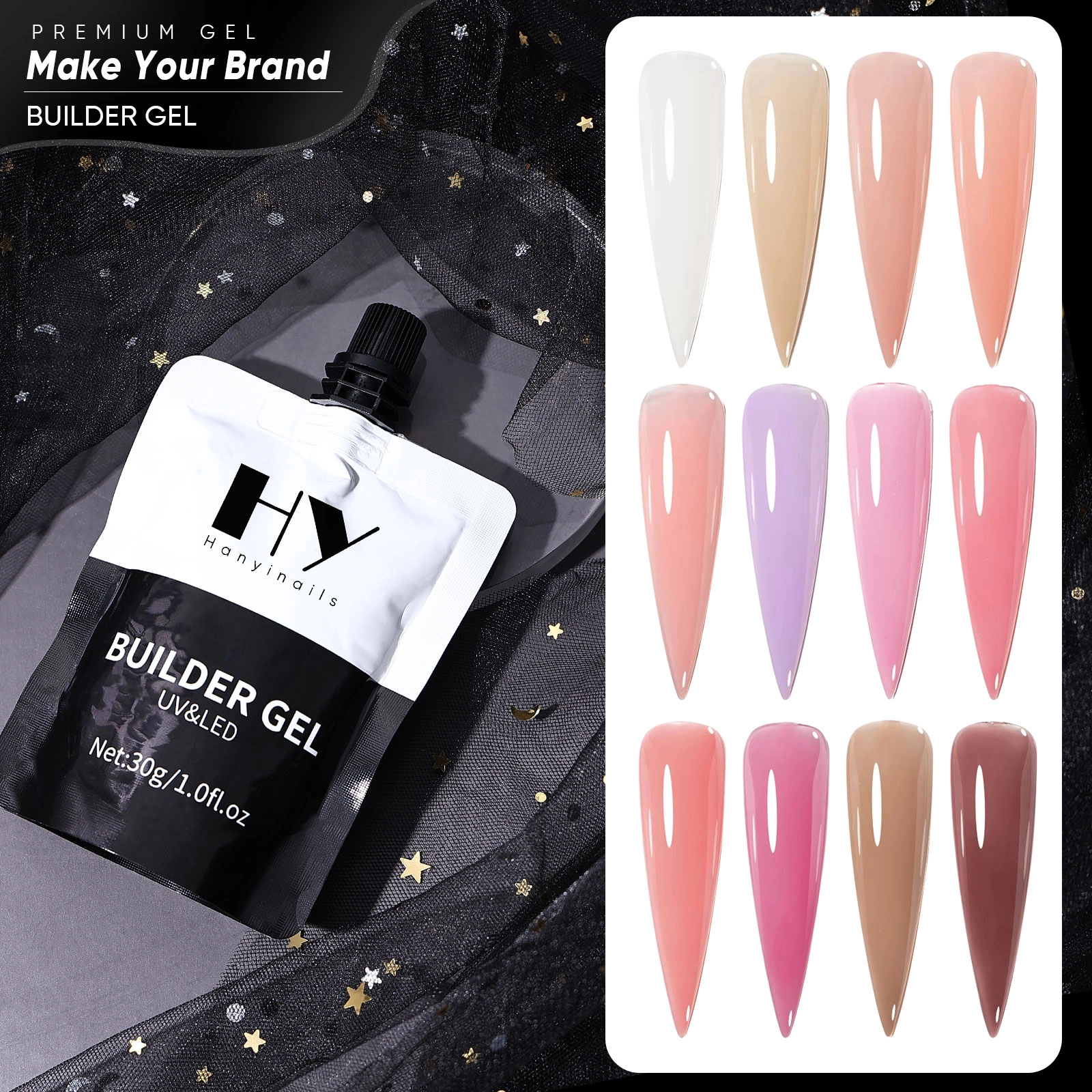
Many professional builder gels, hard gels, and related nail enhancement systems also rely on light-initiated polymerization.
However, their formulations, recommended application thicknesses, and curing procedures can differ from conventional gel color products.
A lamp suitable for one gel polish should not automatically be assumed compatible with every builder gel, extension gel, or highly pigmented formulation.
Air-Dry Gel-Like Nail Polish
Some products use names such as gel-like polish or gel-effect lacquer to describe their appearance rather than their curing chemistry.
These products may be designed to dry without a UV/LED lamp.
They should be evaluated according to their own product instructions rather than treated as conventional professional gel polish.
Which Nail Products Require a Curing Lamp?
| Product Category | Typical Setting Mechanism | UV/LED Lamp Required? | Main Verification |
|---|---|---|---|
| Professional gel polish | Light-initiated polymerization | Yes | Formula–lamp compatibility |
| UV/LED builder gel | Light-initiated polymerization | Yes | Specific formulation and curing procedure |
| Light-curable hard gel | Light-initiated polymerization | Yes | Manufacturer-approved curing system |
| Air-dry gel-like polish | Product-specific lacquer film formation | No, when specified as no-lamp | Product labeling and instructions |
| Traditional nail lacquer | Primarily solvent evaporation | No | Drying and application instructions |
Professional takeaway: The word gel is not sufficient to identify curing requirements. Confirm the actual product category before selecting equipment or providing application instructions.
2. What Happens When Gel Nail Polish Cures?
Gel nail polish curing is a chemical process, not simply the evaporation of a liquid.
Understanding the distinction helps explain why lamp compatibility is important and why an apparently solid surface does not necessarily demonstrate an adequate cure.
The Role of Photoinitiators
Many UV/LED-curable nail gels contain reactive monomers, oligomers, and photoinitiators.
Photoinitiators are ingredients that respond to suitable light exposure.
When they absorb light within their effective activation range, they initiate reactions that allow reactive components in the formulation to polymerize.
The result is the formation of a polymer network that gives the cured coating its intended physical properties.
Different photoinitiators respond to different wavelength ranges, so the same lamp may not perform equally with every formulation.
How Light Exposure Initiates Polymerization
The basic process can be summarized as follows:
1. Photoinitiators are present in the gel formulation.
The formula contains ingredients designed to respond to specific light exposure conditions.
2. The gel receives light from a compatible curing lamp.
The lamp provides wavelengths that can activate the relevant photoinitiators.
3. Polymerization begins.
Reactive components start forming chemical bonds, producing a progressively crosslinked coating.
4. The prescribed exposure procedure supports the intended cure.
The formulation requires appropriate light delivery throughout the applied coating under the manufacturer's specified conditions.
5. The cured coating develops its intended properties.
These properties depend on the formulation, processing conditions, and the degree of cure achieved.
Why Does Curing Need the Correct Light Energy?
A photoinitiator cannot be evaluated independently of the light source used to activate it.
The lamp must provide a suitable emission spectrum and effective light exposure for the particular product.
If the relevant wavelengths are absent or the delivered exposure is insufficient, the required polymerization may not occur to an adequate extent.
Coating thickness, pigmentation, and lamp positioning can also affect the light received by different parts of the applied gel.
Can You Tell Whether Gel Polish Is Fully Cured by Touch?
Not reliably.
An apparently hard or glossy surface does not independently demonstrate that the entire gel layer has reached the manufacturer's required degree of cure.
Likewise, a tacky surface does not always indicate a curing failure because certain gel systems intentionally produce an oxygen-inhibited surface layer.
The appropriate interpretation depends on the product and its instructions.
For a technical explanation of why appearance and hardness alone cannot confirm adequate curing, see NailKnowledge: The Hidden Dangers of Improper UV Nail Curing.
Drying vs. Curing
| Factor | Traditional Nail Lacquer | Professional Light-Curable Gel |
|---|---|---|
| Main setting process | Primarily solvent evaporation | Photoinitiated polymerization |
| Curing lamp required | No | Yes |
| Important formulation factors | Solvents and film-forming ingredients | Reactive ingredients and photoinitiators |
| Main processing variables | Coating thickness and drying conditions | Spectrum, irradiance, exposure, and layer thickness |
| Surface feels dry or hard | Does not always indicate full handling readiness | Does not independently prove adequate curing |
| Verification approach | Product-specific drying instructions | Manufacturer-validated curing procedure |
For professional services, understanding this distinction helps avoid treating gel polish as though it were an ordinary air-dry lacquer.
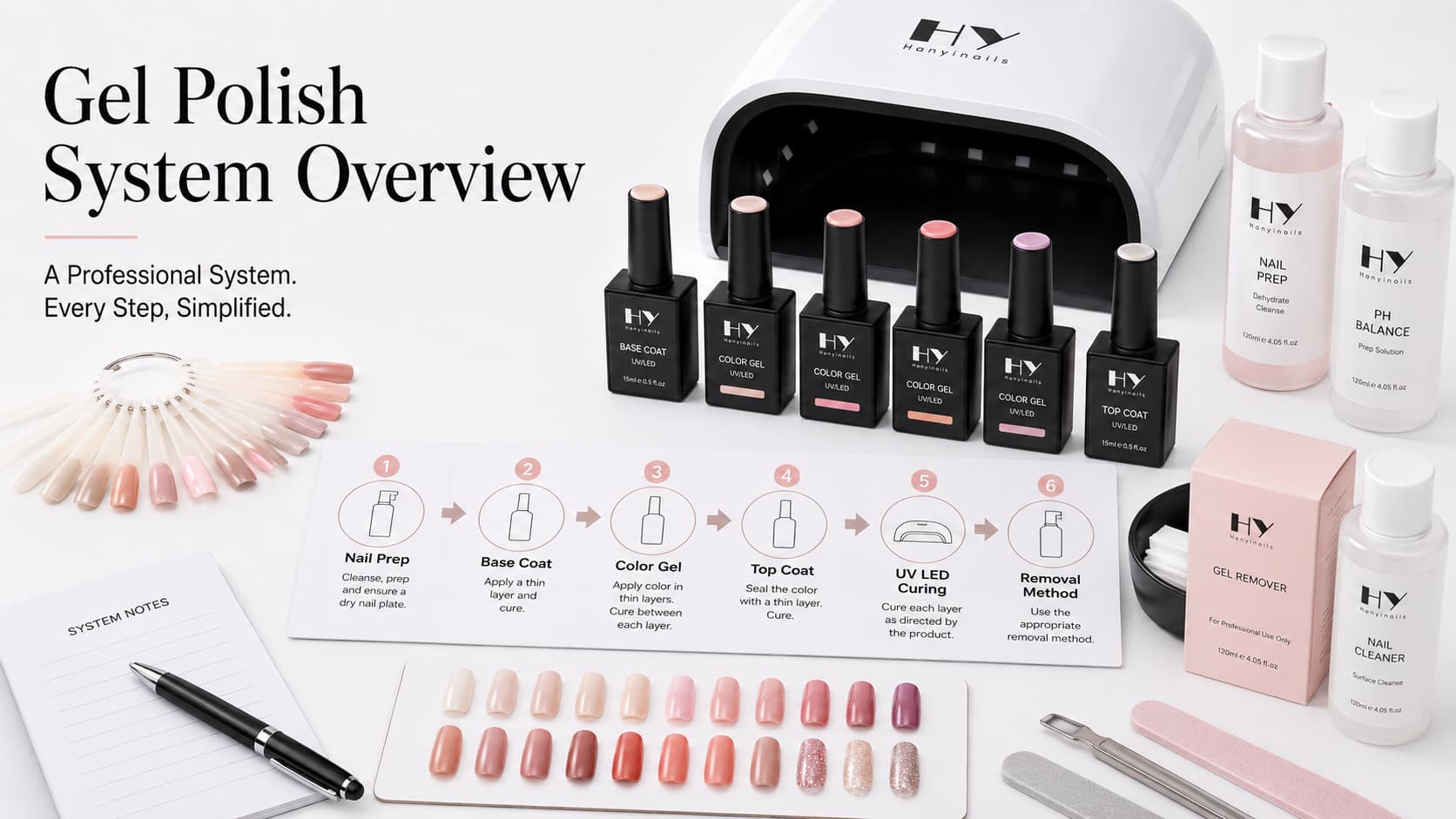
3. UV vs. LED Nail Lamps: What's the Difference?
UV and LED nail lamps are often described as two completely different curing technologies.
That terminology can be misleading.
UV refers to a wavelength region of light. LED refers to the technology used to produce light.
A lamp using LED components can emit ultraviolet radiation, near-violet visible light, or a combination of wavelengths.
Consequently, the difference between traditional fluorescent UV lamps and modern LED-based nail lamps is primarily the light-generation technology and resulting emission characteristics—not simply whether UV light exists.
Fluorescent UV Nail Lamps
Traditional fluorescent curing lamps use fluorescent tubes to produce ultraviolet light.
Their output spectrum depends on the lamp and bulb design.
These systems have been used with many professional nail gel formulations, but compatibility must still be established for the actual product.
Maintenance is especially important because fluorescent bulb output can change with age and use.
A bulb may continue producing visible light while its useful curing performance has declined.
LED-Based Nail Curing Lamps
Modern LED curing lamps use light-emitting diodes.
Their emitted wavelengths depend on the LED components and lamp configuration.
Some systems operate primarily within particular UVA wavelength bands, while others also emit near-violet visible light.
LED-based lamps may provide practical advantages in size, energy efficiency, and maintenance requirements.
However, these potential advantages do not prove compatibility with every professional gel formulation.
Are Dual-Wavelength UV/LED Lamps Better?
Dual-wavelength nail lamps are commonly marketed as systems that emit light around 365 nm and 405 nm.
These wavelength regions may be useful for particular photoinitiator combinations.
However, a 365 nm + 405 nm specification does not guarantee that the lamp can adequately cure every nail gel.
Actual compatibility depends on the product formulation, emission characteristics, delivered exposure, and validation under the specified application conditions.
It is also incorrect to assume that 365 nm always cures the lower gel layers while 405 nm cures only the surface. Light penetration and curing behavior depend on the entire formulation and optical conditions.
UV vs. LED Nail Lamp Comparison
| Evaluation Factor | Fluorescent UV Lamp | LED-Based Nail Lamp |
|---|---|---|
| Light-generation technology | Fluorescent tubes | Light-emitting diodes |
| Emission spectrum | Depends on bulb design | Depends on LED configuration |
| Curing compatibility | Must match the gel formulation | Must match the gel formulation |
| Exposure duration | Product- and lamp-specific | Product- and lamp-specific |
| Maintenance | Tube condition and replacement | LED output, cleanliness, and equipment condition |
| Lamp geometry | Depends on construction | Depends on construction |
| Professional suitability | Based on validated system performance | Based on validated system performance |
Which Lamp Should a Professional Salon Choose?
A salon should begin with the gel manufacturer's curing specifications rather than a generic comparison of equipment wattages or advertised speed.
The correct lamp is one that has been demonstrated to provide suitable curing conditions for the actual product system.
Other useful considerations include hand positioning, lamp coverage, maintenance requirements, operating instructions, and reliable technical support.

4. How Do Wavelengths and Photoinitiators Affect Gel Curing?
Understanding wavelength compatibility is essential for professional gel application.
Two nail lamps may appear similar, have comparable electrical wattage, and use the same general technology while delivering different light to the nail surface.
The difference can materially affect their suitability for a particular formulation.
4.1 What Wavelengths Do Professional Gel Curing Lamps Use?
Many modern nail curing lamps use wavelengths within the UVA range or near the visible violet region.
For example:
- 365 nm is within the UVA region.
- 405 nm is within the near-violet visible-light region under the conventional 400 nm boundary between UVA and visible light.
These are commonly discussed wavelengths in professional nail systems, but the presence of either wavelength does not independently establish compatibility.
The relevant issue is whether the actual light delivered by the lamp can activate the photoinitiator system used in the gel.
4.2 How Do Photoinitiators Respond to Different Wavelengths?
Photoinitiators differ in their absorption characteristics.
A formulation designed around one photoinitiator system may respond differently when exposed to a lamp with another emission spectrum.
A gel may therefore perform adequately in its specified curing system but produce an inadequate result under an unrelated lamp.
Professional formulators consider the relationship between photoinitiator chemistry and the intended curing conditions.
For salons and buyers, this means that lamp selection should be based on manufacturer-supported compatibility information rather than assumptions about lamp appearance or marketing terminology.
The importance of photoinitiator selection is also supported by a 2025 study published in Coatings, which examined the influence of different photoinitiating systems on polymerization rate and methacrylate group conversion in a model pigmented UV/LED nail gel formulation.
The research demonstrates why the chemistry of the photoinitiating system is an important part of evaluating curing performance. Its results should not, however, be treated as universal curing specifications for every commercial gel polish.
Research reference: Bednarczyk and Rożniakowski (2025), The Influence of the Photoinitiating System on Residual Monomer Contents and Photopolymerization Rate of a Model Pigmented UV/LED Nail Gel Formulation.
4.3 Why Does Lamp Wattage Not Guarantee Proper Curing?
Electrical wattage describes power consumption or an electrical rating. It does not directly specify the useful optical energy reaching the gel.
Two lamps with similar wattage can differ in:
- Emission wavelength distribution.
- Irradiance at the nail surface.
- LED or bulb placement.
- Light distribution across the hand.
- Optical design and operating condition.
- Ability to deliver the prescribed exposure to the applied product.
For this reason, purchasing a higher-wattage lamp is not a substitute for confirming compatibility.
A lower-wattage device is not automatically unsuitable, just as a higher-wattage device is not automatically appropriate.
NailKnowledge's technical discussion of improper UV nail curing identifies emitted wavelength range, light intensity, exposure duration, and product thickness as essential factors affecting curing.
Technical reference: NailKnowledge — The Hidden Dangers of Improper UV Nail Curing.
4.4 What Do Irradiance and Exposure Time Mean?
Irradiance describes the rate at which optical energy reaches a surface, commonly expressed per unit area.
Exposure time describes how long the gel receives that light under the specified operating conditions.
Together with wavelength-dependent absorption and other variables, these factors influence the light exposure experienced by the coating.
However, an adequate cure cannot be established simply by multiplying an advertised wattage by the number of seconds.
The formulation and validated procedure remain essential.
Irradiance and exposure time should therefore be evaluated in relation to the relevant wavelengths and the manufacturer's specified curing conditions.
4.5 How Do Thickness and Pigmentation Affect Curing?
Light must reach the relevant reactive material within the applied coating.
Thicker layers and certain pigment systems can affect transmission, absorption, or scattering of light.
Consequently, a curing procedure appropriate for one layer thickness or shade may not necessarily apply to every other application condition.
Highly pigmented products, opaque colors, and thicker enhancement materials deserve particular attention during product validation.
The 2025 Coatings study discussed above investigated highly pigmented nail gel formulations and the effects of photoinitiating systems on polymerization behavior. It also describes the technical challenge posed by pigments that absorb or scatter light.
These findings support the need to consider pigment and formulation variables during product evaluation. They do not establish a universal curing time for black, white, or other highly opaque gel polishes.
Technicians should use the coating thickness and curing procedure specified for the exact product rather than increasing thickness and assuming additional lamp exposure will compensate.
4.6 Does a Dual-Wavelength Lamp Cure Every Gel?
No.
A lamp emitting both 365 nm and 405 nm may be suitable for multiple formulations, but its wavelength specification alone does not prove universal compatibility.
A dual-wavelength lamp can still be unsuitable if the required spectral output or exposure conditions are not achieved.
Why Spectral Overlap Is Not Proof of Adequate Curing
Spectral overlap is an important compatibility consideration, but it does not independently establish an adequate cure.
Even when the lamp emits wavelengths that overlap with a photoinitiator's effective absorption range, the formulation must receive sufficient suitable light under the validated application conditions.
Curing performance also depends on factors such as:
- The photoinitiator system and its concentration.
- Effective irradiance at the coating.
- Exposure duration.
- Layer thickness.
- Pigment absorption and scattering.
- Other formulation characteristics.
- The applicable curing performance criteria.
A wavelength match should therefore be understood as part of the compatibility assessment, not as the final result of curing validation.
Professional rule: Never replace product-specific curing validation with a universal compatibility claim.
Technical Factors That Influence Gel Curing
| Technical Factor | Why It Matters | What Should Be Verified |
|---|---|---|
| Photoinitiator system | Determines the formulation's light-response characteristics | Product-specific curing requirements |
| Emission spectrum | Determines which wavelengths reach the coating | Lamp–formula wavelength compatibility |
| Irradiance | Influences the rate of optical energy delivery | Validated exposure conditions |
| Exposure time | Affects total light exposure | Manufacturer-specified curing procedure |
| Layer thickness | Influences light penetration and application behavior | Recommended thickness |
| Pigmentation | May alter light transmission | Shade-specific curing instructions or validation |
| Lamp geometry | Affects illumination across different nail positions | Correct hand placement and coverage |
| Lamp condition | May affect delivered light | Maintenance and operating instructions |
What Should Professional Buyers Learn From This?
A curing lamp should be evaluated as part of a complete product system.
For an OEM/ODM gel polish collection, formula development, color selection, application instructions, and curing equipment requirements should be coordinated rather than treated as unrelated decisions.
A brand introducing a new formulation, substantially changing pigmentation, or recommending a different lamp should consider whether its previous curing validation remains applicable.
5. How to Check Gel Polish and Lamp Compatibility
For nail technicians, compatibility verification begins before application.
For nail brands and distributors, it should begin before product specifications and customer instructions are approved.
A suitable curing procedure must account for the exact formulation and the equipment used.
Important distinction: Reviewing product documents and lamp specifications is not the same as independently testing the degree of cure. The following six-step process helps professionals verify that they are following an established product system; it is not a substitute for appropriate manufacturer-led technical validation.
Step 1: Identify the Exact Gel Product
Begin by confirming the product type and formulation identity.
Check:
- Product name and formulation identification.
- Whether it is a gel color, builder gel, base coat, or top coat.
- Manufacturer-provided curing instructions.
- Recommended application thickness.
- Relevant shade or product variations.
Do not assume that two products from the same supplier always use identical curing conditions.
Step 2: Check the Manufacturer's Recommended Lamp
Obtain the curing equipment requirements for the product.
The manufacturer may identify a particular lamp model or provide validated compatibility specifications.
If the salon uses another lamp, do not assume that a similar appearance, wavelength label, or electrical rating establishes equivalence.
Seek confirmation from the gel manufacturer or appropriate technical documentation.
Step 3: Review Wavelength and Output Information
Compare the lamp's emission characteristics with the formulation's documented curing requirements.
Information may include:
- Emission wavelength range.
- Relevant output specifications.
- Recommended operating mode.
- Distance or placement requirements.
- Equipment limitations.
A marketing claim such as dual wavelength or high power should not replace technical verification.
Remember that matching basic wavelength specifications does not establish that the actual formulation has achieved the required degree of cure.
Step 4: Confirm the Specified Curing Procedure
Review the manufacturer's complete curing instructions, including:
- Application thickness.
- Number of layers.
- Required exposure duration.
- Lamp mode.
- Hand and thumb placement.
- Product-specific requirements.
Do not assume that adding extra curing time can resolve a lamp mismatch.
Longer exposure is not a universal substitute for the correct wavelength distribution and validated process.
Step 5: Assess Lamp Coverage and Condition
Inspect the lamp and its working environment.
Confirm that the device is clean, functioning as intended, and maintained according to its manufacturer's instructions.
Consider the positioning of all fingers, including the thumbs, so the applied coating receives the prescribed exposure.
Equipment geometry and placement can influence consistency across different nails.
If the device is damaged, contaminated, or operating abnormally, do not assume its curing performance remains unchanged.
Step 6: Document Compatibility Evidence
For professional purchasing or private-label product development, retain relevant technical information.
This may include:
- Product-specific curing instructions.
- Manufacturer-supported lamp recommendations.
- Approved application procedures.
- Relevant formulation or shade validation.
- Equipment maintenance requirements.
- Records of approved changes to the product or curing system.
Visual inspection alone should not be presented as proof of complete polymerization.
Where formal curing validation is required, the appropriate methods and acceptance criteria should be established by the product manufacturer or qualified technical personnel.
A compatibility checklist is not a substitute for validated product-specific curing performance testing.
Four Levels of Curing-System Evaluation
Different checks provide different kinds of evidence. They should not be treated as interchangeable.
| Evaluation Level | Main Purpose | Does It Independently Prove Adequate Curing? |
|---|---|---|
| Product documentation review | Identify the manufacturer's intended curing system | No |
| Lamp specification review | Compare equipment characteristics with documented requirements | No |
| Visual and surface inspection | Identify obvious application or coating abnormalities | No |
| Validated product-specific testing | Evaluate curing performance using appropriate methods and acceptance criteria | Depends on the validity and scope of the testing |
Where appropriate, qualified technical personnel may evaluate curing performance using analytical methods such as spectroscopic assessment of chemical conversion. The method, sampling conditions, and acceptance criteria must be suitable for the actual formulation.
This does not mean salons are expected to perform laboratory testing during routine manicures.
For routine professional use, the objective is to follow a validated product system and avoid unsupported substitutions.
Compatibility Decision: Confirmed, Unconfirmed, or Incompatible?
Following the six-step review, professionals should distinguish three possible outcomes.
| Decision Status | Meaning | Recommended Action |
|---|---|---|
| Confirmed Compatible | The manufacturer's validated information supports the specific product, lamp, and procedure | Use according to the approved instructions |
| Unconfirmed / Insufficient Evidence | Available information does not establish compatibility | Do not assume compatibility; request manufacturer clarification or suitable validation |
| Known Incompatible | The equipment or procedure conflicts with established product requirements | Do not use that combination; select a verified compatible system |
An absence of evidence is not evidence of compatibility.
A lamp should not be considered approved merely because the gel appears hard after exposure.
Professional Compatibility Verification Checklist
| Verification Item | Evidence to Review | Decision |
|---|---|---|
| Exact gel formulation | Product identification and specification | Confirm |
| Recommended lamp | Manufacturer-supported model or validated requirements | Confirm |
| Wavelength compatibility | Relevant emission and product information | Confirm |
| Curing procedure | Written application and exposure instructions | Confirm |
| Layer thickness | Product-specific application limits | Confirm |
| Lamp coverage | Hand positioning and operating guidance | Review |
| Lamp condition | Maintenance and inspection records | Review |
| Technical validation | Appropriate manufacturer documentation | Review |
| Formula or lamp changes | Updated compatibility assessment | Reassess when needed |
Three Illustrative Compatibility Scenarios
Scenario A: A Salon Changes Its Curing Lamp
A salon replaces an older curing lamp with a newer LED device.
The new lamp has a higher advertised wattage, but the salon has not confirmed compatibility with its existing gel products.
The appropriate next step is to verify the new lamp against the gel manufacturers' curing requirements before relying on it for routine services.
If the available information is insufficient, the compatibility status remains unconfirmed.
Scenario B: A Nail Brand Introduces a Highly Pigmented Color Collection
The brand previously evaluated a lighter gel polish shade but is developing several highly opaque colors.
The brand should determine whether its existing curing specifications remain applicable to the new formulations rather than assuming identical performance.
Where necessary, appropriate shade-specific evaluation should be conducted before approving customer instructions.
Scenario C: A Distributor Receives Requests for Universal Lamp Compatibility
The supplier's product documentation only supports particular curing systems.
The distributor should communicate the verified compatibility requirements instead of advertising that the product works with any UV/LED lamp.
If a customer proposes an unverified lamp, the distributor should obtain further manufacturer information before claiming compatibility.
These scenarios illustrate professional decision-making. They are not claims about specific Hanyinails testing results.
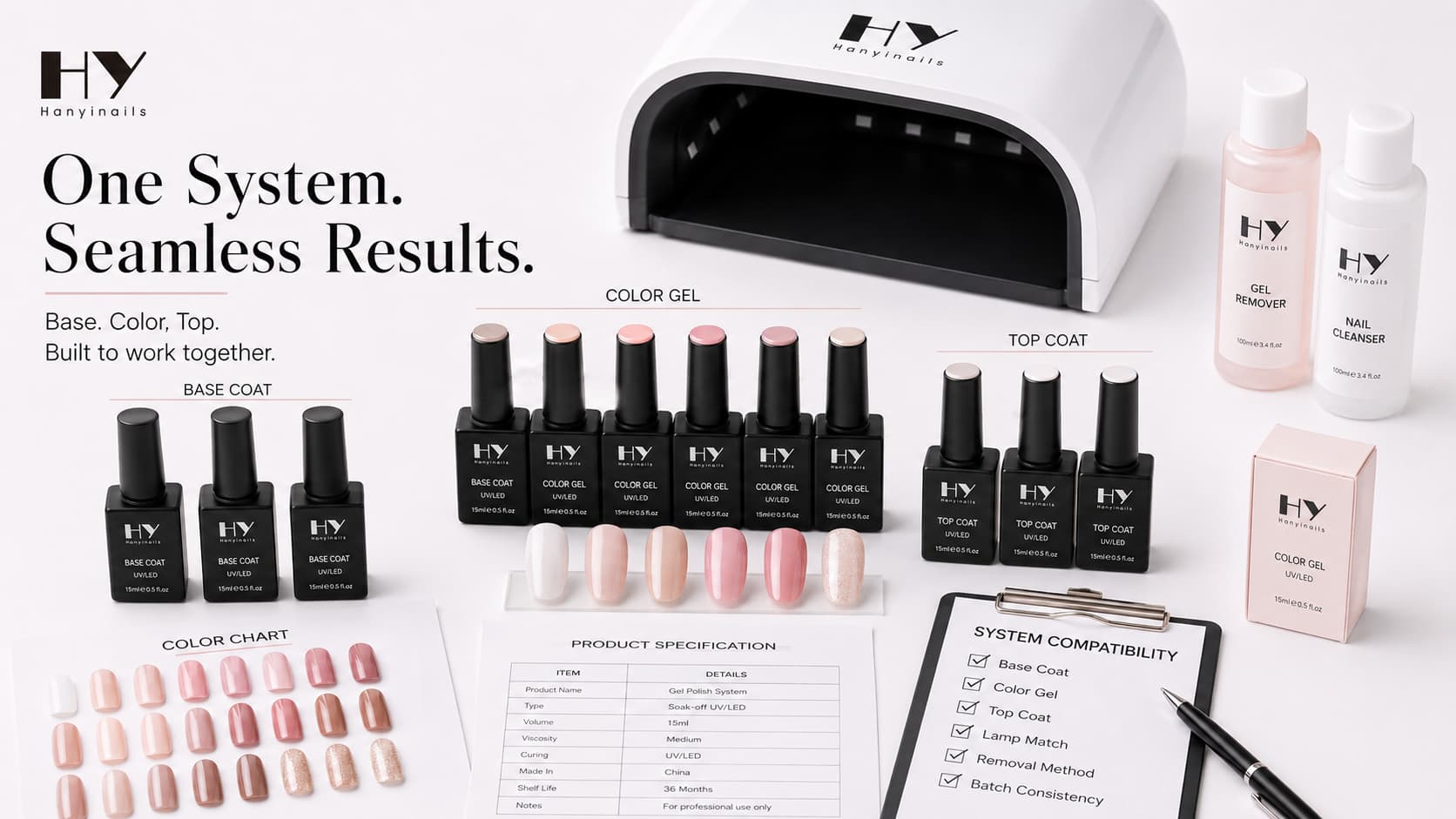
6. Common Gel Polish Curing Problems and Their Causes
Curing problems may appear as softness, wrinkling, uneven hardening, unusual heat sensations, or premature coating failure.
However, these symptoms are not exclusive to curing problems.
Application thickness, preparation, product compatibility, lamp condition, and the formulation itself may all influence the observed result.
The appropriate response is to investigate the complete system rather than automatically increasing curing time.
Problem 1: Gel Polish Remains Unusually Soft
Unusual softness following the prescribed curing procedure may indicate that the product has not developed its intended physical properties.
Possible contributing factors include:
- Incompatible curing equipment.
- Incorrect exposure settings.
- Excessive layer thickness.
- Lamp positioning or output problems.
- Product-specific formulation issues.
Do not continue normal finishing while the condition remains unexplained.
Review the product instructions and consult the manufacturer as necessary.
Problem 2: Gel Polish Wrinkles or Hardens Unevenly
Wrinkling may result from application thickness, pigmentation, unsuitable exposure conditions, or formulation-specific behavior.
It is not possible to establish the exact cause from appearance alone.
The technician should review the intended application procedure and the manufacturer's curing requirements.
Do not assume that applying additional top coat will correct the underlying issue.
Problem 3: Some Fingers Cure Differently
If one or more nails consistently show different results, consider the placement of the hand within the lamp and the illumination available at each nail position.
The thumbs may require specific positioning according to the equipment instructions.
Check lamp geometry, operating condition, and the manufacturer's recommended placement procedure.
Problem 4: Excessive Heat or Burning Sensations
Gel polymerization is an exothermic process, meaning that heat may be released during the reaction.
A mild sensation of warmth may occur with some products.
However, marked burning, pain, or significant discomfort is not something to ignore.
Stop the procedure if the client experiences pain or a concerning reaction, and investigate the application thickness, formulation, curing mode, and equipment compatibility.
A low-heat lamp setting is not a substitute for proper product compatibility or validated curing instructions.
Problem 5: The Surface Remains Tacky
A tacky surface does not necessarily mean the gel is inadequately cured.
Some products intentionally produce an oxygen-inhibited surface layer as part of their application system.
Other formulations are marketed as no-wipe products and may have different expected surface characteristics.
The correct interpretation depends on the exact product.
Do not attempt to determine the degree of cure simply by touching the surface.
Problem 6: Gel Polish Peels or Lifts Prematurely
Premature lifting may involve multiple factors.
These include nail preparation, adhesion, layer thickness, product compatibility, mechanical stress, and potentially inadequate curing.
Because lifting is not specific to a single cause, it should not automatically be attributed to the lamp.
Investigate the full application system before changing products or equipment.
Gel Polish Curing Troubleshooting Matrix
| Observed Problem | Possible Contributing Factors | Professional Next Step |
|---|---|---|
| Unusually soft gel | Compatibility, insufficient exposure, excessive thickness | Stop and review the specified curing system |
| Wrinkled finish | Thickness, pigmentation, unsuitable exposure conditions | Check application and manufacturer instructions |
| Uneven results across nails | Placement or illumination differences | Review hand positioning and lamp coverage |
| Significant burning or pain | Exothermic reaction, application conditions, system mismatch | Stop and investigate |
| Tacky surface | Intended inhibition layer or abnormal product behavior | Check product-specific expectations |
| Premature peeling | Preparation, adhesion, application, or curing-related factors | Assess the complete system |
| Unexpected curing variation between shades | Pigmentation, formulation differences, application thickness | Review shade-specific requirements |
| Problems after changing lamps | Unverified compatibility or equipment differences | Reconfirm validated curing conditions |
Why Symptoms Alone Cannot Prove a Curing Failure
These symptoms are troubleshooting indicators, not standalone analytical tests of the degree of cure.
For example, surface tackiness may be expected in certain gel systems, while premature peeling may primarily involve adhesion or nail preparation.
Likewise, a hard surface does not independently confirm adequate polymerization throughout the coating.
The observed behavior should therefore guide further investigation rather than be treated as a definitive diagnosis.
When Should You Stop the Application?
Stop routine application or finishing when the product behaves abnormally, curing conditions cannot be verified, or the client experiences significant pain or irritation.
Avoid attempting to repair a suspected curing problem by indiscriminately adding exposure time, applying more gel, or covering the material.
Follow the product manufacturer's instructions for handling the affected material.
7. Can Gel Nail Polish Cure Without a Lamp?
Professional UV/LED-curable gel nail polish requires a compatible curing light source.
Air drying, ice water, fans, conventional quick-dry sprays, and ordinary sunlight are not substitutes for a validated gel curing procedure.
If the gel has already been applied and the required curing system is unavailable, the appropriate response is to stop the application and follow the manufacturer's directions for safely handling or removing the uncured material.
Do not leave uncured gel on the nails expecting it to become adequately cured through natural air exposure.
What About Gel-Like Nail Polish?
Some products marketed as gel-like or gel-effect are designed to dry without a curing lamp.
These products may produce a glossy finish resembling a gel manicure, but their formulation and application requirements can differ significantly from professional light-curable gel systems.
They should be evaluated as separate product categories.
Further Reading: No-Lamp Alternatives
For detailed answers about sunlight, ice water, fans, quick-dry sprays, and what to do when a curing lamp is unavailable, read:
How to Dry Gel Nail Polish Without UV Light: What Actually Works?
This article provides the complete no-lamp alternatives and uncured-product handling guide.
8. UV Exposure and Safe Professional Gel Application
Professional gel application involves more than achieving a glossy finish.
Salons and brands should also consider appropriate lamp use, exposure to uncured ingredients, and the information provided to technicians and customers.
8.1 UV Exposure During Gel Manicures
Many professional nail curing lamps emit UVA radiation.
The amount and nature of exposure vary with the equipment and procedure.
LED-based curing lamps should not automatically be described as UV-free, and differences in exposure should not be reduced to a universal safety ranking based solely on lamp technology.
The American Academy of Dermatology recommends considering protective measures during gel manicures.
These include applying broad-spectrum, water-resistant sunscreen with SPF 30 or higher to the hands before the appointment, or using suitable dark, opaque gloves that leave the nails accessible.
Official reference: American Academy of Dermatology — Gel Manicures: Tips for Healthy Nails.
Such precautions should be incorporated appropriately into the salon procedure without interfering with the product manufacturer's nail preparation requirements.
8.2 Uncured Gel and Acrylate Contact Risks
Some nail products contain reactive acrylate or methacrylate ingredients with sensitization potential.
Unnecessary contact between uncured product and surrounding skin should be avoided.
The absence of HEMA from a formula does not establish that the product is free from all potential allergens.
Likewise, a product advertised as low odor or professional grade should not automatically be described as risk-free.
DermNet explains that certain acrylate monomers are potent irritants and allergens and that contact with reactive uncured materials should be avoided.
The FDA also provides guidance on nail product ingredients, labeling, and relevant safety concerns, including risks associated with certain methacrylate monomers.
These sources support the importance of appropriate handling and product information. They do not establish that every individual gel formulation presents an identical risk.
Relevant references:
If irritation, persistent redness, swelling, or suspected allergic symptoms occur, discontinue exposure and seek appropriate medical advice.
8.3 Professional Application and Client Protection
Professional salons should establish consistent procedures that address:
- Product identification.
- Confirmed lamp compatibility.
- Correct application thickness.
- Manufacturer-specified curing conditions.
- Appropriate hand placement.
- Prevention of skin contact with uncured material.
- Lamp maintenance.
- Client protection and product-specific handling instructions.
Technicians should not rely on arbitrary exposure times or assumptions about equipment power.
Proper curing is important, but it should not be presented as a guarantee that every product will be suitable for every person.
Professional Safety Checklist
| Safety Consideration | Recommended Practice |
|---|---|
| Gel identification | Confirm product category and instructions |
| Curing equipment | Use a verified compatible lamp |
| Application thickness | Follow product-specific limits |
| Skin exposure | Avoid contact with uncured gel |
| UV protection | Consider AAD-recommended protective measures |
| Lamp condition | Maintain equipment according to instructions |
| Unexpected pain or burning | Stop and investigate |
| Allergic symptoms | Discontinue exposure and seek appropriate advice |
| Product claims | Avoid unsupported absolute safety guarantees |
Professional takeaway: Correct curing procedures, safe handling practices, and accurate product information should be treated as connected responsibilities.
9. What Nail Brands Should Verify Before Choosing a Curing System
For nail brands, distributors, and private-label buyers, curing compatibility is both a technical and commercial consideration.
A gel polish collection may include base coats, color gels, top coats, specialty effects, and additional nail enhancement products.
These products may not all share identical curing requirements.
Before approving a collection for the market, buyers should understand the technical instructions that accompany each relevant formula.
9.1 Formula–Lamp Compatibility
Ask the supplier which lamp systems have been evaluated for the intended formulation.
A general claim such as UV/LED compatible should be supported by appropriate product-specific information.
If the buyer intends to recommend another lamp, determine whether additional compatibility assessment is needed.
9.2 Curing Procedure and Application Instructions
Request clear application instructions covering the relevant product system.
Depending on the formulation, these may address:
- Recommended layer thickness.
- Curing equipment.
- Operating mode.
- Exposure duration.
- Application sequence.
- Special instructions for particular products or shades.
Clear documentation can reduce customer confusion and unsuitable equipment use.
9.3 Shade and Pigment Consistency
Different pigment systems can affect how light interacts with a gel coating.
When developing a large color collection, buyers should ask whether the proposed curing requirements apply across the relevant range of shades.
Particular attention may be necessary for highly pigmented, opaque, or otherwise technically distinctive formulations.
The presence of different colorants does not automatically prove that a different curing schedule is needed, but the suitability of the schedule should be verified.
9.4 Ingredient and Safety Documentation
Buyers should request the technical and regulatory information appropriate to their target market and product category.
This may include:
- Ingredient information.
- Applicable safety documentation.
- Product warnings and instructions.
- Relevant formulation specifications.
- Market-specific labeling requirements.
The precise documentation requirements vary by jurisdiction and product type.
A supplier's general certification claims should not be treated as automatic approval for every formula or target market.
9.5 Production and Batch Consistency
Commercial buyers should understand how the supplier manages product consistency.
Changes in raw materials, formulation, pigmentation, or processing conditions may affect characteristics relevant to application and curing.
Where appropriate, suppliers should have procedures to evaluate and document changes that could affect the product's validated use conditions.
9.6 OEM/ODM Packaging and Customer Instructions
Technical information should be reflected accurately in product packaging and customer-facing documentation.
For example, a label should not state universal lamp compatibility when the available evidence only supports particular systems.
Instructions should remain consistent across the approved product specification, packaging, and related sales materials.
When Should Curing Compatibility Be Reassessed?
Compatibility information should not automatically be carried forward after a relevant product or equipment change.
Buyers should determine whether reassessment is needed when:
- The gel formulation is modified.
- Photoinitiator ingredients or their concentrations change.
- Pigmentation, opacity, or shade formulation changes materially.
- A new lamp model or different operating mode is introduced.
- Recommended layer thickness or exposure procedures change.
- Relevant equipment components or operating conditions change.
- Customer complaints indicate unexpected curing behavior.
These changes do not automatically mean the product is incompatible. They mean that the applicability of the existing validation should be reviewed.
Where the change may affect curing performance, the supplier or qualified technical personnel should determine what additional evaluation is appropriate.
Professional Curing System Supplier Evaluation Matrix
| Evaluation Area | Buyer Question | Suggested Evidence |
|---|---|---|
| Formula identification | Which exact gel formulation is being supplied? | Product specification |
| Lamp compatibility | Which curing equipment is validated? | Manufacturer-supported compatibility information |
| Exposure procedure | What conditions are required? | Written curing instructions |
| Shade performance | Does the prescribed procedure cover the proposed shades? | Relevant formulation or shade evaluation |
| Application requirements | What coating thickness and sequence apply? | Application SOP |
| Ingredient information | What relevant ingredients and warnings must be disclosed? | Applicable product documentation |
| Quality consistency | How are material changes and production variation evaluated? | Relevant QC procedures |
| Private-label instructions | Do packaging claims match the available evidence? | Approved artwork and instructions |
| Market requirements | What requirements apply in the intended destination? | Market-specific compliance review |
What Should a Gel Polish OEM Brief Include?
A technical OEM/ODM brief should identify:
- Intended gel polish product category.
- Target markets and customer types.
- Desired color and finish range.
- Base coat and top coat system requirements.
- Proposed curing equipment.
- Required application and curing instructions.
- Relevant ingredient and labeling requirements.
- Packaging and customization requirements.
- Quality and consistency expectations.
- Any performance claims requiring substantiation.
The objective is to align the product formulation, application procedure, customer instructions, and commercial positioning.
Why Universal Compatibility Claims Require Caution
A supplier may be asked whether its gel polish can cure under any UV or LED lamp.
Such a claim cannot be established simply from a wavelength label or a successful visual demonstration.
It requires suitable evidence that the relevant formulation achieves its intended curing performance under the conditions being claimed.
When compatibility has only been verified for certain systems, the product documentation should communicate those limitations accurately.
Hanyinails OEM/ODM Support
Hanyinails works with nail brands, salons, distributors, and wholesalers developing professional gel polish collections.
Businesses can discuss formula selection, custom colors, packaging, private-label presentation, and relevant product specifications as part of their OEM/ODM evaluation.
When considering curing-related requirements, buyers should confirm the available technical information and compatibility conditions for the exact products being sourced.
This guide does not claim that every Hanyinails formulation is compatible with every UV/LED curing lamp, or that laboratory validation has been performed for product combinations not specifically documented.
Buyers should verify the product-specific curing requirements and available documentation before making commercial or customer-facing claims.
Explore Hanyinails OEM/ODM services, learn more about our company, or contact Hanyinails to discuss your product requirements.
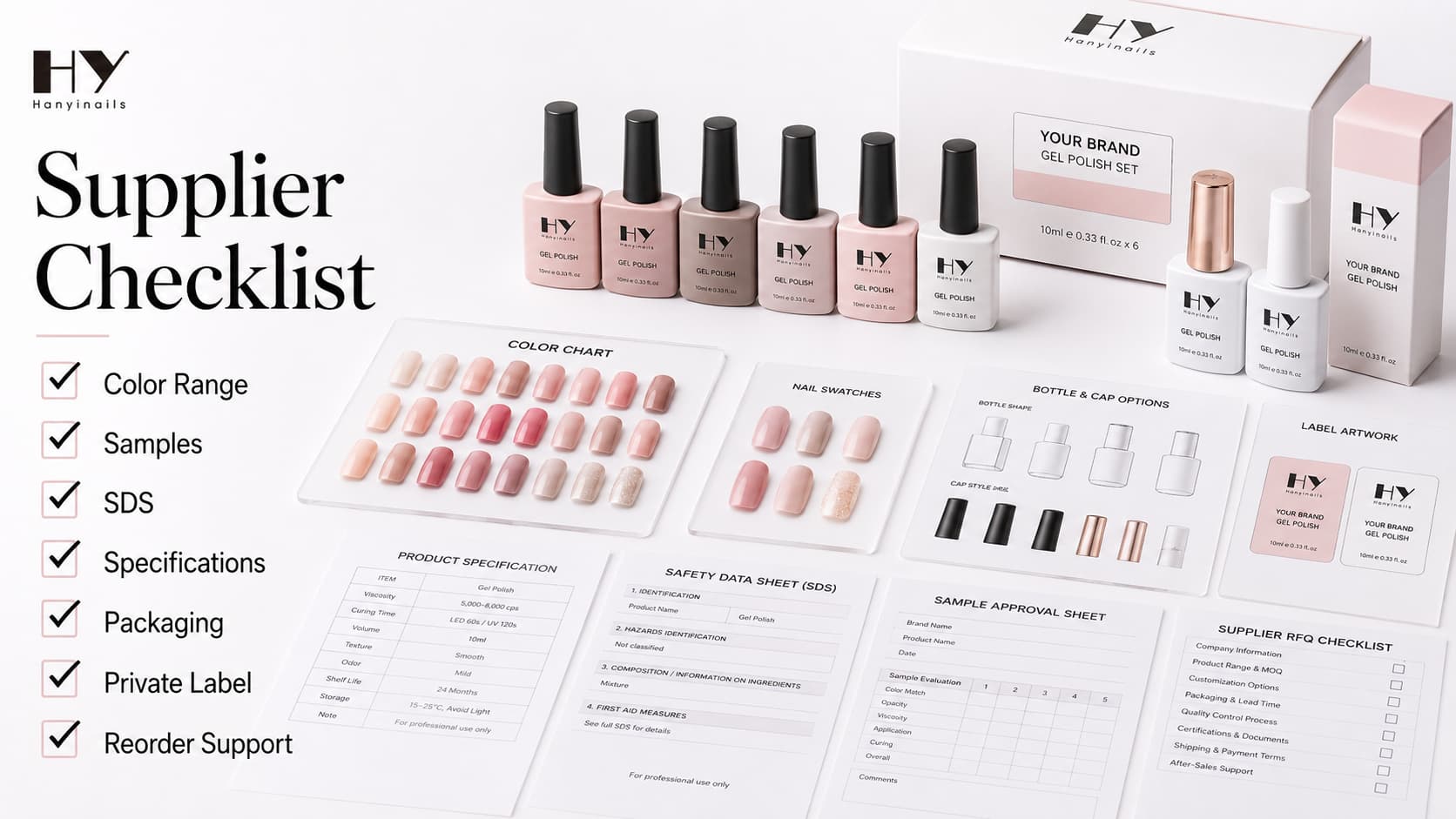
10. FAQs About UV and LED Gel Polish Curing
1. Does all gel nail polish need UV light?
Professional UV/LED-curable gel nail polish requires an appropriate light source to initiate polymerization. This may be a compatible LED-based curing lamp rather than an older fluorescent UV lamp. However, products marketed as gel-like or gel-effect nail polish may be designed to air-dry without a lamp. Always confirm the actual product category and manufacturer's curing instructions.
2. Can LED nail lamps cure UV gel polish?
Yes, an LED-based lamp can cure UV/LED gel polish when its emission characteristics and exposure conditions are compatible with the product's photoinitiator system. However, not every LED lamp is suitable for every formulation. The manufacturer should identify the recommended lamp or provide validated compatibility requirements. Electrical wattage alone cannot confirm adequate curing.
3. Are UV and LED nail lamps the same?
Not exactly. UV describes a range of wavelengths, while LED describes a light-generation technology. Traditional curing lamps may use fluorescent tubes, whereas modern LED-based lamps use light-emitting diodes. Both can provide suitable light for particular UV-curable formulations. Compatibility depends on the actual emission spectrum, effective exposure, and manufacturer's instructions.
4. Does a 365 nm and 405 nm lamp cure every gel?
No. A dual-wavelength lamp may work with multiple gel formulations, but the presence of 365 nm and 405 nm light does not establish universal compatibility. Photoinitiators differ in their absorption characteristics. Adequate curing also depends on delivered irradiance, exposure time, layer thickness, and the formulation. Product-specific compatibility must be verified.
5. Does a higher-wattage nail lamp cure gel better?
Not necessarily. Electrical wattage does not independently describe the effective light reaching the gel or the suitability of its wavelengths. Two lamps with similar wattage may deliver different curing conditions. Professional users should follow the gel manufacturer's validated equipment and exposure recommendations instead of assuming that higher advertised power produces better curing.
6. How can you tell if gel polish is properly cured?
A hard or glossy surface does not independently prove that the entire gel coating has reached the required degree of cure. Some products also have an expected tacky inhibition layer. Follow the manufacturer's validated curing procedure and investigate abnormal behavior. Formal assessment requires appropriate product-specific testing and acceptance criteria rather than visual or touch inspection alone.
7. Why does gel polish wrinkle or remain soft after curing?
Wrinkling or unusual softness may involve application thickness, pigmentation, incompatible equipment, inadequate exposure, or formulation-specific behavior. These symptoms do not establish a single cause. Stop routine finishing, review the prescribed curing procedure, inspect lamp condition and placement, and seek manufacturer guidance when necessary. Increasing exposure time is not a universal solution.
8. What should nail brands check before choosing a curing lamp?
Nail brands should confirm the exact formulation, manufacturer-supported lamp compatibility, prescribed exposure conditions, application thickness, shade-specific requirements, and relevant technical documentation. They should also ensure that curing instructions match the approved packaging and sales materials. Formula or equipment changes may require reassessment, and compatibility claims should be supported by appropriate evidence.
Develop Professional Gel Polish Collections with Hanyinails
Reliable gel polish performance depends on more than color, finish, or application technique.
The relationship between formulation, photoinitiators, curing equipment, exposure conditions, and technical documentation should be considered throughout product development and professional use.
For nail brands and distributors, understanding these requirements helps support clearer product specifications, more accurate customer instructions, and better-informed sourcing decisions.
Hanyinails provides professional nail product manufacturing and OEM/ODM customization services for businesses developing private-label nail collections.
To discuss gel polish formulations, product specifications, packaging, and curing-related requirements for your intended market, contact Hanyinails.

Hanyinails
Hanyinails
Hanyinails
Hanyinails