HEMA vs HPMA in Gel Polish: Ingredient Guide for Nail Professionals
Wednesday, 08/6/2025
HEMA vs HPMA in gel polish reveals key differences in ingredient safety and performance for nail professionals. Understand how HPMA in gel polish offers a gentler alternative to HEMA, helping you choose the best formulas for client care and lasting results.
Quick Answer: Are HEMA and HPMA the Same in Gel Polish?
HEMA and HPMA are both methacrylate monomers that may be used in some nail gel systems, but they are not the same ingredient. HEMA stands for 2-hydroxyethyl methacrylate, while HPMA usually refers to 2-hydroxypropyl methacrylate. In gel polish formulas, both may be used to support adhesion, flexibility, curing performance, or product handling, depending on the formula design.
If a label lists hydroxypropyl methacrylate, it should not be read as HEMA unless the ingredient list or SDS separately identifies 2-hydroxyethyl methacrylate.
HPMA should not be described as allergy-free, hypoallergenic, or automatically safer than HEMA. Nail professionals and private label buyers should review the full formula, SDS, ingredient list, curing requirements, label text, product claims, and target market documents before using or marketing HEMA-based, HEMA-free, HPMA-based, or HPMA-free gel polish products.
Key Takeaways
HEMA and HPMA are not the same ingredient. HEMA means 2-hydroxyethyl methacrylate, while HPMA usually means 2-hydroxypropyl methacrylate.
Both HEMA and HPMA belong to the broader methacrylate ingredient family and should be reviewed as part of the full nail gel formula.
HEMA is commonly discussed in nail products because some professional-use warnings and ingredient discussions specifically address HEMA and Di-HEMA TMHDC in nail products.
HPMA may be used in some HEMA-free or alternative formula strategies, but it should not be marketed as allergy-free or risk-free without suitable support.
Nail professionals should avoid skin contact, follow curing instructions, use products as directed, and stop use if irritation or sensitivity concerns appear.
Private label buyers should confirm SDS, ingredient information, formula claim support, label requirements, sample testing, curing performance, and target market documents before OEM production.
What Are HEMA and HPMA in Gel Polish?
HEMA and HPMA are both methacrylate ingredients that may be used in certain nail gel systems. In gel polish and other UV/LED-curable nail products, methacrylate-based ingredients can help support product adhesion, flexibility, curing behavior, and overall performance.
HEMA stands for 2-hydroxyethyl methacrylate. It is often discussed in nail products because it has been used in some gel systems and because professional-use, labeling, and sensitization discussions are common in the nail industry.
HPMA usually refers to 2-hydroxypropyl methacrylate. It is a different ingredient from HEMA and may appear in some nail gel formulas or HEMA-free formula strategies.
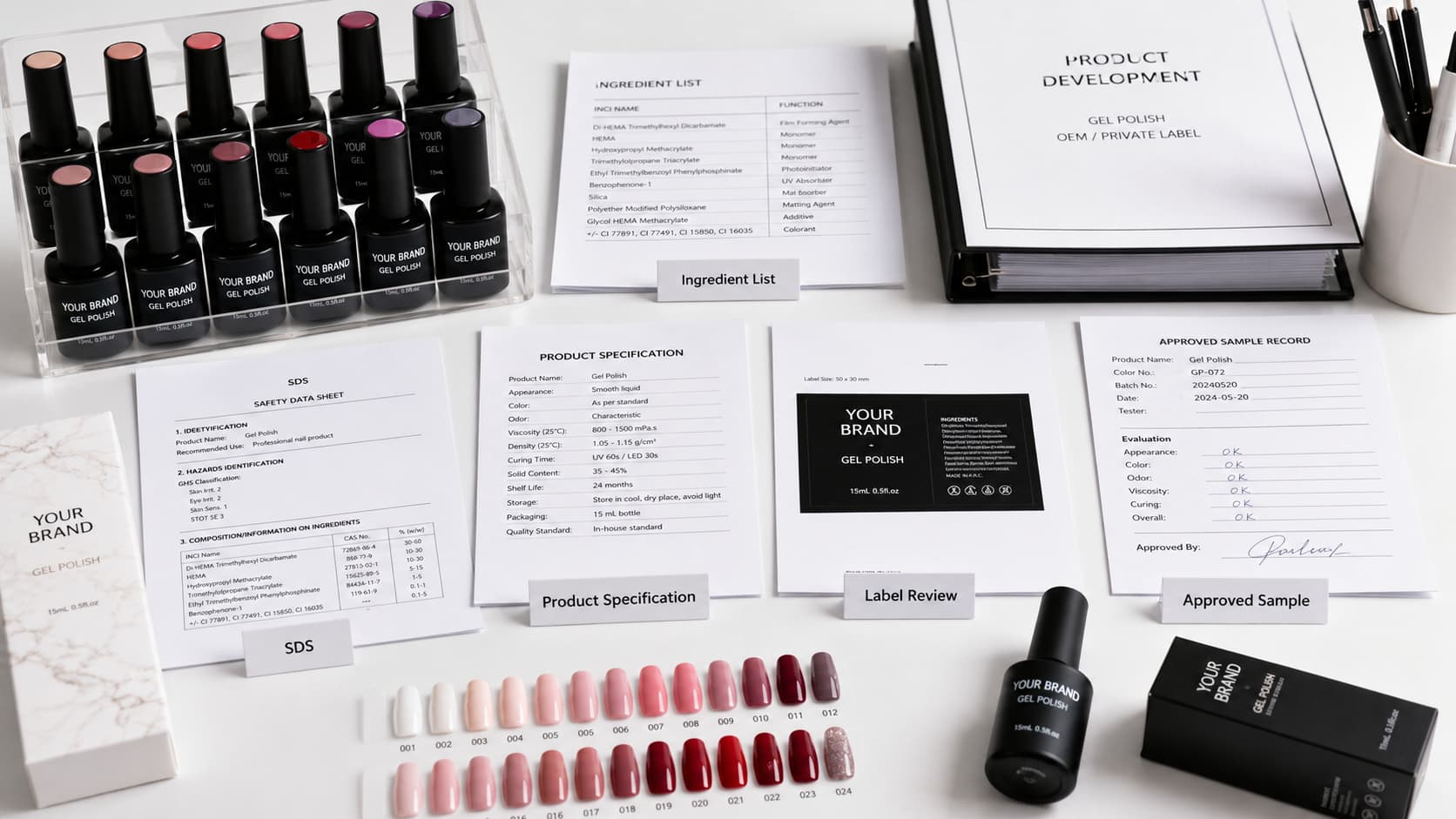
Private label buyers should confirm ingredient information, SDS, product specifications, label wording, approved samples, and claim support before production.
For nail professionals and private label buyers, the most important point is this: ingredient names should be checked carefully. A product may be marketed as HEMA-free, but buyers should still review the full formula, SDS, ingredient list, label text, and supporting documents to understand what ingredients are present.
Is Hydroxypropyl Methacrylate the Same as HEMA?
No. Hydroxypropyl methacrylate is not the same as HEMA.
HEMA is 2-hydroxyethyl methacrylate. HPMA is usually 2-hydroxypropyl methacrylate. Both are methacrylate monomers, but they are different chemical ingredients.
This difference matters because buyers, nail professionals, and product developers may search for “hydroxypropyl methacrylate vs HEMA” when checking ingredient labels, SDS files, supplier documents, or HEMA-free gel polish claims.
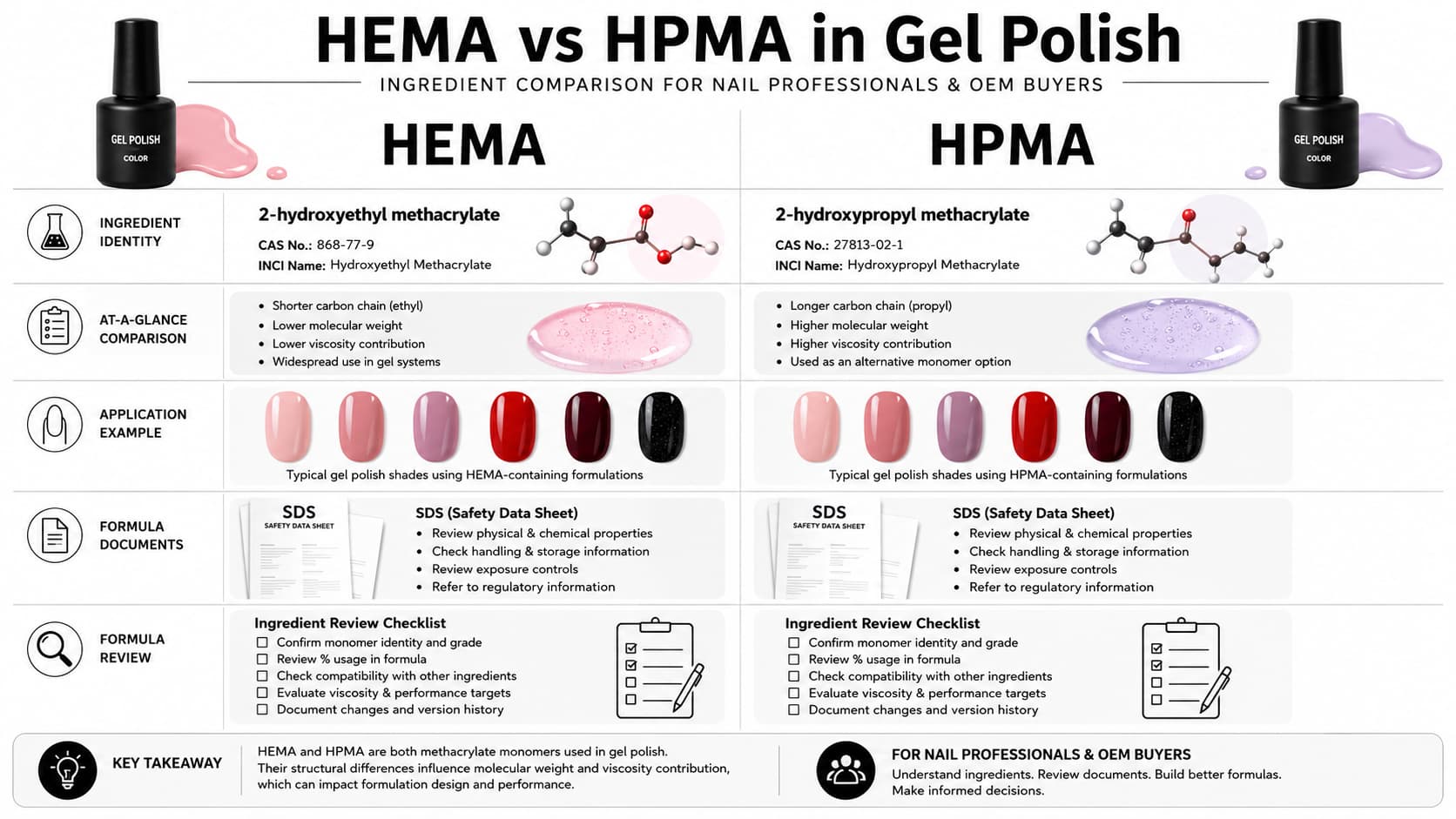
HEMA and HPMA are different methacrylate ingredients and should be reviewed separately in gel polish formula documents.
Question
Short Answer
Is HPMA the same as HEMA?
No. HPMA and HEMA are different methacrylate ingredients.
What does HEMA stand for?
HEMA stands for 2-hydroxyethyl methacrylate.
What does HPMA stand for?
HPMA usually stands for 2-hydroxypropyl methacrylate.
Are both used in nail gel systems?
They may be used in some nail gel formulas, depending on the product design.
Does HPMA-free mean HEMA-free?
Not automatically. Buyers should check the full ingredient list and formula claim documents.
Does HEMA-free mean allergy-free?
No. HEMA-free does not automatically mean allergy-free, hypoallergenic, or suitable for every user.
HEMA vs HPMA: Key Differences for Nail Gel Formulas
HEMA and HPMA may be discussed together because they are both methacrylate ingredients, but they should be reviewed separately.
Review Area
HEMA
HPMA
Full Name
2-hydroxyethyl methacrylate
Usually 2-hydroxypropyl methacrylate
Ingredient Family
Methacrylate monomer
Methacrylate monomer
Nail Product Context
Often discussed in gel polish, builder gel, base products, and professional nail systems
May appear in some gel formulas or alternative formula strategies
Common Buyer Question
What is HEMA in gel polish?
What is HPMA in gel polish?
Main Confusion
Some buyers assume all HEMA-free products are automatically low-risk
Some buyers assume HPMA is simply a safer substitute for HEMA
Correct Approach
Check formula, SDS, label, curing instructions, and market requirements
Check formula, SDS, label, curing instructions, and market requirements
Claim Risk
HEMA-free should not be expanded into allergy-free without support
HPMA-based should not be expanded into allergy-free or hypoallergenic without support
The goal is not to say that one ingredient is universally better than the other. The goal is to understand the formula, confirm product documents, and avoid unsupported claims.
Why HEMA Is Used in Some Gel Polish Formulas
HEMA may be used in some nail gel systems because it can contribute to adhesion, product handling, and the overall performance of a UV/LED-curable formula. The exact role depends on the full formula, product type, and intended use.
In nail products, HEMA may be discussed in connection with:
Adhesion to the nail plate
Product flexibility
Curing behavior
Compatibility with other formula components
Base coat or builder gel systems
Professional use requirements
Label warnings
Sensitization concerns
Ingredient disclosure
Market-specific regulation
For nail professionals, HEMA-related discussions are often linked to application technique. Avoiding skin contact, following curing instructions, using products according to directions, and understanding professional-use labels are all important.
Why HPMA Is Used in Some HEMA-Free Gel Polish Formula Discussions
HPMA may appear in some nail gel formulas or in discussions about HEMA-free alternatives. Some brands and buyers look at HPMA when they want to develop products without HEMA.
However, HPMA should not be treated as automatically safe, allergy-free, hypoallergenic, or risk-free. It is still part of the broader methacrylate ingredient family and should be reviewed in the context of the full formula.
Private label buyers should ask:
Is HPMA present in the formula?
Is the product HEMA-free, HPMA-free, or both?
Which ingredient documents support the claim?
Does the SDS match the final approved formula?
Does the label clearly match the product claim?
Are there professional-use warnings or market-specific label requirements?
Has the sample been tested for curing performance?
Is the product intended for professional use, retail use, or both?
Which market will the product be sold in?
Are additional compliance reviews needed before launch?
How Should Nail Professionals Review HEMA and HPMA Risk in Gel Polish?
This question should be handled carefully. It is better to ask: what does the formula contain, how is it intended to be used, how is it cured, what does the label say, and what documents support the product?
HEMA and HPMA should not be described with broad claims such as:
Completely safe
Allergy-free
Hypoallergenic
Non-irritating
Suitable for every user
Suitable for sensitive skin
Medical-grade
Risk-free
Safer for everyone
Risk can depend on the full formula, concentration, exposure, curing performance, application technique, skin contact, professional training, product system, and individual sensitivity. Nail products should be used according to product directions and target market requirements.
For EU-focused projects, buyers should pay close attention to ingredient restrictions, label warnings, professional-use requirements, and other cosmetic product obligations. HEMA and Di-HEMA TMHDC have specific professional-use and warning language requirements in EU cosmetic regulation. Buyers should confirm current requirements with qualified regulatory professionals before launch.
For HPMA, buyers should still review SDS and hazard information. HPMA should not be marketed as allergy-free simply because it is not HEMA.
What Nail Professionals Should Check Before Use
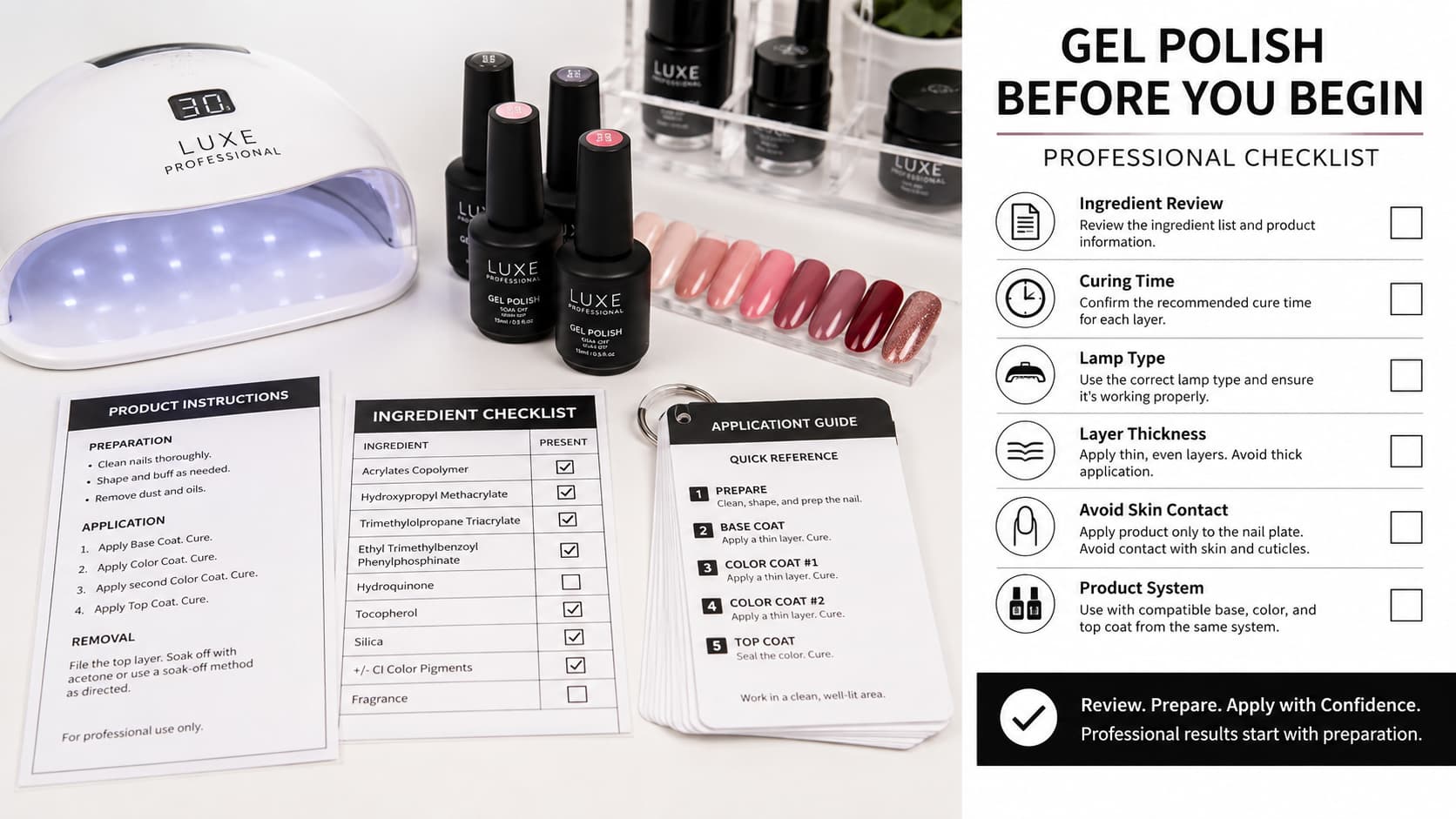
Nail professionals should review ingredient and application information before using gel polish products, especially when clients ask about HEMA-free, HPMA-based, low-odor, or other ingredient claims.
Nail professionals should review ingredient information, curing instructions, lamp type, layer thickness, product system, and skin contact precautions before use.
Before use, nail professionals should check:
Product type
Ingredient list, if available
SDS or safety information, if available
Whether the product contains HEMA, HPMA, or other methacrylates
Whether the product is labeled for professional use
Required curing lamp type
Curing time
Layer thickness
Base coat and top coat compatibility
Whether skin contact should be avoided
Whether the product should be used only on the nail plate
Removal instructions
Storage instructions
Client sensitivity history, if relevant to salon policy
Nail professionals should avoid flooding the cuticle or surrounding skin. Product contact with skin may increase sensitivity concerns, especially with uncured or under-cured gel. Complete curing and correct application are important parts of professional nail service quality.
If irritation, discomfort, or sensitivity concerns appear, product use should stop and the client should seek suitable professional advice.
What Private Label Buyers Should Confirm Before OEM Production
Private label buyers should not approve a HEMA, HEMA-free, HPMA-based, or HPMA-free gel polish project only from a product name or marketing description. They should request project-specific confirmation before sampling, packaging, or bulk production.
Before OEM production, buyers should confirm:
Product type
Target country or sales market
Intended user group
Professional use or retail use positioning
Whether HEMA is present
Whether HPMA is present
Whether Di-HEMA TMHDC is present
Whether other methacrylates are present
Ingredient information
SDS
Product specification sheet
Formula claim confirmation
Curing requirements
Sample testing plan
Label wording
Warning statements
Packaging artwork
Approved sample record
Color number list
Batch consistency requirements
Test reports, if required
CPNP-related documents for EU projects, if applicable
Responsible person or importer requirements, if applicable
The buyer should also confirm who is responsible for final market compliance. A manufacturer may provide product documents, but the brand owner, importer, distributor, or responsible person may still have market-specific obligations.
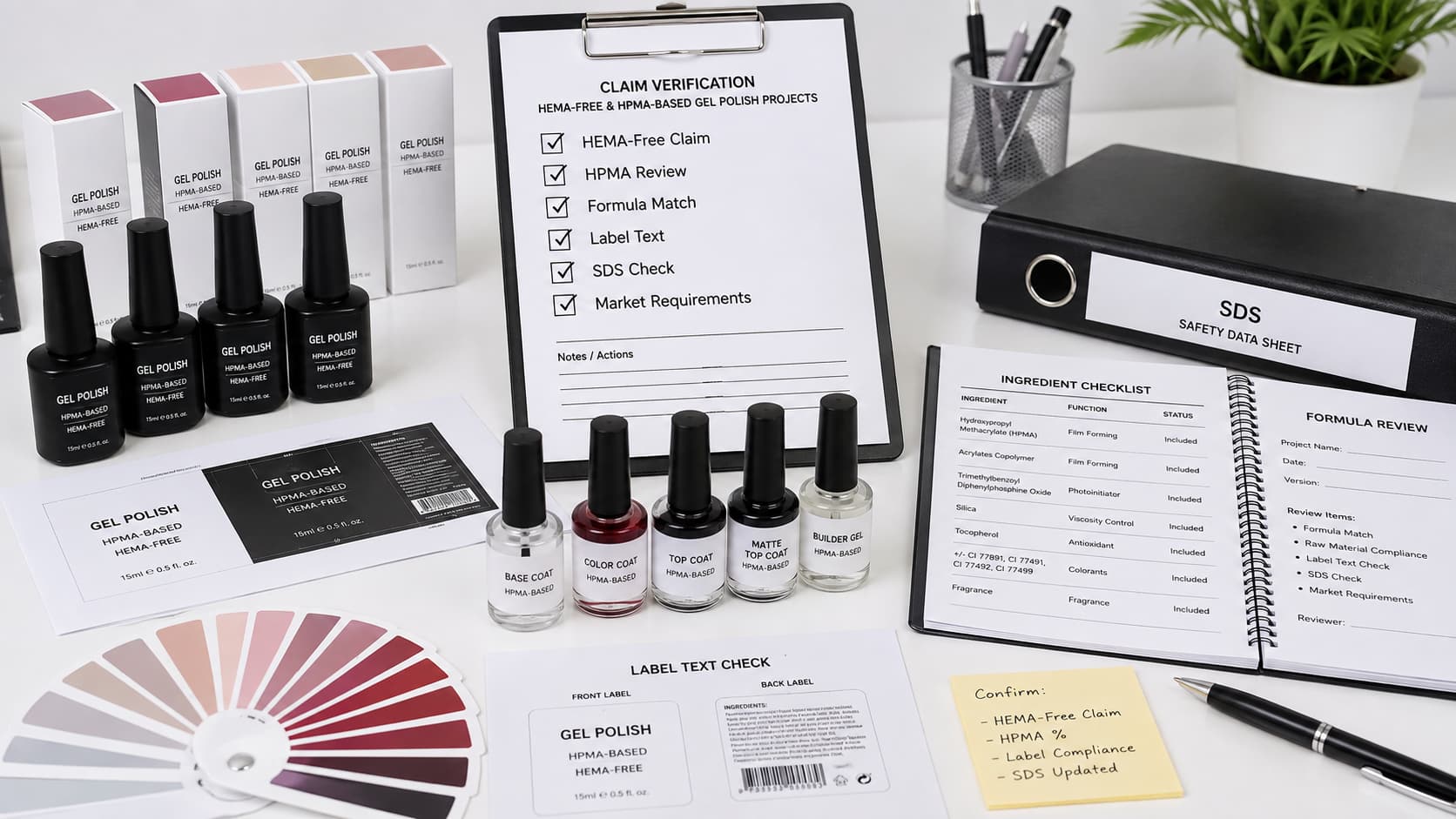
HEMA-Free and HPMA-Based Claims: What Needs Documentation?
HEMA-free, HPMA-free, HPMA-based, low-odor, vegan, cruelty-free, professional use, and other claims should be handled as formula- and document-based claims.
Claims such as HEMA-free or HPMA-free should match the final formula, SDS, ingredient information, label text, and target market requirements.
A claim should match:
The final approved formula
Ingredient information
SDS
Product specification sheet
Label text
Packaging artwork
Target market requirements
Approved sample record
Batch or SKU information, if applicable
For example, if a product is described as HEMA-free, buyers should confirm that HEMA is not present in the final approved formula. If a product is described as HPMA-free, buyers should confirm that HPMA is not present in the final approved formula. If a product is described as HEMA-free but contains HPMA or another methacrylate, the label and marketing language should not suggest that the product is allergy-free.
Buyers should avoid claim shortcuts such as:
HEMA-free = allergy-free
HPMA-based = safer
Methacrylate-free = proven without full formula review
Low-odor = low-risk
Professional use = suitable for everyone
Retail use = no training needed
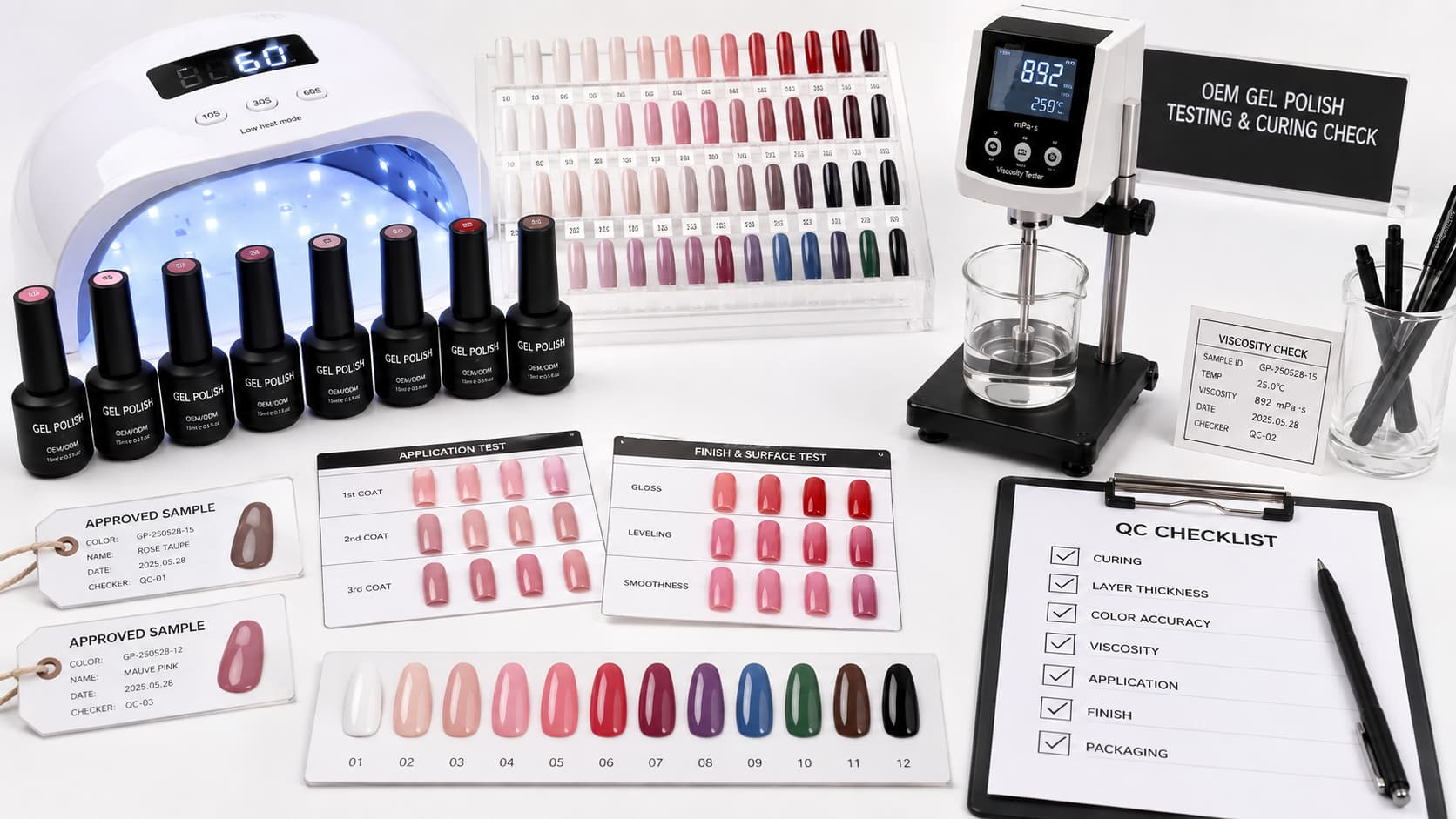
Sample Testing and Curing Checks for Nail Gel Products
Ingredient review is important, but formula performance also needs sample testing. A gel polish formula may look suitable on paper but still need curing, color, texture, and packaging checks before production.
Gel polish samples should be checked for curing performance, layer thickness, color accuracy, viscosity, application, finish, packaging, and batch consistency.
Testing Area
What to Check
Curing Performance
Whether the gel cures properly under the intended UV/LED lamp conditions.
Layer Thickness
Whether the product cures as expected when applied at the recommended thickness.
Color Accuracy
Whether the sample matches the approved color, color chart, or reference shade.
Viscosity
Whether the texture fits the intended use and product positioning.
Application
Whether the product applies smoothly and evenly.
Finish
Whether the final appearance matches the expected glossy, matte, jelly, shimmer, glitter, or cat eye effect.
Adhesion
Whether the product works with the recommended base and top coat system.
Soak-Off Performance
Whether removal performance fits the intended use case, if applicable.
Odor Expectations
Whether odor expectations are discussed, if relevant to the project.
Packaging Accuracy
Whether bottles, caps, labels, boxes, and color numbers match the approved plan.
Batch Consistency
Whether production can be checked against approved samples and color standards.
Buyers should not use one sample result to make broad claims across every future formula, shade, effect, or batch. Testing should be product-specific.
How Hanyinails Supports Nail Gel OEM Ingredient Discussions
Hanyinails is a professional nail products manufacturer focused on professional nail gel items. The company supports OEM customization and one-stop customization for nail brands, salons, distributors, wholesalers, retailers, and beauty businesses.
For ingredient-related OEM projects, buyers can share product type, target market, formula expectations, claim requirements, packaging plans, sample testing needs, and documentation needs during RFQ discussion.
Verified Hanyinails manufacturing and customization capabilities include:
12 years of OEM customization experience
10 production lines
60 production machines
8 QA/QC inspectors
8000㎡ workshop
2000 new colors per year
More than 50 styles of stock bottles and caps
More than 600 styles of customized bottles and caps
More than 100 different styles of kit boxes
More than 200 styles of color chart design
Participation in exhibitions in more than 10 countries every year
Buyers planning private label packaging can review the Create Your Brand page.
Buyers reviewing documentation can review the Certifications page.
For larger or ongoing production needs, buyers can review the Contract Manufacturing page.
Discuss a Nail Gel Formula or Private Label Gel Polish Project
Share your product type, target market, formula expectations, claim requirements, packaging needs, sample testing plan, document needs, and launch schedule with Hanyinails for project-specific discussion.
Common Mistakes When Discussing HEMA and HPMA in Gel Polish
Mistake 1: Assuming HPMA Is the Same as HEMA
HPMA and HEMA are different ingredients. Buyers should check full ingredient names, SDS, formula documents, and label text instead of assuming that similar names mean the same ingredient.
Mistake 2: Treating HEMA-Free as Allergy-Free
HEMA-free does not automatically mean allergy-free, hypoallergenic, or suitable for every user. A HEMA-free formula may still contain other methacrylates or ingredients that require careful review.
Mistake 3: Calling HPMA Automatically Safer
HPMA should not be described as automatically safer or risk-free. Buyers should review the full formula, product documents, curing performance, and target market requirements.
Mistake 4: Ignoring Curing Instructions
Uncured or under-cured gel may increase product performance and sensitivity concerns. Nail professionals should follow curing instructions, recommended layer thickness, and product system guidance.
Mistake 5: Printing Claims Before Document Review
Labels, boxes, color charts, product pages, and marketplace listings should not use claims such as HEMA-free, HPMA-free, low-odor, professional use, or vegan before documents are reviewed.
Different markets may have different cosmetic product requirements, professional-use warnings, ingredient restrictions, importer obligations, and label rules. Buyers should confirm the target market before launch.
FAQ: HEMA vs HPMA in Gel Polish
Is hydroxypropyl methacrylate the same as HEMA?
No. Hydroxypropyl methacrylate is not the same as HEMA. HEMA stands for 2-hydroxyethyl methacrylate, while HPMA usually stands for 2-hydroxypropyl methacrylate. They are different methacrylate ingredients.
What is HPMA in gel polish?
HPMA usually refers to 2-hydroxypropyl methacrylate. It may be used in some nail gel formulas, depending on the product design. Buyers should check the full ingredient list, SDS, and formula claim documents before using HPMA-related claims.
What does HPMA stand for?
HPMA usually stands for 2-hydroxypropyl methacrylate. Because abbreviations can vary by supplier or document, buyers should confirm the full ingredient name in the SDS or ingredient list.
What is HEMA in nail products?
HEMA stands for 2-hydroxyethyl methacrylate. In nail products, HEMA may be used in some gel systems to support adhesion, handling, or formula performance, depending on the product.
What does HEMA stand for in gel polish?
HEMA stands for 2-hydroxyethyl methacrylate. It is a methacrylate ingredient that may appear in some gel polish or nail gel formulas.
Is HPMA-free gel polish the same as HEMA-free gel polish?
No. HPMA-free and HEMA-free are different claims. HPMA-free means HPMA is not present in the final approved formula. HEMA-free means HEMA is not present in the final approved formula. Buyers should confirm both claims with formula documents.
Are HEMA-free gel polishes allergy-free?
No. HEMA-free gel polish should not be described as allergy-free unless suitable evidence supports that claim. A HEMA-free product may still contain other methacrylates or ingredients that require careful use and document review.
What documents should private label buyers request for HEMA or HPMA formulas?
Private label buyers should request ingredient information, SDS, product specifications, formula claim confirmation, curing requirements, label files, approved sample records, test reports if required, and target market documents such as CPNP-related files for EU projects if applicable.
Looking for a creative, premium, and reliable nail product manufacturer?
Whether you're an Amazon seller, Shopify store owner, chain store buyer, brand owner, distributor, wholesaler, or nail supply retailer — Hanyinails is your trusted partner for custom and wholesale nail solutions.
Address: 303 West Gate, Block A, South China International Innovation Industrial Park, Foluo Road, Luocun, Nanhai District, Foshan, Guangdong Province, China.
We specialize in OEM & ODM services, offering tailored formulations, vibrant colors, and premium packaging. Contact us today to discuss your brand’s needs and get a personalized quote!
We specialize in OEM & ODM services, offering tailored formulations, vibrant colors, and premium packaging. Contact us today to discuss your brand’s needs and get a personalized quote!
We specialize in OEM & ODM services, offering tailored formulations, vibrant colors, and premium packaging. Contact us today to discuss your brand’s needs and get a personalized quote!





Hanyinails
Hanyinails
Hanyinails
Hanyinails