


What Is 3D Gel Nail Art?
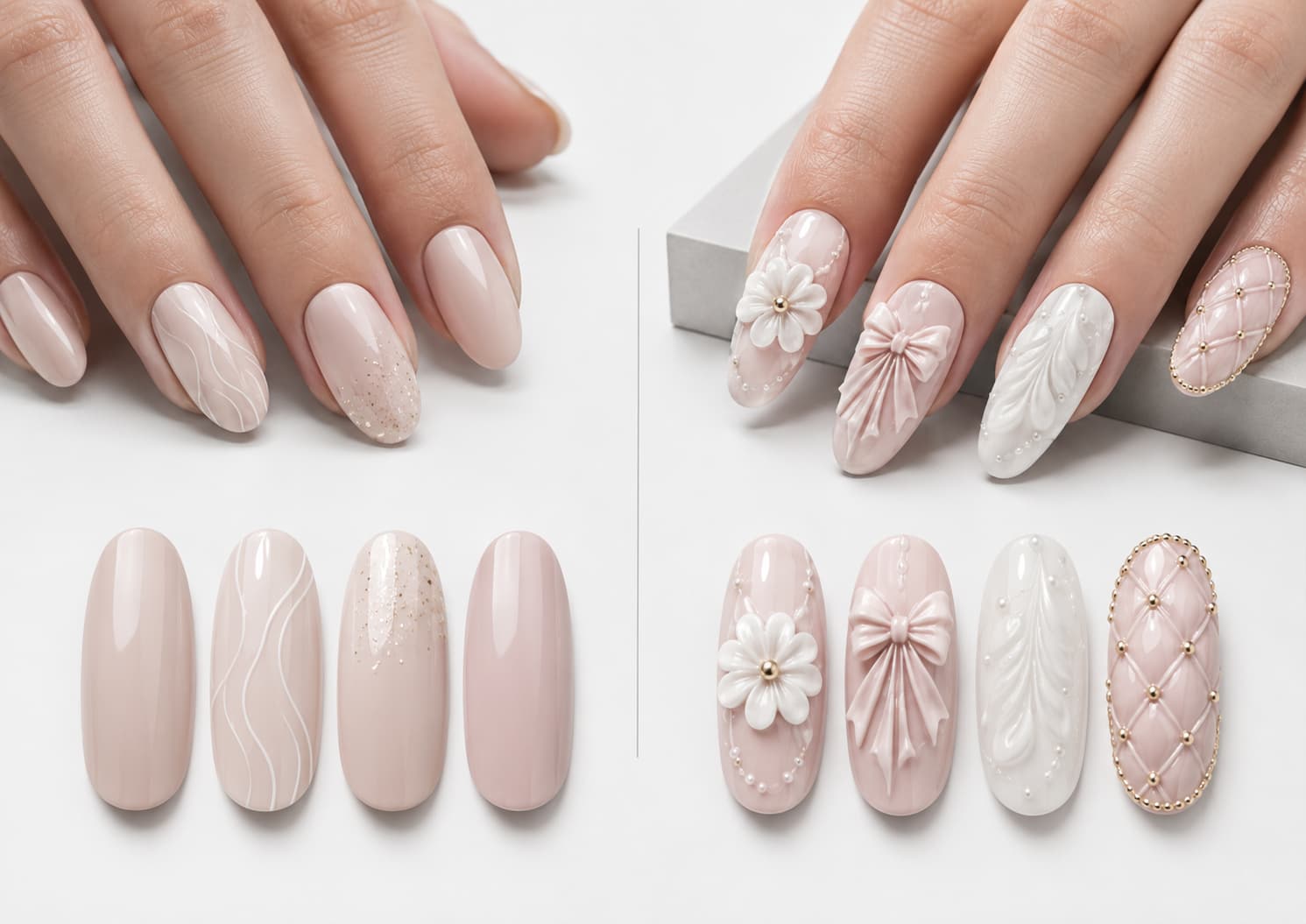
3D gel nail art is a nail enhancement technique built around gels that hold their shape after application. Instead of flowing flat like standard gel polish, the gel is picked up with a brush or silicone tool and molded directly on the nail. It is then cured under a UV or LED lamp to lock the shape in place.
Because the gel does not self-level, nail artists can build visible height and texture. A raised petal, ridge, bow, shell pattern, or bead can sit above the nail surface rather than appearing as a flat painted image.
This physical depth is what separates 3D gel nail art from ordinary nail art. The finished design has a surface texture that can be seen and felt, not only a contrast in color.
What Are Sculpted Gel Nails?
The term sculpted gel nails can have more than one meaning in the nail industry. It may describe a nail extension or reinforced nail structure created with builder gel or hard gel. It may also describe raised decorative artwork shaped with 3D sculpting gel on top of a completed nail.
In this guide, sculpted gel nails refers primarily to surface designs created with a moldable, non-self-leveling gel. Because suppliers may use the same term for different product categories, salons and private label buyers should confirm whether a product is intended for nail structure, surface decoration, or both.
What Is the 3D Gel on Nails Called?
The gel used for raised nail art may be sold under several names, including:
- 3D sculpting gel
- Sculpture gel
- Modeling gel
- Embossed painting gel
- Clay gel
- Gum gel
These terms often overlap in the market, but they are not always exact synonyms. Texture, flexibility, pigmentation, curing behavior, and intended use can vary by formula. Buyers should compare product specifications and samples rather than relying on the product name alone.
3D Gel vs Regular Gel Polish vs Builder Gel
Understanding the differences between these products helps nail technicians choose the correct gel for color coverage, structural reinforcement, decoration, adhesion, or detailed sculpting.
In practical terms, a gel that spreads and levels on its own is usually not suitable for precise sculpting. A true sculpting gel should hold a peak, petal, ridge, or molded detail until it is cured.
Types of Gel Used for 3D Nail Art
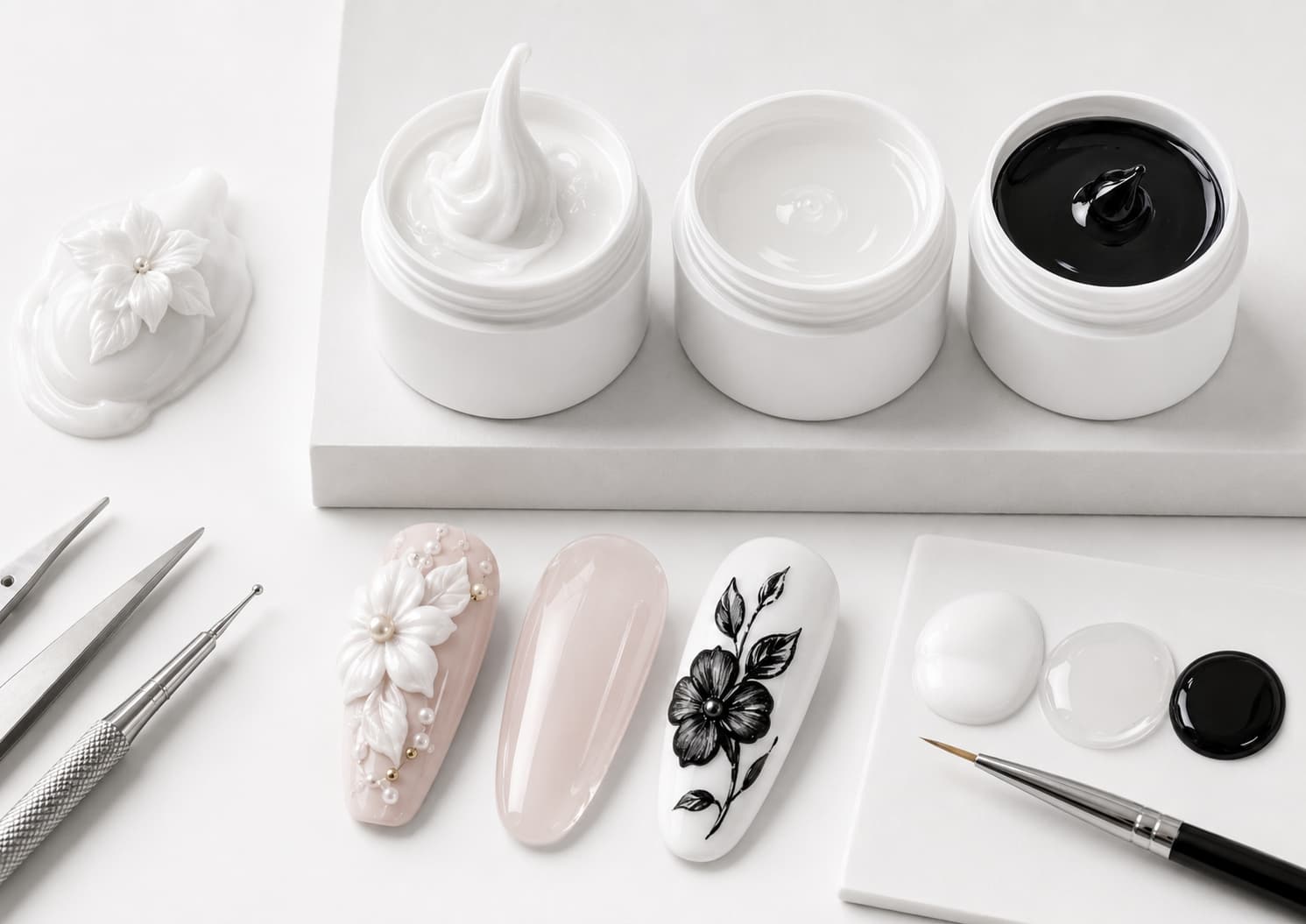
Rather than treating every 3D-related product as interchangeable, it is more accurate to group each gel by what it is designed to do.
Salons and product buyers can explore the professional 3D nail art gel collection to compare products developed for raised lines, sculpted details, and decorative nail effects.
What Designs Can Be Created With 3D Gel?
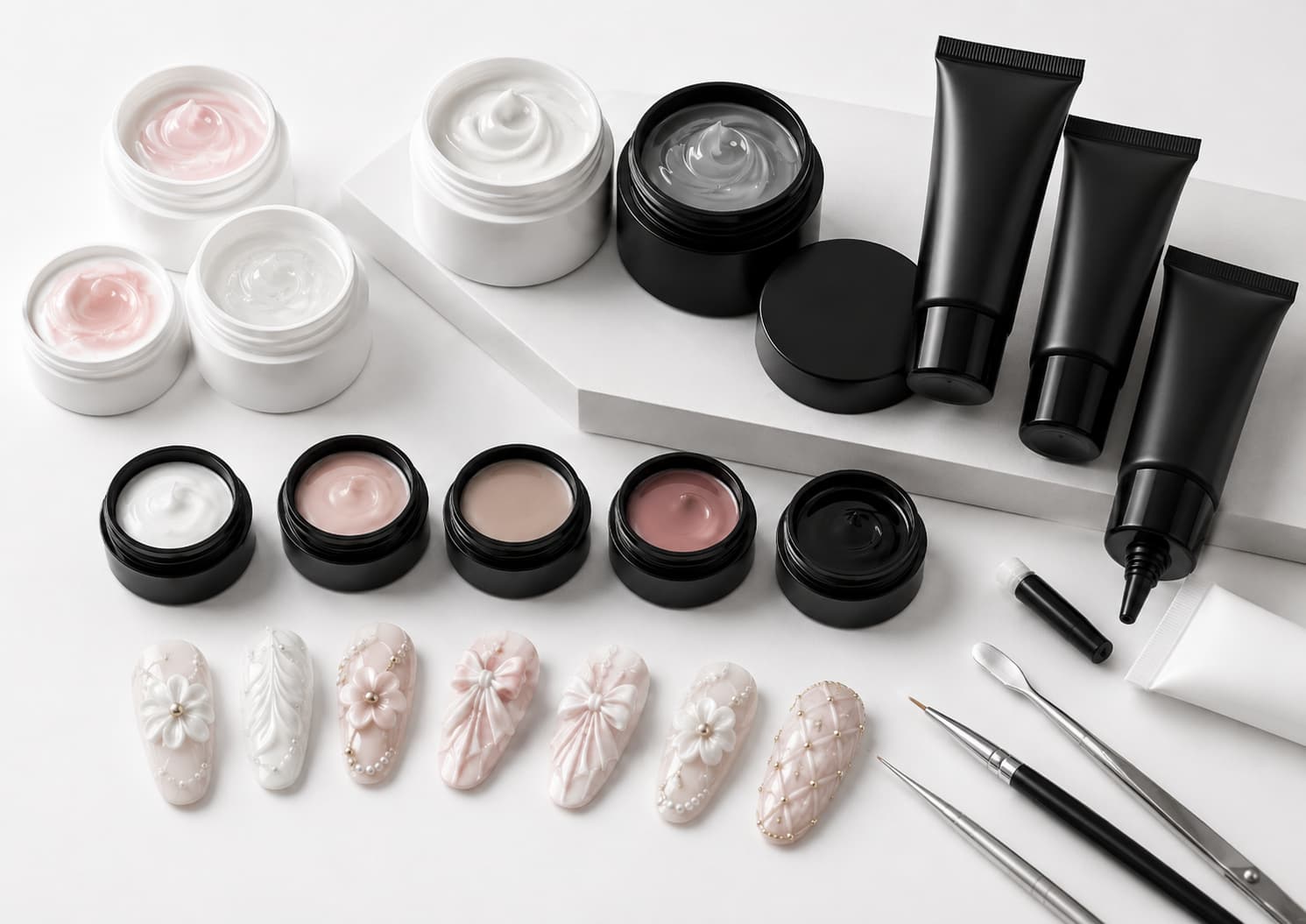
3D gel nail art can be used for a wide variety of salon and editorial designs, including:
- 3D flowers and individual petals
- Raised linework and abstract relief
- Shell, pearl, and ocean-inspired textures
- Bows and decorative ribbons
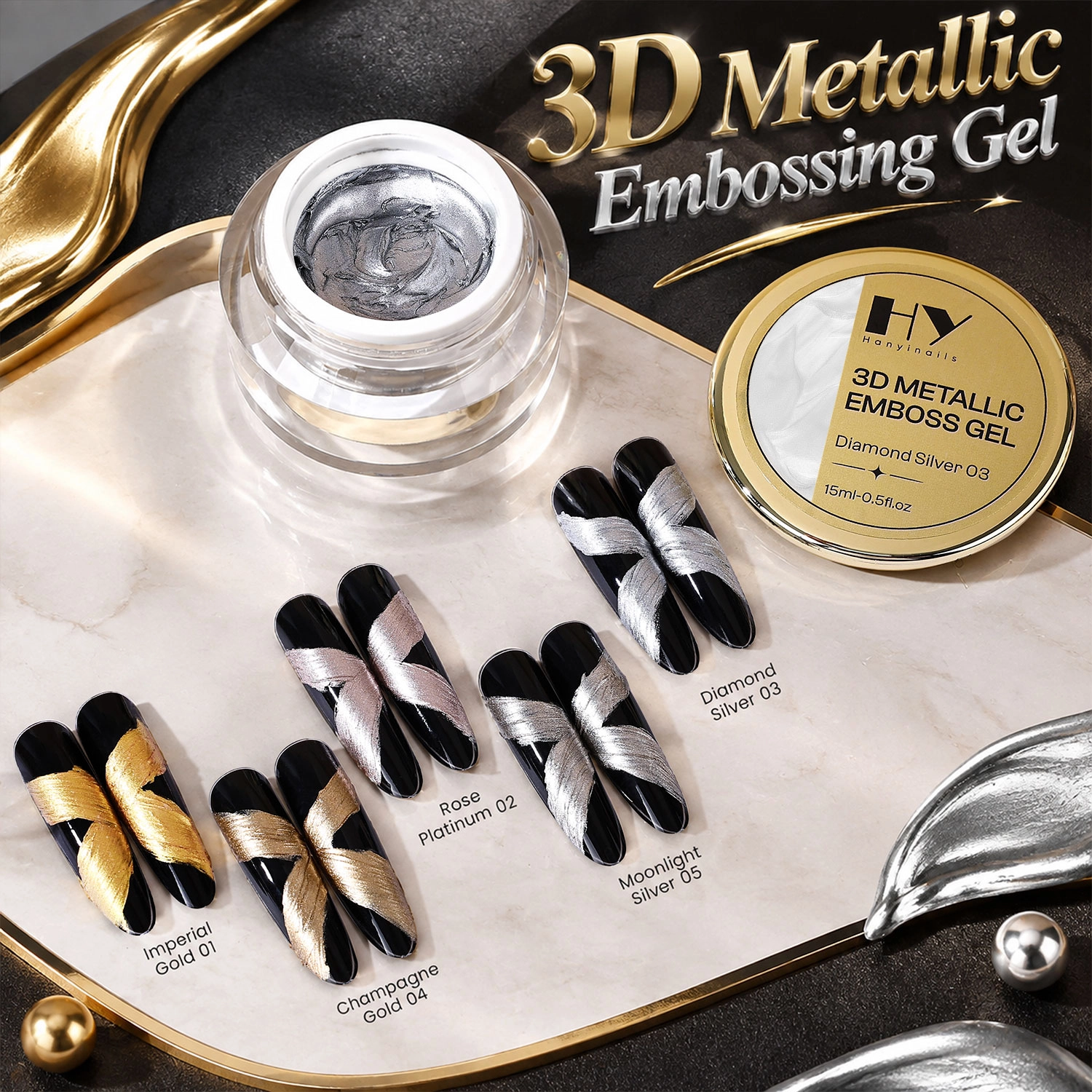
- Chrome bubbles and metallic raised details
- Sweater-knit and embossed patterns
- Water droplets and transparent effects
How Is 3D Gel Nail Art Applied?
At a high level, the application process includes the following steps:
- Prepare the natural nail or enhancement surface and apply the appropriate base product.
- Apply and cure a color layer if the design will sit over gel polish.
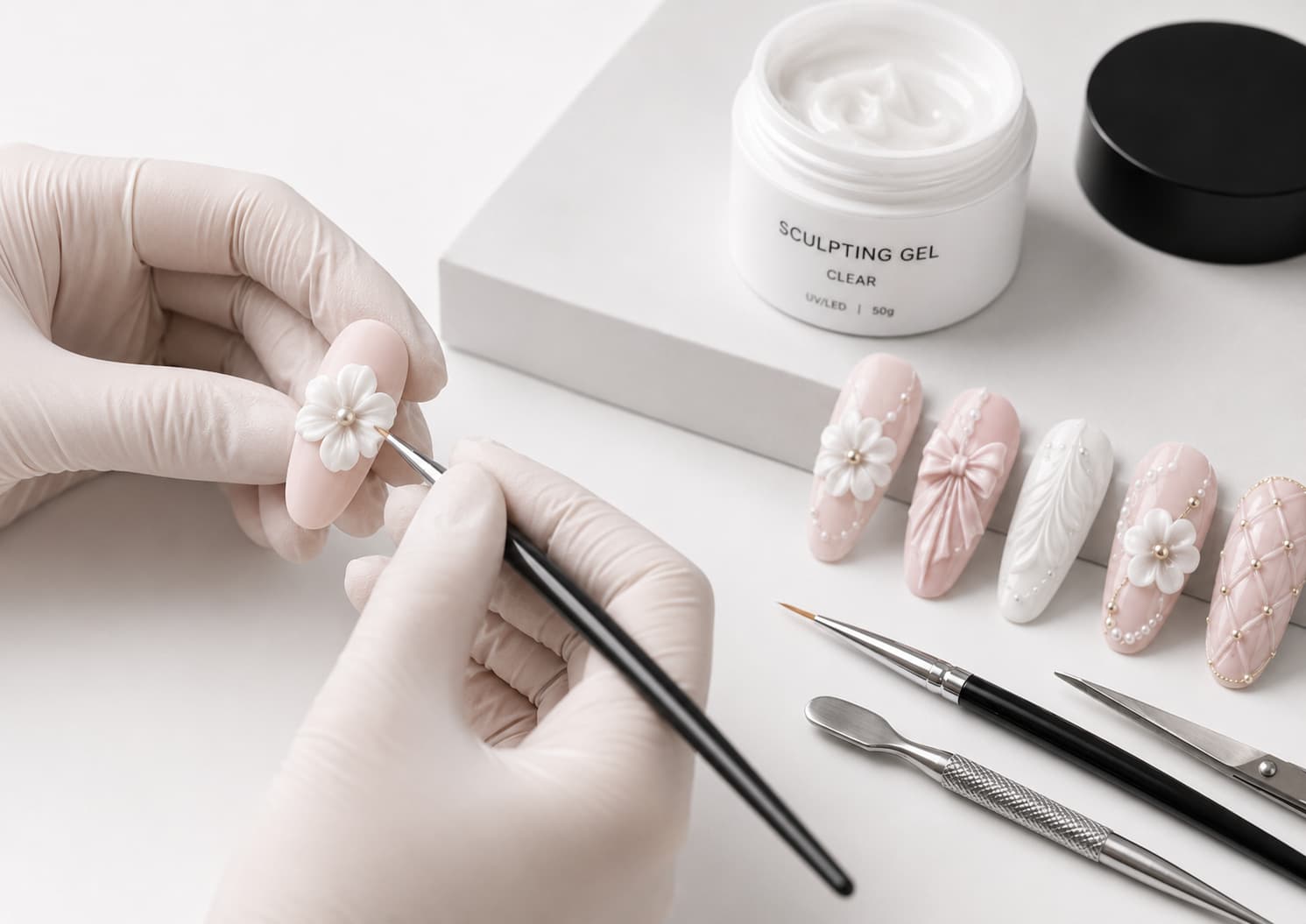
- Pick up a controlled amount of sculpting gel and mold the design in thin sections.
- Cure between layers or design sections instead of building one excessively thick piece at once.
- Add linework, pigment, chrome, or other decorative details when required.
- Follow the formula-specific instructions for sealing the design. Some designs are fully top-coated, while highly textured or no-wipe designs may only require the base and edges to be sealed.
Consistent results depend on cure depth, layer thickness, tool control, lamp compatibility, and the physical properties of the selected formula. For a more detailed workflow, see the complete guide to using 3D sculpting gel.
Common Product and Application Problems
- The gel collapses before curing: Too much product may have been picked up at once, or the gel may be too soft for the intended design height.
- The design remains soft inside: The sculpted section may be too thick for the lamp and formula combination. Build thinner sections and cure each layer according to the product instructions.
- The design cracks or lifts: The nail may not have been prepared correctly, the base may be incompatible, or the edges may not have been securely sealed.
- The tool sticks to the gel: Use a clean silicone tool and, only when recommended for the formula, a compatible slip solution or cleanser to reduce dragging.
- Chrome does not apply evenly: The surface may be under-cured, over-cured, or too tacky for the selected chrome application method.
How to Choose 3D Gel for Salon Use
For nail technicians choosing a product for daily salon use, the most important differences include:
- Shape retention: Does the gel hold fine detail without slumping before curing?
- Pigmentation: Does it provide opaque coverage in one application, or does the design require several layers?
- Cure depth: Can the center of the sculpted piece cure fully under the salon's intended lamp?
- Tool control: Does the gel release cleanly from brushes and silicone tools?
- Bubble resistance: Does the surface remain smooth when the product is picked up and shaped?
- Wear durability: Does the raised design resist cracking, lifting, and daily contact during a normal manicure wear cycle?
How Nail Brands Should Source 3D Gel
For salons, distributors, nail product brands, and private label buyers, evaluating a manufacturer requires more than checking color and packaging. Buyers should request information that helps confirm whether the product can perform consistently in the intended market.
A practical sourcing checklist includes:
- Formula and batch samples for shape-retention, pigmentation, and curing tests
- Recommended UV or LED lamp compatibility and curing instructions
- MSDS and relevant safety or compliance documentation
- Availability of HEMA-free or TPO-free options for applicable product programs
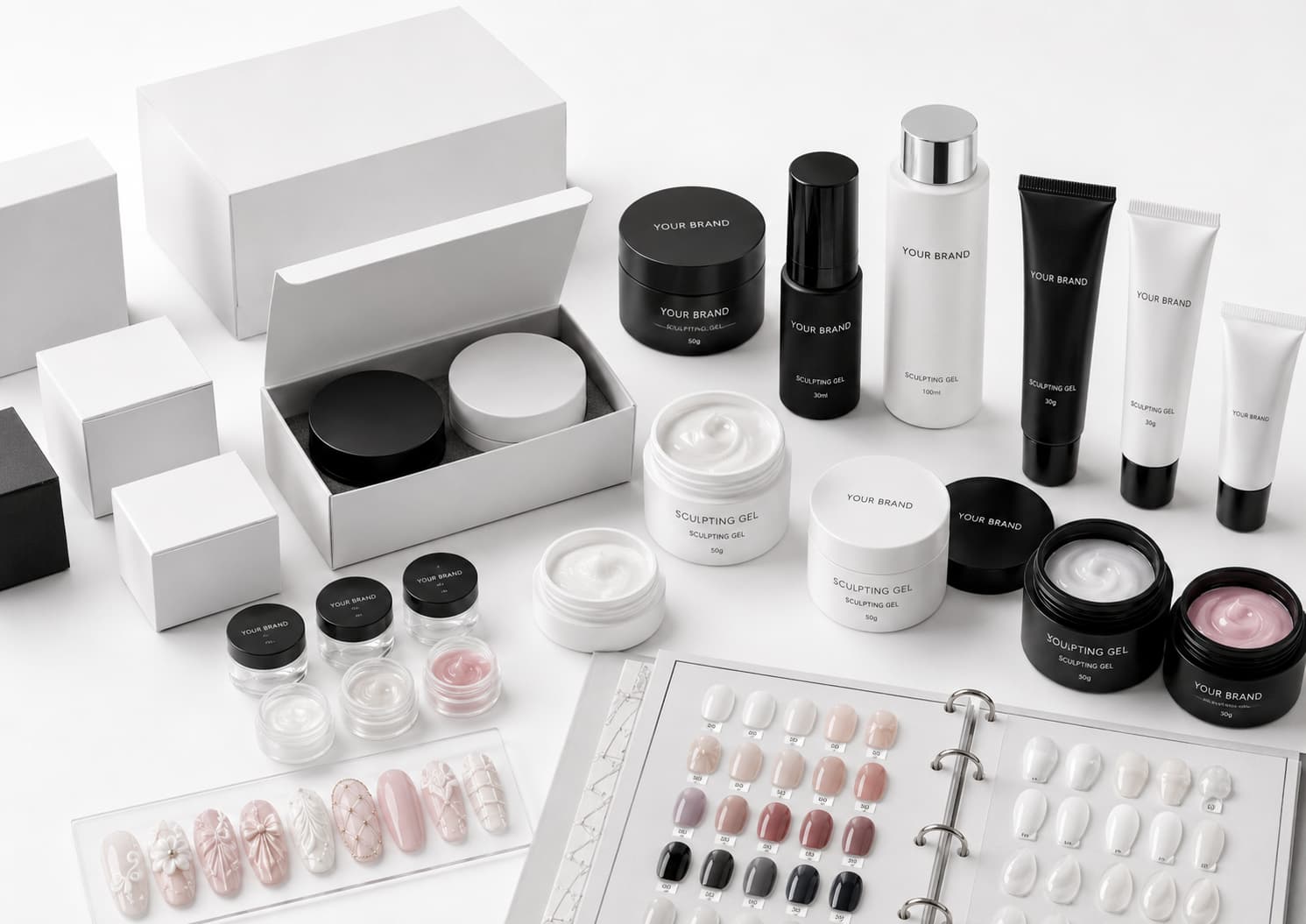
- Packaging, labeling, color-card, and kit customization options
- Minimum order quantity and production lead time
- Technical support for product testing, application, and private label development
Consistent viscosity, stable pigmentation, controlled curing performance, and reliable batch reproduction are especially important for private label products. These characteristics affect both technician experience and the number of product complaints a brand may receive after launch.
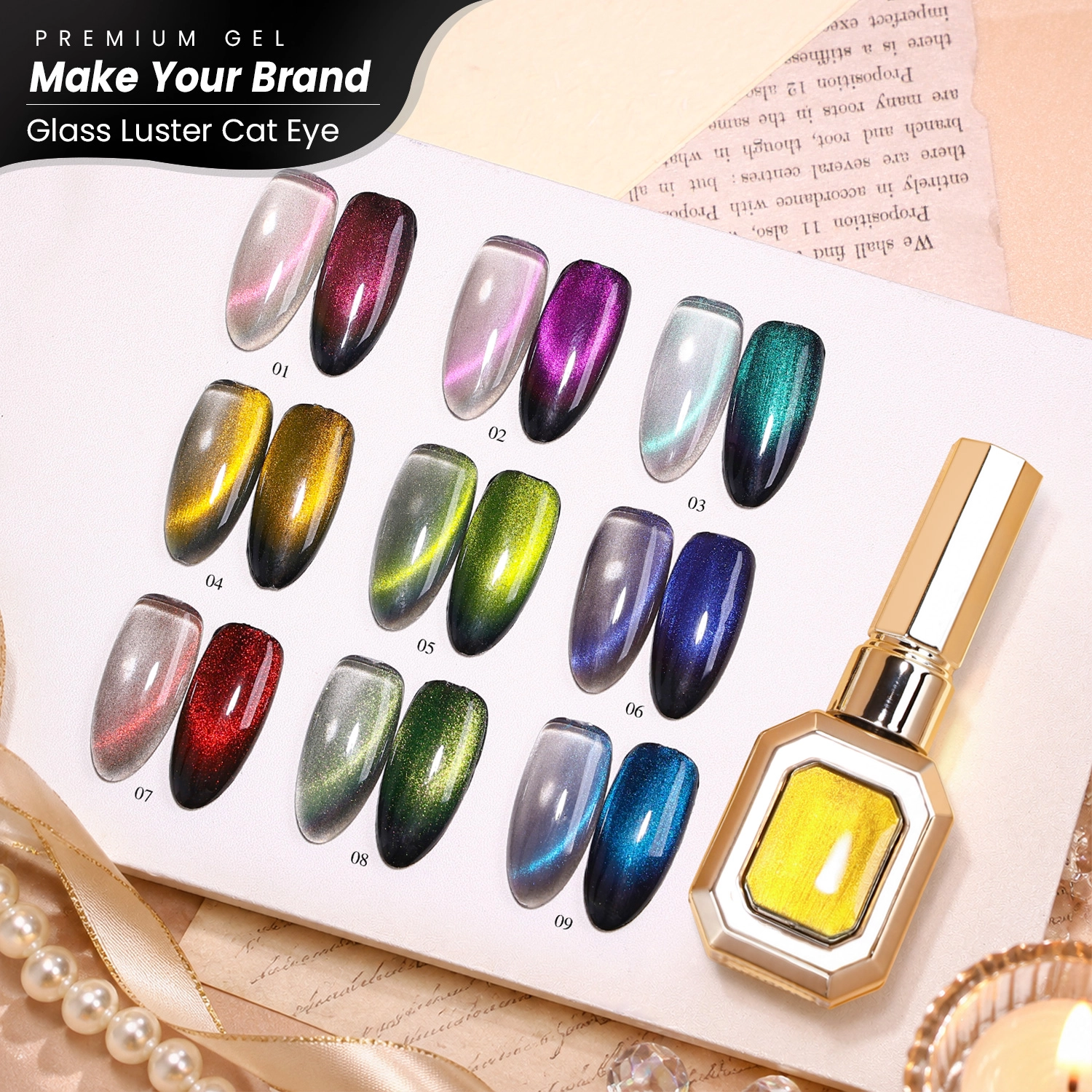
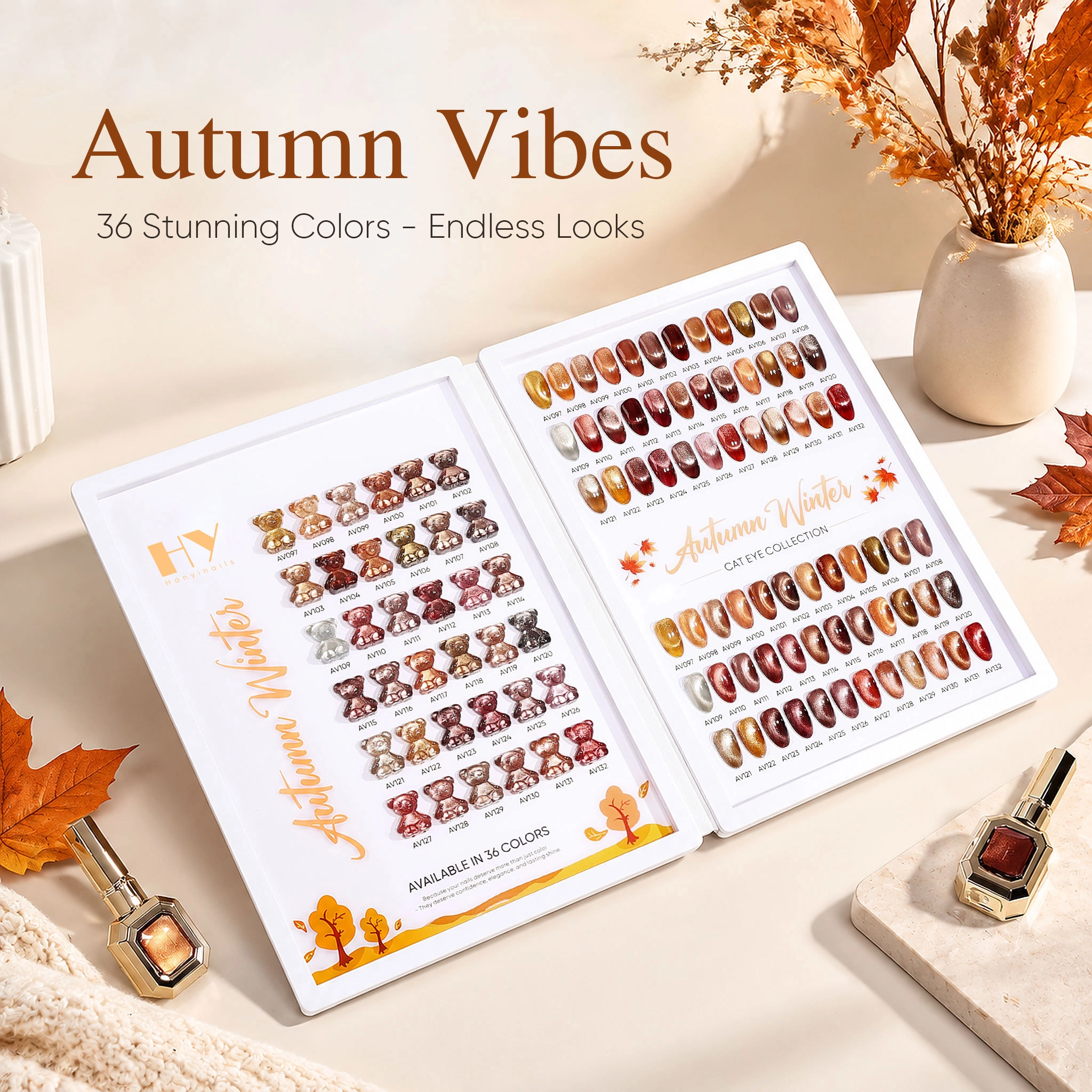
Hanyinails supports salons, distributors, and nail brands with 3D gel product development and OEM/ODM services. Available options depend on the selected formula, packaging format, target market, and project requirements. Buyers can review Hanyinails' gel nail product certifications and documentation, or learn how to create your own 3D nail art gel brand.



Hanyinails
Hanyinails
Hanyinails
Hanyinails