



NAIL PRODUCT EDUCATION / TECHNICAL GUIDE
QUICK ANSWER
True UV/LED-curable gel nail polish cannot be reliably cured without a compatible curing lamp. Air drying, ice water, fans, quick-dry sprays, and ordinary sunlight cannot replace the light exposure required by the manufacturer's curing system.
If you do not have a suitable lamp, the practical alternative is to choose a nail product specifically formulated to dry without one, such as air-dry gel-like nail polish or traditional nail lacquer.
If you have already applied UV/LED-curable gel polish but cannot cure it, stop the application. Do not leave the uncured material on your nails expecting it to dry naturally, apply more products over it, or attempt an improvised curing method. Avoid skin contact and promptly follow the manufacturer's instructions for safely handling or removing the uncured material.
The important distinction is between drying and curing. Ordinary nail polish generally forms its coating as solvents evaporate. Professional light-curable gel polish uses photoinitiated polymerization to form a hardened coating.
Products marketed with terms such as gel-like, gel effect, or no UV needed may use different technology from professional UV/LED-curable gel systems.
This guide explains which methods do not work, how to identify no-lamp products, what to do when a curing lamp is unavailable, and how salons and nail brands can evaluate suitable alternatives.
1. Can You Dry Gel Nail Polish Without UV Light?
Whether a nail polish can dry without UV light depends on the product's actual formulation and instructions.
There are two fundamentally different product categories that consumers often confuse:
- UV/LED-curable gel nail polish: Requires a compatible curing lamp and the manufacturer's specified exposure procedure.
- Air-dry gel-like nail polish: Designed to produce a gel-inspired appearance without requiring a curing lamp.
Traditional nail lacquer is another no-lamp option, although it may not be marketed as gel-like.
The problem is that the word gel does not always identify the product's underlying technology.
A bottle described as gel effect may be an ordinary air-dry lacquer, while a professional soak-off gel polish may require a specific UV/LED curing system.
Quick Product Identification Table
| Product Description | Typical Product Type | Lamp Required? | What to Check |
|---|---|---|---|
| UV gel polish | Light-curable gel | Yes | Compatible lamp and curing instructions |
| LED gel polish | Light-curable gel | Yes | Manufacturer-approved LED curing system |
| Soak-off gel polish | Usually light-curable gel | Generally yes | Product-specific curing and removal instructions |
| Gel-like nail polish | Often air-dry lacquer | Usually no | Actual product directions |
| No-UV gel-effect polish | No-lamp cosmetic coating | No, if specifically formulated as such | Label and application procedure |
| Traditional nail lacquer | Air-dry lacquer | No | Drying and recoating instructions |
Professional takeaway: Do not determine curing requirements from the product name alone. Read the label, technical information, and manufacturer's application instructions.
Does LED Light Count as UV Light?
A common misconception is that an LED nail lamp contains no ultraviolet light.
LED refers to the light-emitting diode technology used to produce light. UV refers to a range of wavelengths. These terms describe different characteristics and should not be treated as mutually exclusive.
Many professional LED nail curing lamps emit UVA radiation, near-violet visible light, or a combination of wavelengths, depending on their design.
The relevant question is not simply whether the lamp is marketed as UV or LED.
It is whether the lamp delivers the wavelength range, irradiance, and exposure required by the specific gel formulation.
For a detailed explanation, read our professional guide to UV and LED gel polish curing.
2. Why True Gel Polish Cannot Air-Dry Like Regular Nail Polish
To understand why gel polish cannot simply dry overnight, it helps to distinguish two different coating processes.
Regular Nail Polish: Drying Through Solvent Evaporation
Traditional nail lacquer commonly contains film-forming ingredients dissolved or dispersed in volatile solvents.
After application, the solvents gradually evaporate, allowing the coating to form and harden.
Drying performance depends on the formulation, applied thickness, ventilation, surrounding conditions, and whether a compatible base or top coat is used.
A surface may feel dry before the coating is sufficiently set to withstand normal handling.
This is why thin layers and the manufacturer's recommended drying intervals matter.
Professional Gel Polish: Light-Initiated Polymerization
Professional UV/LED-curable gel polish operates differently.
The formulation typically contains reactive components and photoinitiators that respond to particular wavelengths of light.
When exposed to the specified curing equipment, the photoinitiators initiate polymerization, transforming the applied gel into a crosslinked coating.
Successful curing depends on the product formulation and its validated application conditions, including:
- Compatible light wavelengths.
- Appropriate irradiance and exposure duration.
- Recommended application thickness.
- Suitable hand placement and lamp condition.
- The manufacturer's specified curing procedure.
A thicker application or unsuitable lamp can affect the outcome even if the surface appears firm.
Surface hardness is not a reliable independent test of complete polymerization.
Why Waiting Longer Does Not Solve the Problem
Unlike ordinary lacquer, light-curable gel polish does not primarily form its intended cured coating through solvent evaporation.
Leaving it exposed to room air for several hours cannot substitute for the required photoinitiated curing process.
The material may change in appearance or consistency under certain environmental conditions, but this does not establish that it has reached the manufacturer's required degree of cure.
Therefore, if a UV/LED-curable product has not been exposed to a compatible curing system, it should not be treated as an adequately cured manicure.
Drying vs. Curing: The Essential Difference
| Factor | Air-Dry Nail Lacquer | UV/LED-Curable Gel Polish |
|---|---|---|
| Main coating process | Primarily solvent evaporation and film formation | Light-initiated polymerization |
| Requires a curing lamp | No | Yes |
| Can room air complete the intended process? | Yes, according to product directions | No, not as a substitute for the specified light cure |
| Can a fan help? | May assist suitable air-dry systems | Cannot replace polymerization |
| Can a quick-dry product help? | Sometimes, if compatible | Cannot cure the underlying uncured gel |
| Main technical consideration | Film formation and drying conditions | Formula-lamp compatibility and curing procedure |
This distinction explains why methods promoted as shortcuts for ordinary nail polish should not automatically be applied to professional gel systems.
3. Gel Polish vs. Gel-Like Polish: What Actually Needs a Lamp?
The market uses overlapping terminology for products with different curing and drying requirements.
For consumers, this creates confusion. For salons and nail brands, it can lead to incorrect application instructions, unsuitable equipment recommendations, and unrealistic expectations about product performance.
UV/LED-Curable Gel Polish
Professional gel polish is designed to form its intended coating under specified light-curing conditions.
Its performance depends on the complete product system, including compatible base products, color gels, top coats, and curing equipment where required.
Professional buyers should request product-specific instructions rather than assuming that any UV/LED lamp can cure every gel polish.
Air-Dry Gel-Like Nail Polish
Air-dry gel-like polishes are intended to imitate certain visual characteristics of gel manicures, such as shine, smoothness, or a fuller-looking finish.
They do not necessarily use the same chemistry as light-curable salon gel polish.
Many are lacquer-based systems with a dedicated color and top coat combination. Others may use different film-forming ingredients or product-specific technologies.
The critical point is that the manufacturer explicitly identifies the product as suitable for use without a curing lamp.
Traditional Nail Lacquer
Traditional nail lacquer is another valid option for users who do not want to use a UV/LED lamp.
It can provide a wide range of colors and finishes without a light-curing process.
Its drying behavior and wear performance should be evaluated according to the specific product.
Product Comparison for Salons and Nail Brands
| Evaluation Area | UV/LED Gel Polish | Air-Dry Gel-Like Polish | Traditional Nail Lacquer |
|---|---|---|---|
| Curing lamp | Required | Not required when labeled no-lamp | Not required |
| Coating mechanism | Light-initiated polymerization | Product-specific air-dry film formation | Primarily solvent evaporation |
| Application process | Requires a specified curing system | Follows no-lamp product instructions | Follows standard lacquer instructions |
| Top coat | Depends on gel system | May require a dedicated top coat | Optional or recommended by system |
| Removal | Depends on specific gel formulation | Usually follows lacquer-type instructions | Usually follows lacquer-type instructions |
| Main buyer consideration | Cure compatibility and technical documentation | Drying performance and system design | Finish, wear, and application consistency |
A no-lamp polish is an alternative product category—not a method for curing ordinary UV/LED gel polish without a lamp.
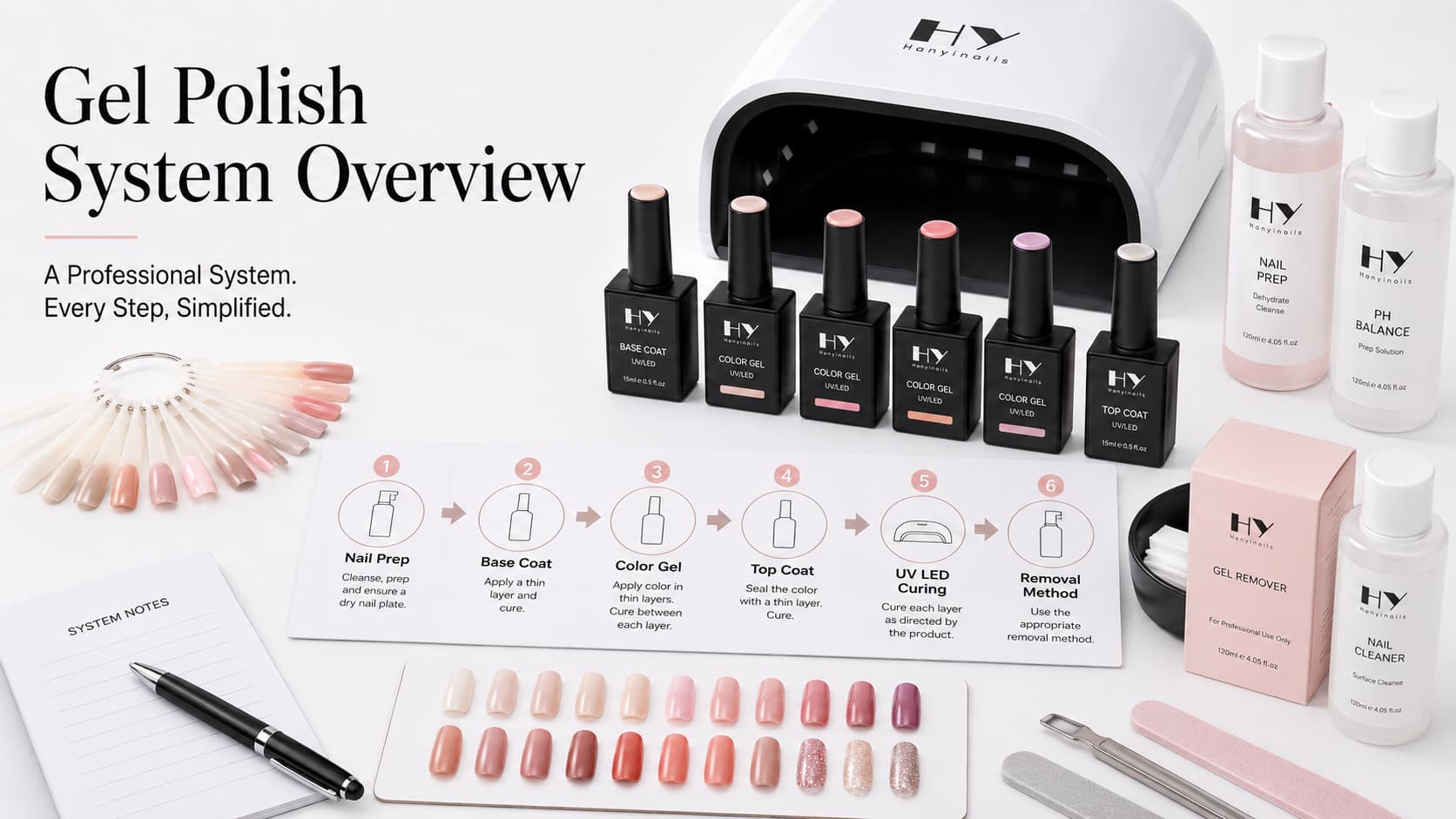
4. Do Sunlight, Ice Water, Fans, or Quick-Dry Sprays Work?
Online tutorials sometimes suggest household methods for drying gel nail polish without UV light.
These suggestions often come from techniques intended for traditional nail lacquer rather than professional light-curable gel products.
The distinction matters because a surface that looks dry is not necessarily properly cured.
Method 1: Ice Water
Can ice water cure UV/LED gel polish? No.
Putting freshly applied gel polish into ice water does not provide the light energy required for photoinitiated polymerization.
Cooling may temporarily affect the physical feel or behavior of certain cosmetic coatings, but it is not an approved substitute for curing UV/LED gel polish.
For traditional lacquer, an ice-water method should not be treated as a universally reliable drying procedure either.
Verdict: Do not use ice water as an alternative to a gel curing lamp.
Method 2: Quick-Drying Nail Sprays
Quick-drying sprays are intended for compatible air-dry nail coatings.
Depending on the specific product, they may help improve the handling or drying characteristics of conventional nail lacquer.
However, spraying such a product over uncured light-curable gel does not replace the required polymerization process.
It may also introduce an unsuitable product combination if the materials were not designed for use together.
Verdict: Use quick-dry sprays only with compatible air-dry products and according to their instructions.
Method 3: Direct Sunlight
Can sunlight cure gel nail polish? It is not a reliable or recommended replacement for a specified curing lamp.
Sunlight contains ultraviolet radiation, and exposure can affect some photosensitive gel materials.
However, natural sunlight varies with location, weather, time of day, season, and other environmental conditions.
These variables do not provide the controlled exposure necessary to confirm that a particular gel polish has cured according to its manufacturer-approved procedure.
A product may appear to harden without achieving an adequate or consistent cure.
Additional unnecessary UV exposure is also undesirable.
Verdict: Do not use sunlight as an improvised curing system.
Method 4: A Fan
A fan can help move air around a work area.
For certain solvent-based nail lacquers, air circulation may assist drying by allowing evaporated solvents to disperse.
That does not mean a fan will cure UV/LED gel polish.
Air movement cannot replace the specified light-initiated reaction.
Verdict: Potentially useful for suitable air-dry lacquer systems, but ineffective as a substitute for gel curing.
Method 5: Quick-Dry Top Coat
A compatible quick-dry top coat may help improve the finish and handling properties of ordinary nail lacquer.
Some gel-like polish systems also use dedicated top coats to produce their intended glossy appearance and wear performance.
However, applying a conventional quick-dry top coat over uncured UV/LED gel polish does not make the underlying gel adequately cured.
A shiny outer layer can conceal a product problem without resolving it.
Verdict: Use only with compatible product systems. Never rely on top coat to correct uncured gel underneath.
Method 6: Leaving Gel Polish to Air-Dry Overnight
A common question is whether gel polish will eventually dry if it is left untouched for several hours.
For true UV/LED-curable gel polish, waiting overnight does not substitute for the manufacturer's prescribed curing process.
Do not assume that a change in surface texture indicates that the product has become safe to wear as a fully cured gel coating.
Verdict: Extended waiting is not a substitute for light curing.
Method 7: Switching to a No-Lamp Gel-Like Polish
This is a practical alternative—but it involves choosing a different product.
When a polish is specifically formulated for air drying, the user can follow its stated application and drying instructions without a curing lamp.
The product may offer a gel-inspired appearance, but should not automatically be described as chemically identical to professional UV/LED gel polish.
Verdict: A suitable option when no curing equipment is available.
Comparison: Which Methods Actually Work?
| Method | Cures True UV/LED Gel Polish? | Suitable for Certain Air-Dry Products? |
|---|---|---|
| Ice water | No | Not a generally validated drying solution |
| Quick-dry spray | No | Yes, where specified |
| Direct sunlight | Not a reliable approved substitute | Not required |
| Fan | No | May assist some lacquer drying processes |
| Quick-dry top coat | No | Yes, with compatible lacquer systems |
| Waiting overnight | No | Air-dry products may continue setting over time |
| No-lamp gel-like polish | Different product category | Yes, when labeled for air drying |
| Manufacturer-approved curing lamp | Yes, when correctly matched and used | Generally unnecessary |
Professional takeaway: Do not attempt to convert a light-curable gel polish into an air-dry polish through household techniques.
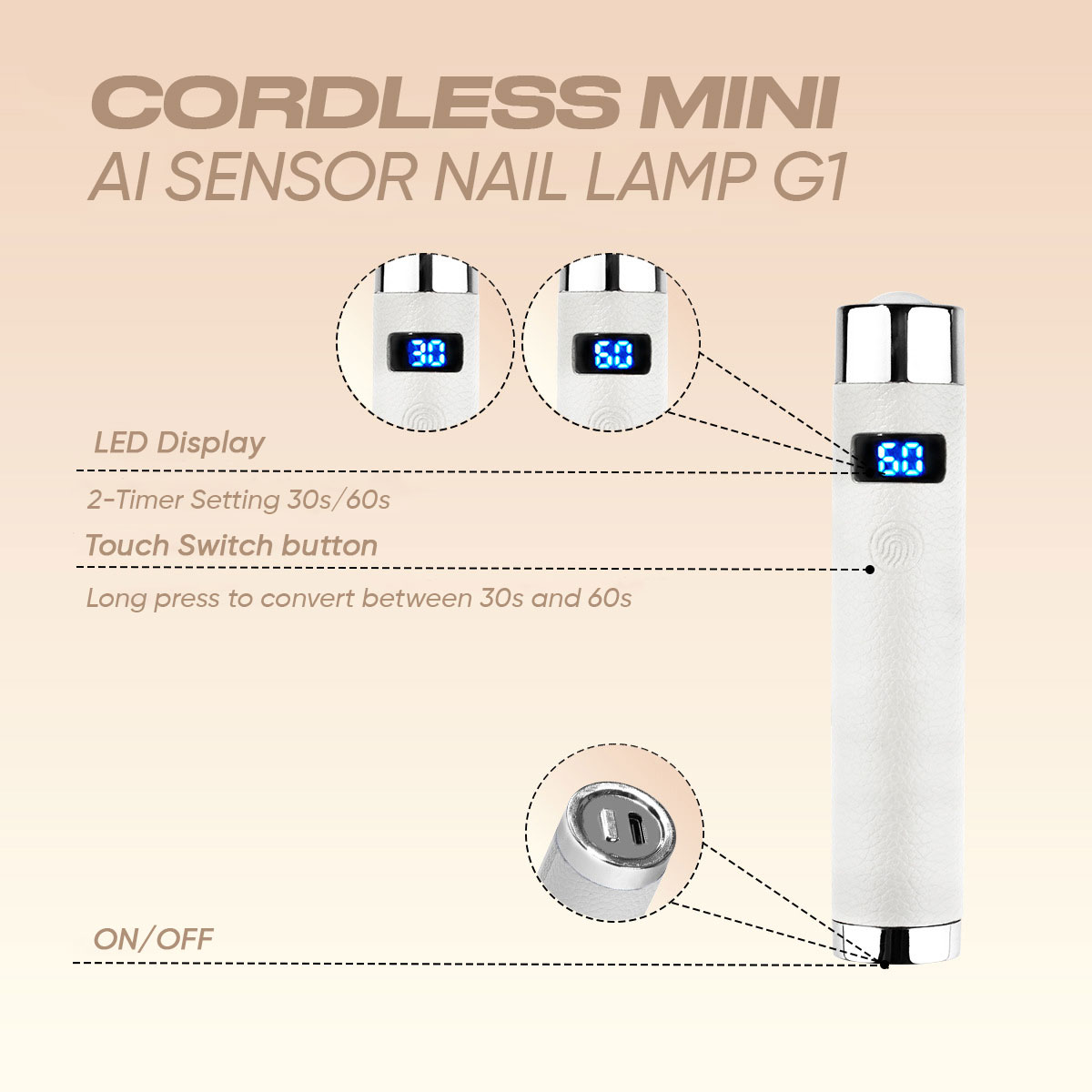
5. What to Do If You Applied Gel Polish Without a Compatible Lamp
This is one of the most important practical situations addressed by this guide.
A user may have purchased a professional gel polish without realizing it requires a curing lamp. Another may have applied a product using an unsuitable device or discovered that their lamp is unavailable.
In these circumstances, the priority is not to find an improvised shortcut. It is to stop the incorrect application process, identify the product, and prevent unnecessary exposure to uncured material.
Step 1: Identify the Product
Read the bottle label and any manufacturer-provided instructions.
Look for information concerning:
- UV/LED curing requirements.
- Compatible lamp specifications.
- Prescribed curing time and layer thickness.
- Base and top coat compatibility.
- Safe handling and removal procedures.
If the instructions are unclear, contact the product manufacturer or supplier for clarification.
Do not assume that gel-like, hybrid, soak-off, or long-wear automatically means the same curing method.
Step 2: Stop Using Unverified Curing Methods
If the product requires light curing and you do not have a compatible lamp, stop the application rather than attempting to complete the service using sunlight, ice water, a fan, a regular desk lamp, or another unverified device.
Do not continue applying additional coats or ordinary top coat over the uncured gel.
A random lamp cannot be judged suitable merely because it produces visible light or is labeled with a high wattage.
The gel and curing equipment must be compatible under the manufacturer's specified conditions.
Step 3: Avoid Contact with Uncured Gel
Uncured gel products may contain reactive ingredients capable of causing irritation or allergic contact reactions.
Keep the material away from the surrounding skin, eyes, and mouth.
Do not deliberately test the gel's condition by repeatedly touching it with bare fingers.
Do not leave uncured UV/LED gel polish on the nails for an extended period while waiting for it to air-dry. If the specified curing process cannot be completed, move to the manufacturer's safe handling or removal procedure rather than allowing unnecessary exposure to continue.
Do not cover uncured gel with ordinary nail polish, additional gel, or top coat to make the surface feel dry.
If material has spread onto the skin, follow the product's safe handling instructions and prevent further contact.
Step 4: Promptly Follow the Manufacturer's Instructions for Handling or Removing Uncured Product
If you cannot complete the specified curing procedure, promptly consult and follow the manufacturer's directions for safely handling or removing the uncured material.
Do not confuse uncured-gel cleanup with removal of a fully cured gel enhancement.
A soaking, filing, or removal procedure designed for a fully cured soak-off coating should not automatically be applied to freshly deposited, uncured gel.
There is no single solvent, soaking time, wiping method, or removal procedure that should be recommended universally for every gel formulation.
Use appropriate materials, ventilation, and protective measures as indicated by the specific product instructions.
Avoid forceful scraping, unnecessary abrasion of the natural nail, or spreading uncured material onto surrounding skin.
If the instructions are missing or unclear, contact the manufacturer or a suitably trained nail professional for product-specific guidance rather than experimenting with household solvents or improvised techniques.
If a suspected allergic reaction, persistent irritation, or another concerning symptom develops, discontinue exposure and seek appropriate medical advice.
Step 5: Choose the Appropriate Next Product or Curing System
After the uncured product has been handled according to its instructions, decide which type of manicure you actually want.
If you want a professional UV/LED gel manicure, use the specified compatible curing equipment.
If you want a manicure without a lamp, select a product explicitly designed for air drying.
Do not assume that a new product labeled gel-like can be used interchangeably with the original UV/LED gel system.
Safe Decision Checklist
| Situation | Appropriate Next Step |
|---|---|
| You have an air-dry gel-like polish | Follow its specified drying instructions |
| You have UV/LED gel and a compatible lamp | Follow the complete manufacturer-approved curing procedure |
| You have applied UV/LED gel but have no compatible lamp | Stop application; promptly follow the manufacturer's safe handling or uncured-product removal instructions |
| You used an unknown or incompatible lamp | Do not assume adequate cure; contact the product manufacturer |
| The material behaves abnormally after the prescribed cure | Stop routine finishing and investigate |
| You experience irritation or suspected allergic symptoms | Discontinue exposure and seek appropriate medical advice |
Three Practical Scenarios
Scenario A: A customer bought a gel polish online but has no curing lamp.
The label confirms that the product requires UV/LED curing.
The appropriate response is not to recommend air drying or a household lamp. If the gel has not yet been applied, the user should obtain the specified curing system or choose an air-dry product instead.
If the gel has already been applied, the user should stop and follow the manufacturer's directions for safely handling or removing the uncured material.
Scenario B: A salon is using a different lamp from the one specified by the gel manufacturer.
The gel may appear to harden, but appearance alone cannot prove curing adequacy.
The salon should verify compatibility through the manufacturer rather than assuming that any high-powered UV/LED lamp will work.
Scenario C: A consumer wants a glossy gel-inspired finish without UV/LED equipment.
An air-dry gel-like polish or long-wear lacquer system may be appropriate.
The consumer should follow that product's own color-coat and top-coat instructions rather than treating it as conventional salon gel.
These are illustrative decision scenarios, not documented Hanyinails product tests.
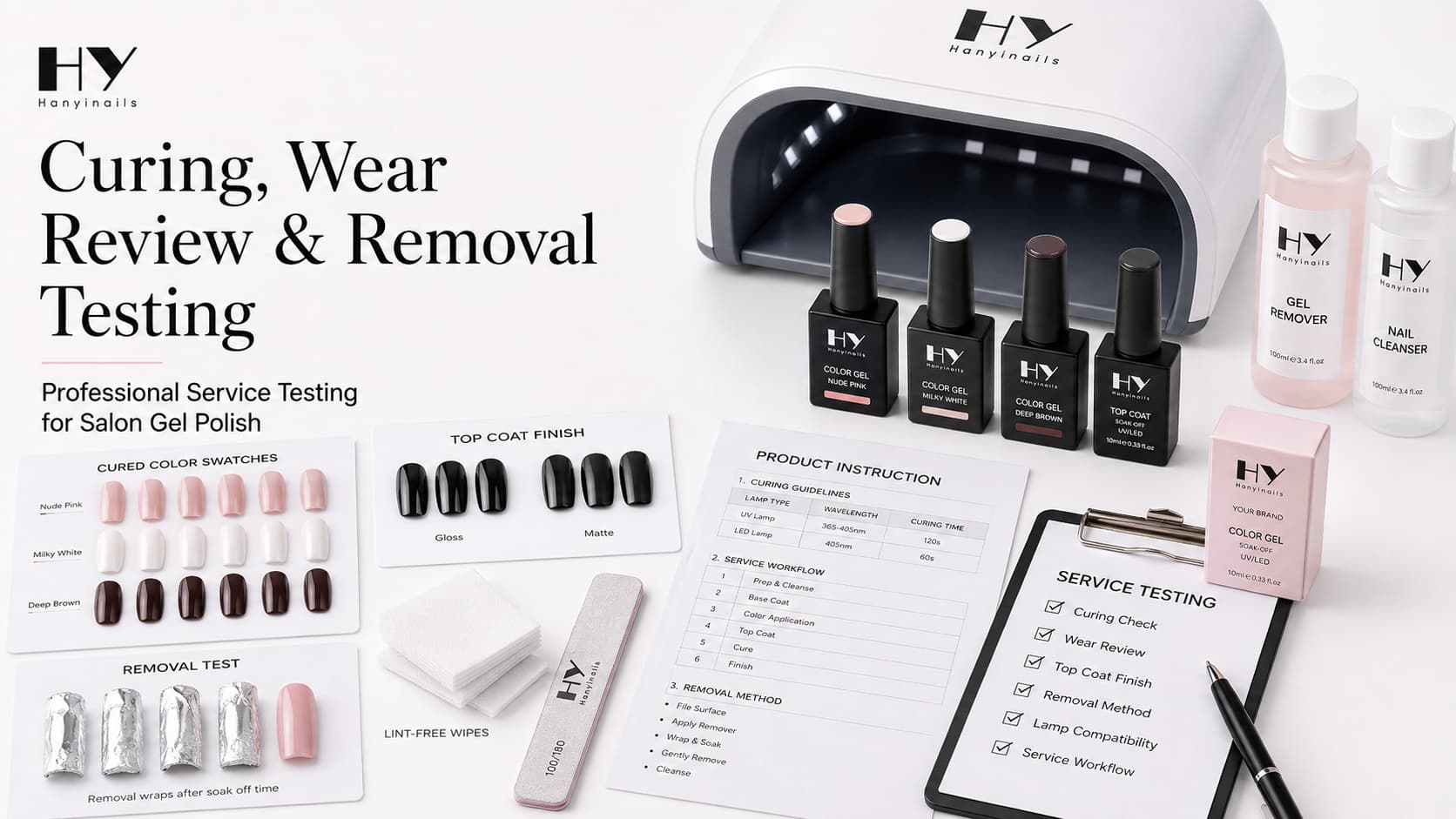
6. Best No-Lamp Alternatives to Traditional Gel Polish
For someone who does not want to use a curing lamp, the practical solution is to choose an appropriate product category rather than trying to cure an incompatible gel.
Several types of air-dry nail products can provide attractive, glossy finishes without a UV/LED curing device.
1. Air-Dry Gel-Like Nail Polish
Air-dry gel-like polish is designed to create a gel-inspired appearance without requiring light curing.
Depending on the formulation, these products may offer smooth application, high shine, or improved wear compared with some conventional lacquers.
However, performance claims must be evaluated product by product.
Manufacturer Example: Essie Gel Couture
Essie identifies Gel Couture as a gel-like nail polish system that does not require a UV or LED lamp. Its application and drying process follow an air-dry nail lacquer approach.
Essie's official FAQ also recommends using the dedicated Gel Couture top coat as part of the product system.
This is an example of how the word gel can describe a finish or product positioning rather than a UV-curable formulation.
Official reference: Essie — Frequently Asked Questions.
Manufacturer Example: Sally Hansen Miracle Gel
Sally Hansen describes Miracle Gel as a gel-like polish that does not require a UV lamp.
Its published instructions include applying color coats, allowing them to dry according to the product directions, and finishing with the designated top coat.
Official reference: Sally Hansen — Miracle Gel.
These third-party products are cited solely to demonstrate product categories. They are not presented as Hanyinails products or as evidence of Hanyinails manufacturing capabilities.
2. Long-Wear Traditional Nail Lacquer
Long-wear nail lacquers are another alternative for people who prefer not to use light-curing equipment.
These systems may use specialized film-forming ingredients and compatible finishing products to achieve their intended appearance and wear characteristics.
When evaluating them, consider:
- Application consistency.
- Surface smoothness and gloss.
- Drying behavior.
- Chip resistance.
- Removal instructions.
- Compatibility with the specified base and top coats.
No-lamp products should not automatically be expected to match every performance characteristic of a professional light-curable gel system.
3. No-Lamp Nail Polish Systems for Salon and Retail Collections
For nail salons, retailers, and private-label brands, no-lamp products may serve customers who prefer a simple at-home application process.
They can also complement professional UV/LED gel collections by addressing a different usage scenario.
For example, a brand may want to offer both:
- A professional gel polish collection intended for use with compatible curing equipment.
- A separate air-dry lacquer or gel-like collection intended for users who do not want a lamp.
These products should have clearly differentiated labeling and instructions.
A buyer should not market an air-dry lacquer as though it uses the same curing mechanism as professional UV/LED gel polish.
No-Lamp Product Selection Matrix
| Buyer Requirement | Suitable Product Direction | Main Verification |
|---|---|---|
| No curing lamp | Air-dry gel-like polish or traditional lacquer | Explicit no-lamp application instructions |
| Glossy gel-inspired appearance | Gel-like polish system | Verified finish and top coat requirements |
| Simple home application | Consumer-oriented air-dry lacquer | Clear instructions and appropriate packaging |
| Professional gel service | UV/LED-curable gel system | Compatible lamp and validated curing procedure |
| Multiple retail customer segments | Separate gel and no-lamp collections | Correct product classification and labeling |
Professional takeaway: A successful no-lamp nail product is one designed to work without a lamp from the beginning—not a UV-curable gel used outside its specified system.
7. How Long Does Air-Dry Gel-Like Polish Take to Dry?
There is no universal drying time for every gel-like nail polish.
Drying behavior depends on the formula, coating thickness, ambient conditions, and the product's application system.
A product that becomes touch-dry quickly may still require additional time before normal handling will not damage the finish.
Four Drying Stages That Should Not Be Confused
The following terms are practical descriptions used to explain drying behavior. They are not universal, standardized testing stages adopted by every nail polish manufacturer. Product instructions may use different terminology or define readiness using specific application criteria.
| Drying Stage | What It Means | Practical Consideration |
|---|---|---|
| Surface drying | The outer surface begins losing its wet appearance | Does not necessarily mean it can withstand contact |
| Touch-dry | The surface may tolerate limited light contact | Smudging or indentation may still occur |
| Ready for next coat | The product can receive the next layer according to its instructions | Follow manufacturer guidance rather than guessing |
| Sufficiently set for normal handling | The coating has reached the intended handling condition | Depends on product and application conditions |
What Affects Air-Dry Polish Performance?
Layer Thickness
Thicker applications may slow drying or produce uneven film formation.
Use the coating thickness recommended for the product rather than applying excessive material to achieve a gel-like appearance.
Product Formulation
Different polymers, resins, solvents, and additives affect how an air-dry coating behaves.
Two products marketed as gel-like may have different drying procedures.
Environmental Conditions
Temperature, ventilation, and humidity can influence drying performance, depending on the formulation.
These factors do not create a universal shortcut that works for all products.
Top Coat Compatibility
Some gel-like systems require a dedicated top coat for their intended appearance and wear performance.
Follow the complete product system rather than assuming that any top coat will give the same result.
Example of a Product-Specific Drying Instruction
Sally Hansen's published Miracle Gel instructions specify allowing each color coat to dry for five minutes before completing the stated application sequence.
This is an instruction for that particular product system.
It should not be applied as a universal five-minute drying rule for all no-lamp nail polishes.
The relevant question is not simply, "How many minutes does gel-like polish take to dry?"
It is, "What drying and recoating instructions have been established for this exact formula and application system?"
8. Common Mistakes and Safety Precautions
Confusion between light-curable gel and air-dry lacquer can lead to inappropriate product use.
These mistakes are especially important for salons, nail educators, and brands preparing technical instructions for customers.
Mistake 1: Treating All Products Labeled "Gel" as Identical
The word gel can describe different product categories and marketing positions.
A no-lamp gel-effect lacquer should not be treated as chemically or procedurally identical to a professional UV/LED-curable gel.
Better approach: Identify the actual formulation category and read the instructions before application.
Mistake 2: Assuming Any LED Lamp Can Cure Any Gel
LED technology alone does not guarantee compatibility.
Different products may have different photoinitiator systems and curing requirements.
Similarly, lamp wattage by itself cannot confirm that the correct light energy reaches the material.
Better approach: Use a manufacturer-approved or otherwise verified compatible curing system.
Mistake 3: Using Sunlight or Household Light as a Replacement
Uncontrolled light sources should not be used as substitutes for specified curing equipment.
Partial hardening is not proof of adequate polymerization.
Better approach: Follow the intended curing procedure or choose an air-dry product.
Mistake 4: Applying More Top Coat Over Uncured Gel
A glossy finish does not establish that the underlying coating has been adequately cured.
Covering questionable material can conceal the problem without correcting it.
Better approach: Stop and follow the product's approved handling or removal instructions.
Mistake 5: Assuming HEMA-Free Means Allergy-Free
HEMA-free products do not contain HEMA as specified by their formulation, but other acrylate or methacrylate ingredients may still have sensitization potential.
Users and technicians should avoid unnecessary contact with uncured products regardless of whether a formula is marketed as HEMA-free.
DermNet explains that acrylate monomers can cause irritant or allergic contact reactions and that direct exposure to these reactive materials should be avoided.
Reference: DermNet — Allergy to Acrylates.
Better approach: Review ingredient information, follow product-specific safety instructions, prevent uncured product from contacting skin, and avoid unsupported allergy-free claims.
Mistake 6: Assuming LED Nail Lamps Produce No UV Exposure
Many LED curing lamps produce ultraviolet or near-violet light suitable for particular photoinitiator systems.
Their output and exposure conditions vary.
The American Academy of Dermatology recommends measures such as broad-spectrum SPF 30 or higher sunscreen on the hands, or suitable protective gloves, to reduce UV exposure during gel manicures.
These precautions do not replace the need for proper curing equipment and product compatibility.
Reference: American Academy of Dermatology — Gel Manicures: Tips for Healthy Nails.
Mistake 7: Continuing an Application When the Product Behaves Abnormally
Unexpected material instability, severe burning sensations, pain, visible skin irritation, or other concerning reactions should not be ignored.
A brief sensation of warmth during curing is not by itself proof of a curing failure. However, marked discomfort, burning, or pain warrants stopping the procedure and investigating the product and application conditions.
A product that looks hardened may still require investigation if the specified curing procedure was not followed.
Do not attempt to diagnose the exact degree of cure from appearance or touch alone.
Professional Safety Checklist
| Safety Question | Recommended Action |
|---|---|
| Does the product require light curing? | Verify before application |
| Is the lamp compatible with the exact gel? | Follow the manufacturer's specifications |
| Is the product intended to air-dry? | Use the specified no-lamp application process |
| Has uncured gel touched skin? | Follow safe handling instructions and prevent further exposure |
| Is the cured material behaving abnormally? | Stop routine finishing and investigate |
| Is there marked burning, pain, or another concerning reaction? | Stop the procedure and assess the situation |
| Are there irritation or allergy symptoms? | Discontinue exposure and seek appropriate medical advice |
For general information about nail product ingredients and safe use, refer to the U.S. Food and Drug Administration's Nail Care Products guidance.
9. Choosing No-Lamp Nail Products for Salons and Nail Brands
For professional nail businesses, product classification is more than a technical detail.
It influences application instructions, equipment requirements, customer expectations, packaging claims, and after-sales support.
A product sold as gel-like should be evaluated according to its actual formulation and specified drying process.
A product sold as professional UV/LED gel should be evaluated according to its curing compatibility and approved system.
These categories should not be mixed in purchasing specifications or customer instructions.
What Should Buyers Verify Before Choosing a No-Lamp Polish?
1. Product Classification
Is the product a light-curable gel, conventional nail lacquer, or gel-like air-dry system?
This should be clearly established before any claims about curing, drying, or wear performance are made.
2. Documented Application and Drying Instructions
What does the manufacturer specify for nail preparation, coat thickness, drying intervals, and finishing?
Avoid relying on generic drying times copied from unrelated brands.
3. Base and Top Coat Requirements
Does the formula require a dedicated top coat or other companion product?
If a system is designed around two or more compatible components, buyers should evaluate it as a complete application system.
4. Finish and Wear Performance
What product-specific evidence supports claims relating to gloss, chip resistance, appearance, and durability?
A gel-like appearance should not automatically be presented as equivalent to UV/LED-cured gel performance.
5. Ingredient and Market Documentation
What ingredient information, labeling details, safety documentation, and market-specific compliance materials are available?
Documentation requirements depend on the formula and intended sales market.
6. OEM/ODM Customization
Can the supplier provide or develop the intended product category, and what verified formulation, packaging, brush, labeling, and private-label options are available?
Buyers should confirm the availability and specifications of the exact air-dry or light-curable formulation before making commercial commitments.
No-Lamp Nail Polish Supplier Evaluation Matrix
| Evaluation Area | Buyer Question | Evidence to Request |
|---|---|---|
| Formula category | Is this an air-dry lacquer or a UV/LED-curable gel? | Product specification and application instructions |
| Drying behavior | How should each layer dry before the next step? | Formula-specific usage directions |
| Finish | What appearance should the finished coating achieve? | Documented finish evaluation |
| Top coat system | Is a dedicated companion product required? | Compatibility instructions |
| Wear performance | What testing supports durability claims? | Appropriate product evaluation records |
| Ingredient information | What ingredients and warnings apply? | Formula-specific documentation |
| Packaging and labeling | How will the no-lamp instructions be communicated? | Approved artwork and labeling specifications |
| Production consistency | How is repeatable product performance assessed? | Relevant quality control documentation |
What Should an OEM Brief Include?
For buyers considering a new no-lamp polish collection, the product brief should clearly specify:
- Intended product category.
- Target customers and sales channels.
- Desired finish and color positioning.
- Required no-lamp application behavior.
- Whether a dedicated base or top coat is needed.
- Packaging and brush preferences.
- Intended markets and documentation requirements.
- Product performance claims that require verification.
This approach helps reduce confusion between product naming, technical performance, and customer expectations.
Hanyinails OEM/ODM Support
Hanyinails works with professional nail brands, salons, distributors, and wholesalers developing or expanding nail product collections.
Businesses can discuss their target product category, intended user experience, branding requirements, and relevant technical documentation when evaluating suitable private-label options.
For buyers exploring no-lamp lacquer or gel-like product concepts, the availability, technical specifications, and manufacturing options for any particular formulation should be confirmed directly with Hanyinails.
This guide does not establish that every no-lamp formula or product format is currently available from Hanyinails. Product-specific capabilities and claims should be verified before use in a commercial proposal.
Learn more about creating your own nail product brand, explore Hanyinails company information, or contact Hanyinails to discuss the intended product requirements.
10. FAQs About Gel Polish Without UV Light
1. Can gel nail polish dry without UV light?
True UV/LED-curable gel nail polish requires a compatible light-curing system and cannot be reliably cured by ordinary air drying. Products marketed as gel-like or no-UV polish may be formulated to dry without a lamp, but these are different product categories. Always check the manufacturer's instructions before deciding how to apply or dry the product.
2. Can you air-dry gel polish overnight?
Leaving true UV/LED-curable gel polish exposed to air overnight does not replace its prescribed light-curing procedure. A change in surface appearance does not establish adequate polymerization. If you have applied a light-curable gel without compatible equipment, stop the application, avoid skin contact, and promptly follow the manufacturer's instructions for handling or removing the uncured material.
3. Will sunlight cure gel nail polish?
Sunlight is not a reliable or approved substitute for a manufacturer-specified curing lamp. Natural UV exposure varies with weather, location, season, and time of day. Although some photosensitive materials may react to sunlight, visible hardening does not prove adequate curing. Use the validated curing system rather than attempting to cure gel nails outdoors.
4. Can ice water dry gel nail polish?
Ice water cannot provide the light energy needed to cure UV/LED gel polish. Cooling may affect how certain coatings feel, but it does not replace photoinitiated polymerization. Do not use an ice-water bath as a gel-curing technique. If you want a product that dries without a lamp, choose a specifically formulated air-dry lacquer.
5. Can you use a fan to dry gel polish?
A fan may assist drying for certain conventional nail lacquers by improving air circulation, depending on the formulation. However, it cannot replace the specified UV/LED curing process for professional gel polish. Follow the product's instructions and do not assume that a coating is adequately cured simply because its surface appears less wet.
6. What should I do if I have no UV/LED lamp?
First confirm whether your polish actually requires light curing. If it does, do not attempt household substitutes such as sunlight, ice water, or ordinary lamps. If the product is already on your nails, stop applying additional layers and promptly follow the manufacturer's safe handling instructions. For a manicure without curing equipment, choose a product explicitly labeled for air drying.
7. Is gel-like polish the same as salon gel polish?
Not necessarily. Many gel-like polishes are air-dry lacquer systems designed to create a glossy, gel-inspired appearance. Professional salon gel polish commonly relies on UV/LED-initiated polymerization. Their ingredients, application procedures, equipment requirements, and removal instructions may differ. Product names alone are not sufficient to determine whether a curing lamp is needed.
8. How long does no-UV gel-like polish take to dry?
Drying time depends on the exact product formulation, coating thickness, ambient conditions, and any required top coat. Some manufacturers specify separate intervals between color coats and final finishing. A touch-dry surface may still be vulnerable to marks. Follow the stated product instructions rather than applying a universal drying time to every gel-like nail polish.
Professional Nail Product Development with Hanyinails
Understanding the difference between UV/LED-curable gel polish and air-dry gel-like products helps nail professionals make more reliable technical and purchasing decisions.
A successful nail polish system should use a clearly identified formulation, appropriate application instructions, compatible finishing products, and claims supported by relevant evidence.
For brands and distributors, these considerations also influence packaging, customer education, and product positioning.
Hanyinails provides professional nail product manufacturing and OEM/ODM customization services for businesses developing private-label nail collections.
If you are evaluating gel polish or no-lamp nail polish concepts for your brand, contact Hanyinails to discuss your intended formulation, application requirements, packaging, and target market.


Hanyinails
Hanyinails
Hanyinails
Hanyinails