



Quick Answer: Most people can start by applying cuticle oil once a day, especially before bedtime. This is a practical starting point for cosmetic nail care, not a clinically established requirement. If the skin around your nails feels dry, you may benefit from applying it more frequently, such as after handwashing. Use a small amount around each nail, massage gently, and adjust your routine according to your skin condition and the product instructions.
Cuticle oil is a practical addition to daily nail care, whether you wear natural nails, regular nail polish, or professionally applied gel enhancements. However, not every claim about cuticle oil is supported by evidence. It is primarily a conditioning and moisturizing product, not a treatment for nail infections or a proven way to accelerate nail growth.
This guide explains how often to use cuticle oil, how to apply it correctly, which ingredients to consider, and how to recognize when an old bottle should be replaced. It also covers practical considerations for salons and professional nail care brands.
What Does Cuticle Oil Do?
Cuticle oil is a nail care product formulated to moisturize and condition the skin around the nails. Depending on the formula, it may contain plant-derived oils, emollients, antioxidants, fragrances, or other cosmetic ingredients.
The thin layer of nonliving tissue attached to the nail plate is known as the cuticle. The nearby living skin, including the proximal nail fold, forms part of the protective area around the nail.
These structures should be treated gently. Cutting or aggressively pushing back living skin can damage the protective barrier and increase the risk of infection.
Cuticle oil is commonly used to:
- Condition dry, rough skin around the nails.
- Improve the appearance of dry cuticles.
- Help maintain a comfortable moisturizing routine.
- Reduce the dry, ragged appearance of the surrounding skin.
- Complement professional manicure finishing and aftercare.
The American Academy of Dermatology (AAD) recommends moisturizing nails and avoiding aggressive cuticle manipulation as part of safe nail care.
What cuticle oil does not do: It does not automatically repair damaged nail tissue, treat fungal infections, or guarantee faster nail growth.
Cuticle Oil vs. Cuticle Remover
Cuticle oil is used to moisturize and condition the skin around the nails. Cuticle remover is a separate nail preparation product designed to help loosen or remove nonliving cuticle tissue. Use removers strictly according to their product instructions. Neither product should be used to cut or aggressively remove living skin.
How Often Should You Use Cuticle Oil?
For everyday care, once-daily application is a reasonable starting routine, rather than a clinically established requirement.
Some people prefer applying cuticle oil twice a day, particularly when their hands are exposed to frequent washing, dry air, or other conditions that contribute to skin dryness.
There is no universally proven application frequency that works best for everyone. The appropriate routine depends on the formula, individual skin tolerance, daily activities, and the condition of the surrounding skin.
Recommended Application Frequency by Nail Care Situation
| Nail care situation | Practical starting routine | Important consideration |
|---|---|---|
| Normal nails and cuticles | Once daily | Adjust according to skin comfort |
| Dry cuticles | Once or twice daily, as tolerated | Stop if irritation develops |
| Frequent handwashing | Reapply when the skin feels dry | Hand cream can complement cuticle oil |
| Dry weather or winter | Increase moisturizing as needed | Avoid excessive or irritating products |
| After a completed manicure | Apply during finishing and routine aftercare | Follow the coating system's instructions |
| Natural nails without polish | Apply as part of everyday moisturizing | No nail coating needs to be considered |
These are general care suggestions, not clinical treatment schedules or evidence that a particular frequency is superior.
Is it better to apply cuticle oil in the morning or at night?
Both are acceptable.
Morning application can help people who want to condition dry cuticles before starting their daily activities.
Nighttime application is convenient because it is easy to make part of an established skincare routine, and the oil may be less likely to be washed away immediately.
Neither time of day is guaranteed to produce better results. Consistent, comfortable use matters more than choosing a particular hour.
Should you use cuticle oil after every handwash?
Not necessarily.
Frequent handwashing can leave the surrounding skin feeling dry. Reapplying a suitable moisturizer or cuticle oil when needed may help maintain comfort.
If your hands become irritated, cracked, painful, or persistently inflamed, increasing oil application alone may not be enough. Appropriate medical advice may be necessary.
How to Apply Cuticle Oil Correctly
Using cuticle oil is straightforward. The goal is to distribute a small amount over the surrounding skin without excessive rubbing or unnecessary product waste.
Step 1: Start with clean hands
Wash your hands when needed and dry them gently.
Check the skin around your nails before applying oil. Avoid massaging products into visibly inflamed areas or open wounds unless the product is specifically suitable and a healthcare professional has advised its use.
Step 2: Choose a suitable applicator
Cuticle oil may be packaged with a brush, dropper, pen, or rollerball.
- Brush applicators: Useful for controlled application around individual nails.
- Dropper bottles: Allow the user to dispense small amounts without directly touching the nail.
- Cuticle oil pens: Convenient for portable daily care.
- Rollerball applicators: Provide a compact application format, although users should pay attention to applicator cleanliness.
The most convenient option depends on personal preference and product design.
Step 3: Apply a small amount
Place a small drop or thin layer of cuticle oil around the base and sides of each nail.
There is no need to flood the nail surface. Begin with a small amount and add more only if necessary.
Step 4: Massage gently
Use a fingertip to spread the oil around the nail folds with light pressure.
Do not scrape, cut, or aggressively push back the surrounding living skin.
Step 5: Continue your regular moisturizing routine
Allow the product to remain on the skin according to its directions.
Most leave-on cuticle oils do not need to be rinsed immediately. However, individual products may have different instructions, and users should always follow the label.

Professional tip: If you are preparing to apply regular polish, gel polish, or another nail coating, the nail plate must meet the coating system's preparation requirements. For the correct application timing, read Cuticle Oil Before or After Nail Polish?
What Are the Benefits of Cuticle Oil?
Cuticle oil can be useful, but its benefits should be described accurately.
1. Moisturizes dry skin around the nails
The main benefit is conditioning and moisturizing the surrounding skin.
Oil-based emollients can help reduce the feeling of dryness and leave the nail area looking smoother and better maintained.
2. Improves the appearance of rough cuticles
Dry skin around the nails may look uneven or ragged.
Regular moisturizing can improve its appearance, although oil cannot replace appropriate care for persistent inflammation or injury.
3. Supports a consistent nail care routine
Applying cuticle oil encourages regular attention to the nail area.
For salon clients, a simple aftercare routine can complement gentle nail handling, correct removal techniques, and suitable moisturizing products.
4. Provides cosmetic conditioning
Some formulations leave a light protective or conditioning film on the skin and nail surface.
The actual skin feel depends on the combination of oils, other emollients, fragrance, and packaging format.
Does cuticle oil make nails grow faster?
There is insufficient evidence to claim that ordinary cosmetic cuticle oil reliably accelerates nail growth.
Nail growth occurs through processes in the nail matrix. Applying oil around the nail does not automatically increase the rate at which new nail tissue forms.
Moisturizing may improve the condition and appearance of dry skin around the nails, but this is different from stimulating faster nail growth.
Likewise, claims that cuticle oil guarantees stronger nails or longer-lasting gel manicures require suitable product-specific evidence.
Which Ingredients Should You Look for in Cuticle Oil?
A good cuticle oil formula should be appropriate for its intended users and provide a comfortable application experience.
The name of an ingredient alone does not determine the quality of a finished product. Concentration, formulation, stability, packaging, and individual skin tolerance also matter.
Common Cuticle Oil Ingredients
| Ingredient | Common cosmetic function | What buyers should consider |
|---|---|---|
| Jojoba Oil | Emollient and skin conditioning | Texture, spreadability, and formulation balance |
| Sweet Almond Oil | Softening and moisturizing | Potential almond-related sensitivities |
| Sunflower Seed Oil | Emollient and skin conditioning | Oxidative stability and skin feel |
| Coconut Oil | Emollient | Texture, residue, and personal tolerance |
| Avocado Oil | Richer-feeling conditioning ingredient | Suitability for lightweight or richer formulas |
| Vitamin E / Tocopherol | Commonly used as an antioxidant to help limit oxidation of susceptible formulation ingredients | Its contribution to formula stability depends on concentration, formulation, packaging, and testing; it does not establish nail repair or growth benefits |
| Fragrance | Provides a sensory experience | Possible irritation or fragrance sensitivity |

Is natural cuticle oil always better?
Not necessarily.
Natural ingredients can be useful, but they are not automatically safer or more effective than ingredients from other sources.
A formula containing plant-derived oils can still cause irritation or allergic reactions in susceptible users.
The U.S. Food and Drug Administration (FDA) advises consumers to read cosmetic labels and not assume that natural or organic ingredients are inherently safer.
Should you choose fragranced or fragrance-free cuticle oil?
This depends on the target user.
Fragranced products may appeal to customers who enjoy a scented manicure experience. Fragrance-free options may be preferable for some people who want to avoid added fragrance.
However, no cosmetic product can be assumed to be completely non-irritating for everyone.
For nail brands and distributors, formulation selection should consider customer preferences, ingredient disclosure, and the product's intended market.
Cuticle Oil vs Hand Cream: Which Should You Use?
Cuticle oil and hand cream can both contribute to moisturizing the skin, but their formulations and application formats are often different.
| Comparison | Cuticle Oil | Hand Cream |
|---|---|---|
| Typical application area | Cuticle area and surrounding skin | Hands, fingers, and surrounding skin |
| Common texture | Oil-based liquid or serum-like formulation | Lotion, cream, or richer balm |
| Application method | Brush, dropper, pen, or rollerball | Tube, jar, or pump |
| Main practical advantage | Targeted application around individual nails | Convenient moisturizing of a larger skin area |
| Use in nail care | Manicure finishing and routine cuticle conditioning | General hand moisturizing and aftercare |
Can you use both products together?
Yes, when the products are suitable for your skin.
For example, you may use hand cream to moisturize your hands and a small amount of cuticle oil to condition the nail folds.
There is no requirement to use both products or to apply them in a fixed order. Choose a routine that is comfortable and compatible with the products' directions.
A simple, consistent routine is usually more practical than applying numerous products without a clear purpose.
Can You Use Cuticle Oil with Gel or Acrylic Nails?
In general, cuticle oil can be used to condition the surrounding skin while wearing completed gel or acrylic nail enhancements.
However, it is important to distinguish aftercare from nail preparation.
Before applying a new coating or enhancement, the natural nail must be prepared according to the product manufacturer's instructions. Unwanted oil residue on the bonding surface can interfere with some systems.
Once the manicure has been completed, cuticle oil can be incorporated into normal aftercare, subject to the specific product instructions.
Does cuticle oil ruin gel nails?
Ordinary aftercare application around the cuticles should not be confused with introducing oil during the nail bonding stage.
At the same time, cuticle oil cannot fix poor adhesion, incomplete curing, or a lifted enhancement.
Do not assume that an oil will extend gel wear time unless the claim is supported by suitable testing.
For a detailed comparison of regular nail polish, UV/LED gel polish, and builder gel application timing, see our Cuticle Oil Before or After Nail Polish Guide.
Does Cuticle Oil Expire? How to Store It Properly
Yes. Cuticle oil can deteriorate over time, even when the bottle has not been fully used.
Its usable life depends on the formula, ingredient stability, packaging, manufacturing conditions, storage environment, and whether the container has been opened.
There is no reliable universal expiration period that applies to every cuticle oil product.
How long does cuticle oil last?
The most reliable starting point is the manufacturer's label and product documentation.
Some products may display an expiration or best-before date. Others may provide a period-after-opening instruction where required or applicable.
A product's shelf life and its recommended period of use after opening are not necessarily the same.
According to the FDA's guidance on cosmetic shelf life and expiration dating, cosmetic shelf life varies by product, use, and storage conditions.
The FDA also notes that U.S. cosmetic law generally does not require expiration dates to appear on cosmetic labels, although manufacturers remain responsible for product safety. Other markets may have different labeling requirements.
EU Cosmetic Shelf-Life and PAO Labeling Requirements
For cosmetic products sold in the European Union, labeling obligations differ from those in the United States.
Under Article 19 of Regulation (EC) No 1223/2009, cosmetics with a minimum durability of 30 months or less generally require a date of minimum durability, which identifies the period during which the product continues to fulfil its intended function and applicable safety requirements when stored appropriately.
For products with a minimum durability of more than 30 months, a date of minimum durability is generally not mandatory. Instead, a Period After Opening (PAO) indication is required where the concept of durability after opening is relevant.
The PAO is commonly represented by an open-jar symbol accompanied by a period expressed in months or years.
These requirements should not be interpreted as a universal expiration period for all cuticle oils. The appropriate shelf-life and PAO information must be established for the specific formulation and its intended market.
Professional buyers should review the applicable labeling requirements, product stability information, and supporting documentation before approving retail packaging.
For regulatory details, consult Regulation (EC) No 1223/2009, Article 19.
How can you tell if cuticle oil has gone bad?
Watch for changes from the product's normal condition.
| Warning sign | What it may indicate | Recommended action |
|---|---|---|
| Unusual or rancid smell | Possible deterioration of oil ingredients | Stop using and replace the product |
| Unexpected color change | Possible oxidation or other formula changes | Check the product and discard if deterioration is suspected |
| Significant texture change | Possible formula instability | Stop using if the change is abnormal |
| Leakage or damaged packaging | Compromised product integrity | Do not use a compromised container |
| Visible contamination | Possible contamination from handling or storage | Discard the product |
A normal appearance or smell does not guarantee that a product remains safe indefinitely.
If the recommended use period has passed, follow the manufacturer's instructions rather than relying on appearance alone.
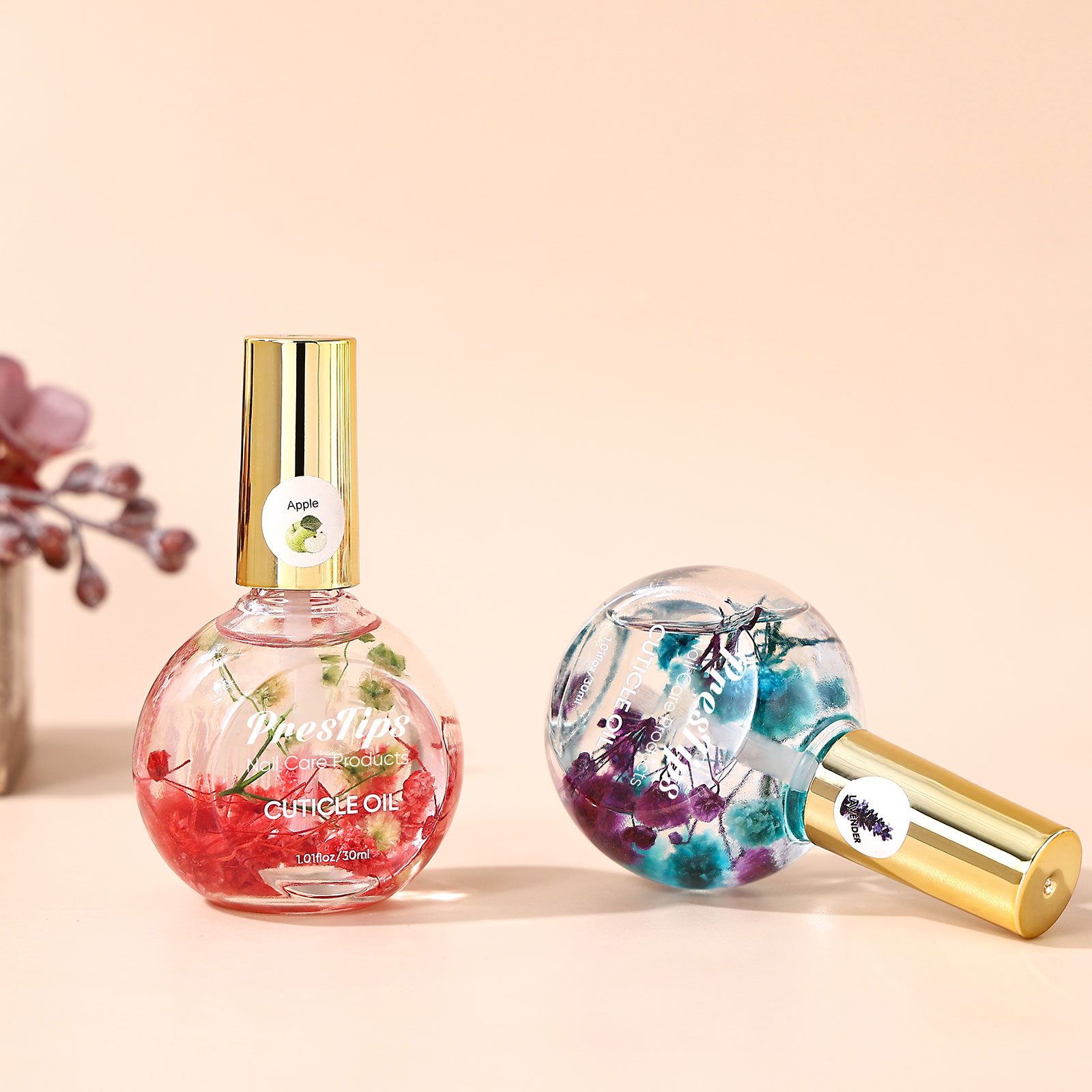
How should cuticle oil be stored?
To help preserve product quality:
- Keep the container tightly closed when not in use.
- Store it according to the manufacturer's temperature instructions.
- Avoid prolonged direct sunlight and excessive heat.
- Keep applicators clean and avoid unnecessary contamination.
- Do not add water or other ingredients to an existing product.
- Check the labeled use period, and consider recording the opening date.
Some botanical oils may be particularly susceptible to oxidation, but the rate of deterioration varies by formulation.
Can you use expired cuticle oil?
It is safer to follow the manufacturer's recommended expiration or use period.
If the oil has developed an unusual smell, changed appearance, or shows signs of contamination, discontinue use.
For professional salons, distributors, and nail brands, stock rotation, batch identification, and appropriate storage are important parts of product quality management.
Common Mistakes When Using Cuticle Oil
Applying more oil than necessary
A large quantity does not automatically provide better results.
Excess product may create unnecessary residue and make application less convenient.
Expecting cuticle oil to repair every nail problem
Cuticle oil is a cosmetic conditioning product. It cannot correct lifting enhancements, significant nail injuries, or underlying medical conditions.
Applying irritating products to damaged skin
Some fragrance ingredients or essential oils may irritate sensitive skin.
Avoid assuming that concentrated plant extracts are automatically suitable for irritated or broken skin.
Using unverified DIY formulas
Homemade blends may not have been assessed for ingredient compatibility, stability, contamination, or safe use.
In particular, adding essential oils such as tea tree oil without appropriate formulation and safety evaluation can introduce irritation risks.
DIY mixtures should not be presented as substitutes for properly evaluated commercial formulations.
Using cuticle oil to treat nail fungus
Cuticle oil is not a recognized replacement for medical treatment of fungal nail infections.
The American Academy of Dermatology explains that evidence for home remedies such as tea tree oil remains limited and that suspected fungal infections should be professionally assessed.
Neglecting storage and product hygiene
Leaving bottles open, exposing oils to high temperatures, or using contaminated applicators can reduce product quality.
Follow the label and replace products when appropriate.
DIY vs. Commercial Cuticle Oil: What Should Buyers Consider?
Homemade oil blends offer flexibility in ingredient selection, but they do not automatically provide verified shelf life, stability, labeling compliance, or consistent batch quality. When evaluating commercial cuticle oil, consider its actual formulation, packaging, supporting documentation, and applicable market requirements. For professional retail or private label programs, repeatability and traceability are useful purchasing criteria.
Choosing Cuticle Oil for Professional Nail Care Ranges
For salons, distributors, and private label nail brands, choosing cuticle oil involves more than identifying a popular botanical ingredient.
A suitable product should combine the intended cosmetic performance with practical packaging, clear usage instructions, and appropriate product documentation.
Evaluate the formula
Consider texture, spreadability, fragrance, residue, skin feel, and suitability for the intended customer group.
Avoid making guaranteed growth, medical, or manicure longevity claims without appropriate substantiation.
Evaluate the packaging
Brush bottles, pens, and droppers offer different levels of portability and application control.
Buyers should assess leakage resistance, closure performance, applicator consistency, and label readability.
Evaluate quality and documentation
Depending on the destination market, consider ingredient declarations, applicable labeling requirements, product stability information, traceability, and supported marketing claims.
A well-designed product range should make daily use straightforward for salon staff and retail customers.

Professional Product Evaluation: What Buyers Should Document
When evaluating a cuticle oil for a professional or private label range, buyers can use a practical checklist to compare products consistently.
Formula evaluation
- Record the product's texture, spreadability, fragrance, and residue under defined use conditions.
- Check ingredient information against the intended market's labeling requirements.
- Review available stability information and identify any claims that require additional substantiation.
Packaging evaluation
- Examine the applicator's ability to dispense a controlled amount.
- Check closure integrity and leakage resistance using a documented procedure.
- Review label durability, readability, and consistency with the approved packaging specification.
Documentation review
- Confirm the identification of the product and its relevant batch or lot.
- Request appropriate shelf-life and stability information.
- Check whether proposed product claims are supported by available evidence.
- Confirm which specifications apply to the actual formulation and packaging selected for the order.
These are recommended evaluation criteria, not a claim that Hanyinails has completed a particular laboratory study or achieved specific test results.
Brands should make approval decisions using the actual formulation, product records, and applicable market requirements rather than generic statements about botanical ingredients or cosmetic performance.
Integrating Cuticle Oil into a Professional Nail Care Range
Cuticle oil can complement professional nail care products when the intended use and aftercare instructions are clearly explained.
Hanyinails provides professional nail products and OEM/ODM customization services for brands and distributors.
Explore our Base, Top & Nail Care Collection, view the Hanyinails Cuticle Oil product, or learn more about our Create Your Brand service.
Buyers should confirm the ingredient composition, available packaging options, product claims, and relevant documentation for the specific Hanyinails product they intend to purchase or customize.
Frequently Asked Questions
1. How often should you use cuticle oil?
Once daily is a practical starting routine, not a clinical requirement. If your cuticles feel especially dry, you may apply it more frequently as tolerated and according to the product instructions.
2. Can you use cuticle oil every day?
Yes. Many cuticle oils are intended for routine use. Stop using a product if irritation develops, and follow its labeled directions.
3. Should you apply cuticle oil before bed?
Bedtime is a convenient option because it can be part of a regular skincare routine. Morning application is also acceptable.
4. Do you need to wash off cuticle oil?
Most leave-on cuticle oils are intended to remain on the skin. Follow the directions for your specific product.
5. Does cuticle oil help nails grow faster?
There is insufficient evidence that ordinary cosmetic cuticle oil reliably accelerates natural nail growth. Its primary purpose is conditioning and moisturizing.
6. Does cuticle oil expire?
Yes. Cuticle oil can deteriorate with time and improper storage. Its usable life depends on the formulation, packaging, storage conditions, and applicable manufacturer instructions.
7. Can you use cuticle oil with gel nails?
Generally, yes, after the gel manicure has been completed according to its instructions. Avoid leaving oily residue on the nail plate during preparation for a new coating.
8. Can cuticle oil replace hand cream?
Cuticle oil provides targeted conditioning around the nails, while hand cream is usually more convenient for moisturizing the hands. Both may be useful depending on individual needs.
Final Takeaway: Make Cuticle Oil Part of a Practical Nail Care Routine
Cuticle oil is most useful as a regular moisturizing and conditioning product rather than a solution for every nail concern.
Start with a comfortable routine, choose a suitable formula, and follow the manufacturer's directions for use and storage. When evaluating older products, check their shelf-life information and any signs of deterioration.
For professional nail brands and salon buyers, cuticle oil selection should also consider formulation consistency, practical packaging, appropriate labeling, and supportable product claims.
Professional Cuticle Oil & OEM/ODM Support
Hanyinails supports professional nail care product sourcing and customization. Contact Hanyinails to discuss your nail care product range and OEM/ODM requirements.
Professional References
- American Academy of Dermatology — Manicure and Pedicure Safety — Guidance on nail moisturizing and avoiding damaging cuticle practices.
- American Academy of Dermatology — Nail Fungus: Diagnosis and Treatment — Guidance on professional diagnosis, medical treatment, and the limitations of home remedies.
- U.S. FDA — Shelf Life and Expiration Dating of Cosmetics — Cosmetic shelf life, deterioration, storage factors, and manufacturer responsibilities.
- U.S. FDA — Using Cosmetics Safely — Cosmetic safety, label reading, storage, and ingredient-related precautions.
- European Union — Regulation (EC) No 1223/2009, Article 19 — Cosmetic labeling requirements, minimum durability, and period-after-opening information.




Hanyinails
Hanyinails
Hanyinails
Hanyinails