What Are Dip Powder Nails? How They Work, Natural Nails, UV Light & Pros and Cons
Tuesday, 12/9/2025
Dip Powder Nails use adhesive, colored powder, and an activator to create a durable manicure—usually without UV light. Learn how the process works, what it means for natural nails, and how the benefits compare with the risks.
Dip powder nails are a nail enhancement method that usually combines a base or resin liquid, colored powder, an activator and a finishing product.
Unlike gel polish, traditional dip powder systems generally do not require each color layer to be cured under a UV or LED lamp. The powder bonds with the liquid system and is then hardened according to the system's activator instructions.
Dip powder can be used over natural nails, and different systems may also be used within broader nail-enhancement services.
The important point is that “dip powder” describes a system, not just a colored powder.
Exact steps, timing and product compatibility depend on the specific system being used.
Quick Answer
What Are Dip Powder Nails?
Dip powder nails are created by combining a liquid bonding system with fine colored powder and an activator. The result is a hardened coating over the nail.
Dip powder can be applied over natural nails.
Traditional dip systems generally do not require UV/LED curing for the powder layers.
The system is different from both gel polish and traditional liquid-and-powder acrylic.
Application thickness depends on technique and product system.
Hygiene and removal practices matter.
Exact instructions should come from the specific products being used.
Dip powder is best understood as one option within the wider nail-enhancement category rather than as a universally “better” replacement for gel or acrylic.
Dip Powder Nails at a Glance
Question
Short Answer
What is dip powder?
A nail enhancement system using liquid bonding products, powder and activator
Can it go on natural nails?
Yes, depending on the intended product system
Does dip powder need UV light?
Traditional dip systems generally do not require UV/LED curing for the powder layers
Is dip the same as acrylic?
No, although both may involve polymer powder
Is dip the same as gel polish?
No
Can dip feel thick?
It can if too much product is applied
Can dip damage nails?
Nail condition can be affected by preparation, product reactions, filing and removal practices
Is hygiene important?
Yes, especially in shared-use salon settings
Should every system be applied the same way?
No; follow the exact product instructions
1. Is Dip Powder a Hybrid Nail Enhancement System?
Dip powder is often described in cosmetology education as a hybrid nail-enhancement system because it combines characteristics associated with several nail systems.
A typical dip powder service may use:
a resin-style base or bonding liquid;
polymer-based powder;
an activator;
and a finishing product.
That makes it different from a single-step nail color. It is also why buyers should evaluate a dip powder system as a group of compatible products rather than judging only the colored powder.
A Common Cosmetology Question
Which nail enhancement system is described as a hybrid of wrap, liquid-and-powder and sometimes gel systems?
The commonly expected answer is dip powder.
Individual product systems can still differ, so this educational definition should not be treated as a technical specification for every dip product.
2. How Does a Dip Powder System Work?
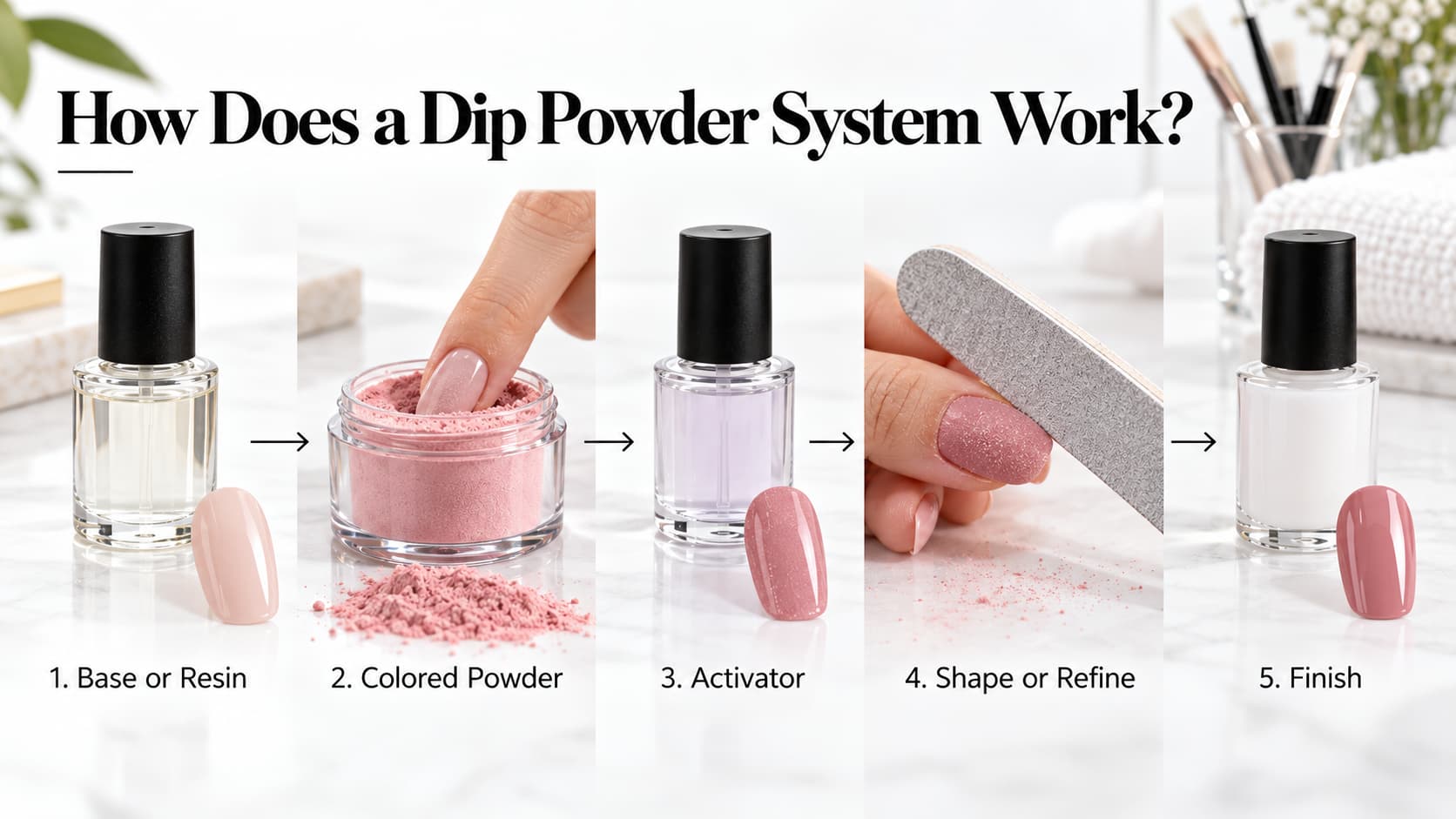
A dip powder manicure is created through interaction between the liquid system and the powder. The exact chemistry and workflow vary by product, but the general logic is straightforward.
Base or Resin
The liquid base creates the layer that the powder adheres to. It should be applied according to the system instructions rather than treated as a universal adhesive with one fixed application method.
Colored Powder
The powder provides the color and contributes to the built coating.
Powders may vary in:
color;
texture;
pigmentation;
particle appearance;
and how they behave with the associated liquid system.
Activator
The activator helps harden the applied system. Activator timing and number of applications can differ between systems.
Finishing Product
A finishing layer provides the final surface according to the intended system. The result may then be shaped or refined as required by the product workflow.
Dip powder performance depends on the complete system—not on the powder alone.
Dip powder works as a system: the base or resin, colored powder, activator and finishing products need to function together according to the instructions for the specific product system.
3. Do Dip Powder Nails Need UV or LED Light?
One of the most common questions about dip powder is whether it needs a nail lamp.
Traditional Dip Powder Systems
Traditional dip powder systems generally do not require UV or LED curing for the powder layers.
Instead, the powder works with the base/resin and activator system. That distinguishes traditional dip powder from gel polish, which usually relies on a compatible UV/LED curing process.
But Check the Exact Product System
Do not assume every product marketed with “dip,” “hybrid” or similar terminology follows exactly the same process. Some products may be designed as hybrid systems or may use different finishing products.
Before application, confirm:
whether a lamp is required;
which liquids belong to the system;
the activator instructions;
finishing instructions;
and any product-specific timing.
Traditional dip powder layers generally do not require UV/LED curing, but always follow the exact system instructions.
4. Can You Use Dip Powder on Natural Nails?
Yes. Dip powder can be applied over natural nails when the product system is intended for that use.
It does not automatically require adding artificial length.
Natural Nail Overlay
When used as an overlay, the dip system forms a coating over the existing natural nail.
The finished appearance depends on:
nail preparation;
product viscosity;
number and thickness of layers;
powder behavior;
shaping;
and finishing technique.
Does Dip Powder Make Natural Nails Stronger?
It is better to describe the system as creating a coating over the natural nail rather than claiming that it permanently strengthens the natural nail itself.
A harder or thicker enhancement can provide temporary mechanical coverage, but nail health should not be judged only by how rigid the finished manicure feels. Preparation and removal practices are especially important.
Can Dip Powder Be Used on Short Natural Nails?
Dip powder can be used on shorter natural nails when the system and intended service are suitable.
The choice between a natural nail overlay, added length or another enhancement system depends on the client goal and the products being used.
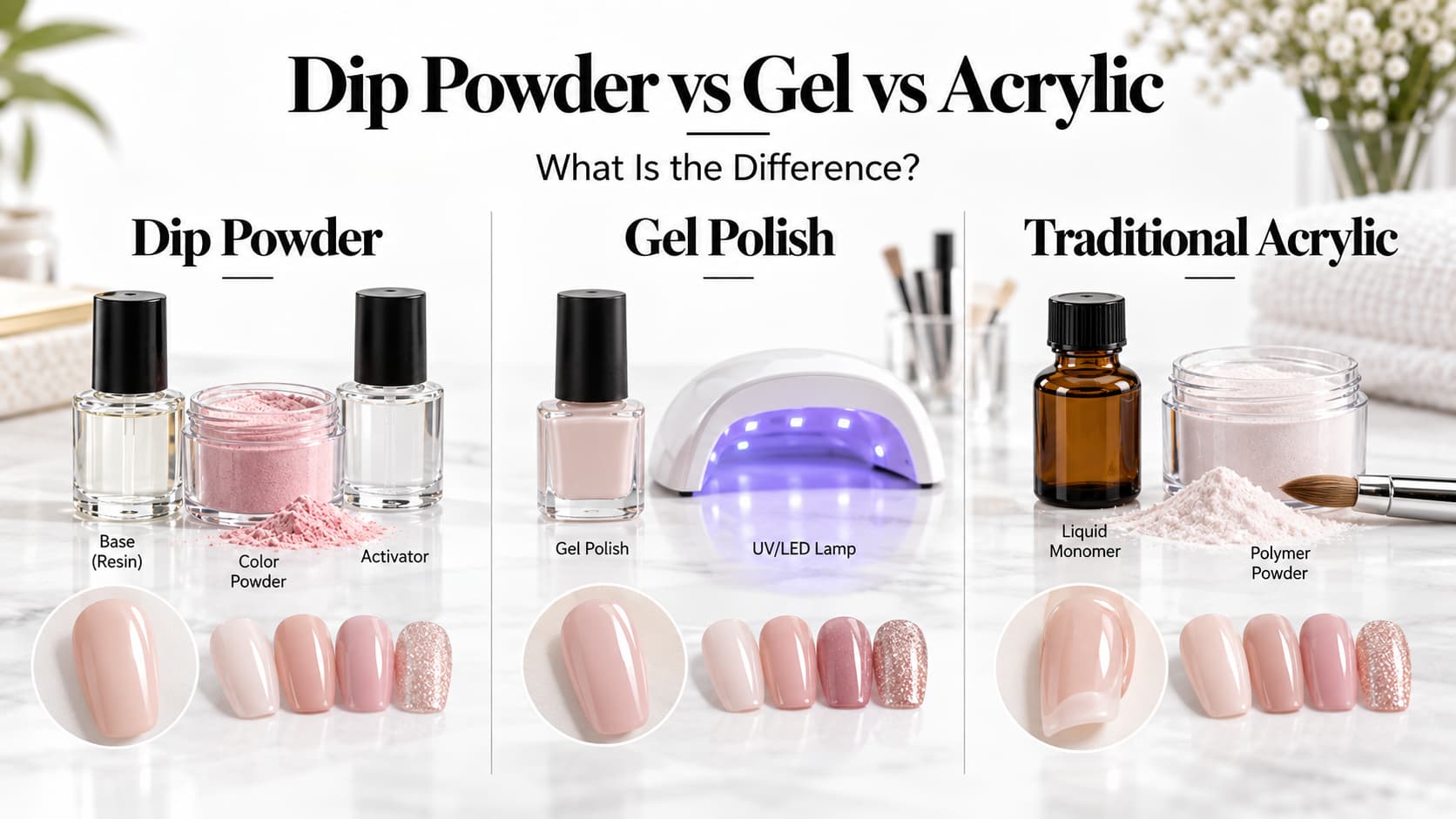
5. Dip Powder vs Gel vs Acrylic: What Is the Difference?
These systems can all be used in professional nail services, but they work differently.
Factor
Dip Powder
Gel Polish
Traditional Acrylic
Main System
Base/resin + powder + activator
Gel product
Liquid monomer + polymer powder
UV/LED Lamp
Usually not required for traditional dip powder layers
Usually required for compatible gel curing
Generally not required
Natural Nail Use
Yes
Yes
Yes
Building Length
Depends on system and service
Depends on type of gel system
Commonly used for extensions
Coating Feel
Depends on application thickness
Usually thinner with standard gel polish
Can create substantial structure
Removal
Depends on system; many services involve acetone-based removal
Depends on product
Depends on product
Important Considerations
Hygiene, adhesives, filing, removal
Curing, skin contact, removal
Monomer handling, structure, filing, removal
There is no universal “best” system. The right choice depends on desired nail look, service type, required structure, application workflow, product compatibility, maintenance expectations and client preferences.
Dip powder, gel polish and traditional acrylic use different product systems and curing or hardening methods, so the better option depends on the intended service rather than one universal ranking.
6. What Are the Potential Advantages of Dip Powder Nails?
No Lamp for Traditional Dip Layers
Traditional systems generally harden through the liquid-and-activator process rather than lamp-curing every colored layer.
Natural Nail Overlay
Dip powder can be used over natural nails without automatically adding extension length.
Broad Color Possibilities
Colored powders can support different collection directions, including:
neutrals;
bright shades;
glitter;
seasonal colors;
and coordinated sets.
Actual color availability depends on the product range.
Structured Coating
The layered system can create a more substantial coating than standard nail polish. How thick or lightweight it feels depends heavily on application.
Kit-Based System
Dip powder can be organized into a system containing compatible liquids, powders and supporting products. This can be useful for salons, home-use kits and product collections when the components and instructions are clearly defined.
7. What Are the Trade-Offs of Dip Powder Nails?
Application Can Become Bulky
Applying too much base or too many heavy layers can create a thick finished result.
Components Must Work Together
Powder alone does not define the performance of the system. Base, activator, finishing product and application instructions all matter.
Adhesive Products Can Cause Reactions
Some people can react to products used within dip manicure systems. Any itching, swelling, irritation, discoloration or other unexpected reaction should be taken seriously rather than covered with more product.
Removal Requires Care
Peeling or forcibly scraping off an enhancement can affect the nail surface. Follow the removal instructions for the exact product.
Shared-Powder Hygiene Matters
In professional or shared-use environments, hygiene procedures need to prevent multiple clients from contaminating a common powder supply.
Dip powder should be evaluated as a complete service system with benefits and trade-offs rather than marketed as automatically healthier or safer than every alternative.
8. Are Dip Powder Nails Safe? Hygiene Matters
Questions such as “Are dip manicures safe?” cannot be answered responsibly with a simple universal yes or no. Several factors affect the service.
Avoid Shared Direct Dipping
In a salon or shared-use setting, multiple clients should not repeatedly dip directly into the same powder container.
More hygienic approaches can include:
portioning product into an individual disposable container;
or applying powder without direct shared dipping.
The exact salon hygiene procedure should follow applicable professional and local requirements.
Avoid Unnecessary Skin Contact
Liquid products and adhesives should be used carefully according to their instructions. Product repeatedly contacting surrounding skin can increase exposure and may also interfere with the finished service.
Watch for Possible Reactions
If redness, swelling, itching, fluid-filled bumps, nail lifting or other unexpected symptoms occur after a manicure, further cosmetic application should not be used to hide the problem.
Professional medical advice may be appropriate for persistent or significant reactions.
Keep Tools and Work Areas Clean
Professional dip services should include appropriate sanitation practices for:
tools;
work surfaces;
hands;
containers;
and any reusable equipment.
“Hygienic” should describe the process, not just the product label.
9. Does Dip Powder Damage Natural Nails?
Dip powder should not be described as automatically damaging. It also should not be described as automatically harmless.
Nail condition can be affected by several parts of the service.
Preparation
Excessive filing or aggressive surface preparation can affect the natural nail. Preparation should be appropriate for the exact product system.
Product Reaction
A person may react to one or more products used during the service. That is different from mechanical nail damage, but it is still relevant to nail and skin health.
Removal
Removal is one of the most important variables. Forcing, peeling or scraping off firmly attached product can remove surface layers from the nail.
Acetone-based removal may also dry or irritate the surrounding nail and skin when used repeatedly or improperly.
Repeated Services
The condition of the natural nail should be checked between services rather than hidden continuously under new product.
A better question than “Is dip powder bad for nails?” is: How are the nails being prepared, exposed to products, maintained and removed?
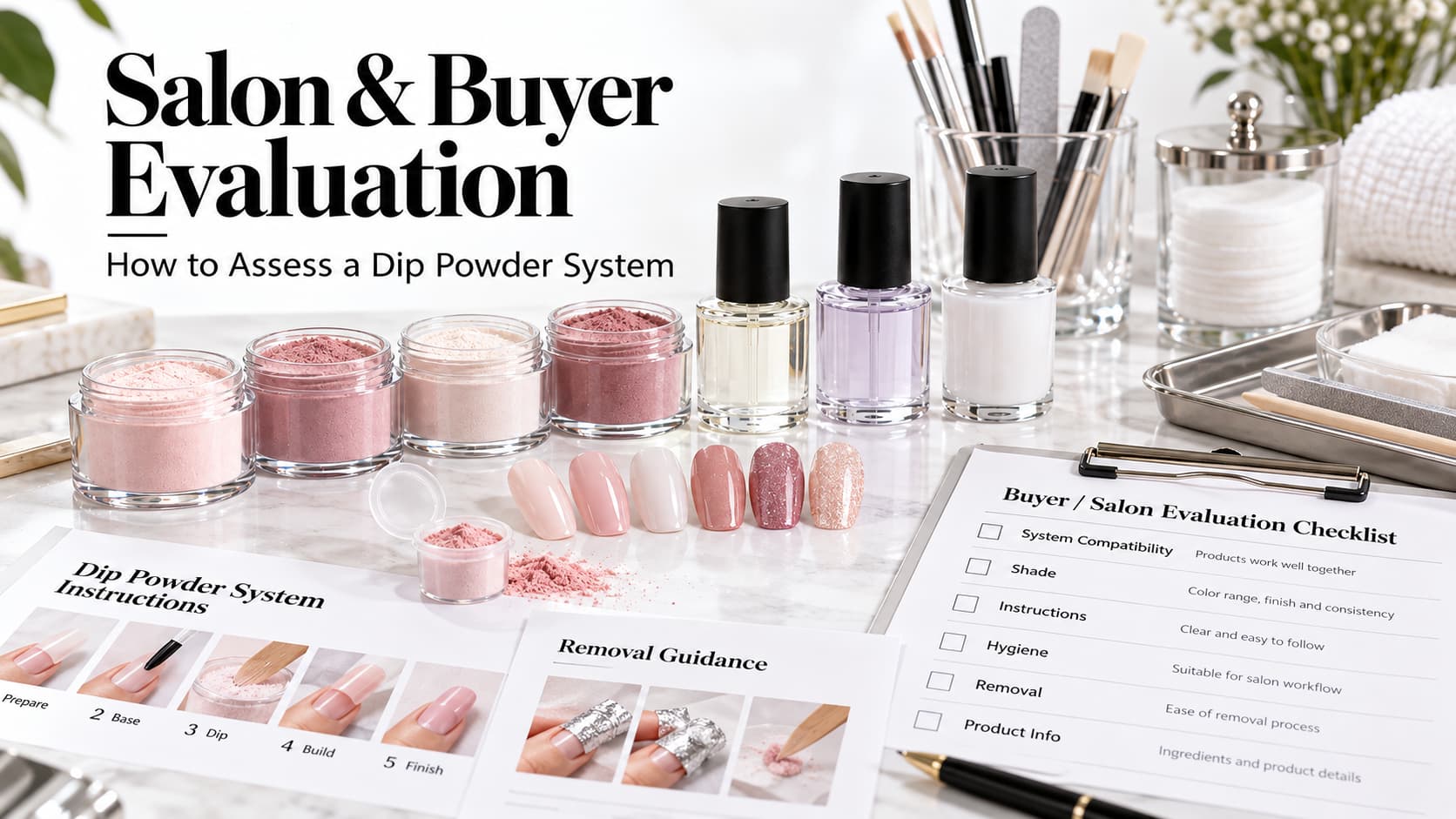
13. What Should Salons Compare When Choosing a Dip Powder System?
A professional evaluation should go beyond the color chart.
Powder Appearance
Compare:
fineness;
color appearance;
evenness;
and how the powder behaves with the intended liquids.
System Compatibility
Confirm that:
base;
powder;
activator;
finishing products;
and supporting products
are designed to work together.
Application Instructions
Check whether the supplier clearly explains:
sequence;
activator use;
shaping;
finishing;
and removal.
Shade Differentiation
If buying a color range, compare actual swatches rather than assuming colors will look distinct because their names differ.
Removal Guidance
A professional system should have clear removal instructions appropriate for the product.
Hygiene Workflow
Think about how powder will be dispensed in shared professional use.
Product Information
Confirm any ingredient, formulation or performance claims against information for the exact product. Do not assume that a claim applying to one SKU automatically applies to every powder or liquid in a category.
Salons and private label buyers should evaluate the complete dip powder system, including compatible liquids, shade samples, instructions, hygiene workflow, removal guidance and verified product information.
14. What Should Private Label Buyers Evaluate?
Private label buyers should evaluate the complete system as both a product and a commercial collection.
System Structure
What products are required to complete the service?
Product Role
Salon, retail, home-use kit, distributor or another market?
Shade Range
Core colors, neutrals, seasonal colors, glitter or themed collections?
Swatch Review
Do actual samples match the intended shade direction?
Instructions
Can the buyer clearly explain how the system is used?
Packaging Identification
Can customers distinguish base, activator, finish, powder shades and supporting products?
Formulation Claims
Ingredient or formulation statements should be documented for the exact products being evaluated.
Market Requirements
Labeling, packaging and commercial requirements can differ by target market.
Target Customer → Target Market → System Components → Shade Range → Kit or Individual Products → Packaging Direction → Verified Product Information
Dip Powder Nails Buyer Checklist
Area
What to Review
System
Required components, compatible liquids and powders, activator identification
Application
Instructions, lamp requirements, application and finishing steps
Natural Nail Use
Whether the system supports natural nail overlays and whether added length is optional
Color
Actual swatches, shade differentiation and customer fit
Hygiene
Powder dispensing in shared-use environments and handling of reusable tools
Removal
Product-specific removal instructions and avoidance of forceful peeling or scraping
Product Information
Verified formulation claims, SKU-specific technical information and clear application limitations
Commercial Fit
Salon, retail, home kit, distributor or private label collection
Common Dip Powder Misconceptions
“Dip Powder Always Requires No UV Light”
Traditional dip powder layers generally do not require UV/LED curing, but always check the complete product system.
“Dip Powder Is Just Colored Acrylic Powder”
The powder is only one part of the system. Base/resin, activator and finishing products also affect how the service works.
“Dip Powder Is Automatically Healthier Than Gel or Acrylic”
No nail enhancement system should be described as universally healthier for every user. Product exposure, application, hygiene and removal practices all matter.
“HEMA-Free Means Allergy-Free”
No. A product described as formulated without HEMA should not automatically be described as allergy-free, hypoallergenic or suitable for every sensitive user.
“Dip Powder Strengthens the Natural Nail”
The enhancement can create a coating over the nail, but that is not the same as permanently improving the biological strength of the natural nail.
“All Dip Powder Kits Work the Same Way”
They do not. Always follow the instructions for the specific system.
Frequently Asked Questions
What exactly are dip powder nails?
Dip powder nails are a nail enhancement method that typically combines a bonding liquid, colored powder, activator and finishing product to create a hardened coating over the nail.
Do dip powder nails need UV light?
Traditional dip powder systems generally do not require UV or LED curing for the powder layers. Some hybrid or finishing products may differ, so check the exact product instructions.
Can dip powder be applied to natural nails?
Yes. Dip powder can be used as an overlay on natural nails when the specific system is intended for that application.
Is dip powder the same as acrylic?
No. Both may involve polymer powder, but traditional acrylic uses a liquid monomer-and-powder system to form the enhancement, while dip powder uses its own bonding and activator system.
Is dip powder better than gel?
Neither is universally better. They use different systems and suit different service preferences. Compare curing method, desired structure, removal, maintenance and client needs.
Are dip manicures safe?
Safety depends on product exposure, hygiene, application, individual reactions and removal practices. Shared direct dipping should be avoided in multi-client salon settings.
Does dip powder damage natural nails?
Dip powder itself should not be treated as automatically damaging or harmless. Aggressive preparation, allergic reactions, repeated acetone exposure and forceful removal can affect the nail or surrounding skin.
How long does dip powder last?
Wear time varies by product system, nail growth, application, daily use and maintenance. Refer to the dedicated longevity guide for a more detailed discussion.
What comes in a dip powder kit?
A kit may include base, activator, finishing liquid, colored powders and supporting tools or prep products. Contents vary by kit.
Use the dedicated safety guide when the main question concerns nail damage, removal or nail-health considerations.
Final Thoughts
Dip powder nails are best understood as a complete nail enhancement system rather than simply a jar of colored powder.
A useful evaluation sequence is:
Understand the System → Check Natural Nail Use → Confirm Lamp Requirements → Compare Gel and Acrylic → Review Advantages and Trade-Offs → Check Hygiene → Understand Removal → Review the Exact Product Instructions → Evaluate the System for Its Intended Market
For consumers and salon professionals, this makes it easier to choose the right service and avoid assumptions based on marketing labels alone.
For private label buyers, it creates a clearer foundation for evaluating system components, shade ranges, kits, instructions, packaging and verified product information.
Next Step
Move From Understanding the System to Choosing the Right Workflow
If you are new to dip powder, start with the application guide or beginner kit guide. If you are evaluating dip powder for a salon, retail or private label project, compare the complete system and exact product information before making a commercial decision.
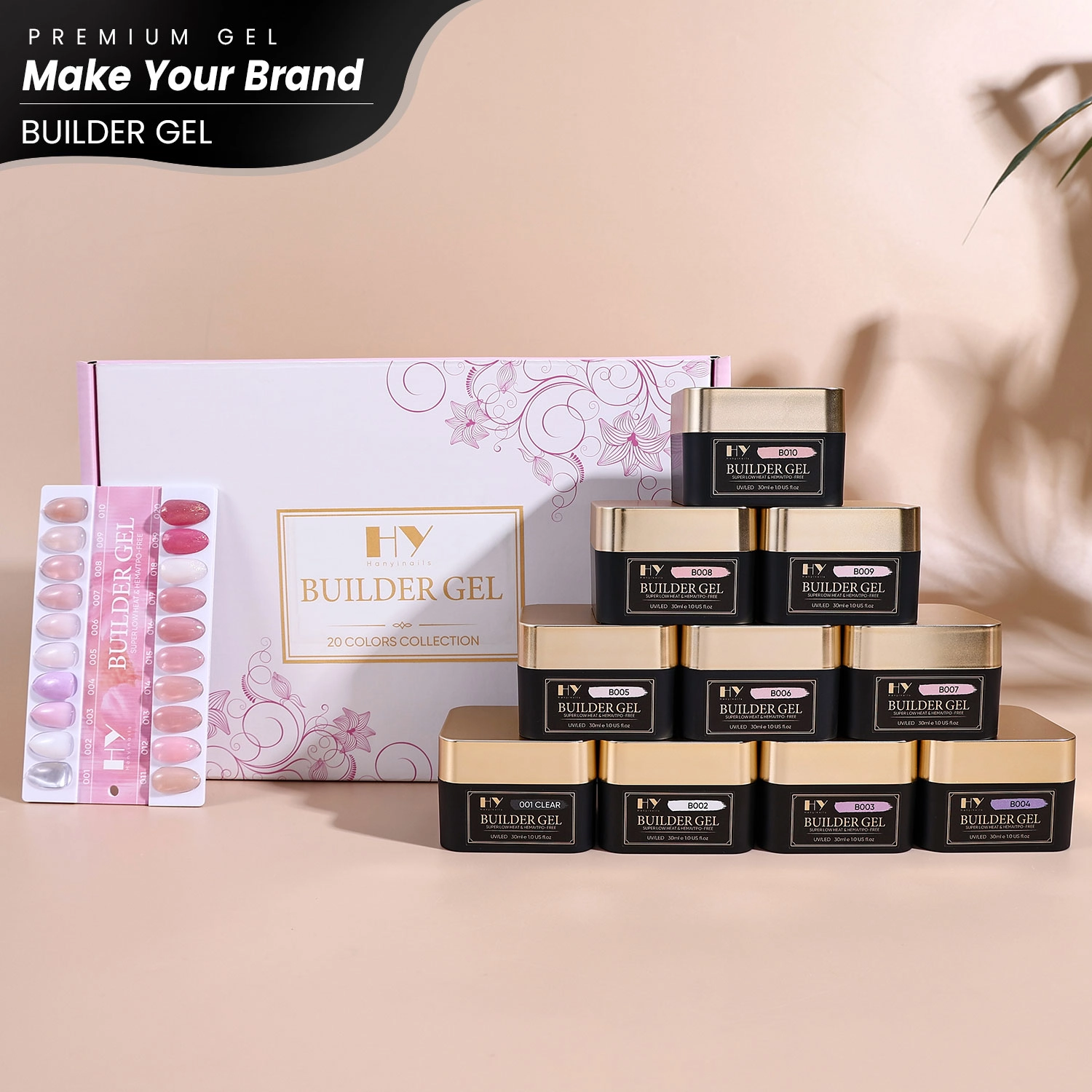
Hanyinails OEM HEMA-Free Polygel Nail Extension Kit | TPO-Free Builder Gel for Natural Nails – Private Label Available
✨ Key Features:
✔ HEMA & TPO Free—suitable for sensitive skin & allergy-prone users
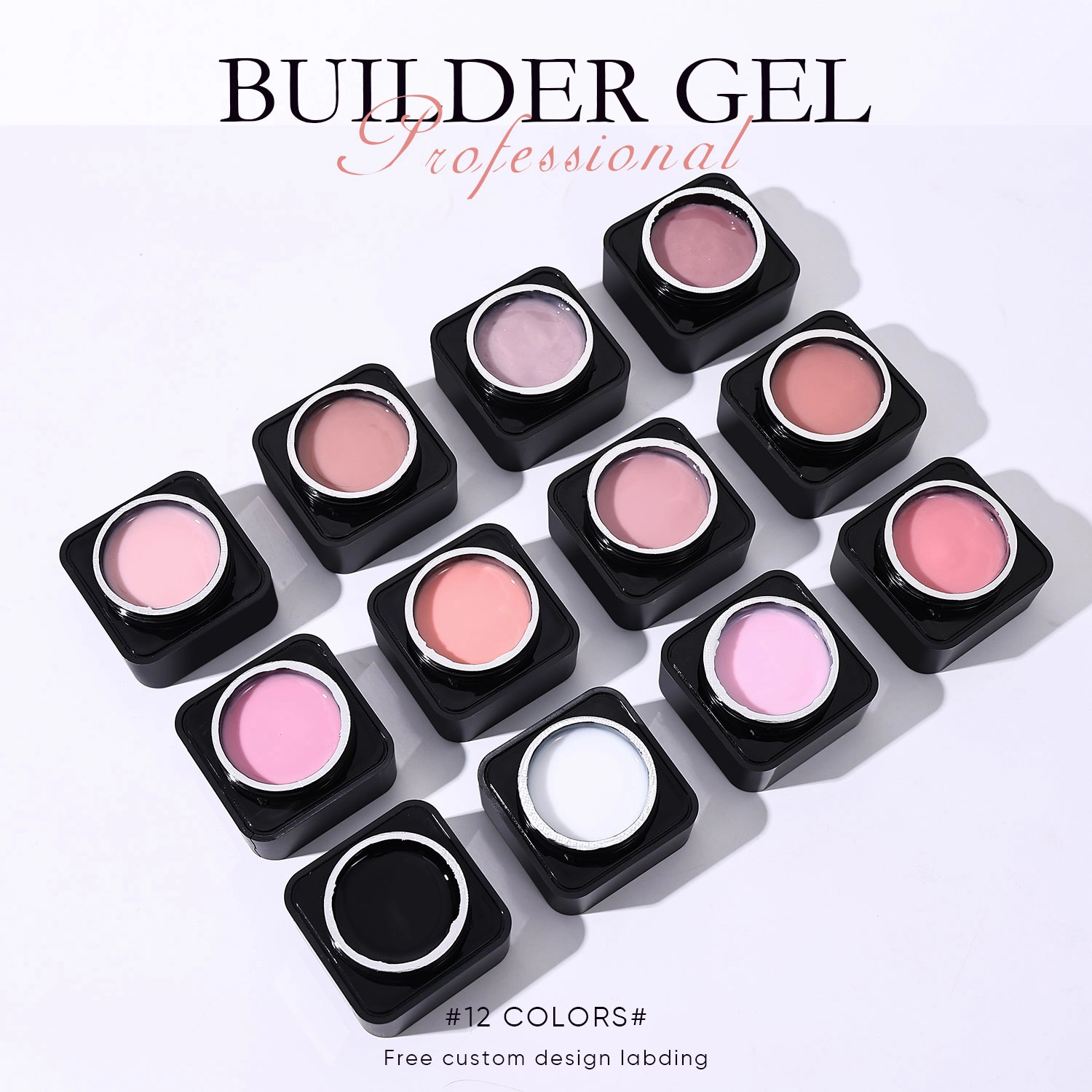
✔ Vegan & Organic—Cruelty-free, eco-conscious, and skin-friendly. ✔ OEM 200+ Colors—Includes nudes, pinks, whites, and shimmer for natural, elegant, or creative nail designs ✔ All-in-One Builder Gel Kit—Perfect for nail extensions, overlays, dual forms, and natural nail enhancement ✔ Beginner & Pro Friendly—Easy application with high-quality results; ideal for DIY users and nail salons
✔ Strong & Long-Lasting—Lightweight yet durable formula lasts up to 3–4 weeks without lifting or chipping
"Get longer, stronger nails with ease—unlock creativity with Polygel."
Looking for a creative, premium, and reliable nail gel product manufacturer?
Whether you're an Amazon seller, Shopify store owner, chain store buyer, brand owner, distributor, wholesaler, or nail supply retailer — Hanyinails is your trusted partner for custom and wholesale nail solutions.
Address: 303 West Gate, Block A, South China International Innovation Industrial Park, Foluo Road, Luocun, Nanhai District, Foshan, Guangdong Province, China.
We specialize in OEM & ODM services, offering tailored formulations, vibrant colors, and premium packaging. Contact us today to discuss your brand’s needs and get a personalized quote!
We specialize in OEM & ODM services, offering tailored formulations, vibrant colors, and premium packaging. Contact us today to discuss your brand’s needs and get a personalized quote!
We specialize in OEM & ODM services, offering tailored formulations, vibrant colors, and premium packaging. Contact us today to discuss your brand’s needs and get a personalized quote!




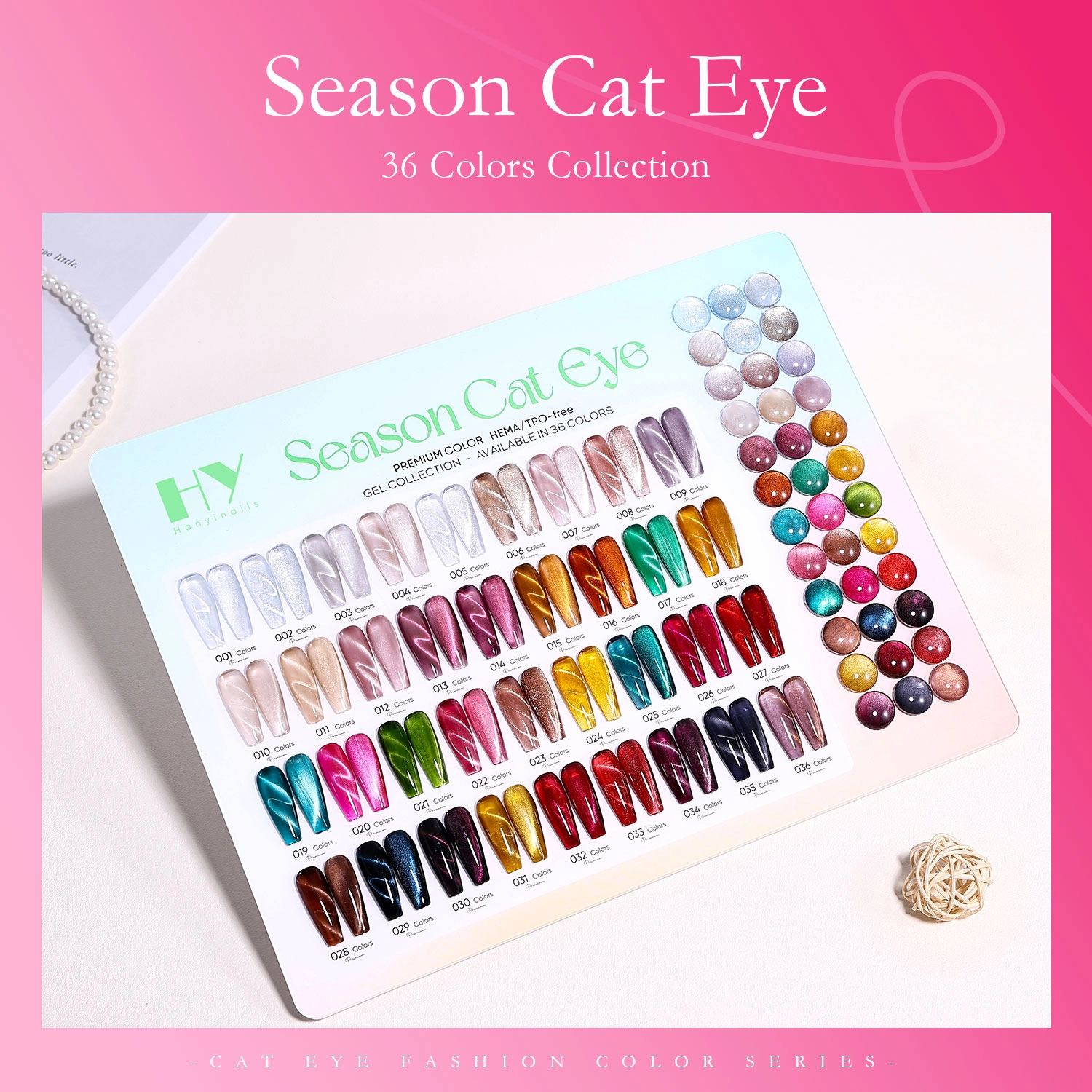

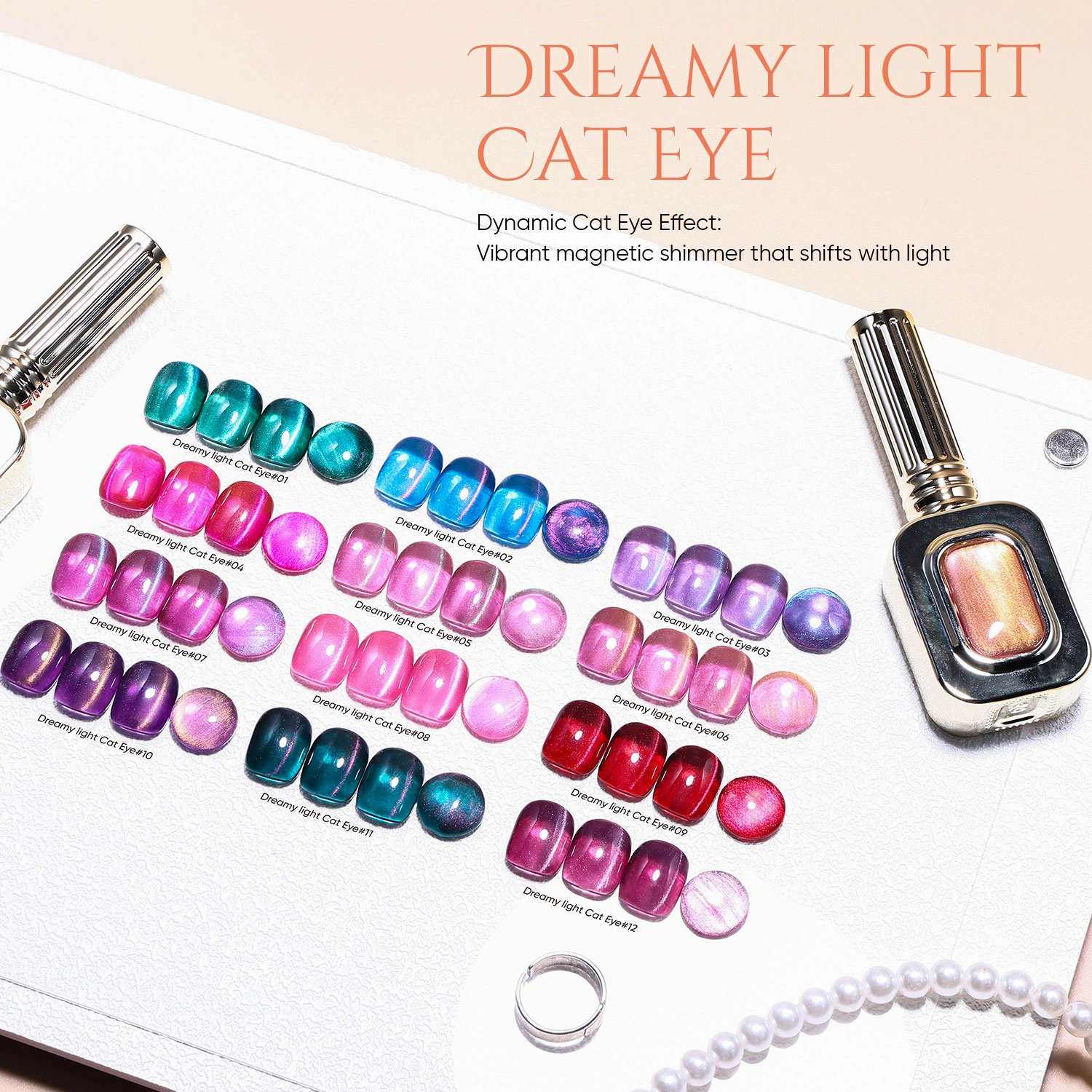
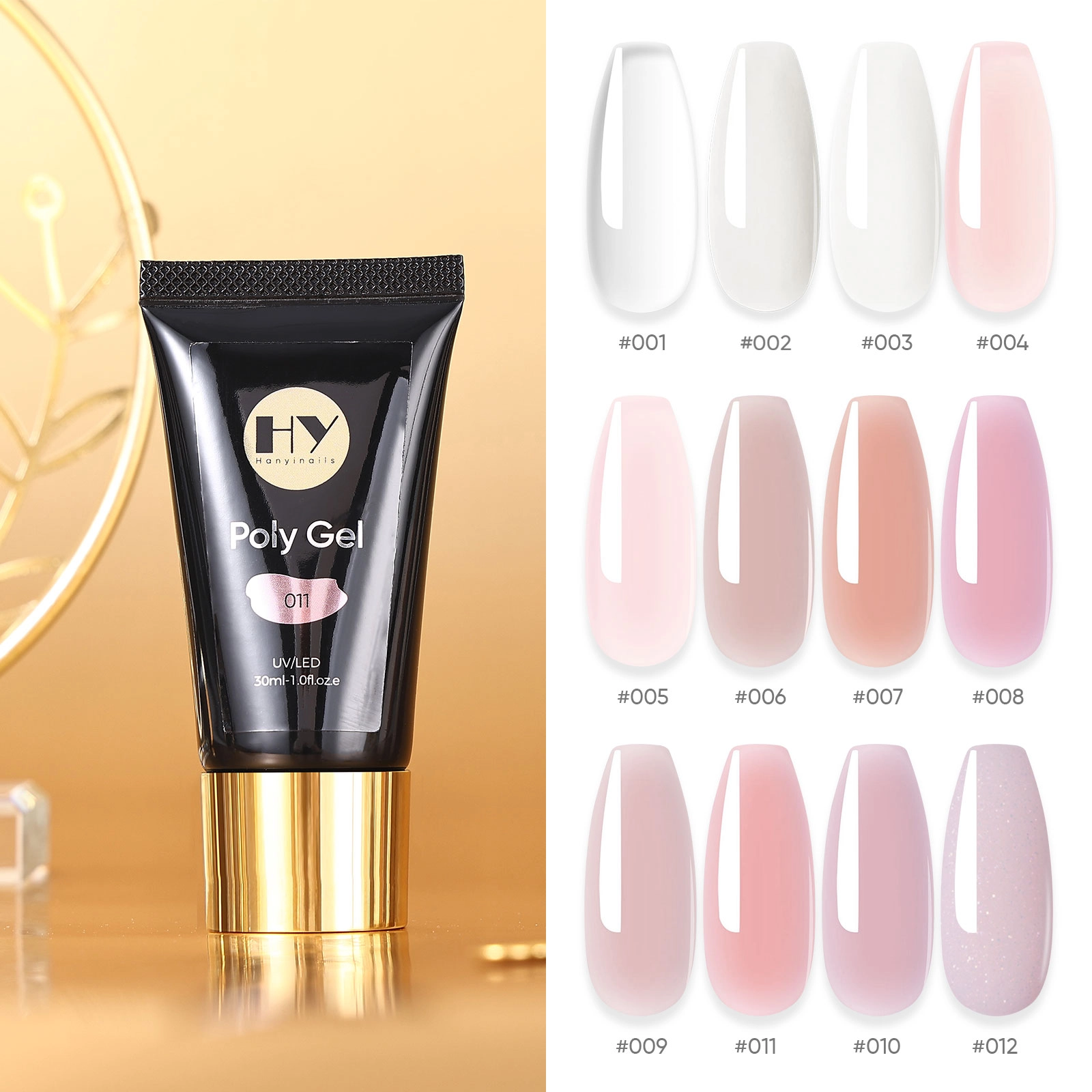
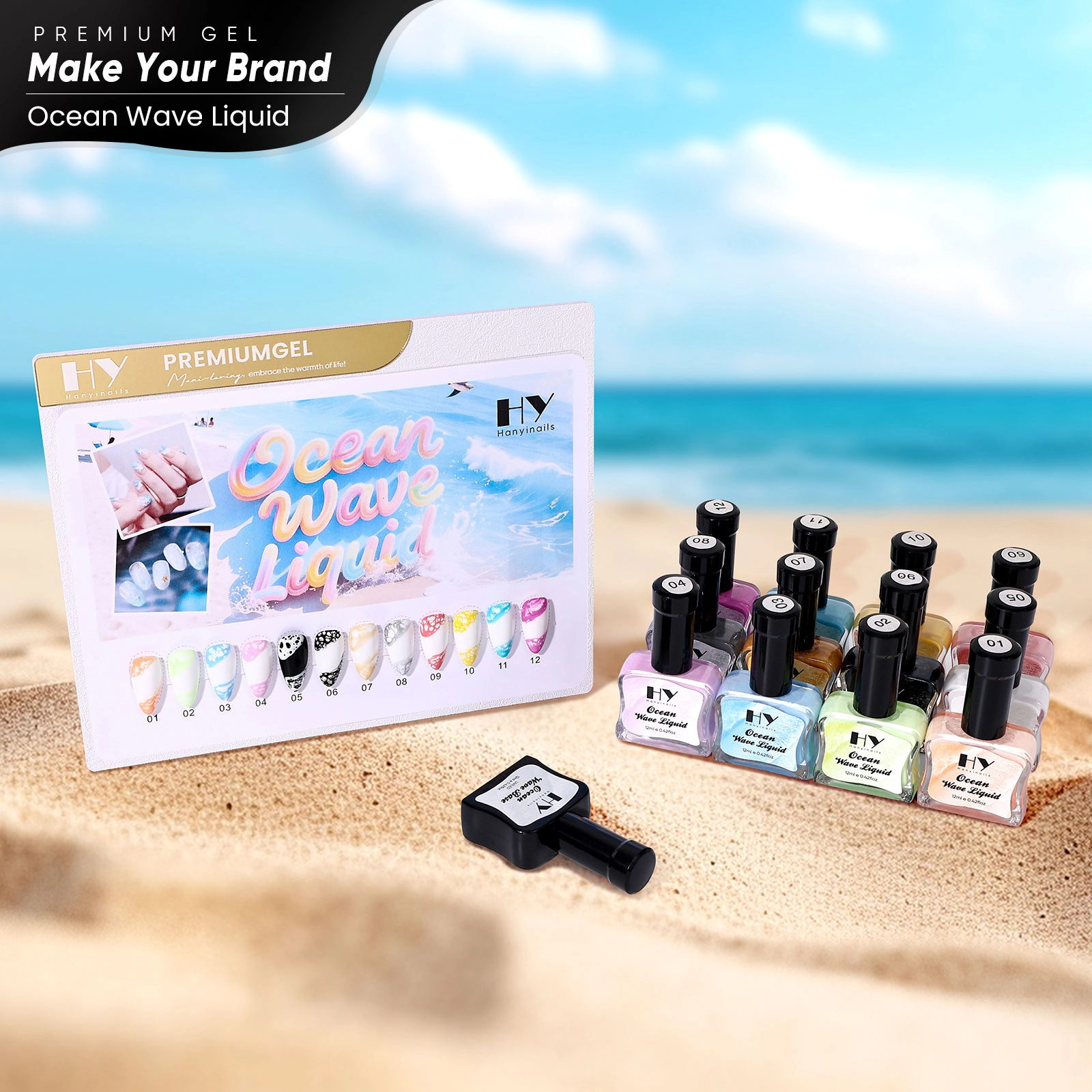

Hanyinails
Hanyinails
Hanyinails
Hanyinails