


The Ultimate 3D Nail Art Gel Guide for Beginners, Professionals & Wholesale Buyers
- What Is 3D Nail Art Gel?
- The Difference Between 3D Nail Art Gel and Regular Gel Polish
- Why 3D Nail Art Gel Has Become a Core Salon Service
- Expert Insight: What Professionals Actually Test Before Committing to a 3D Gel
- 3D Nail Art Gel vs. Acrylic vs. Hard Gel: The Honest Comparison
- Key Benefits of 3D Nail Art Gel for Salon and Wholesale Use
- Durability That Holds Up to Real-World Use
- Creative Range Across Skill Levels
- Professional Finish Without Specialized Equipment
- How to Apply 3D Nail Art Gel: Step-by-Step
- Essential Tools and Materials
- Step 1: Nail Preparation (Do Not Rush This)
- Step 2: Portion Control — Getting the Right Amount of Gel
- Step 3: Sculpt Your Design
- Step 4: Flash Curing for Multi-Element Designs
- Step 5: Seal and Finish
- Common Mistakes and How to Fix Them
- Design Ideas by Skill Level
- Beginner Designs: Master These First
- Intermediate Designs: Building Technical Depth
- Advanced and Statement Designs
- Seasonal Design Reference
- How to Maintain and Remove 3D Nail Art Gel Safely
- Daily Care for 3D Nail Designs
- Safe Removal Without Nail Damage
- Choosing the Right 3D Nail Art Gel: What Actually Matters
- Viscosity Grade
- Pigmentation and Color Stability
- Certifications Relevant to Your Market
- For Wholesale Buyers and Salon Distributors: What to Evaluate Before Sourcing
- Why Choose Hanyinails 3D Nail Art Gel
- Frequently Asked Questions
- Conclusion
Whether you're a nail technician learning your first sculpted petal, a salon owner building out your service menu, or a distributor evaluating 3D gel formulas for private label production — this guide covers what you actually need to know. No filler. No vague advice. Just the technical detail and practical guidance that makes a real difference in results.
What Is 3D Nail Art Gel?
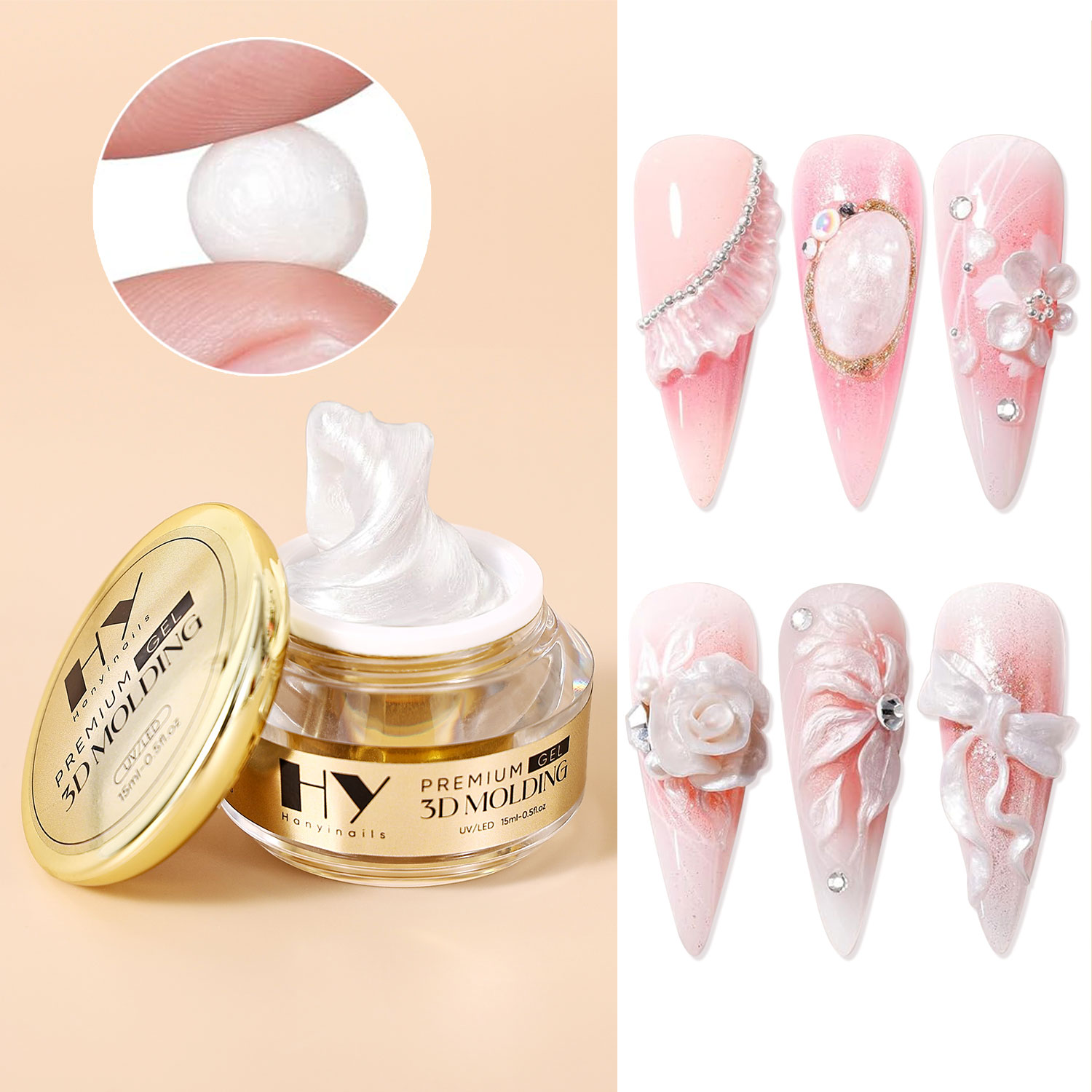
3D Nail Art Gel is a high-viscosity, UV/LED-curable gel specifically formulated to hold dimensional shapes on the nail without collapsing or self-leveling before curing. Unlike standard gel polish — which is designed to flow into a smooth, flat film — 3D gel maintains a clay-like consistency that stays exactly where it's placed, allowing nail artists to sculpt raised textures, layered florals, embossed geometric forms, and intricate decorative elements directly on the nail surface.
The gel remains fully workable until it is exposed to UV or LED light, which means artists have complete control over their design without any time pressure. Once cured, it produces a lightweight but rigid structure that preserves fine detail and surface texture.
The Difference Between 3D Nail Art Gel and Regular Gel Polish
The distinction goes beyond consistency. Here's what separates the two at a functional level:
| Property | Regular Gel Polish | 3D Nail Art Gel |
|---|---|---|
| Viscosity | Low — self-levels flat | High — holds shape immediately |
| Primary purpose | Color and shine | Sculpting and dimension |
| Working time | Limited — must be cured quickly | Unlimited — only cures under lamp |
| Layer behavior | Flows and spreads | Stays where applied |
| Typical finish | Smooth, glossy surface | Raised, textured, dimensional |
| Curing time | 30–60 seconds (thin layer) | 60–90 seconds (depends on thickness) |
A common mistake among beginners is attempting 3D sculpting with builder gel or hard gel. While these products can create slight height, they lack the viscosity and shape retention needed for detailed work. Using the wrong product is one of the leading causes of collapsed or undefined 3D designs.
Why 3D Nail Art Gel Has Become a Core Salon Service
The shift toward 3D nail art isn't a passing trend. Social media platforms — particularly Instagram and TikTok — have created a global audience for nail art content, and dimensional designs consistently outperform flat nail looks in engagement and shareability. For salons, this translates directly into demand: clients arrive with reference images of sculpted florals, textured chrome designs, and layered embellishments, and they expect their technician to deliver.
From a business perspective, 3D gel services command a meaningful price premium over standard gel manicures — typically 30–60% higher per service — while requiring only moderately more time and skill. The material cost per set is low, which means the margin on 3D services is disproportionately strong.
Expert Insight: What Professionals Actually Test Before Committing to a 3D Gel
Choosing the right 3D Nail Art Gel for professional use isn't about color range or packaging. Experienced technicians evaluate three specific performance factors before recommending or stocking a product:
- Shape retention under heat. In a busy salon environment, nail body heat and ambient temperature can soften certain gels before curing. A professional-grade 3D gel should maintain its sculpted shape at normal room temperature (18–26°C) without slumping. Test this by sculpting a small petal shape and leaving it on the nail surface for 60 seconds before curing. If the edges have rounded or the shape has settled, the gel's viscosity is insufficient for complex sculpting.
- Curing consistency across layer depth. 3D gel is necessarily applied in thicker layers than flat gel polish, which creates a real curing challenge. Low-quality gels often cure on the surface while leaving the interior soft — a problem that leads to structural failure within days of application. A reliable gel cures fully through layers up to 3mm thick within 90 seconds under a 48W LED lamp. Any gel that requires more than two cure cycles to achieve full hardness at this depth is not suitable for professional salon use.
- Adhesion to base gel without primer. Some 3D gels require a specific base product or adhesion primer to bond correctly. While this isn't disqualifying, it adds steps and product cost to every service. The best professional 3D gels adhere cleanly over a standard gel base coat without additional preparation, provided the nail plate is properly dehydrated.
3D Nail Art Gel vs. Acrylic vs. Hard Gel: The Honest Comparison
This question comes up constantly among nail technicians switching from acrylic systems, so it deserves a direct technical answer rather than a generic product endorsement.
- Acrylic (liquid monomer + powder polymer) sets through a chemical reaction triggered by air exposure. The working time is typically 2–3 minutes before the material becomes unworkable — which is enough for experienced technicians but unforgiving for beginners. Acrylic produces an extremely hard, durable structure, but it releases vapors from the liquid monomer that require proper ventilation. For 3D sculpting specifically, acrylic allows for very fine detail work in the hands of skilled practitioners, but the rushed working time makes it poorly suited for beginners or for designs requiring multiple iterative adjustments.
- Hard gel cures under UV/LED light and offers more flexibility than acrylic. It is primarily designed for nail extensions rather than 3D decoration, and its viscosity — while thicker than gel polish — is insufficient for holding the kind of raised relief detail that defines quality 3D nail art. Hard gel is appropriate for encapsulating small 3D elements or creating a base for embellishments, but not for sculpting florals or textured designs from scratch.
- 3D Nail Art Gel was specifically engineered for decorative sculpting. The unlimited working time (it only cures under a lamp), combined with a viscosity that holds shape without external support, makes it the most accessible and versatile medium for 3D nail work. The learning curve is significantly shorter than acrylic, the working environment is more comfortable (no vapor), and the results for decorative application are consistently superior.
For salons building a 3D nail art service, 3D Nail Art Gel is the correct product choice for the majority of designs.
Key Benefits of 3D Nail Art Gel for Salon and Wholesale Use
Understanding the practical advantages helps both nail artists justify the investment to clients and wholesale buyers evaluate the product's commercial positioning.
Durability That Holds Up to Real-World Use
When applied correctly over a properly prepared nail and sealed with a quality top coat, professional-grade 3D gel designs maintain their shape and adhesion for 3–4 weeks under normal daily activity. The cured gel is rigid but not brittle — it flexes slightly with the natural nail without cracking. This durability distinguishes 3D gel from glued-on embellishments (press-on gems, pre-made 3D charms), which are prone to snagging and lifting within the first week.
The key variable is edge sealing. Any 3D design element that is not sealed at its base with top coat or a thin layer of clear gel is a potential lift point. This is one of the most common sources of early design failure, and it is entirely preventable.
Creative Range Across Skill Levels
One of the underappreciated advantages of 3D Nail Art Gel is that its creative range scales with skill. A beginner working in their first month can produce clean, wearable accent designs — a single raised daisy on a nude base, a simple heart with textured surface, a minimal dot cluster — that clients will genuinely pay for. An experienced technician working with the same product can produce multi-layer sculpted roses with individual petal definition, dimensional abstract textures, or complex geometric relief work.
This scalability matters commercially: a salon doesn't need to wait until its technicians are advanced practitioners before 3D services become a revenue line. Simple beginner designs can be offered at an accessible price point while more complex work commands premium pricing — all from the same core product.
Professional Finish Without Specialized Equipment
Unlike acrylic systems that require separate liquid monomers, dappen dishes, and specific brushes, 3D Nail Art Gel works with the UV/LED lamp and sculpting tools a salon already owns. The entry barrier is low. A technician needs a standard 48W LED lamp, a set of silicone sculpting tools, and a slip solution (or isopropyl alcohol as an alternative) to begin producing professional-quality 3D work.
How to Apply 3D Nail Art Gel: Step-by-Step
The steps below reflect a complete professional workflow, from nail preparation through final cure. Skipping or rushing any stage of the preparation sequence is the most reliable way to produce designs that lift or lose definition prematurely.
Essential Tools and Materials
Before beginning, confirm you have the following:
- 3D Nail Art Gel in your chosen colors (and clear, for encapsulation work)
- UV/LED lamp — minimum 36W; 48W recommended for thicker 3D elements
- Silicone sculpting tools (at least two sizes: fine point and medium flat)
- Slip solution or 70% isopropyl alcohol (for tool lubrication and cleanup)
- Nail dehydrator and gel base coat
- Fine sculpting brush (optional, for detail work)
- Dotting tools (optional, for symmetrical placement)
- Clear top coat or gel sealer
One note on lamps: not all LED lamps cure all gel formulations equally. If you are sourcing 3D gel from a new manufacturer, test the cure time and through-layer hardness with your specific lamp before using the product on clients.
Step 1: Nail Preparation (Do Not Rush This)
Push back and trim cuticles. Lightly buff the nail plate with a 180-grit file to remove surface shine and create micro-texture — this mechanical roughening significantly improves adhesion. Remove all dust with a lint-free wipe and apply nail dehydrator. Allow it to evaporate fully (approximately 30 seconds) before proceeding.
Apply a thin, even layer of gel base coat. Cure fully under your lamp according to the base coat manufacturer's instructions. The base coat must be completely cured and tack-free before 3D gel application begins. Any uncured base coat will migrate into the 3D structure and weaken adhesion.
If your base includes a color or gel polish layer beneath the 3D elements, apply and cure that before any sculpting work.
Step 2: Portion Control — Getting the Right Amount of Gel
This is where most beginners go wrong. Too much gel creates designs that are too heavy, cure unevenly, and lack fine detail. Too little gel makes it difficult to achieve clean petal definition.
A practical reference for common design elements:
- Single small petal (approx. 5mm): rice-grain-sized bead of gel
- Full five-petal flower (per flower): approximately 0.3–0.4g total
- Textured accent point: a pinhead-sized bead
- Raised geometric element: sized to the design, applied in layers no thicker than 2.5–3mm per cure cycle
Use a silicone tool or clean sculpting spatula to scoop gel from the jar. Do not contaminate the jar with used product — always work from a palette or the back of your hand.
Step 3: Sculpt Your Design
Place the gel bead on the nail in the desired position. Use a silicone tool lightly moistened with slip solution to shape and refine the gel. The slip solution prevents the tool from dragging and tearing the gel structure.
For petal-based designs, work from the center outward, pressing each petal outward and thinning the edges as you go. Thin edges cure cleaner and look more refined than thick, rounded ones.
Important for multi-layer designs: do not build the full height of a 3D element in a single application. Thick gel layers — anything over approximately 3mm — will not cure fully to the core in a single pass, resulting in soft interiors. Instead:
- Apply the first layer, sculpt into shape, cure for 60 seconds
- Lightly dust the cured surface with nail dust or apply a very thin coat of clear gel to create adhesion for the next layer
- Apply and cure subsequent layers until the desired height is achieved
Step 4: Flash Curing for Multi-Element Designs
When creating designs with multiple separate elements (e.g., a floral cluster with stems, leaves, and individual flowers), use flash curing — a partial 10–15 second cure — to firm up each element before adding adjacent ones. This prevents neighboring gel pieces from merging or distorting each other.
Full cure each element once the complete arrangement is in place.
Step 5: Seal and Finish
Once all 3D elements are fully cured and you are satisfied with the design, apply a layer of clear top coat or gel sealer. Pay particular attention to the edges where each 3D element meets the nail surface — brush the sealer under the edge of each element to create a complete seal. This is the single most important step for preventing lifting.
Cure the top coat fully. For designs with significant height, apply a second thin layer of top coat to ensure full coverage.
Common Mistakes and How to Fix Them
| Problem | Likely Cause | Solution |
|---|---|---|
| Gel not curing fully | Layer too thick, or lamp wattage insufficient | Sculpt in layers ≤3mm; upgrade to 48W LED lamp |
| Designs lifting within days | Insufficient nail prep or unsealed edges | Re-do dehydration step; seal all base edges with top coat |
| Petal edges look rounded and undefined | Using too much gel or too little slip solution | Reduce bead size; re-moisten tool before each shaping pass |
| Gel collapses before curing | Gel too warm, or formula viscosity too low | Work in a cooler room; switch to a higher-viscosity formula |
| Surface appears sticky after cure | Top coat applied over partially-cured layer | Always full-cure each layer before applying the next |
| 3D element cracks after a few days | Over-thick application cured from outside in | Apply in thinner layers with intermediate cures |
Design Ideas by Skill Level
Beginner Designs: Master These First
Start with designs that rely on simple shapes and minimal layering. These are appropriate for technicians in their first 1–3 months working with 3D gel:
- Single-accent daisy: Five small oval petals arranged around a central dot. Apply each petal individually, flash-cure, then add the center. Achievable with a fine silicone tool and basic bead control.
- Textured heart: A standard heart shape with a roughened surface created by stippling the gel with a dotting tool before curing. Creates visual interest without requiring precise sculpting skills.
- Dot cluster accent: Varying-sized beads of 3D gel arranged in a deliberate cluster on one nail. No shaping required — just controlled bead placement. Good for practicing portion control.
Intermediate Designs: Building Technical Depth
For technicians who have completed at least 10–15 sets using basic 3D techniques:
- Multi-layer rose: Build from the center outward using curved petals that overlap. Requires flash curing between each row of petals and comfort with directional petal shaping. Use two gel colors (light base + darker shadow tone) for realistic depth.
- Embossed geometric pattern: Raised triangles, diamonds, or chevrons applied in a repeating grid. Tests consistent bead sizing and placement accuracy.
- Bow with ribbon tails: Requires understanding of how to thin gel at connection points to create realistic fabric-like movement in the design.
Advanced and Statement Designs
- Sculpted 3D chrysanthemum: Dozens of narrow, individually shaped petals radiating from a dense center. Requires full control of thin-petal technique and patient layer-by-layer construction.
- Relief texture design: A full-coverage nail surface with repeating embossed texture — scales, lace, knit stitch pattern. Requires even gel distribution across the entire nail plate.
- Encapsulated 3D art: 3D gel elements built inside clear builder gel, creating a suspended dimensional effect with gel polish color beneath. Technically demanding but produces striking results.
Seasonal Design Reference
| Season | Design Idea | 3D Technique |
|---|---|---|
| Spring | Cherry blossom branch | Multi-petal florals + thin branch lines |
| Summer | Tropical leaves | Broad flat petal technique, slight curl at edges |
| Autumn | Pumpkin accent | Ribbed sphere shape with stem |
| Winter | Snowflake | Precise geometric point technique |
| Holiday | Poinsettia | Multi-layer petal with red/gold color mix |
How to Maintain and Remove 3D Nail Art Gel Safely
Daily Care for 3D Nail Designs
Advise clients to:
- Wear gloves when washing dishes or using cleaning products — prolonged water exposure softens the seal around 3D elements
- Apply cuticle oil daily to the surrounding skin but avoid saturating the base of 3D elements, which can gradually loosen adhesion
- Avoid using the 3D-decorated nail as a tool for prying or scraping — the design can act as a lever point and cause the entire nail plate coating to lift
With proper care, professional 3D gel designs last 3–4 weeks without maintenance.
Safe Removal Without Nail Damage
Never peel, pry, or force removal of 3D gel. Because 3D designs have structural height, they require slightly more preparation before acetone soak-off than flat gel services:
- Use a medium-grit file (150–180 grit) to remove the bulk of the raised 3D structure, filing down until you reach approximately 1mm above the nail plate surface. Do not file directly to the nail — the extra buffer protects against accidental damage.
- Soak a lint-free cotton pad in 100% acetone and place it directly on the nail surface.
- Wrap firmly in aluminum foil and leave for 12–15 minutes. The remaining thinned gel will soften and release.
- Use an orangewood stick to gently push away the softened gel from the cuticle toward the free edge. Do not scrape across the nail plate.
- If any residue remains, re-wrap for an additional 3–5 minutes rather than forcing removal.
- Once clear, apply a nourishing nail oil immediately to rehydrate the nail plate.
Choosing the Right 3D Nail Art Gel: What Actually Matters
Not all 3D gels perform equally, and the price point of a product is a poor proxy for its quality. These are the specification factors that determine real-world performance:
Viscosity Grade
3D gels are available in different viscosity grades, and the right choice depends on the design type:
- High viscosity (carving/sculpting gel): Firm, clay-like texture. Best for detailed relief work, individual petals, and any design where sharp edges and precise form are required. Does not self-level at all.
- Medium viscosity (modeling gel): More pliable and forgiving. Better for organic, curved shapes and designs where smooth blending between elements is needed.
- Soft viscosity (texture/emboss gel): Used for surface texture effects and subtle raised detailing over color. Not suitable for high-relief sculpting.
A professional salon should stock at least two viscosity grades to cover the full range of client requests.
Pigmentation and Color Stability
Pre-pigmented 3D gels should deliver full color opacity in a single application without the color washing out or fading after cure. Test pigmentation by applying a standard petal shape over a black base coat — if the petal color is visible and true after one cure, the pigmentation density is sufficient. Poor-quality gels often require multiple applications to achieve opacity, which adds time and risks overbuilding height.
Color stability under UV exposure over the wear period is also important, particularly for white and pastel formulas, which are susceptible to yellowing with low-quality photoinitiators.
Certifications Relevant to Your Market
For salons in European markets, CPNP (Cosmetic Products Notification Portal) compliance and HEMA-free formulation are increasingly standard client expectations. In North American markets, FDA compliance documentation is the baseline. For wholesale buyers and private label distributors, confirming that the manufacturer holds the appropriate certifications for your target market is a non-negotiable step before sourcing.

For Wholesale Buyers and Salon Distributors: What to Evaluate Before Sourcing
If you are a salon group purchasing manager, a nail supply distributor, or a private label brand owner, the decision criteria for 3D Nail Art Gel go beyond the product's end-use performance. Here is what experienced wholesale buyers verify before committing to a manufacturer:
- Batch consistency. The single most common complaint in wholesale nail gel procurement is inconsistency between batches — a formula that performs well in the sample but ships differently in production volume. Ask any manufacturer you're evaluating for batch test documentation, and request multiple small production samples from different production runs before committing to volume orders.
- Shelf stability. Professional 3D gels should maintain their viscosity and curing performance for a minimum of 18–24 months from production date when stored correctly (away from light, at 15–25°C). Gels that thicken, separate, or show surface crystallization before this window are a logistics and returns liability.
- MOQ and lead time flexibility. For distributors building a private label range, minimum order quantities and production lead times directly impact cash flow and inventory planning. Standard MOQ for private label 3D gel production with a professional manufacturer is typically 200–500 units per SKU, with lead times of 30–45 days for established formulas. Custom formula development adds 2–4 weeks to the timeline.
- OEM/ODM capability. If you are building a branded nail product line, evaluate the manufacturer's capacity to support custom formulation (viscosity adjustment, color matching, scent-free options), custom packaging (bottle shape, label, cap), and the documentation support required for your market's regulatory filing.
- Technical support after the sale. When a salon client reports a performance issue with a product you've distributed, how quickly can you get a technical answer from your manufacturer? Distributors who choose manufacturers with responsive technical support have meaningfully lower returns and complaint rates.
Why Choose Hanyinails 3D Nail Art Gel
Hanyinails is a professional manufacturer of nail art gel products based in Foshan, Guangdong Province, China — one of the world's most established manufacturing regions for cosmetic nail products. The company operates an integrated production facility covering formula R&D, pigment mixing, filling, packaging, and quality control under one roof.
For wholesale buyers and private label brands, this integration matters: it means that formula adjustments, packaging changes, and quality control queries are handled within the same facility rather than across multiple suppliers — resulting in faster turnaround and more reliable consistency.
Key differentiators of Hanyinails' 3D gel product line:
- Non-sticky, non-flowing formula: Hanyinails' 3D sculpting gels are engineered with a firm, non-sticky surface texture that allows silicone tools to glide cleanly without dragging. This is a specific formulation advantage that reduces application time and improves detail accuracy.
- HEMA-free options available: For markets where HEMA-free formulation is a regulatory requirement or a premium positioning point, Hanyinails offers certified HEMA-free 3D gel formulations.
- OEM/ODM with full documentation support: Custom formulation, private label packaging, and the market certification documentation (CPNP, SGS, MSDS, GMP) required for global distribution.
- 2,000+ new colors per year: For distributors whose clients demand trend-aligned color offerings, Hanyinails releases a continuous stream of new color SKUs aligned with global nail trend cycles.
Frequently Asked Questions
Can I use 3D Nail Art Gel over regular gel polish?
Yes. In fact, this is the standard workflow. Apply and cure your color gel polish layer first, then sculpt your 3D elements on top. The cured gel polish surface provides a clean, stable base for adhesion. Do not attempt to sculpt over uncured gel polish — the two layers will mix and create a compromised bond.
Why is my 3D nail art gel not curing completely?
The two most common causes are excessive layer thickness and insufficient lamp wattage. For complex 3D designs with height, sculpt in layers no thicker than 2.5–3mm and cure each layer fully before adding the next. If full-depth hardness is still not achieved with a 60–90 second cure cycle, upgrade to a 48W LED lamp. Ensure the lamp's light chamber is clean — accumulated gel residue on the lamp's inner surface reduces effective output over time.
How long does 3D Nail Art Gel last on nails?
With proper preparation, correct application, and thorough edge sealing, professional 3D gel designs last 3–4 weeks. The most common cause of early lifting is insufficient nail dehydration during prep or unsealed edges at the base of each 3D element. Both are entirely preventable with correct technique.
Is 3D Nail Art Gel safe for natural nails?
Yes, when applied and removed correctly. Professional-grade formulas with non-toxic, low-odor ingredients do not damage the nail plate. The key safety variable is removal: never peel or force 3D gel off the nail. Improper removal — not the gel formula itself — is the source of virtually all nail plate damage associated with gel products.
Can beginners use 3D Nail Art Gel at home?
Yes. The unlimited working time (gel only cures under a lamp) makes 3D gel more beginner-friendly than acrylic systems. Start with simple single-element designs, work with small bead sizes, and focus on mastering clean edge shaping before attempting multi-layer designs.
What is the difference between 3D gel and 4D gel?
In market terminology, "4D gel" typically refers to a higher-viscosity variant with an even firmer, more clay-like consistency that holds extremely fine detail and sharp architectural lines. The underlying chemistry is similar; the viscosity grade is higher. 4D gel is preferred for highly precise geometric or structural designs where any softness in the material would compromise the form.
For wholesale buyers: what is the typical MOQ for private label 3D gel?
This varies by manufacturer. At Hanyinails, private label orders for 3D gel products are available from 200 units per SKU for established formulas in standard packaging. Custom formula development or unique packaging requires a higher MOQ, typically 500 units, and a 2–4 week development phase before production begins. Contact the Hanyinails sales team directly for a tailored quote based on your product range and market.
Conclusion
3D Nail Art Gel represents one of the strongest commercial opportunities in the current nail services market — high client demand, premium pricing, low material cost, and accessible skill development make it a service that pays back the investment in training and product quickly.
For nail technicians, the pathway to consistent professional results is a combination of correct product selection (viscosity-matched to design type), rigorous nail preparation, and patience with layered application. The techniques in this guide are not shortcuts — they are the foundation of results that hold up over a full wear cycle and generate the client loyalty that builds a sustainable book of business.
For salon owners and distributors, the opportunity lies in structuring 3D gel services as a premium tier — with appropriate pricing, visible before-and-after documentation, and a supply relationship with a manufacturer that can deliver consistent quality at commercial volume.
Hanyinails manufactures professional-grade 3D Nail Art Gel for salons and private label brands worldwide, with full OEM/ODM support, HEMA-free certified formulas, and the batch consistency that serious distributors require. If you're evaluating a 3D gel supply partner, contact the Hanyinails team to request samples and discuss your specific sourcing requirements.
Why Does Chrome Powder Create a Mirror Finish? The Optical Principles Explained
Small Bottle, Big Impact: How Cuticle Oil Became the Hidden Guardian of Nail Longevity
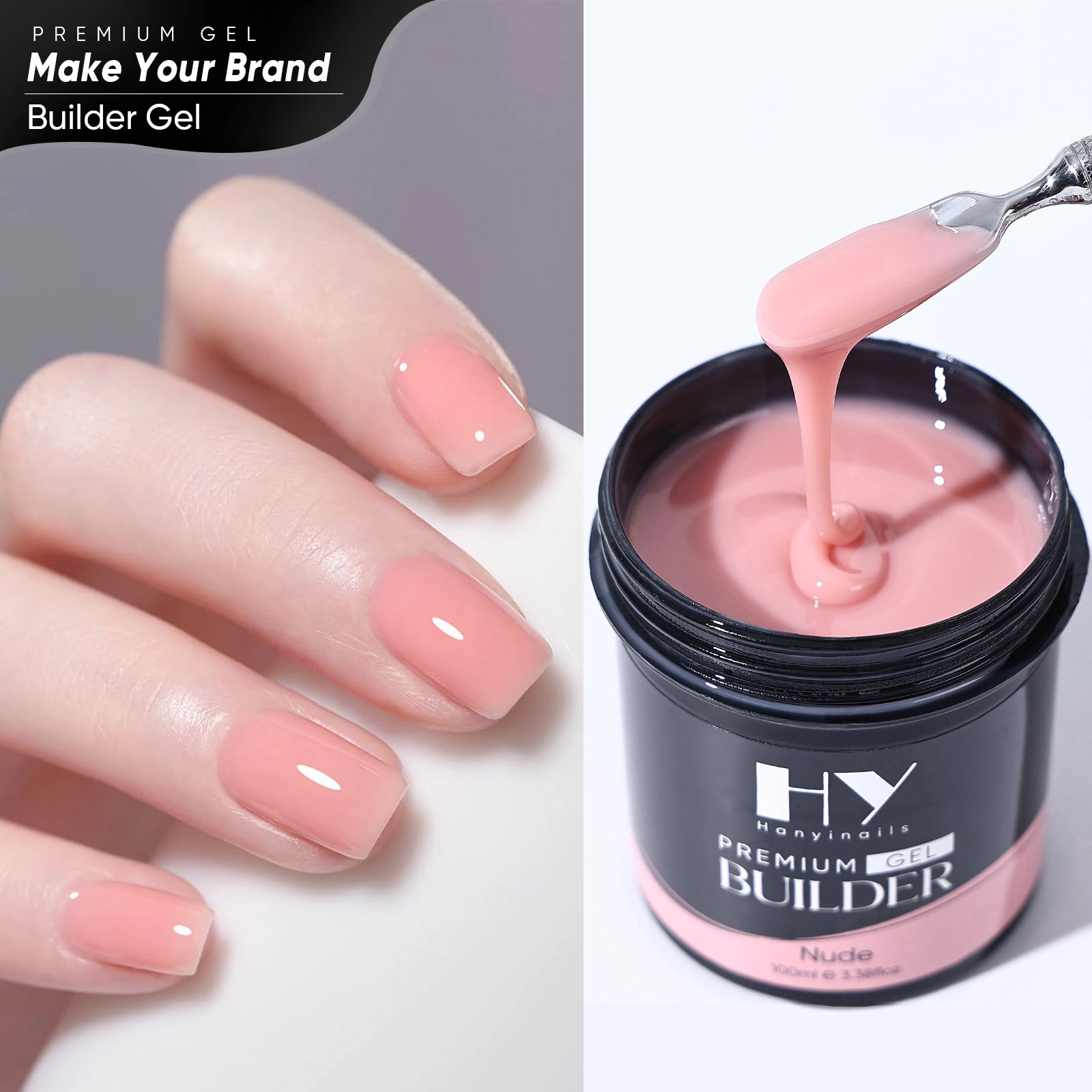
Why Are Your Nails Prone to Breaking? The Strengthening Principles of Builder Gel and How to Use It Correctly
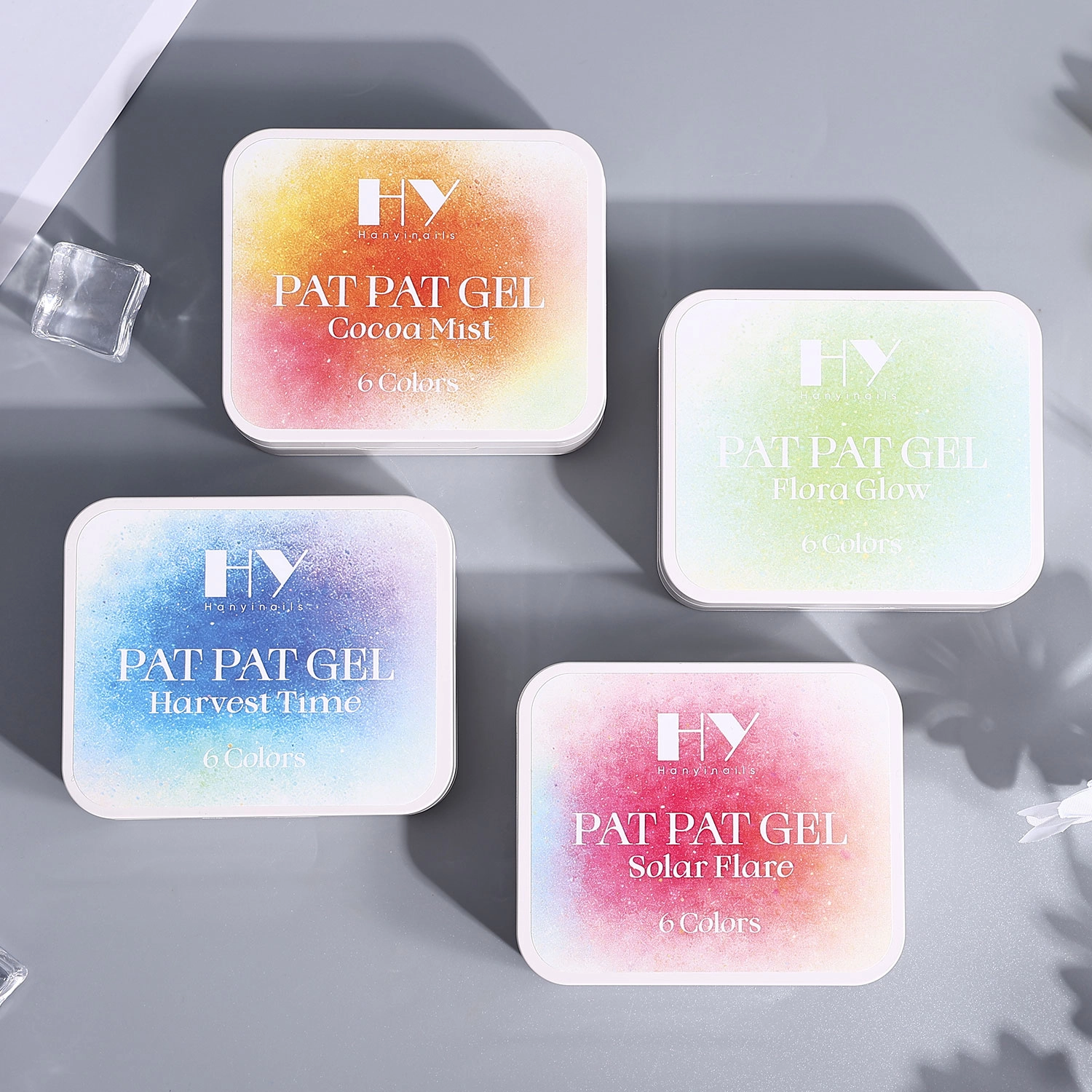
The Complete Guide to Pat Pat Gel: Revolutionizing Semi-Solid Nail Art
How to Use Semi Solid Nail Gel? Complete Beginner Tutorial | Step-by-Step Guide for Perfect Application
For Customization
What custom customers need to prepare?
1. Send Your Design/ldea.
2. Confirm 3D Drawing 5Logo Design.
3.3D Printing & Quotation.
4. Mode Design s sample Confirm.
HEMA-Free Gel Polish
Can I mix HEMA and HEMA-free products?
We don’t recommend it. Cross-contamination may:
Trigger allergies
Reduce HEMA-free benefits
Stick to one system per service.
TPO -Free Gel Polish
How do I identify TPO-free gels?
Check labels for "TPO-Free" claims
Look for certifications like EU Ecolabel
Ask suppliers for safety data sheets (SDS)
FAQ
Do you offer OEM & ODM services?
Yes! We specialize in OEM & ODM nail polish production, offering custom formulations, colors, and packaging to meet your brand’s needs.
For Company
Where is Hanyi factory located?
Hanyi is locatedin Guangdong Province, China
Recommended for You
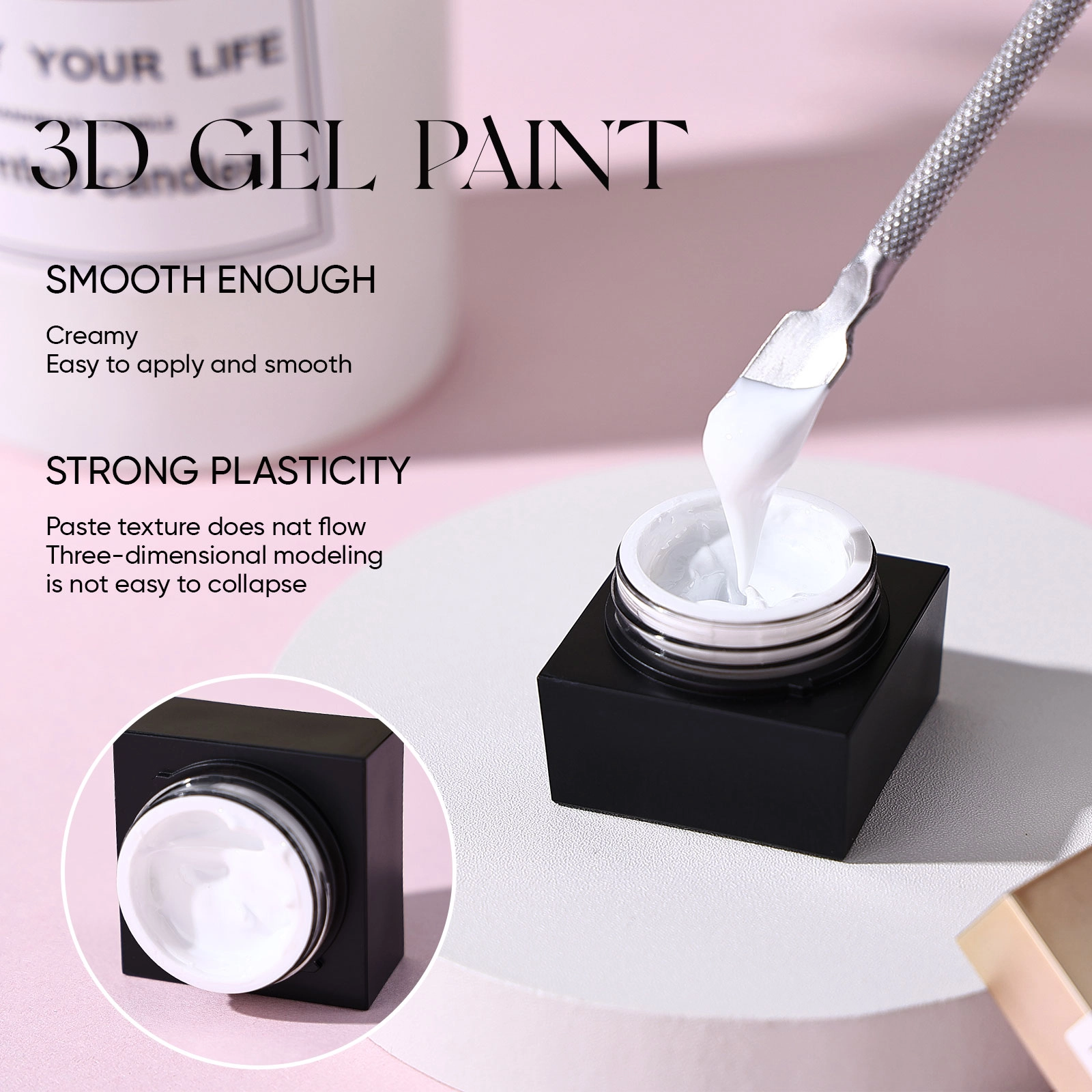
🔑 Key Features:
🔸 3D Textured Effect—Perfect for embossed flowers, relief effects, and 3D design.
🔸 Non-Flowing Formula—Stays exactly where applied, no spreading or dripping.
🔸 High Pigment Saturation—Vivid colors even with one layer.
🔸 Strong Adhesion—Long-lasting wear with excellent grip on base gel.
🔸 UV/LED Curing—Compatible with standard curing systems (60–90s).
🔸 OEM/ODM Customization—Bottle design, logo, and colors are all customizable.
🔸 Suitable for All Levels—Beginner to professional nail artists.

🔑 Key Features:
-
🌸 Vibrant Pitaya Pink Color—Trendy and bold, perfect for all skin tones and seasons.
-
💅 Long-Lasting Formula—Stays chip-free for up to 21 days with proper application.
-
✨ High Gloss Finish—Provides a salon-quality shine that won't dull.
-
🌿 Eco-Friendly & Cruelty-Free – Made with non-toxic ingredients, gentle on nails.
-
🛠️ OEM/ODM Support—Customize color, packaging, logo, bottle shape, and more.
-
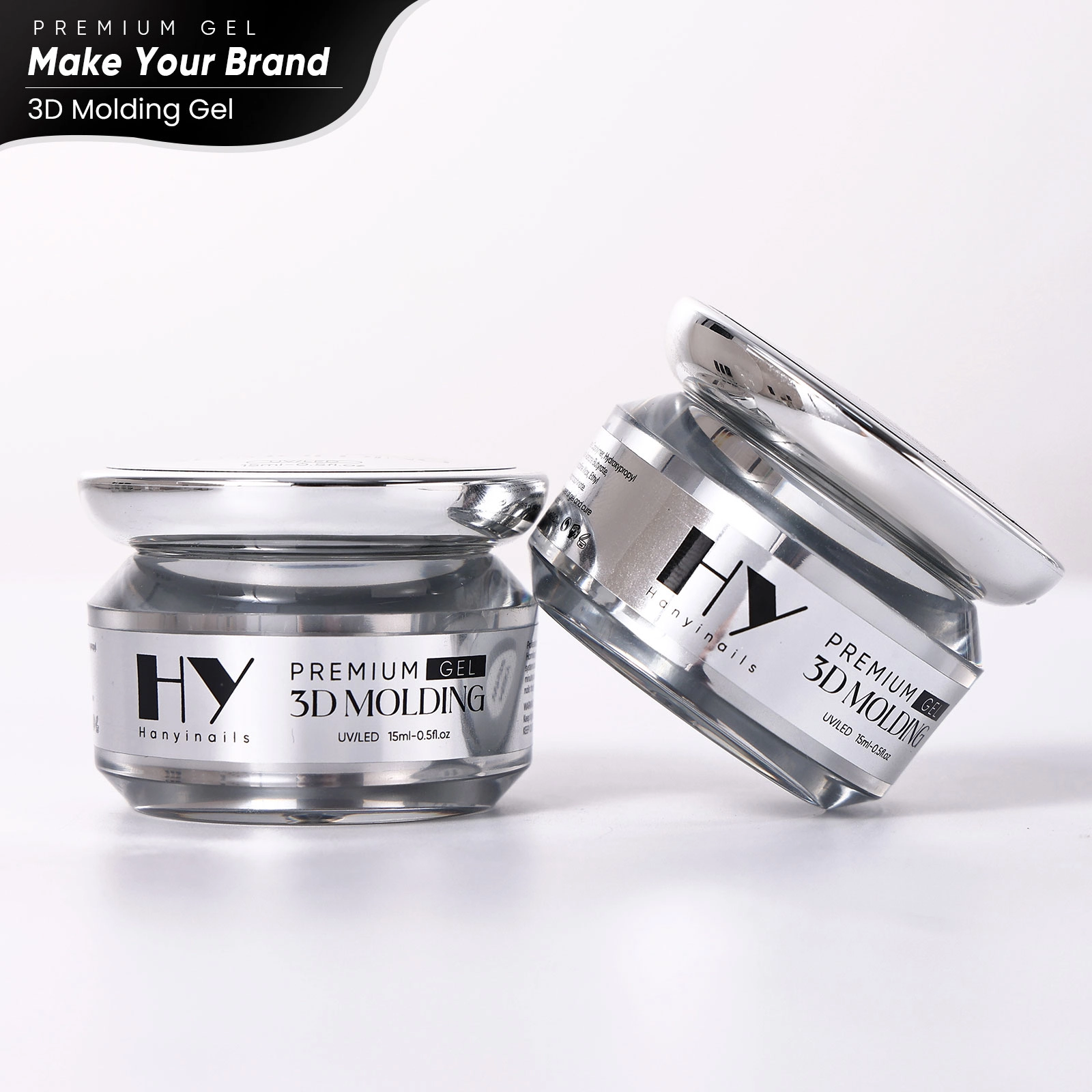
- 🔑 Key Features:
-
✨ Bubble-Free Formula - Smooth application with crystal-clear, professional results every time.
⚡ Fast-Curing Formula - Cures in 60s (LED) / 90s (UV) for efficient salon or home use.
🎨 Multi-White & Clear Options - Available in White, Milky, Pearl, and Clear for versatile designs.
💪 Strong yet Flexible Hold - Maintains sharp 3D shapes without cracking or collapsing.
🏭 OEM/ODM Customization - Custom colors, packaging, and branding available for your line. -
Sculpt with Precision, Create with Clarity.
-
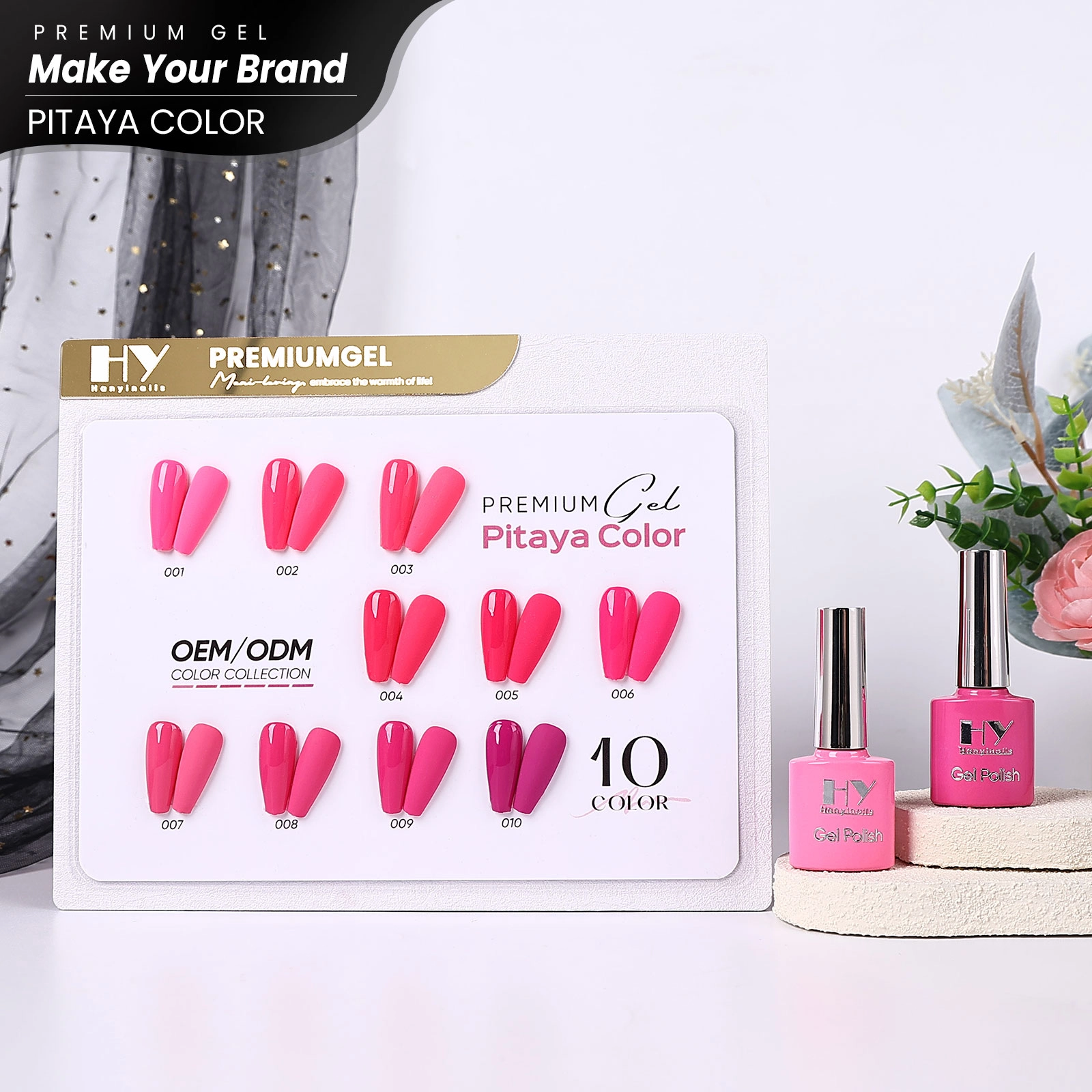
🔑 Key Features:
-
🌸 Vibrant Pitaya Pink Color—Trendy and bold, perfect for all skin tones and seasons.
-
💅 Long-Lasting Formula—Stays chip-free for up to 21 days with proper application.
-
✨ High Gloss Finish—Provides a salon-quality shine that won't dull.
-
🌿 Eco-Friendly & Cruelty-Free – Made with non-toxic ingredients, gentle on nails.
-
🛠️ OEM/ODM Support—Customize color, packaging, logo, bottle shape, and more.
-
Looking for a creative, premium, and reliable nail product manufacturer?
Whether you're an Amazon seller, Shopify store owner, chain store buyer, brand owner, distributor, wholesaler, or nail supply retailer — Hanyinails is your trusted partner for custom and wholesale nail solutions.
Hanyinails
Hanyinails
Hanyinails
Hanyinails