Molding Gel for Nails: How 3D Sculpting Gel Is Used in Professional Nail Art
Tuesday, 11/4/2025
3D Nail Art Gel transforms nail design by enabling precise, durable 3D sculpting for professional results. Hanyinails details techniques and best practices to master molding gel application and elevate nail art craftsmanship.
Molding gel for nails is a thick, shapeable gel used to create raised and dimensional nail art. Depending on the brand or product line, similar products may also be described as modeling gel, moulding gel, 3D sculpting gel, or 3D nail art gel.
Unlike regular gel polish, which is mainly designed to create a relatively smooth color coating, molding gel is selected when the nail artist needs enough body and control to build shapes, textures, lines, petals, bows, or other raised decorative elements.
For professional nail artists, salons, and buyers, the important question is not simply whether a product is called “molding gel” or “3D gel.” More useful questions include:
How well does the gel hold its shape?
How easily can it be controlled with a tool?
What types of designs is it intended for?
What curing instructions apply to the specific formula?
Is the product consistent enough for repeated professional use?
This guide focuses on those practical questions and on how molding gel fits into professional 3D nail-art workflows.
Quick Answer
Molding gel is a shapeable nail-art gel used to build raised 3D details such as flowers, bows, textures, and sculpted accents. Its professional value depends on shape retention, tool control, product-specific curing guidance, and consistency during repeated use.
What Is Molding Gel for Nails?
Molding gel is a nail-art material designed to be shaped before curing.
Its main role is to help the artist build dimensional details that remain raised above the nail surface rather than flowing into a flat layer.
Depending on the formula, molding gel may be used for designs such as:
raised flowers and petals;
bows and ribbon effects;
textured lines;
shells and abstract shapes;
embossed patterns;
miniature decorative details;
and other sculpted 3D elements.
The exact working behavior varies by formula. Some products may feel firmer and hold a sharply defined shape, while others may be softer and easier to spread or blend.
For this reason, “molding gel” should be understood as a functional product category, not as a guarantee that every formula will behave in exactly the same way.
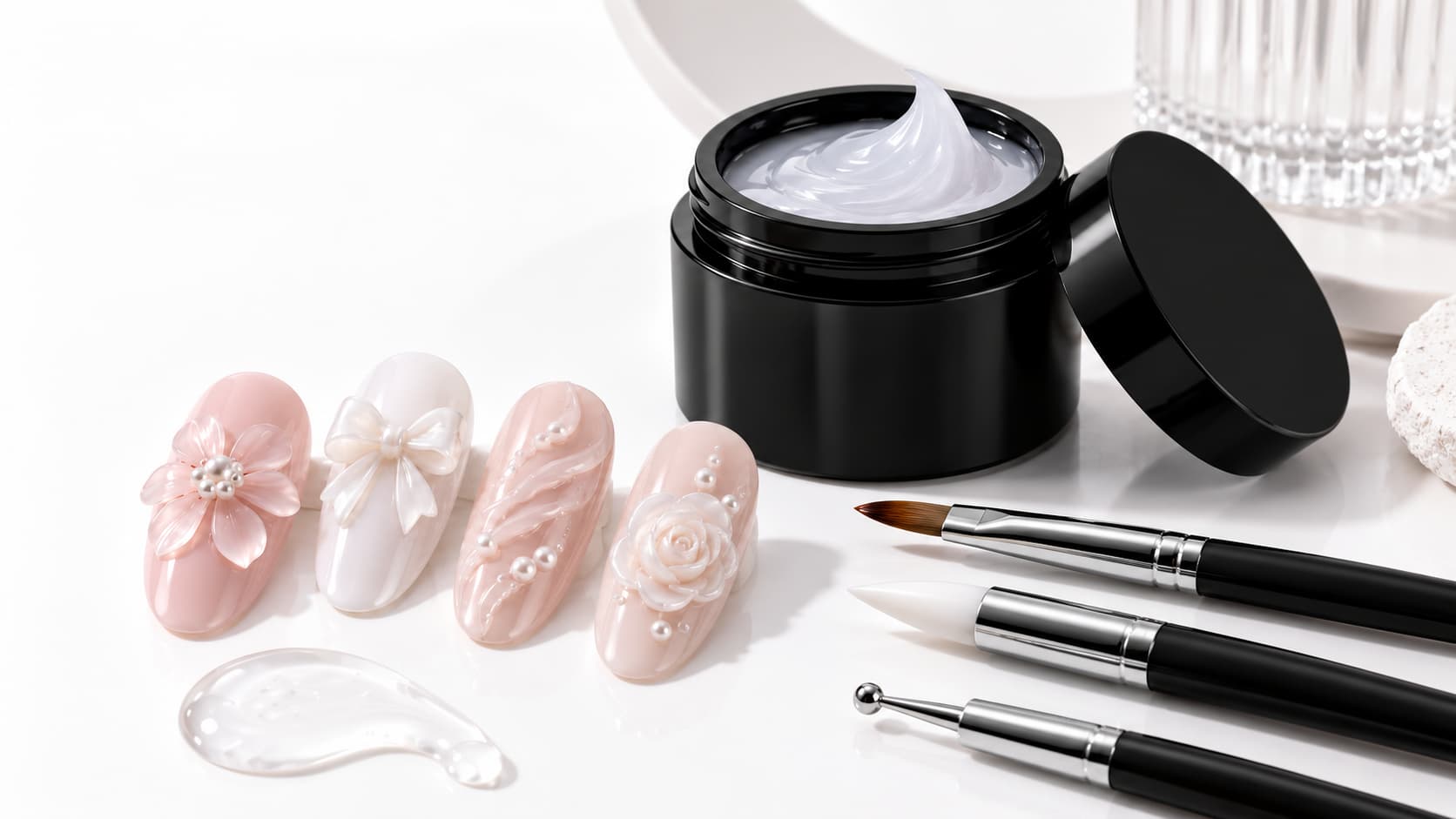
Molding gel is designed for controlled shaping of raised details such as flowers, bows, textures and sculpted accents.
For a broader introduction to dimensional gel techniques, readers can also explore the
3D Nail Art Gel guide
.
Is Molding Gel the Same as Modeling Gel, Moulding Gel, or 3D Sculpting Gel?
These terms are often used for closely related types of nail-art products:
molding gel
moulding gel
modeling gel
3D sculpting gel
3D nail art gel
The spelling differences between “molding” and “moulding” are often regional, while “modeling” and “sculpting” describe the shaping function of the product.
However, the nail industry does not use these names with one universal technical definition.
Two products with similar names may still differ in:
viscosity;
firmness;
stickiness;
pigmentation;
transparency;
curing requirements;
recommended application thickness;
and intended design style.
Professional users should compare the actual product instructions and working characteristics rather than relying only on the product name.
What Is Molding Gel Used for in 3D Nail Art?
The main advantage of molding gel is control.
When a gel is designed to hold a three-dimensional shape before curing, the nail artist can manipulate it into details that would be difficult to create with a thin, self-leveling gel polish.
Raised Floral Designs
Petals and small flowers are common examples of sculpted gel work.
The artist can place a small amount of gel, shape individual sections with a brush or sculpting tool, and build the design gradually.
Bows and Decorative Shapes
Molding gel can also be used for bows, ribbons, hearts, shells, and other decorative motifs.
For these designs, shape retention becomes especially important because the structure needs to remain defined before curing.
Textured Nail Surfaces
Not every 3D design needs to look like a separate object.
Molding gel may also be used to create:
raised lines;
woven textures;
embossed surfaces;
abstract relief patterns;
or dimensional accents over a finished nail design.
Small Sculpted Details
For professional nail art, molding gel can help create small details that add depth without requiring the whole nail to become a large sculpted structure.
This can make the product useful for both highly decorative sets and more restrained salon designs.
Molding Gel vs. Regular Gel Polish vs. Builder Gel
Molding gel should not automatically be treated as interchangeable with other gel products.
The following comparison shows their typical roles. Actual characteristics still depend on the individual formulation.
Product Type
Typical Primary Role
Working Behavior
Common Use
Molding / 3D Sculpting Gel
Building raised decorative shapes
Designed to provide shape and tool control
Flowers, bows, textures, raised details
Regular Gel Polish
Color coating
Usually spreads into a thinner, smoother layer
Full-color manicures, layered color designs
Builder Gel
Adding structure or reinforcement
Designed for building nail structure rather than primarily decorative sculpture
Overlays, reinforcement, structured nail work
Art / Liner Gel
Detailed surface decoration
Often optimized for controlled lines or painted details
Lines, illustration, fine nail-art details
The most important distinction is the intended job of the formula.
A builder gel may have enough body for certain decorative effects, and some art gels may produce limited raised details, but that does not automatically make them equivalent to a product specifically formulated for molding or sculpting.
Professional users should choose the product according to the design they need to create.
How to Use Molding Gel for Nails
The exact application process should always follow the instructions for the specific product being used. However, a general professional workflow usually involves four stages.
1. Prepare the Nail Surface and Base Design
Complete the appropriate nail preparation and any underlying color or design layers first.
The surface condition required before applying molding gel can vary by system, so follow the product instructions rather than assuming that every gel should be applied over the same surface.
2. Pick Up a Controlled Amount of Gel
Use an appropriate nail-art brush, silicone tool, dotting tool, or other sculpting tool to pick up a small amount of product.
Starting with too much material can make detailed shaping more difficult.
For complex designs, it is often easier to build several controlled sections than to try to sculpt the entire design from one large amount of gel.
3. Shape the Design
Move, press, pull, or form the gel into the desired structure.
For example:
separate individual flower petals;
define the center of a bow;
create raised edges;
build lines or folds;
or add texture to the surface.
The ideal molding gel should provide enough working time and control for the intended design without losing its shape too quickly.
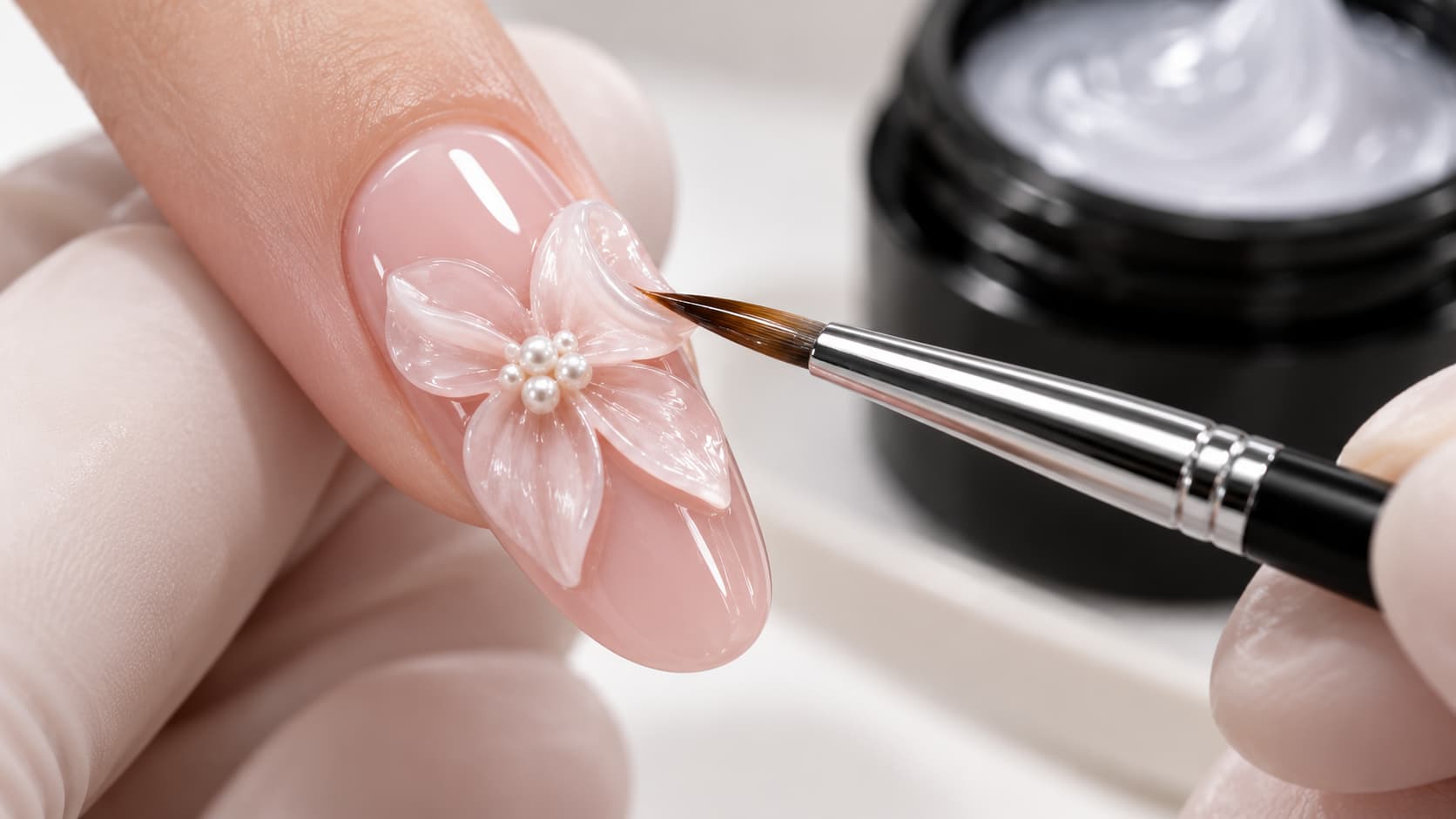
Controlled shaping allows the artist to build raised 3D details in small sections before curing.
For a dedicated step-by-step treatment of the application process, readers can continue to the
3D Nail Art Gel application guide
rather than repeating the full tutorial here.
4. Cure According to the Product Instructions
Curing conditions can vary by formulation and curing system.
Do not assume that one lamp, one curing time, or one thickness works for every molding gel.
Follow the instructions supplied for the exact product being used.
For larger or more complex 3D designs, the artist should also consider whether the structure has been built in a way that allows the product to cure as intended.
What Makes a Good Professional Molding Gel?
For professional use, visual appearance is only one part of product evaluation.
The following characteristics can strongly affect day-to-day usability.
Shape Retention
A molding gel should provide enough body to support the type of design it is intended to create.
If a gel spreads too quickly, fine 3D details may lose definition before curing.
On the other hand, an extremely stiff product may be difficult to manipulate for certain techniques.
The right balance depends on the nail artist's preferred design style.
Tool Control
A professional product should allow predictable interaction with the brush or sculpting tool.
Buyers and technicians may want to evaluate:
whether the gel follows the tool too easily;
whether it sticks excessively;
how easily edges can be defined;
and how long the artist can work before the shape becomes difficult to adjust.
Clear Curing Guidance
Curing should not be a guessing exercise.
Professional users need clear product-specific information about the intended curing process and compatible system.
This is especially important for salons that want consistent procedures across multiple technicians.
Color and Visual Effect
Molding gel may be:
clear;
translucent;
opaque;
highly pigmented;
neutral;
or produced in decorative colors.
The appropriate choice depends on the type of 3D design.
A clear or neutral sculpting gel can be useful when another color layer is added later, while a pigmented gel can make it easier to create a finished raised design in one color.
Product Consistency
For repeated salon or professional use, buyers may also want to evaluate whether the gel behaves consistently between batches and repeated orders.
Important working characteristics may include:
viscosity;
shape retention;
pigmentation;
application feel;
packaging;
and curing behavior according to the supplied instructions.
Common Molding Gel Problems and How to Avoid Them
The Design Spreads Before Curing
If the sculpted shape loses definition too quickly, the formula may be too soft for the intended design, too much product may have been applied at once, or the design method may need to be adjusted.
Try working in smaller sections and evaluate whether the product is suitable for the level of structure required.
The Gel Is Difficult to Shape
A very firm gel may require a different tool or technique.
Rather than forcing the product, technicians should follow the manufacturer's application guidance and test which tools provide the best control.
The Product Sticks to the Tool
Some sculpting gels can feel tacky while being shaped.
The recommended handling method depends on the formula, so avoid automatically introducing unrelated liquids or products unless the manufacturer's instructions support them.
The 3D Design Becomes Too Thick
Large decorative elements may be visually dramatic, but excessive thickness can make shaping and curing more difficult.
Building the design in controlled sections can provide better precision and make the final structure easier to manage.
The Design Lifts or Breaks
Lifting or breakage can have several possible causes, including:
surface preparation;
product placement;
design structure;
mechanical stress;
curing conditions;
or incompatibility between layers.
It is better to troubleshoot these factors systematically rather than assuming that one single cause applies to every failure.
What Should Salons and Professional Buyers Check?
A professional buyer should evaluate molding gel as a working system, not just as a color product.
1. Intended Application
Ask what the gel is specifically designed to create.
Is it intended for:
fine 3D details;
large sculpted flowers;
texture work;
line art;
or multiple techniques?
A clear product role makes it easier to choose the right item for the salon or product range.
2. Working Consistency
Where possible, evaluate how the product behaves during shaping.
Important questions include:
Does it stay where it is placed?
Can small details be controlled?
Does it feel too stiff or too soft for the intended technique?
Can technicians work with it consistently?
3. Application and Curing Instructions
Professional buyers should expect clear guidance covering the main use process.
Curing instructions should relate to the specific product rather than relying on generic assumptions.
4. Product Range
For salons or distributors building a 3D nail-art category, it may be useful to evaluate whether the available range supports different design needs, colors, or visual effects.
The best range is not necessarily the one with the most colors. It is the one that fits the intended customer and service model.
Readers comparing related 3D product categories can also browse the
Liner Art Gel & 3D Art Gel section
as a commercial next step after understanding the product type.
5. Packaging and Repeat Use
Packaging should support practical use in the target environment.
Professional buyers may consider factors such as:
container format;
access to the product;
labeling clarity;
storage instructions;
and whether the packaging helps technicians work cleanly and consistently.
6. Product Information and Market Documentation
If the products will be distributed or resold, buyers should identify which ingredient, labeling, product-information, and regulatory documentation is relevant to the target market.
A generic marketing claim should not replace the documentation actually required for the intended market.
Professional buyers should evaluate molding gel by working behavior, instructions, product range, packaging and suitability for the intended service or market.
What Could Shape the Future of Professional 3D Nail Art?
The future of 3D nail art should not be treated as one guaranteed market direction. However, several practical factors could influence how professional nail artists and buyers evaluate these products.
More Specialized Product Roles
One practical direction is to organize professional nail-art products around more specific tasks rather than expecting one gel to perform every function.
Examples can include products intended primarily for:
fine line work;
raised sculpting;
textured decoration;
structural enhancement;
or surface color.
For professional users, clearer product roles can make product selection and training easier.
Greater Emphasis on Control and Repeatability
Creative freedom matters, but professional salon work also benefits from repeatable technique.
Products that provide predictable placement and shape control may be easier to integrate into a repeatable service workflow than products that require extensive adjustment from one application to the next.
This does not mean one texture is universally better. The useful working consistency depends on the technique being performed.
Stronger Connection Between Product and Technique
Another practical direction is a closer relationship between the product and the instructions that support it.
A professional 3D nail-art product becomes easier to evaluate when the user can clearly understand:
what it is designed to do;
how it should be handled;
what tools are appropriate;
and how it should be cured.
Educational content, application guidance, and product information can therefore become important parts of the professional user experience.
More Complete Workflow Evaluation
Professional buyers may also benefit from evaluating 3D nail-art products as part of a complete working process rather than as isolated jars, colors, or visual effects.
This framework helps salons and buyers focus on how a product fits into actual use rather than judging it only by how dramatic the finished design looks.
Final Thoughts
Molding gel for nails gives nail artists a way to move beyond flat surface decoration and build raised, sculpted details directly into the design.
But the term “molding gel” alone does not tell a professional user everything they need to know.
The most useful evaluation looks at:
what the formula is designed to create;
how well it holds its shape;
how easily it can be controlled;
what curing instructions apply;
and whether the product remains consistent enough for repeated professional use.
For nail artists, this leads to better technique and more predictable design work.
For salons and professional buyers, it provides a clearer way to compare 3D nail-art products based on actual working requirements rather than marketing language alone.
Professional 3D Nail Art
Explore 3D Nail Art Gel Options for Professional Use
If you are comparing molding gel, sculpting gel, or other 3D nail-art products for professional applications, start by identifying the design techniques and working characteristics your salon or business requires.
Molding gel is a shapeable nail-art gel used to build raised or three-dimensional decorative details such as flowers, bows, textures, and sculpted patterns.
Is molding gel the same as modeling gel?
The terms are often used for similar products, but there is no universal naming standard. Always compare the formula's intended use, working consistency, and product instructions.
Is moulding gel different from molding gel?
Usually the difference is spelling. “Moulding” is common in British English, while “molding” is common in American English. Product characteristics can still vary between brands and formulas.
What gel is used to make 3D nail art?
Products described as molding gel, modeling gel, 3D sculpting gel, or 3D nail art gel are commonly intended for raised nail-art work. The right product depends on the type of design and the formula's working properties.
How do you use molding gel for nails?
A general process is to prepare the base design, pick up a controlled amount of molding gel, shape it with an appropriate tool, and cure it according to the product-specific instructions.
Can builder gel be used for 3D nail art?
Some builder gels may be capable of creating limited raised effects, but builder gel is primarily designed for nail structure rather than decorative sculpture. A dedicated molding or sculpting gel may provide more appropriate working properties for detailed 3D art.
What is the difference between molding gel and regular gel polish?
Regular gel polish is mainly designed for color coating, while molding gel is designed to provide enough body and control to create raised, three-dimensional decorative shapes.
Does molding gel need a UV or LED lamp?
Many molding gels are light-cured, but curing requirements vary by product. Always follow the instructions for the specific formula and curing system being used.
What should salons check before choosing a molding gel?
Professional buyers should evaluate the product's intended use, working consistency, shape retention, curing instructions, product information, repeat consistency, packaging, and suitability for their target service or market.
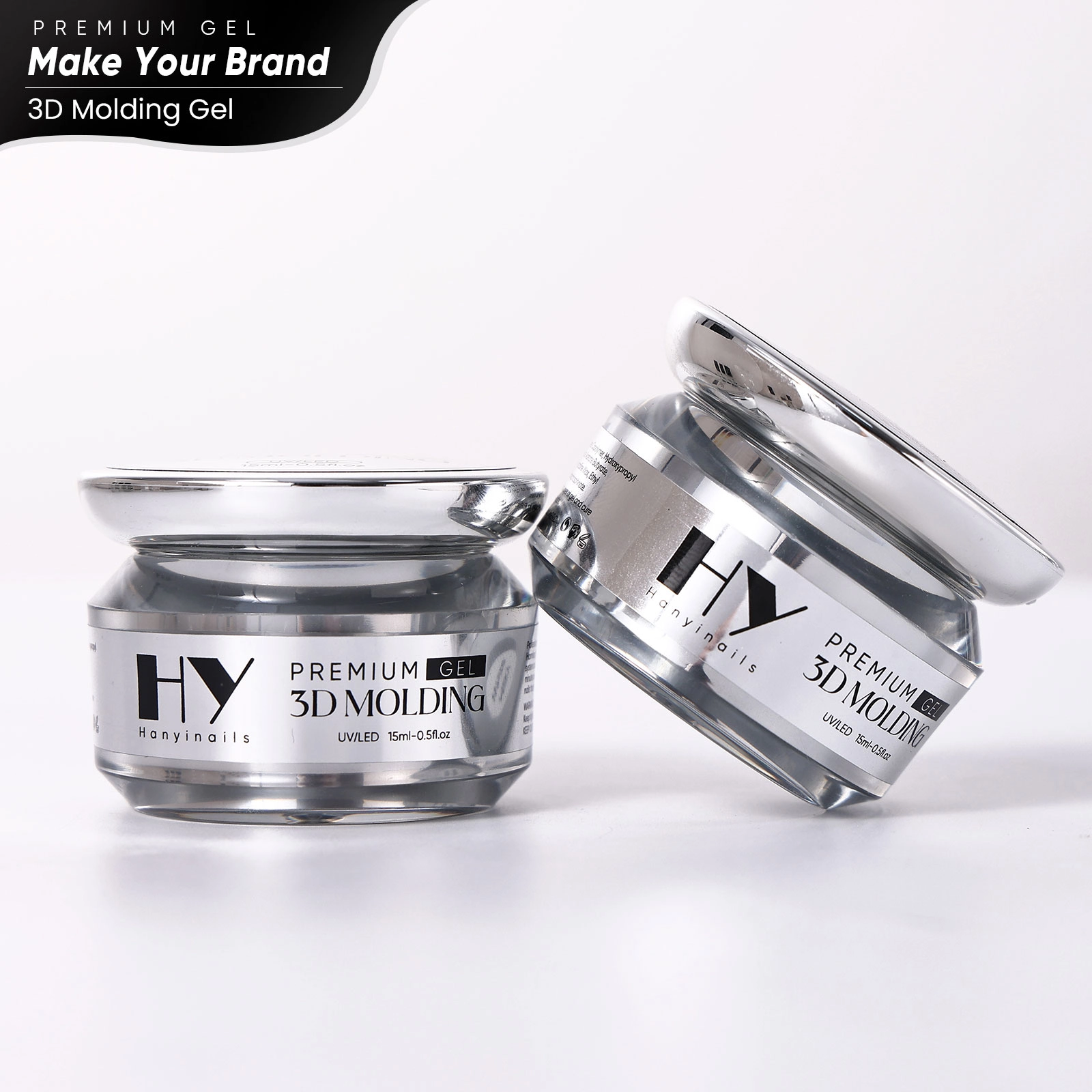
Premium 3D Molding Gel Set - OEM/ODM Custom White & Clear Builder Gel Collection
🔑 Key Features:
✨ Bubble-Free Formula - Smooth application with crystal-clear, professional results every time. ⚡ Fast-Curing Formula - Cures in 60s (LED) / 90s (UV) for efficient salon or home use. 🎨 Multi-White & Clear Options - Available in White, Milky, Pearl, and Clear for versatile designs. 💪 Strong yet Flexible Hold - Maintains sharp 3D shapes without cracking or collapsing. 🏭 OEM/ODM Customization - Custom colors, packaging, and branding available for your line.
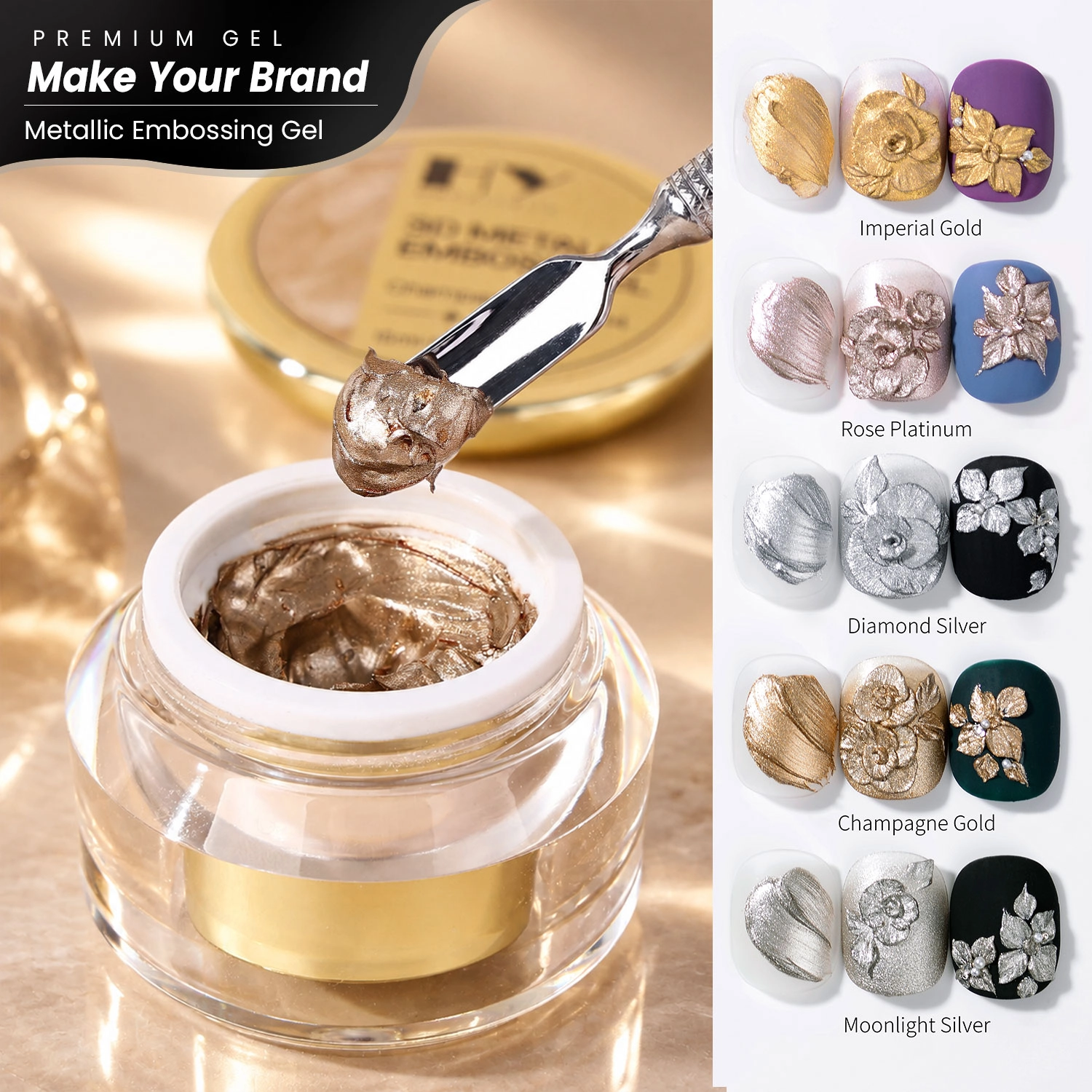
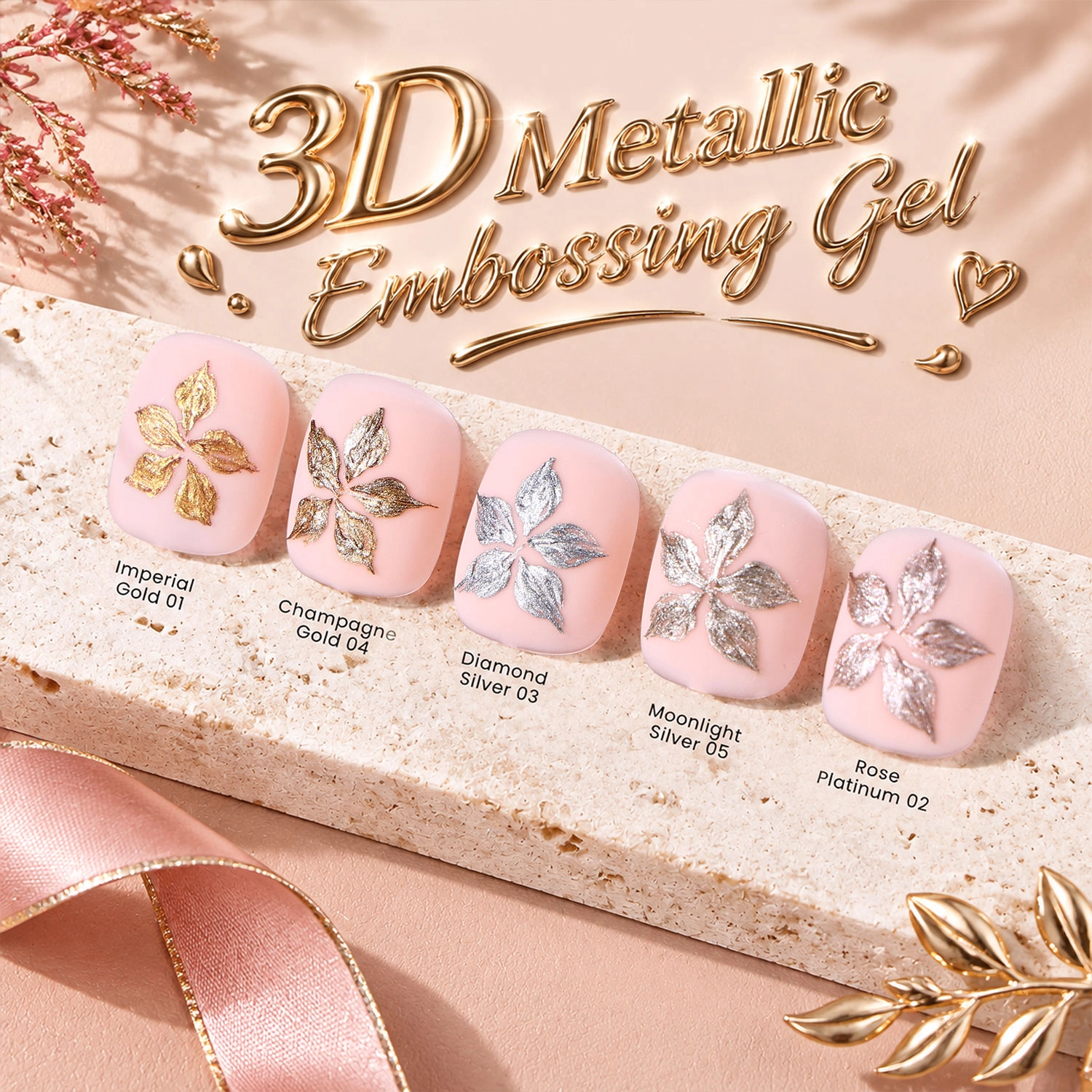
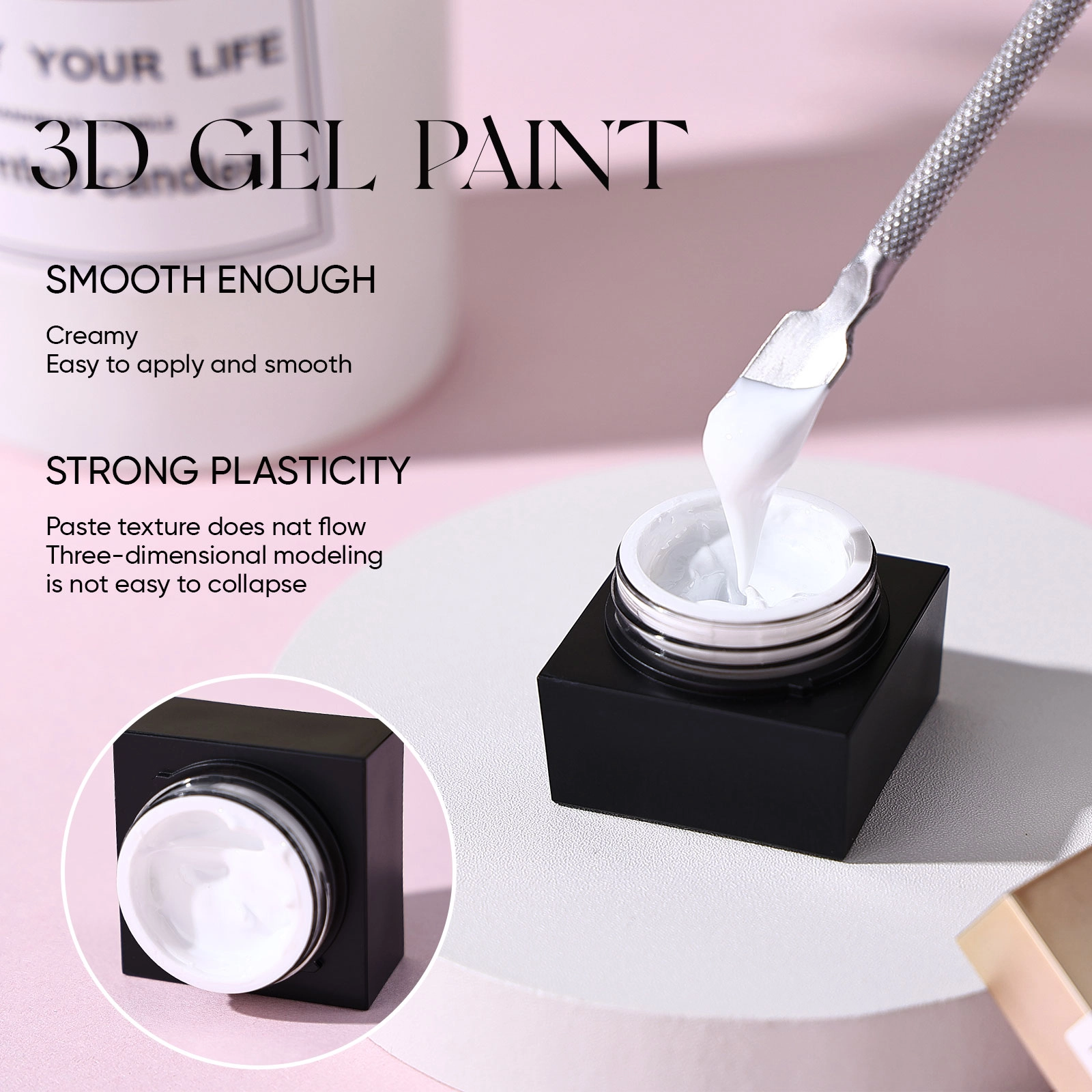
Emboss Painting Gel for Nail Art | OEM 3D Texture Gel | Private Label Factory Supply
🔑 Key Features:
🔸 3D Textured Effect—Perfect for embossed flowers, relief effects, and 3D design. 🔸 Non-Flowing Formula—Stays exactly where applied, no spreading or dripping. 🔸 High Pigment Saturation—Vivid colors even with one layer. 🔸 Strong Adhesion—Long-lasting wear with excellent grip on base gel. 🔸 UV/LED Curing—Compatible with standard curing systems (60–90s). 🔸 OEM/ODM Customization—Bottle design, logo, and colors are all customizable. 🔸 Suitable for All Levels—Beginner to professional nail artists.
Looking for a creative, premium, and reliable nail product manufacturer?
Whether you're an Amazon seller, Shopify store owner, chain store buyer, brand owner, distributor, wholesaler, or nail supply retailer — Hanyinails is your trusted partner for custom and wholesale nail solutions.
Address: 303 West Gate, Block A, South China International Innovation Industrial Park, Foluo Road, Luocun, Nanhai District, Foshan, Guangdong Province, China.
We specialize in OEM & ODM services, offering tailored formulations, vibrant colors, and premium packaging. Contact us today to discuss your brand’s needs and get a personalized quote!
We specialize in OEM & ODM services, offering tailored formulations, vibrant colors, and premium packaging. Contact us today to discuss your brand’s needs and get a personalized quote!
We specialize in OEM & ODM services, offering tailored formulations, vibrant colors, and premium packaging. Contact us today to discuss your brand’s needs and get a personalized quote!





Hanyinails
Hanyinails
Hanyinails
Hanyinails