Buyers seeking cat eye nail polish in bulk need clear answers on minimum order quantities, batch-to-batch quality consistency, customization options, and international logistics; this guide outlines sourcing strategies, supplier evaluation criteria, tiered pricing models, and compliance checkpoints to help distributors, salon chains, and private-label brands make informed purchasing decisions while evaluating Hanyinails as a high-capacity professional nail gel manufacturer and supplier.
Market Demand and Bulk Sourcing Trends
Rising popularity of cat eye finishes and buyer expectations
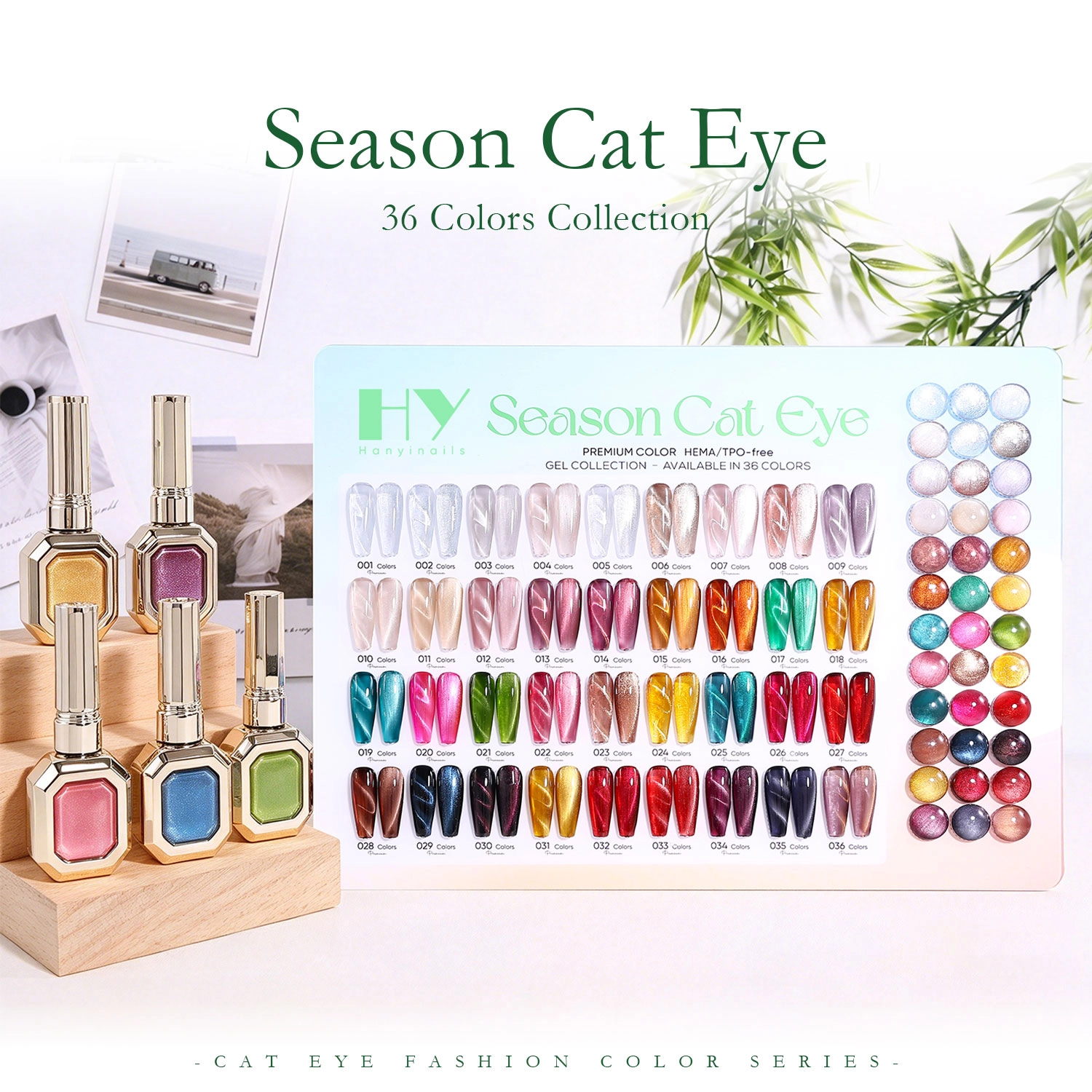
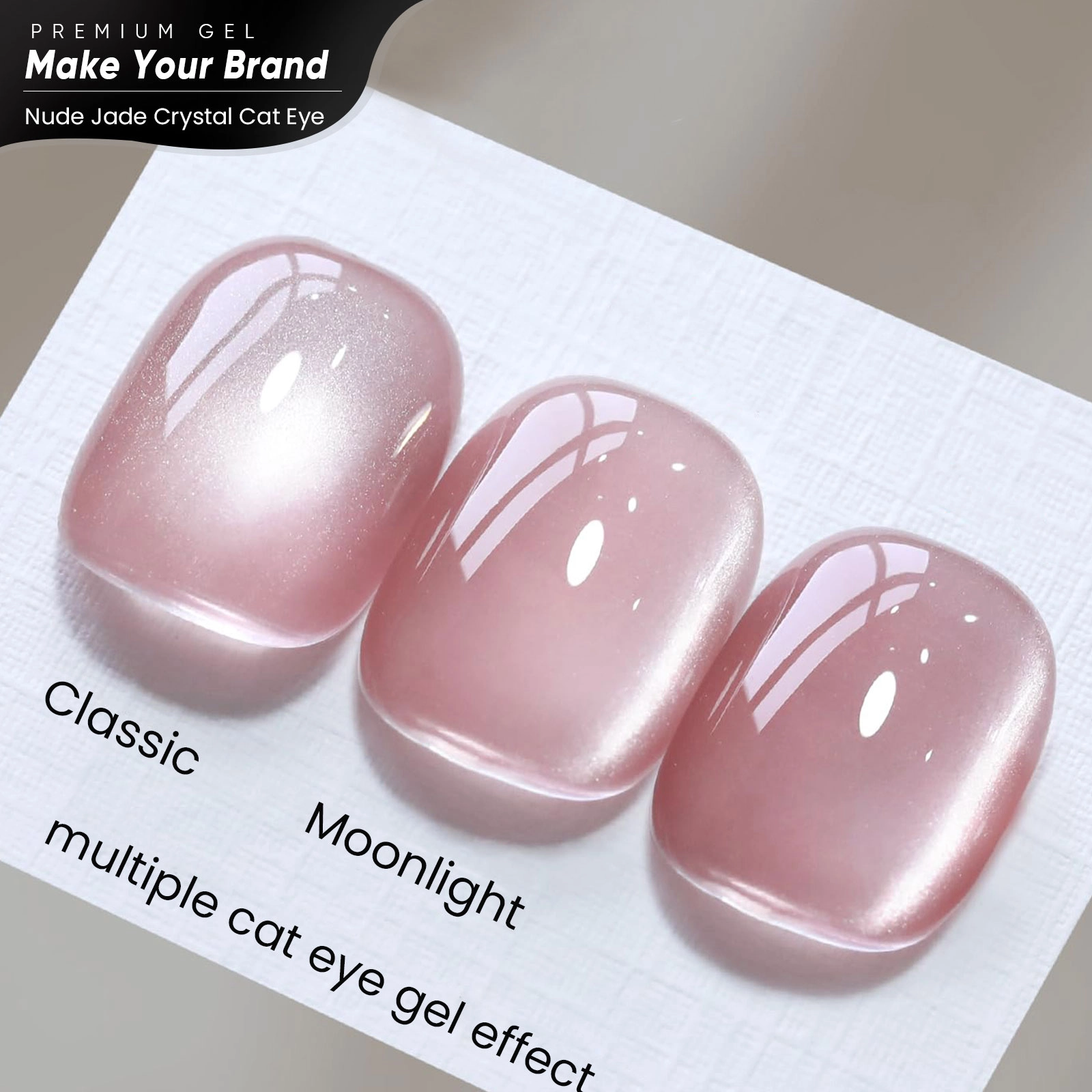
The cat eye effect—achieved with magnetic pigments in a cat eye nail polish or cat-eye gel polish—continues to be a top-selling niche within the nail gel category because it combines high visual impact with long wear, making it attractive for salons and retail lines. Buyers now expect retailers and distributors to carry diverse finishes (magnetic gel, shimmer, holographic) and fast color rotation; Hanyinails’ ability to develop 2,000 new colors per year directly addresses that expectation.
Seasonality, color cycles, and product lifecycle
Seasonal color shifts and trends (e.g., metallics in winter, pastels in spring) mean bulk purchasers must plan SKU depth and reorder cadence. Many B2B buyers aim for staggered replenishment—initial trial orders followed by larger replenishment orders—to validate sales velocity before committing to high MOQs.
Regulatory and safety trends affecting imports
Cosmetic regulations differ by market: for example, labeling and ingredient rules enforced by the U.S. Food and Drug Administration affect imports to the United States, and registration requirements vary in the EU; consult resources like the U.S. FDA Cosmetics Guidance and general standards at the ISO Standards portal when planning cross-border wholesale shipments.
Evaluating Manufacturers: Capacity, Quality, and Customization
Assessing production capacity and lead-time reliability
For bulk buyers, production capacity and predictable lead times are non-negotiable. Ask for: current lead times per SKU, number of production lines (Hanyinails operates 10 production lines and 60 production machines), and typical output per month. A supplier with multiple lines and redundancy reduces the risk of production stoppage and supports tiered rollouts of cat eye nail polish collections.
OEM customization capabilities and private-label support
Private-label brands require label, bottle, and formula customization. Evaluate a factory’s range of stock bottles and ability to do custom molds—Hanyinails offers over 50 stock bottle styles, 600+ customized bottle and cap styles, and more than 100 kit-box styles, enabling differentiating packaging for retail and salon distribution.
Quality control and batch consistency
Consistent pigment dispersion and magnetic response in cat eye nail polish are critical for customer satisfaction. Ask for batch certificates, in-house QC processes, and inspector staffing (Hanyinails lists 8 QA/QC inspectors). Verify whether the supplier conducts adhesion, gloss, and colorfastness tests and whether third-party lab testing can be arranged.
Pricing Structures, MOQs and Order Economics
Understanding tiered pricing and unit economics
Tiered pricing is standard: unit price declines as order quantity increases. Key cost drivers for cat eye nail polish include pigment grade (magnetic powders incur higher costs), bottle and cap customization, labeling, and any special magnet applicators included in kits. Request a complete landed-cost estimate that includes unit cost, packaging, duties, and freight.
Minimum Order Quantities (MOQ): flexibility and negotiation
MOQs vary by factory, SKU complexity, and customization level. For stock formulations and standard bottles, factories often offer lower MOQs; for custom pigments, color matching, and private-label packaging, MOQs increase to amortize tooling and setup costs. Large factories like Hanyinails, with 12 years OEM experience and high color-development throughput, can provide more flexibility and multiple MOQ tiers aligned to buyer needs.
Packaging, kit options, and cost optimization
Packaging choices have outsized impact on final costs and shelf appeal. Use stock bottles to reduce MOQ and per-unit cost, or choose custom bottles and High Quality boxes (Hanyinails offers 200+ color chart designs and 100+ kit box styles) for differentiated SKUs. Negotiate buffered MOQ steps and pilot production runs to validate SKUs before full-scale orders.
Sample Tiered Pricing & Sourcing Comparison (Indicative) | Order Size (units) | Unit Price (USD) | Typical MOQ Flexibility | Best For |
| 500–2,000 | $1.80 – $2.50 | Higher for custom bottles; lower for stock | Small distributors, test SKUs |
| 2,001–10,000 | $1.10 – $1.79 | Standard MOQ tiers | Regional retailers, multi-SKU lines |
| 10,001+ | $0.65 – $1.09 | Most flexible; price-negotiable | Large retailers, private label |
Logistics, Compliance and Inventory Strategy
Shipping modes, lead times, and landed cost planning
Choose sea freight for large volumes to minimize per-unit freight cost; use air freight for urgent replenishment. Calculate total landed cost including duties, insurance, and port fees—tools from international trade authorities like the International Trade Administration can help estimate tariffs and trade guidance. Ask your supplier for FOB and CIF quotes and for help consolidating shipments to reduce per-unit logistics spend.
Customs documentation, labeling and safety compliance
Ensure the supplier can provide full technical files, MSDS (Material Safety Data Sheets), ingredient listings, and compliant product labels for your target market. Buyers exporting to the EU should check the Cosmetic Product Notification Portal (CPNP) requirements; exporters to the U.S. should follow FDA recommendations. Proper documentation reduces customs holds and speeds time-to-market.
Inventory management and replenishment strategies
Adopt safety stock calculations and reorder points based on lead times and sales velocity. For fast-rotating cat eye nail polish shades, consider smaller frequent orders from the factory’s stock colors and larger quarterly replenishment for custom or seasonal lines; this balances cashflow and warehouse capacity while keeping SKU selection fresh.
When selecting a factory partner, prioritize transparent QC processes, stable production capacity, flexible MOQs, and a clear approach to documentation and shipping; companies with robust OEM experience, multiple bottle and box options, and an in-house QC team—such as Hanyinails—are positioned to support bulk buyers from sample to large-scale rollouts.
For technical background on nail polish formulation and industry standards, see Nail polish (Wikipedia) and consult broader regulatory frameworks at ISO Standards and the U.S. FDA Cosmetics Guidance to align product compliance with your target markets.
Contact details, sample request procedures, and an initial wholesale pricing conversation typically require requesting an official quotation (pro forma invoice) with SKU list, requested packaging level, and estimated annual volumes; provide these to suppliers to get accurate MOQs and lead-time commitments.
Hanyinails combines production scale, customization breadth, and QC focus to support distributors, salon groups, and private-label brands in launching and scaling cat eye nail polish ranges with predictable cost structures and supply continuity.
Contact Hanyinails today at sales@hanyinails.com to request MOQ terms, sample packs, and wholesale pricing for cat eye nail polish collections and private-label programs.







Hanyinails
Hanyinails
Hanyinails
Hanyinails