Holographic magnetic gel combines reflective optical particles with magnetically responsive pigments in a UV/LED-curable Nail Gel base to create dimensional cat-eye, linear, velvet, aurora, and scattered-spectrum effects. For B2B buyers, consistent performance depends on pigment particle distribution, magnetic susceptibility, resin compatibility, viscosity, cure depth, color stability, bottle design, and documented quality control. A reliable development program should evaluate the pigment system, oligomer and monomer balance, photoinitiator response, magnet strength, application thickness, storage conditions, and packaging before commercial launch. Suppliers that can control color, curing, filling accuracy, and private-label presentation provide a lower-risk route to scalable professional nail products.
Optical and Magnetic Principles Behind Dimensional Nail Effects
How magnetic pigments create movement and depth
Magnetic nail effects are produced when plate-like or engineered effect particles respond to an external magnetic field before the gel is cured. The magnet aligns or concentrates the particles, changing the direction in which light is reflected through the coating. A narrow stripe, halo, velvet surface, or floating cat-eye appearance is therefore determined by more than color. Particle geometry, magnetic loading, reflective coating, resin wetting, and the distance between the magnet and the uncured surface all influence the final visual result.
Holographic effects add another optical layer. Rainbow dispersion is typically associated with microstructured reflective materials, diffraction particles, or high-reflectance flakes that separate light into spectral colors. The term should not be treated as a guarantee of a specific pigment chemistry. Buyers should request a technical description of the effect material, including whether it is magnetic, interference-based, diffraction-based, metallic, or a blended system. Background color also changes the perceived intensity: black and deep jewel tones usually increase contrast, while milky and translucent bases create softer aurora effects.
Particle size, loading, and visual uniformity
Particle size must be balanced against surface smoothness, suspension stability, and optical brightness. Oversized particles may produce stronger flashes but can create roughness, settling, uneven coverage, or a visible gritty texture after curing. Very fine particles may improve smoothness and suspension but deliver a less dramatic magnetic response. A commercial formula should be assessed through accelerated settling observation, repeated shaking or rolling, drawdown testing, and finished-film inspection.
Pigment loading should be specified by development batch rather than estimated visually. Excessive effect material can reduce resin transparency, weaken magnetic contrast, obstruct light penetration, or cause a thick layer to remain under-cured. Insufficient loading may create a low-value appearance and require multiple coats, increasing service time. Buyers should compare one-coat opacity, two-coat depth, magnet response time, flash intensity, and cured-film smoothness under daylight, salon lighting, and direct LED illumination.
Magnet strength and application geometry
Application tools influence the repeatability of the design. A rectangular magnet can form a line or diagonal band, while a rounded or multi-pole tool can produce curved, velvet, or radial patterns. The working distance is equally important. A magnet positioned close to the wet layer creates a sharper concentration, whereas a greater distance produces a wider and softer transition. Product instructions should define the approximate exposure time, tool orientation, and recommended coating thickness so salons and distributors can reproduce the same result.
Manufacturers should avoid making unsupported claims about magnetic field values unless the tool has been measured with an appropriate instrument. For procurement, practical performance testing is usually more useful than a nominal magnet rating alone. The buyer should request a control sample, application video, cured swatches, and a tolerance range for the finished visual effect.
Formula Engineering for Stable Reflective Gel Systems
Resin selection and viscosity control
A professional formula must suspend effect particles while remaining easy to level and responsive to a magnet. Low viscosity can improve self-leveling but may allow pigments to settle quickly or migrate toward the sidewall. High viscosity can hold particles in position but may create brush marks, uneven thickness, heat spikes, or difficult removal. The practical target is a controlled thixotropic profile: the material should flow under brush movement, remain stable during the magnetic step, and resist excessive flooding before curing.
Oligomer selection affects flexibility, adhesion, gloss, shrinkage, and resistance to yellowing. Monomer balance influences viscosity and film formation, but aggressive reactive diluent selection can increase odor, sensitivity concerns, or brittleness if not properly evaluated. A technical supplier should provide an ingredient and safety documentation package suitable for the intended market, including the applicable Safety Data Sheet and regulatory review.
Photoinitiator response and cure validation
Reflective particles can scatter or absorb light, making cure validation essential. A color that appears cured at the surface may retain uncured material beneath a dense pigment layer or at the sidewalls. Cure testing should use the lamp type specified for the product, with defined wavelength range, output condition, exposure time, layer thickness, and replacement schedule. Testing should include adhesion, hardness, flexibility, residual tack, solvent resistance, and cross-section inspection where appropriate.
UV and LED lamp compatibility should be communicated precisely rather than presented as a universal claim. Different lamps vary in wavelength distribution, intensity, lens condition, and geometry. A supplier following ISO 22716 Good Manufacturing Practices principles can support better batch traceability, controlled production, and documented handling of raw materials and finished goods. Buyers should also examine whether the supplier maintains retain samples and investigates deviations through a corrective and preventive action process.
Suspension, mixing, and packaging compatibility
Magnetic and holographic particles can settle during storage, especially when density differs significantly from the surrounding gel. A formula may need a carefully selected rheology modifier, dispersant, or suspension aid, but additives must be screened for cure interference, whitening, adhesion loss, and long-term viscosity drift. Production mixing should be validated for order of addition, shear exposure, temperature, and deaeration. Excessive shear can damage certain effect materials or introduce air that becomes visible in the finished bottle.
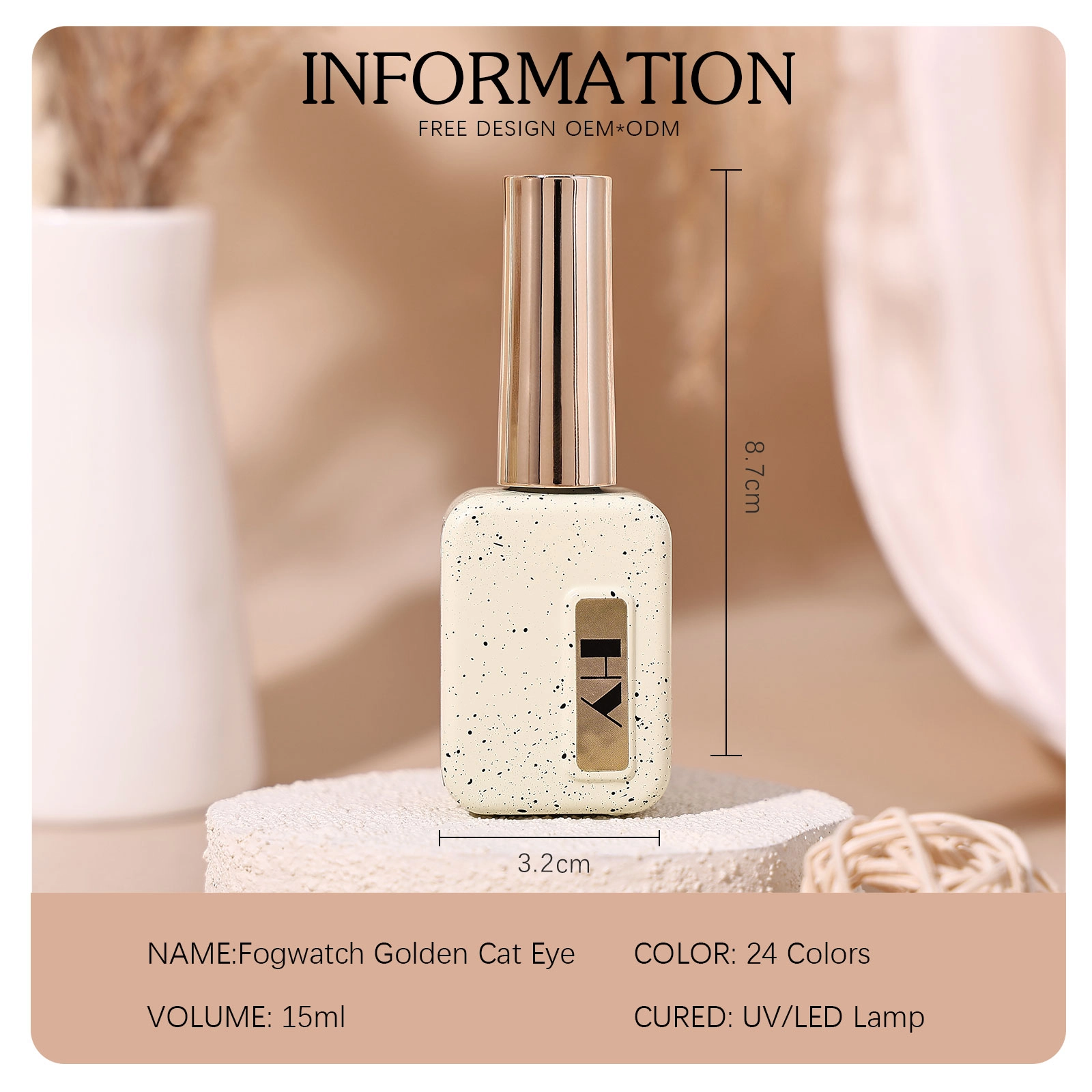
Packaging is part of the formula system. Opaque or UV-resistant bottles help protect light-sensitive materials, while an internal wiper and brush design control pickup volume and reduce flooding. Buyers should test bottle liners, caps, brush adhesives, and decoration inks for compatibility with the gel. Commercial stability studies should examine color change, viscosity, separation, brush condition, leakage, cap torque, and label adhesion under realistic temperature and transport conditions.
| Evaluation area | Basic screening | Commercial qualification | Buyer decision signal |
|---|
| Magnetic response | Visual stripe formation with a standard magnet | Repeat testing across colors, operators, and magnet distances | Consistent effect with defined application instructions |
| Suspension stability | Room-temperature observation | Stability testing with retained samples and transport simulation | No unacceptable settling, hard pack, or irreversible separation |
| Cure performance | Surface tack and basic hardness check | Specified lamp, thickness, exposure, adhesion, and flexibility testing | Complete cure under the declared salon conditions |
| Optical appearance | Swatch review under one light source | Daylight, salon, direct light, and multiple background evaluations | Stable color identity and marketable reflectivity |
| Packaging compatibility | Short filling and closure check | Leakage, cap torque, brush, decoration, and aging evaluation | Low return risk and consistent user experience |
The table represents a practical qualification framework rather than a substitute for applicable legal requirements. Cosmetic products must be reviewed according to the destination market, intended use, ingredient restrictions, labeling rules, and claims substantiation. In the United States, buyers can consult the U.S. Food and Drug Administration cosmetics guidance; for general chemical hazard communication, the World Health Organization laboratory biosafety and chemical safety resources provide useful reference context, while product-specific regulatory counsel remains necessary.
Procurement and Production Controls for Professional Nail Brands
What buyers should request before placing an order
A procurement brief should define target shades, effect vocabulary, viscosity range, bottle size, brush specification, curing system, fill weight, packaging artwork, minimum order quantity, lead time, and acceptable defect limits. Samples should be evaluated by more than one nail technician because application style strongly affects magnetic outcomes. The buyer should record base color, number of coats, wet-film thickness, magnet position, exposure time, lamp model, top coat, and removal behavior.
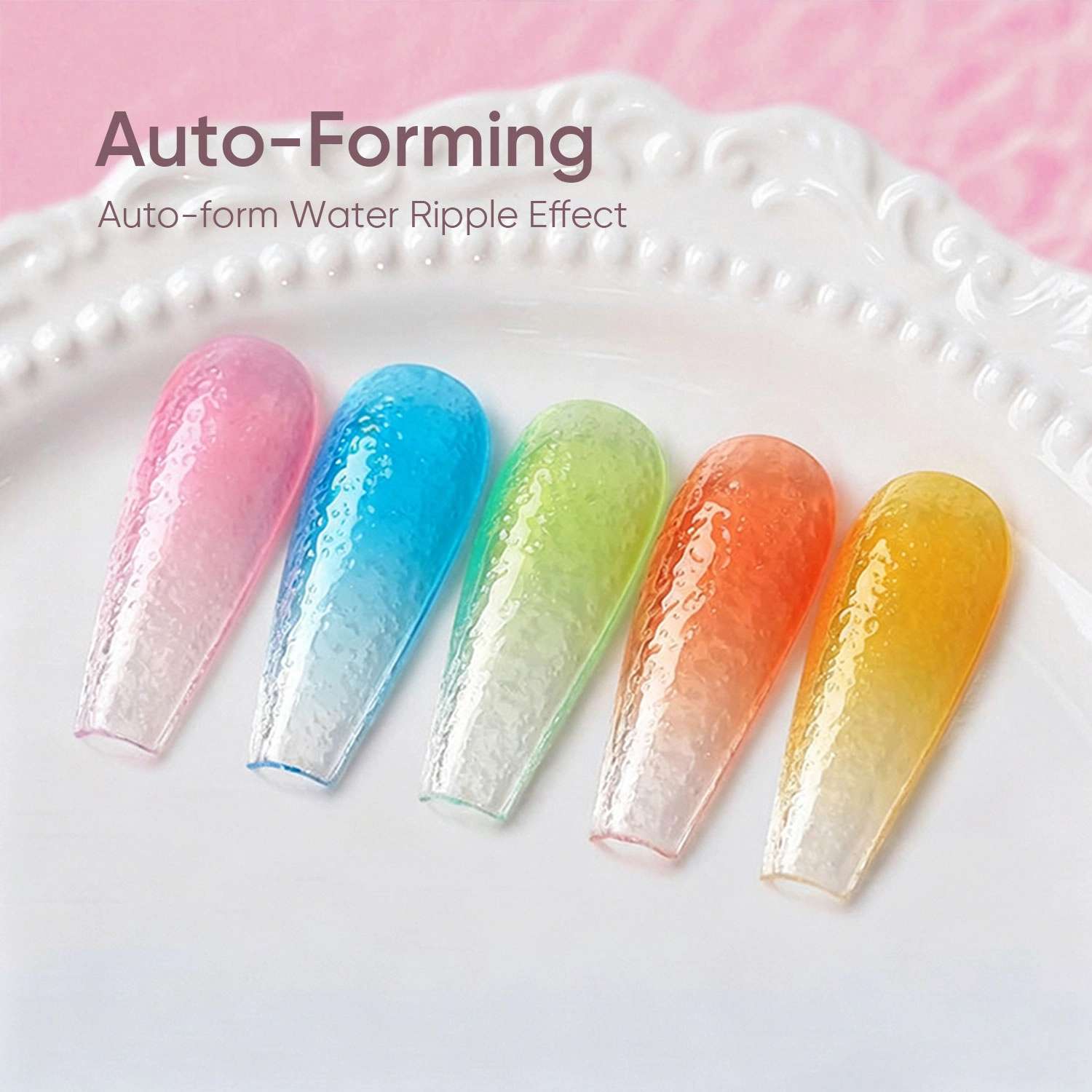
Documentation should include a specification sheet, batch or lot identification, Safety Data Sheet, ingredient disclosure appropriate to the market, packaging details, inspection criteria, and a certificate or report where relevant. Buyers should not rely only on catalog images. Digital images can exaggerate rainbow reflection, hide surface texture, and conceal shade variation. Physical swatches and production-lot approval are more dependable for private-label launches.
Quality risks that affect commercial profitability
Common failure modes include pigment settling that cannot be re-dispersed, weak magnetic contrast, color shift between batches, under-curing, excessive shrinkage, brush contamination, bottle leakage, and inconsistent fill levels. Each issue can generate salon complaints, distributor claims, relabeling costs, or marketplace returns. A supplier should use incoming raw-material checks, in-process viscosity and color checks, filling controls, finished-product inspection, and retained-sample comparison.
For online sales, product education is also a quality control measure. Clear instructions should explain that the magnet is used before curing, that the layer should not be excessively thick, and that the design may vary with magnet angle and distance. This reduces misuse and improves customer satisfaction without overstating the product’s capabilities. A useful education package can include swatch cards, application diagrams, short videos, and recommended top-coat compatibility.
Why Hanyinails Supports Scalable Custom Nail Gel Programs
Manufacturing capacity and development speed
Hanyinails is a professional nail products manufacturer committed to supplying a broad range of professional gel products for brand owners, distributors, salons, and project investors. Our manufacturing platform includes 10 production lines, 60 production machines, 8 QA/QC inspectors, and an 8,000-square-meter workshop. This structure supports coordinated development, filling, inspection, and packaging for effect gels and other Nail Gel categories.
Our development program introduces approximately 2,000 new colors per year, giving buyers access to a broad color library for seasonal collections, private-label launches, and coordinated salon systems. For a reflective magnetic collection, our team can help compare base shades, optical effects, brush performance, packaging formats, and application instructions before the final commercial specification is approved.
One-stop OEM customization for differentiated collections
Hanyinails has 12 years of OEM customization experience and participates in exhibitions in more than 10 countries each year. Our one-stop customization service supports brand positioning through more than 50 stock bottle and cap styles, over 600 customized bottle and cap options, more than 100 kit-box styles, and over 200 color-chart designs. This range helps project owners build a coherent visual identity instead of combining unrelated packaging components from multiple suppliers.
Beyond magnetic effect colors, our portfolio can support a broader professional system including 3D nail art gel, gel builder nail polish, colored nail polish, nail care oil, gel x nail glue, Gelly nail tips, nail hard gel, Poly Acrygel, and line gel nail art. A coordinated portfolio can increase average order value, simplify distributor training, and enable salons to purchase color, structure, extension, and aftercare products from one manufacturing partner.
Commercial value for distributors and brand owners
The commercial advantage of a capable OEM partner is not limited to production volume. It includes shorter communication cycles, more consistent technical documentation, faster sample comparison, coordinated packaging, and a clearer path from concept to replenishment. Buyers can reduce launch risk by approving a master shade, defining the visual tolerance, and linking the finished product to a documented batch-control process.
Our vision is to become the world’s leading manufacturer of nail products, and that objective depends on dependable quality, responsive customization, and long-term customer relationships. For buyers evaluating reflective gel collections, Hanyinails can support the project from effect selection and formula communication through packaging development, production inspection, and repeat-order planning. Product details and OEM discussions are available through the Hanyinails website and sales team.
Contact Hanyinails at sales@hanyinails.com or visit https://www.hanyinails.com to discuss magnetic effect gel development, packaging customization, and a complete professional nail product program.









Hanyinails
Hanyinails
Hanyinails
Hanyinails