Holographic magnetic gel sourcing is increasingly shaped by two connected priorities: regulatory readiness and measurable sustainability. A visually dynamic cat-eye or prism effect is no longer sufficient for professional Nail Gel procurement. Brand owners, distributors, salon chains, and importers must also assess ingredient disclosure, restricted substances, safety documentation, packaging composition, production traceability, waste controls, and the supplier’s ability to support market-specific labeling. The most reliable sourcing strategy combines product performance with documented compliance, stable manufacturing, responsible packaging choices, and a realistic total-cost model.
How Compliance and Sustainability Reshape Magnetic Nail Product Procurement
Cosmetic classification determines the buyer’s compliance workload
In many markets, UV-curable nail coatings are regulated as cosmetic products rather than ordinary decorative goods. Classification affects ingredient naming, claims, labeling, responsible-person obligations, safety assessments, product notification, and post-market monitoring. In the United States, the U.S. Food and Drug Administration cosmetics laws and regulations provide the core framework, while the Modernization of Cosmetics Regulation Act has added important obligations for applicable facilities and cosmetic products.
European Union projects generally require alignment with Regulation (EC) No 1223/2009, including a product information file, cosmetic product safety report, responsible person, compliant claims, and notification through the Cosmetic Products Notification Portal where applicable. Buyers should also review the European Commission’s cosmetics legislation and regulatory guidance before finalizing a private-label launch. A supplier’s general statement that a formula is “safe” cannot replace market-specific documentation.
Ingredient and pigment documentation reduces commercial risk
Magnetic and holographic effects may involve special-effect pigments, treated minerals, polymers, solvents, photoinitiators, and other functional ingredients. Procurement teams should request the full INCI ingredient list, certificate of analysis, safety data sheet where applicable, allergen information, heavy-metal or impurity controls, and declarations concerning restricted substances. The supplier should explain whether the visual effect comes from magnetic particles, reflective pigments, layered dispersion, or a combination of technologies.
Special attention is required for photoinitiators and sensitizing substances because uncured product contact with skin can create avoidable safety and reputational problems. Buyers should verify that the formula is designed for the intended curing system, that recommended lamp parameters are documented, and that curing instructions are consistent across the label, technical data sheet, and salon training material. Claims such as “non-toxic,” “chemical-free,” or “100% safe” should be avoided unless legally substantiated, since all cosmetic formulas contain chemical substances and claims can trigger scrutiny.
Environmental Criteria for Responsible Nail Gel Sourcing
Packaging is a measurable sustainability lever
For professional gel products, packaging often includes a glass or plastic jar, brush or applicator, cap, liner, label, carton, color chart, and shipping master carton. A sustainable packaging review should examine material weight, recycled content, recyclability in the destination market, component separation, decoration methods, and transport efficiency. Lightweight packaging can reduce freight emissions, but excessive reduction may cause leakage, breakage, oxygen exposure, or instability during distribution.
Buyers should request packaging specifications rather than relying on broad environmental claims. Useful records include material declarations, recycled-content statements, carton specifications, packaging test results, and confirmation that inks, coatings, adhesives, and closures are suitable for the intended application. Packaging decisions should also account for the customer experience: a High Quality reflective gel collection may require visual presentation, but unnecessary layers, oversized boxes, and difficult-to-separate components can increase cost and disposal burden.
Manufacturing efficiency affects both sustainability and margins
A supplier’s environmental performance is connected to production yield, batch size, equipment utilization, cleaning procedures, rejected units, and inventory planning. A stable formula with predictable viscosity and pigment dispersion reduces rework and discarded filling batches. Accurate filling tolerances also protect profitability by minimizing overfill, underfill, leakage, and customer complaints.
Buyers can ask for practical sustainability indicators: annual waste-reduction objectives, production-line efficiency, batch rejection rates, energy-management practices, wastewater controls, and procedures for handling obsolete components. ISO 14001 environmental management guidance offers a recognized framework for systematic environmental improvement, although certification should be verified directly and should not be assumed from a supplier’s marketing language.
Supply-chain distance and minimum order quantity require balanced analysis
Local sourcing can shorten transport routes, but geographical proximity alone does not guarantee a lower environmental impact. A distant supplier with consolidated shipments, efficient packaging, high production yield, and longer product stability may perform better than a nearby supplier with frequent partial shipments and high rejection rates. The relevant procurement measure is total supply-chain impact, including raw materials, manufacturing, packaging, warehousing, transport, returns, and disposal.
Minimum order quantity should be evaluated in relation to forecast accuracy. Excess inventory can expire, lose trend relevance, or become difficult to sell if a seasonal color declines in demand. Smaller pilot orders, staged production, shared packaging platforms, and forecast-based replenishment can help brands test a magnetic color range without creating unnecessary stock exposure.
Regulatory Due Diligence Checklist for Importers and Brand Owners
Documents to request before formula approval
A responsible supplier qualification process should begin before artwork, bottle tooling, or large-scale production. The following document set creates a practical baseline for review:
- Complete ingredient list using the required regional naming convention.
- Product specification covering appearance, odor, viscosity, density where relevant, curing behavior, and storage conditions.
- Batch certificate of analysis and retained-sample procedure.
- Safety data sheet or equivalent technical safety documentation when required.
- Raw-material compliance declarations for restricted substances and applicable pigment requirements.
- Recommended curing time, lamp wavelength range, application thickness, and removal guidance.
- Packaging material specifications, compatibility results, and leakage or transport testing.
- Manufacturing quality records, batch coding, complaint handling, and recall cooperation procedures.
For cosmetics, ISO 22716 good manufacturing practices is widely used as a reference for production, quality control, storage, and shipment. Certification alone does not prove that every product is compliant, but a documented quality system can make supplier audits, corrective actions, and traceability more efficient.
Market-by-market requirements should be mapped separately
One formula and one label may not be suitable for every destination. The EU, United States, United Kingdom, Canada, Australia, and Gulf or Asian markets can differ in responsible-party rules, notification processes, ingredient restrictions, language requirements, claims standards, and importer obligations. A distributor should identify the exact selling countries before approving final artwork.
United Kingdom projects should be assessed against the government’s cosmetic-product requirements, including the responsible person, product information, safety assessment, notification, and labeling expectations. The UK government’s cosmetic product compliance guidance is a useful starting point. Buyers should also confirm whether packaging obligations, extended producer responsibility rules, or national waste schemes apply to the selected pack format.
Claims, testing, and traceability influence launch speed
Words such as “vegan,” “cruelty-free,” “long-lasting,” “low odor,” “sustainable,” and “HEMA-free” require evidence and careful definition. A claim may concern the formula, raw-material sourcing, finished-product testing, packaging, or company policy, and these are not interchangeable. Requesting claim substantiation early prevents artwork delays and costly relabeling.
Traceability should extend from finished-goods batch code to filling records, raw-material lots, packaging lots, and retained samples. This structure enables faster investigation if viscosity changes, pigment separation, curing inconsistency, or packaging leakage is reported. It also helps distributors answer professional customers with specific information instead of generic assurances.
| Procurement area | Basic supplier response | Stronger buyer-ready evidence | Commercial benefit |
|---|
| Formula compliance | General safety statement | INCI list, specifications, test records, and market review | Lower relabeling and import risk |
| Effect consistency | Color image or sample | Approved master sample, batch tolerance, viscosity and curing criteria | Fewer salon complaints and returns |
| Packaging sustainability | Eco-friendly claim | Material declaration, weight data, recyclability review, and transport testing | Better ESG communication and fewer damages |
| Quality management | Factory photographs | Documented inspection, batch coding, retained samples, and CAPA process | Improved traceability and repeatability |
| Customization | Logo printing only | Formula, bottle, cap, carton, kit, and color-chart development workflow | Faster brand differentiation |
Why Hanyinails Supports Scalable and Responsible Private-Label Programs
Manufacturing capacity helps convert trend colors into controlled collections
Hanyinails is a professional nail products manufacturer committed to supplying a broad range of professional nail gel items for brand owners, distributors, and salon-product operators. Our facility includes an 8000㎡ workshop, 10 production lines, 60 production machines, and 8 QA/QC inspectors. This structure supports organized sampling, production scheduling, inspection, and repeat-order management for both emerging labels and established portfolios.
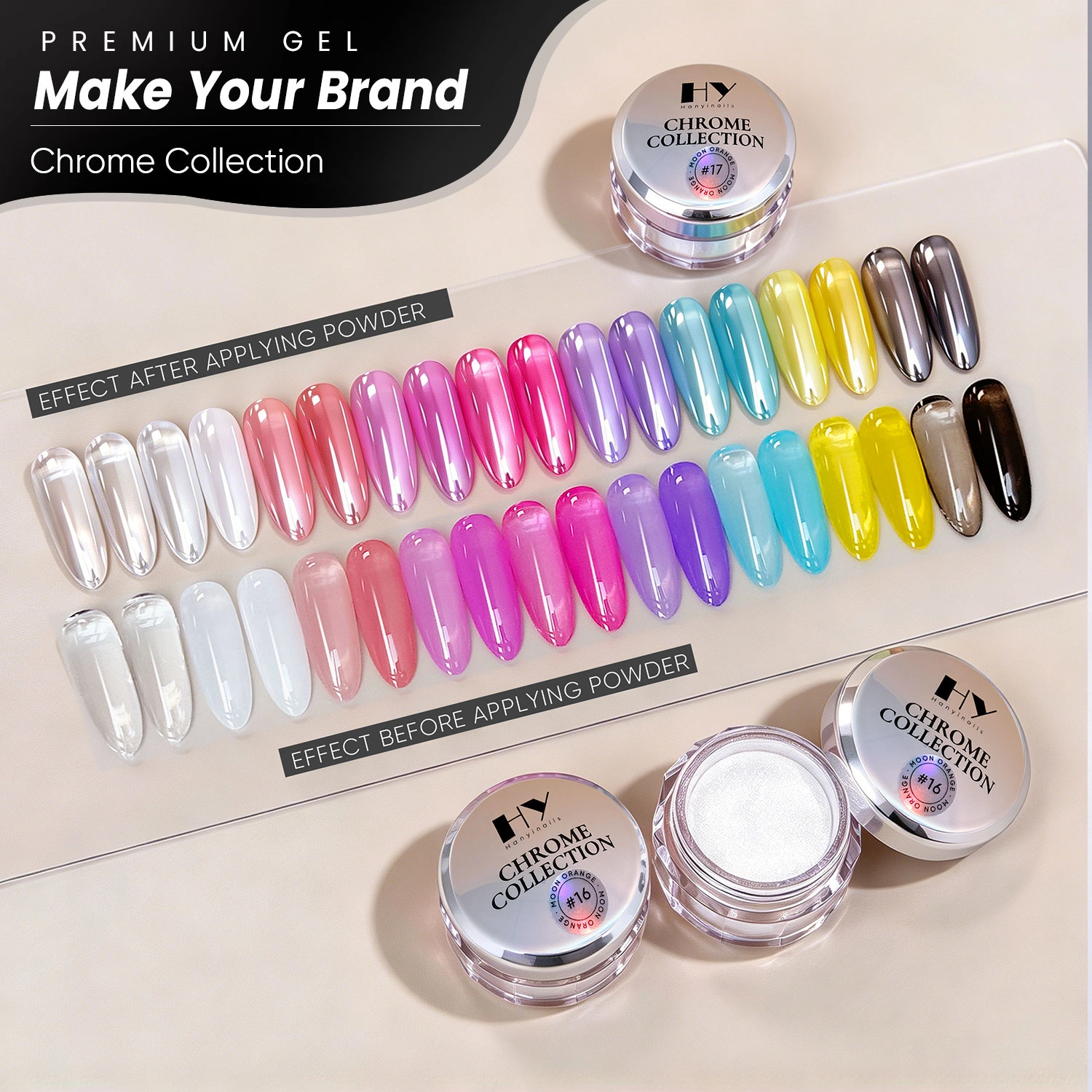
Color-driven products require more than a single successful sample. Magnetic particle orientation, reflective intensity, viscosity, coverage, curing response, and bottle presentation all influence the final salon result. Our development program introduces approximately 2000 new colors per year, enabling customers to evaluate seasonal palettes, coordinated collections, and differentiated effect finishes while maintaining a practical path toward approved master samples and repeat production.
One-stop customization improves procurement control
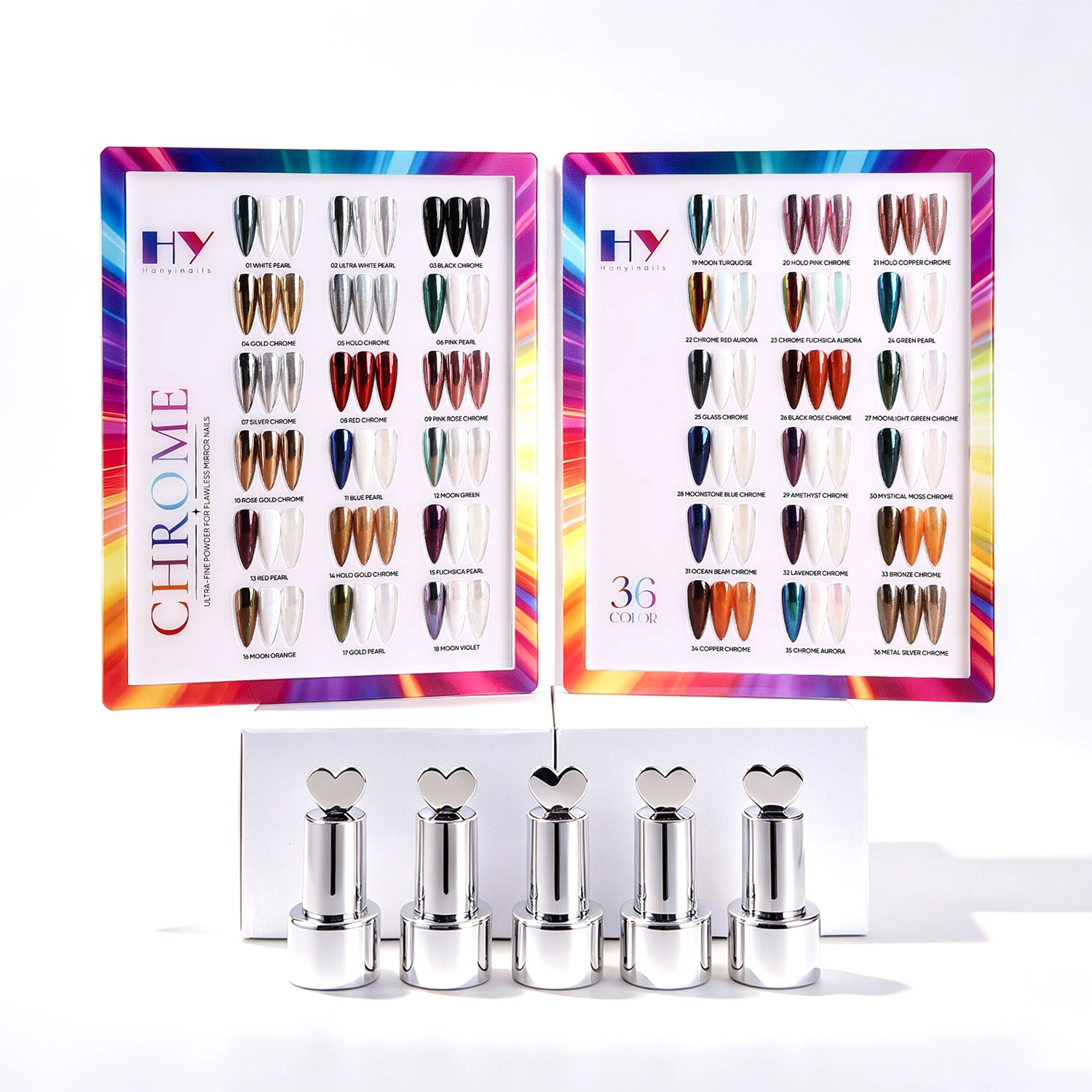
Hanyinails provides 12 years of OEM customization experience and supports brand-specific development across formula presentation and merchandising. Our offering includes more than 50 styles of stock bottles and caps, over 600 styles of customized bottles and caps, more than 100 kit-box styles, and over 200 color-chart designs. These options allow project owners to select a packaging direction that matches positioning, target price, shelf requirements, and sustainability objectives.
A coordinated customization process can reduce the communication gaps that occur when formula, packaging, artwork, and kitting are sourced from separate vendors. Buyers can define the required market, target fill size, effect type, color range, packaging material, label language, and documentation package at the project-planning stage. That approach helps align regulatory review with product development instead of treating compliance as a final-stage correction.
A broader professional nail portfolio supports category expansion
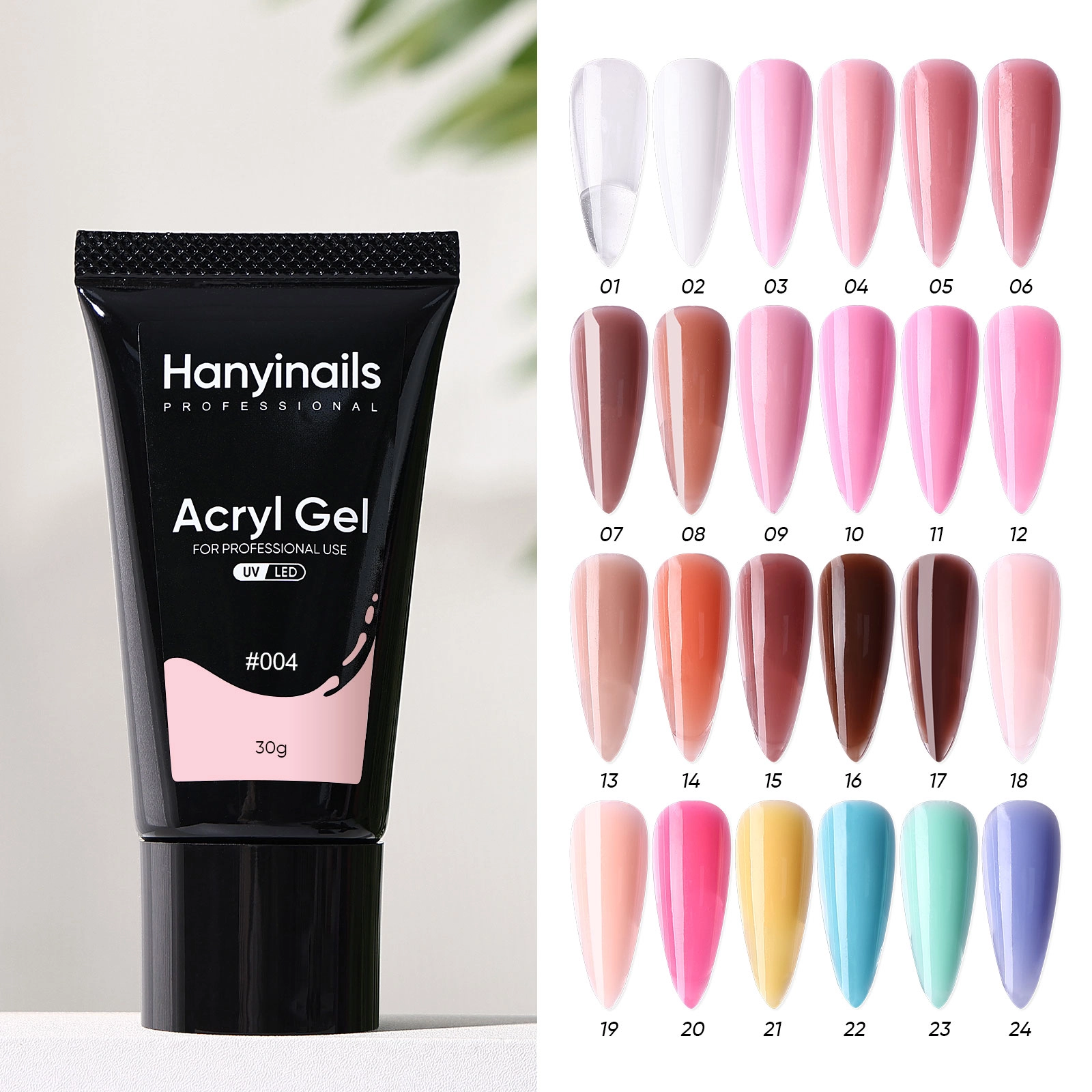
Our product capabilities extend beyond a reflective magnetic collection. Hanyinails supports programs involving 3D nail art gel, gel builder nail polish, colored nail polish, nail care oil, Gel X nail glue, Gelly nail tips, nail hard gel, Poly Acrygel, and line gel nail art. A broader portfolio can help distributors build coordinated systems for nail preparation, extension, structure, color, decoration, and aftercare.
Hanyinails also participates in exhibitions in more than 10 countries every year, providing regular exposure to international market preferences, packaging trends, salon workflows, and distributor requirements. This global-facing approach supports clearer communication when buyers need a collection adapted for different regions rather than a generic product copied across markets. Our vision is to become the world’s leading manufacturer of nail products, with quality consistency, customization capability, and long-term customer support at the center of that objective.
How buyers can structure a Hanyinails sourcing project
For a new collection, the recommended sequence is to define destination markets, target customer profile, effect performance, formula requirements, packaging direction, forecast volume, and documentation expectations. The next stage is sample evaluation under the intended lamp and salon application conditions. Buyers should compare cure behavior, magnetic movement, opacity, wear, removal, odor, brush or applicator performance, label accuracy, and package integrity.
After approval, a controlled purchase order should identify the formula version, color reference, packaging components, artwork revision, fill quantity, inspection standard, batch coding, and shipping requirements. Pre-shipment inspection and retained samples create a clear reference for future replenishment. This process is particularly valuable for high-visibility finishes where small changes in pigment concentration or viscosity can alter the customer’s perception of the collection.
For project discussions, product sampling, OEM development, and packaging selection, buyers can contact Hanyinails at sales@hanyinails.com or review the company portfolio at Hanyinails.




Hanyinails
Hanyinails
Hanyinails
Hanyinails