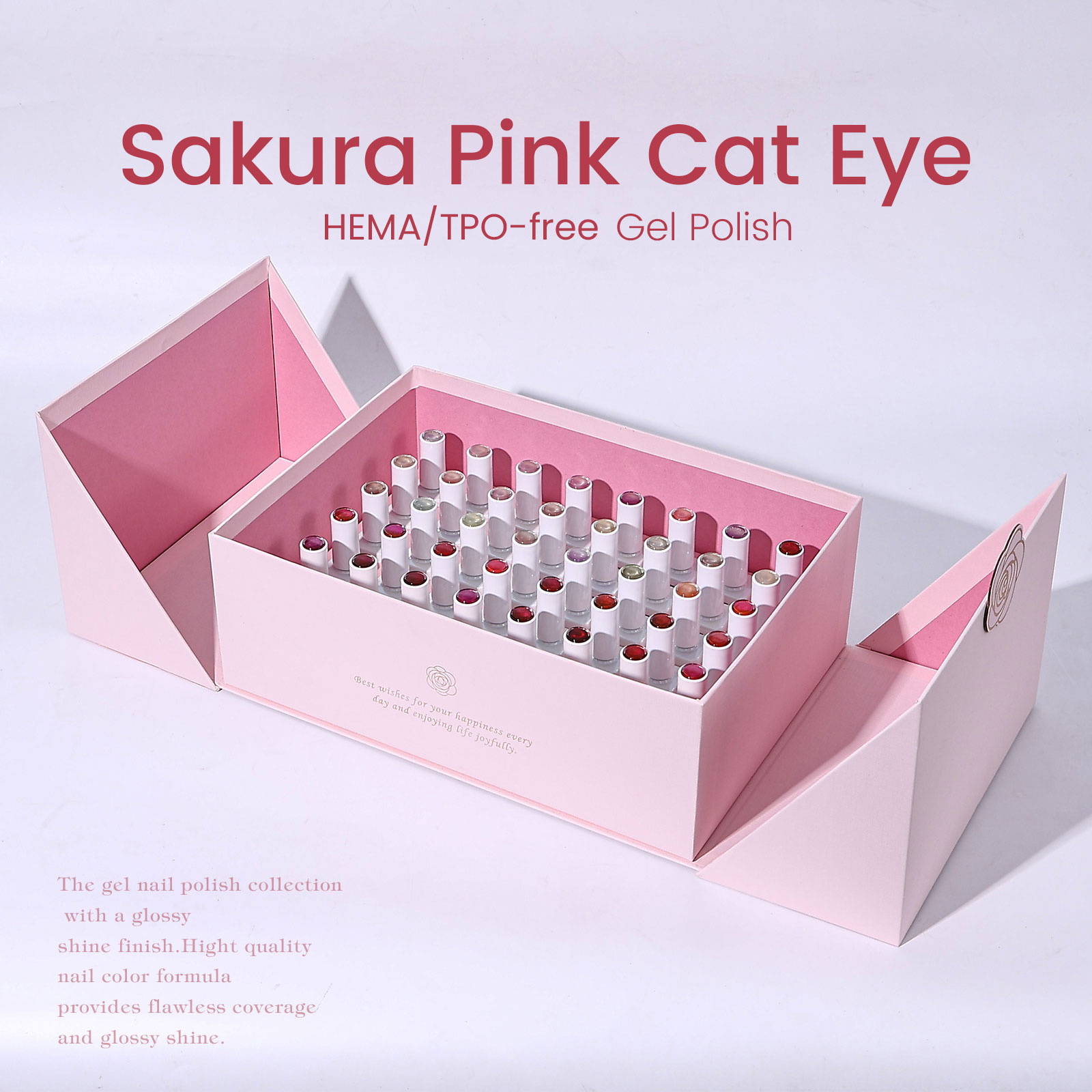
For salons and beauty brands seeking a soft, luminous look with room for creative nail art, Sakura pink cat-eye magnetic gel polish offers a magnetic effect in a broad 50-color collection. It can help buyers build a coordinated assortment around a popular pink aesthetic, but commercial purchasing decisions should also account for application consistency, lamp compatibility, packaging, documentation, and minimum order terms. Confirm current specifications with Hanyinails before placing an order.
How can a magnetic pink gel polish strengthen a nail collection?
What makes the cat-eye effect useful for salons and retailers?
A cat-eye finish gives nail professionals a way to create directional light patterns rather than relying on a flat color alone. A magnet is used near the uncured magnetic gel to shift reflective particles and form a line or other design; the exact visual result depends on the product, magnet, technique, and working time. This makes one shade more versatile for clients seeking customized nail art.
For retailers and distributors, a 50-color range can support assortment planning across complementary shades and different customer preferences. The Sakura pink theme can serve as a soft, feminine anchor, while the broader collection may help create coordinated displays or salon menus. Before committing to a full range, request the current shade chart and confirm which colors are available in the pack size and packaging you intend to sell.
How should buyers assess the range before ordering?
Ask for clear images or physical samples under consistent lighting, since screen displays can alter perceived color and reflectivity. Compare shades on the same base color and with the same application method, then evaluate opacity, particle movement, and how easily the effect can be reproduced. A sample review can reduce the risk of selecting shades that look too similar or differ from your market’s expectations.
For business buyers, also establish whether the 50-color offer refers to a fixed assortment, selectable shades, or a collection with variations in availability. Confirm bottle volume, unit quantity, labeling options, carton details, lead time, and any minimum order quantity in writing. These checks help prevent a mismatch between the product presentation, your sales channel, and the inventory you receive.
How can users apply cat-eye gel more consistently?
What application steps help create a defined magnetic pattern?
Begin with nail preparation and apply compatible base products according to their instructions. Apply the magnetic color evenly, then position the magnet near the wet layer without touching the nail. Hold it steady for the duration recommended by the supplier and inspect the effect before curing, because curing fixes the pattern in place. Practice with the selected magnet and product to develop a repeatable technique.
Control the amount of product on the brush and work one nail at a time when the formula’s working time requires it. An overly thick layer can make application less predictable, while rushing the magnet step can produce a weak or uneven line. Use the supplier’s application guidance rather than assuming all magnetic gel formulas behave alike, and test the complete system before offering it to clients.
How can salons reduce curing and service problems?
Do not assume that every gel polish cures at the same time or under every lamp. Confirm the specified UV or LED lamp type, wavelength guidance, layer thickness, and curing time with the manufacturer, then follow those directions for the exact formula. If the supplier provides technical documents, keep them with salon procedures so staff can apply the same process across services.
Follow standard nail-service hygiene and avoid skin contact with uncured product; remove any gel from the skin before curing. The FDA guidance on nail care products discusses product safety and use considerations, while the product’s own label and safety documentation should guide handling. Stop use if irritation occurs and seek appropriate professional advice.
What should B2B buyers verify before sourcing?
Which quality and compliance documents should be requested?
Request current ingredient information, a safety data sheet where applicable, product labeling details, batch identification practices, and the supplier’s recommended use and storage conditions. Documentation needs can differ by destination market and sales channel, so importers should check local requirements rather than treating one supplier document as universal approval. The European Union Cosmetics Regulation is a primary reference for cosmetics placed on the EU market.
Ask how the supplier controls production consistency, handles batch traceability, and manages quality complaints. ISO 22716 cosmetics good manufacturing practices provides guidance for cosmetics manufacturing and quality practices; its relevance should be discussed with the supplier rather than assumed as a certification claim. A clear document review can help buyers assess operational readiness and plan their own compliance checks.
How can buyers compare total cost and supply reliability?
Compare more than the unit price: include sample costs, freight, duties, packaging customization, labeling, payment terms, and the cost of holding a broad shade assortment. Ask for a written quotation with the exact colors, quantities, packaging, and delivery terms. If a launch depends on several shades arriving together, confirm whether they ship as one order and how the supplier handles backorders.
Before scaling, test samples with the intended base, top coat, magnet, and lamp, then document the results for your team. Confirm reorder lead times and whether repeat batches can be matched to approved samples. These steps are especially useful for salons building service protocols and brands planning repeat retail sales, where a reliable customer experience matters as much as an attractive initial swatch.









Hanyinails
Hanyinails
Hanyinails
Hanyinails