Returns and warranty terms for holographic magnetic gel contracts should define exactly what constitutes a defect, how visual and performance specifications will be measured, who bears transport costs, and which remedy applies when a batch fails inspection. For buyers sourcing holographic magnetic gel, the contract should cover color accuracy, reflective particle distribution, magnetic response, curing behavior, viscosity, container integrity, labeling, shelf life, documentation, and regulatory responsibilities. A reliable agreement separates manufacturing nonconformity from transit damage, improper storage, application error, customer preference, and legally required product withdrawal. This structure protects procurement budgets, supports predictable inventory planning, and gives both the nail gel supplier and the buyer a documented process for resolving claims.
Contract Foundations for Reflective Magnetic Nail Gel
Define the product specification before purchase order approval
A product name alone is not an adequate acceptance standard for a specialty gel. The commercial specification should identify the color reference, magnetic pigment or reflective particle effect, base shade, viscosity range, fill volume, curing system, recommended lamp parameters, packaging format, batch code, and intended professional use. If a buyer requires a cat-eye line, velvet finish, multichrome shift, or holographic sparkle, that effect should be described with approved samples, photographs under stated lighting conditions, and a tolerance statement.
Color variation must be treated realistically. Screen images, printed charts, salon lighting, and camera exposure can alter perceived tone. A stronger contract uses a sealed physical reference sample or an agreed master panel, while allowing a defined tolerance for raw-material variation. The same principle applies to magnetic movement: the agreement should state the approved magnet type, distance, exposure time, angle, and visual result. Without those parameters, a claim that the gel is not sufficiently dimensional may be difficult to verify objectively.
Separate warranty coverage from commercial returns
A return clause and a warranty clause serve different purposes. A commercial return may address unopened goods ordered in error, excess stock, incorrect shipping quantities, or packaging that arrives visibly damaged. A warranty addresses nonconformity caused by manufacturing, formulation, filling, closure, labeling, or documented failure to meet the agreed specification.
Contracts should state whether returns are accepted only with prior written authorization. They should also specify the notification period, such as a short period for visible carton damage and a longer period for latent defects discovered during reasonable incoming inspection. Opened or used products generally require evidence and technical review because contamination, exposure to light, repeated opening, incorrect curing, or contact with other products can change performance after delivery.
Use recognized quality and safety references
Manufacturing and quality language should align with credible standards rather than vague promises. Buyers can reference ISO 9001 quality management principles when defining documented processes, corrective action, record control, and continual improvement. For cosmetic manufacturing operations, ISO 22716 guidelines for cosmetic good manufacturing practices provide a useful framework for production, storage, quality control, and complaint handling.
Regulatory obligations depend on the destination market and product classification. In the United States, buyers should review the U.S. Food and Drug Administration cosmetics guidance, including applicable labeling and safety responsibilities. For products sold in the European Economic Area, the European Union Cosmetics Regulation is a primary legal reference. These sources do not replace market-specific legal advice, but they help contract parties assign responsibility for ingredient documentation, claims, safety files, labels, and post-market complaints.
Warranty Scope, Evidence, and Claim Handling
List covered defects in operational language
A practical warranty should identify covered defects instead of relying on a general phrase such as “quality problem.” Typical covered conditions may include a materially incorrect shade against the approved standard, inadequate fill quantity, leaking containers caused by defective closures, missing or unreadable batch information, abnormal separation that does not remix under the agreed procedure, failure to cure under the specified system, or magnetic particles that do not produce the approved effect when tested according to the contract.
Some performance complaints need a technical threshold. For example, a buyer may define cure failure as persistent tackiness, wrinkling, lifting, or incomplete polymerization after the stated lamp wavelength, power, layer thickness, and exposure time are used. A supplier should not be held responsible for curing results when the salon applies an excessively thick layer, uses an incompatible lamp, or stores the material outside the agreed range. The contract should therefore include an application test method and a clear distinction between product failure and process failure.
Establish a defensible inspection procedure
Incoming inspection should cover outer cartons, bottle condition, cap torque, labels, quantity, batch identification, shade consistency, and representative application tests. The buyer should photograph damaged cartons before opening them and retain samples from any disputed lot. A claim file normally becomes stronger when it includes the purchase order, invoice, packing list, delivery record, batch number, storage records, photographs, test conditions, quantity affected, and a clear description of the business impact.
The supplier should receive a reasonable opportunity to investigate. Depending on the issue, the review may involve retained samples, production records, filling records, raw-material information, stability observations, and laboratory testing. A contract can require an initial response within a defined number of business days and a final determination within a longer period. Emergency escalation should be available when a suspected safety issue, widespread leakage, mislabeling, or regulatory nonconformity affects products already distributed.
Control the distinction between defect and damage
Transit damage is not automatically a formulation warranty issue. Responsibility depends on the agreed Incoterm, insurance arrangement, carrier documentation, packaging design, and point at which risk transfers. A buyer should specify whether the supplier must provide drop-resistant secondary packaging, absorbent materials, tamper evidence, temperature protection, or palletization suitable for international transport.
Storage is equally important. Most UV-curable nail products require protection from excessive heat, freezing conditions, direct sunlight, and uncontrolled exposure to curing light. Contract language should identify the recommended storage range, orientation, maximum exposure conditions, and stock rotation method. If the buyer cannot demonstrate reasonable storage, a technically valid claim may be weakened. First-expiry, first-out inventory control and batch-level traceability reduce this risk.
| Contract area | Recommended buyer requirement | Evidence for evaluation | Typical remedy |
|---|
| Visible delivery damage | Record damage on delivery documents and notify supplier or carrier within the agreed period | Carton photographs, delivery record, packing list | Carrier claim, replacement, credit, or insurance recovery according to risk terms |
| Manufacturing nonconformity | Compare retained sample and batch against approved specification | Batch code, test results, photos, representative samples | Replacement, refund, credit, or rework at supplier cost |
| Color or effect deviation | Use master sample and defined lighting, application, and tolerance conditions | Master panel, application record, controlled images | Replacement or negotiated credit for affected units |
| Application-related complaint | Confirm lamp, layer thickness, preparation, curing time, and storage history | Salon test protocol, lamp details, usage records | Technical support or rejection if product conforms |
| Unopened order error | Allow return only by prior authorization and within a stated period | Sealed cartons, original labels, purchase documents | Restocking fee, exchange, or credit under commercial terms |
Commercial Remedies and Risk Allocation
Select remedies that preserve supply continuity
Replacement is often the most useful remedy when a distributor has a launch date, salon program, or retail promotion. The contract should state whether replacement units ship with the next order or through an expedited shipment, and who pays freight. A refund or credit may be more appropriate when the affected shade is discontinued, the quantity is small, or the buyer cannot accept a delayed launch.
For private-label programs, the agreement should address artwork correction, relabeling, rework, destruction, and the ownership of customized packaging. If a defect affects only part of a production lot, the parties should agree whether the buyer may return the full lot or only verified nonconforming units. A reasonable limitation of liability may exclude indirect losses, but it should not remove responsibilities for deliberate misconduct, regulatory violations, personal injury, or other matters that cannot legally be excluded in the applicable jurisdiction.
Address shelf life and batch traceability
Warranty duration should be connected to manufacturing date, delivery date, or the end of the stated shelf life; the chosen method must be explicit. Buyers may require a minimum remaining shelf life at shipment, particularly when products move through import clearance, distribution centers, and multiple retail channels. The contract should also define how unopened and opened products are treated, because post-opening stability is affected by contamination and environmental exposure.
Each shipment should be traceable through batch or lot identification. Records should connect the finished product to filling date, packaging components, quality release, and complaint history. This supports targeted correction instead of a costly blanket recall. It also helps brand owners demonstrate responsible control when responding to distributors, salons, marketplaces, or regulators.
Use a pre-shipment approval and dispute process
Pre-shipment samples can reduce later disagreements about shade, packaging, and magnetic finish. Approval should be written and tied to a version-controlled sample, not to an informal messaging-app image. The contract may permit a limited production tolerance while requiring advance notice when a raw material, bottle, cap, label, or manufacturing site changes.
If the parties disagree, an independent laboratory or mutually agreed technical assessor can review sealed samples using the documented method. The contract should state how testing fees are allocated and whether the assessor’s decision is binding or advisory. This is particularly valuable for cross-border transactions where language differences, local consumer expectations, and differing legal systems can otherwise delay resolution.
How Hanyinails Supports Lower-Risk Nail Gel Procurement
Manufacturing scale with documented quality attention
Hanyinails is a professional nail products manufacturer committed to supplying professional nail gel items for brand owners, distributors, salons, and project operators. Our manufacturing platform includes 10 production lines, 60 production machines, 8 QA/QC inspectors, and an 8,000-square-meter workshop. This structure supports production planning, batch coordination, inspection checkpoints, and more consistent execution across private-label programs.
Our team develops approximately 2,000 new colors per year, which is relevant to buyers building seasonal collections, magnetic effect ranges, coordinated salon palettes, and differentiated retail lines. Color development should still be governed by approved samples and written tolerances, but a broad development pipeline gives project owners more options before finalizing a commercial assortment.
One-stop customization for brand and packaging requirements
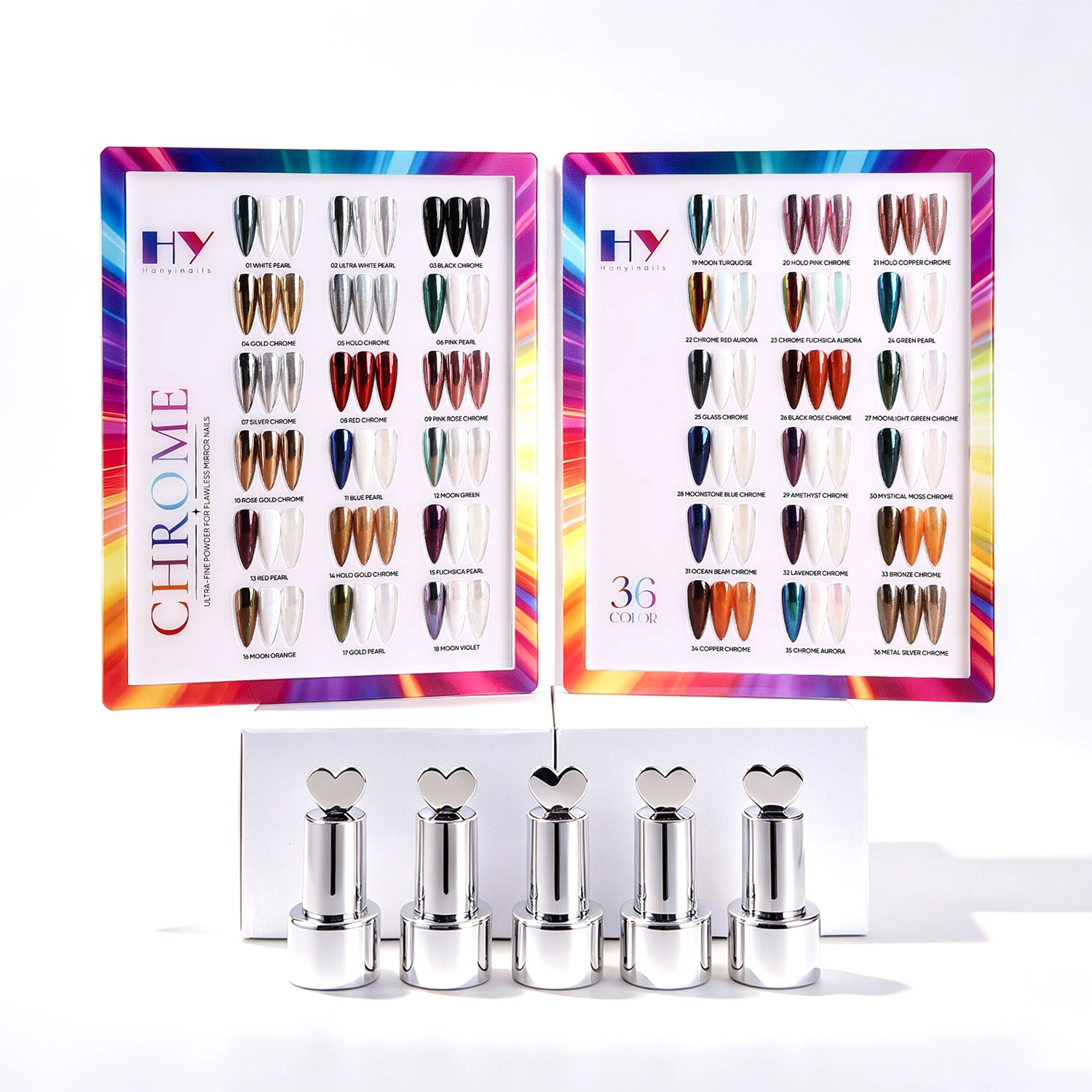
Hanyinails has 12 years of OEM customization experience and participates in exhibitions in more than 10 countries every year. Our one-stop customization service includes more than 50 stock bottle and cap styles, over 600 customized bottle and cap styles, more than 100 kit box designs, and over 200 color chart designs. These options help buyers align bottle ergonomics, shelf presentation, color coding, kit configuration, and launch quantities with their market positioning.
For a reflective magnetic collection, packaging specifications can be integrated with the warranty file: approved artwork, label language, ingredient information, batch coding, fill volume, closure requirements, and carton testing can all be documented before mass production. This reduces the risk that a product performs correctly but fails a marketplace, distributor, or regulatory review because of incomplete presentation or traceability information.
Broader product capability for coordinated programs
Our product range supports multi-category procurement rather than a single-color project. Relevant offerings include 3D nail art gel, gel builder nail polish, colored nail polish, nail care oil, gel x nail glue, Gelly nail tips, nail hard gel, Poly Acrygel, and line gel nail art products. Combining these categories can help a brand create complete professional systems, cross-sell complementary products, and simplify supplier communication.
Hanyinails’ commercial approach is to connect product development, packaging customization, quality coordination, and contract clarity. Buyers should still define their own inspection plan, destination-market obligations, storage controls, and remedy requirements. However, a supplier with dedicated production capacity, QA/QC resources, extensive packaging choices, and ongoing international market exposure can make those controls easier to implement at scale. Our vision is to become the world’s leading manufacturer of nail products, and that objective depends on repeatable quality, transparent communication, and dependable support after shipment.





Hanyinails
Hanyinails
Hanyinails
Hanyinails