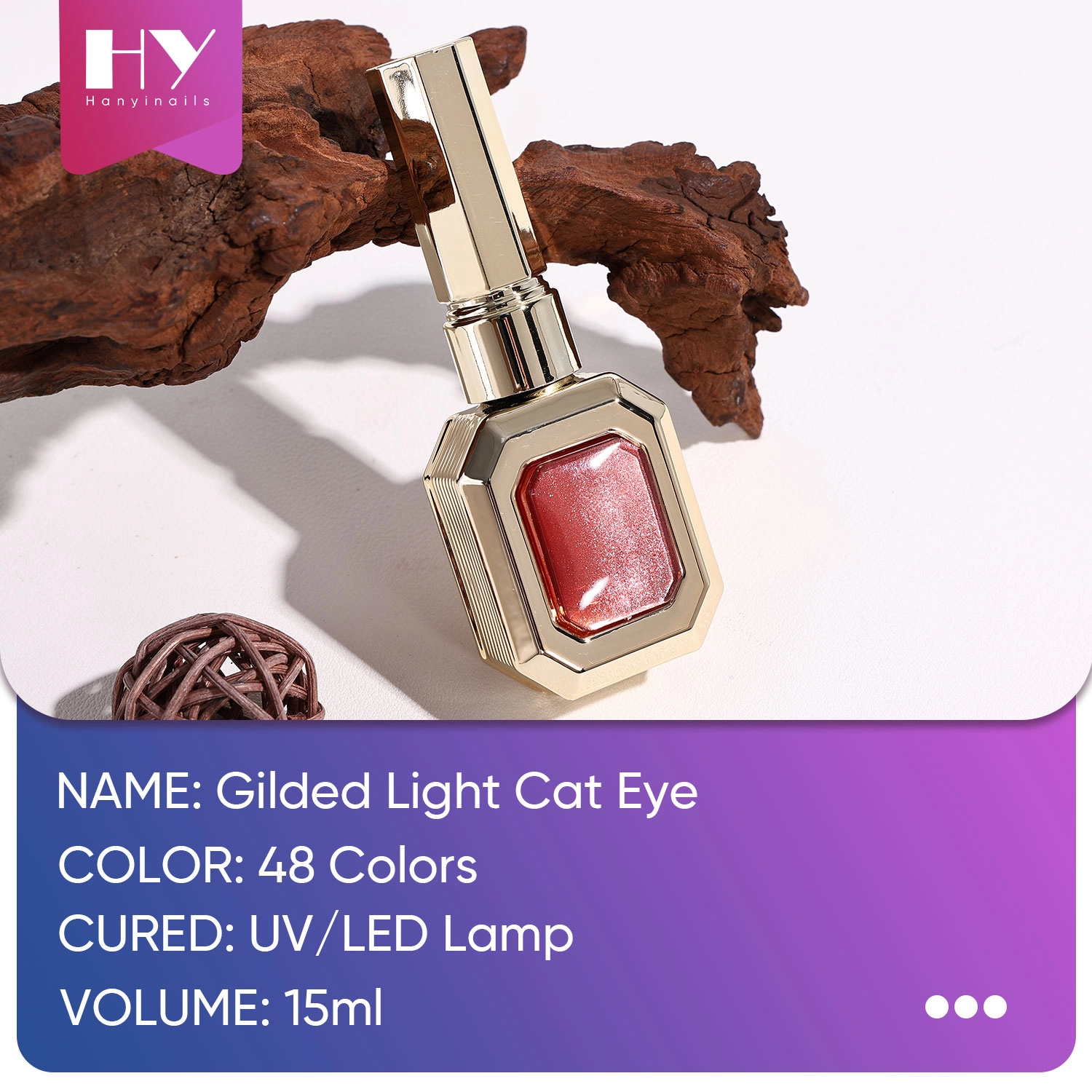
Professional cat eye gel polish is a magnetic-effect UV/LED nail coating designed to create reflective, dimensional, velvet, or gemstone-like patterns when iron-based particles respond to a magnet before curing. For bulk buyers, the decision is not based on color appearance alone. A reliable procurement assessment should verify formula stability, particle distribution, curing compatibility, viscosity, brush performance, bottle integrity, regulatory documentation, batch consistency, private-label capability, and total landed cost. This checklist helps salon chains, distributors, retailers, and beauty brands compare suppliers objectively while reducing risks such as weak magnetic movement, uneven curing, leakage, color drift, or excessive inventory waste.
How to Evaluate Magnetic-Effect Nail Gel for Commercial Use
Confirm the visual effect and formula behavior
The defining commercial value of magnetic nail gel is the movement of reflective particles under a magnet. Buyers should request wet-swatch videos, cured nail samples, and several production-batch samples rather than relying on catalog images. A strong formula should create a visible line, halo, velvet surface, or dimensional shift without requiring excessive manipulation. The effect should remain stable after curing and should not disappear when a top coat is applied.
Particle response must be assessed across different application methods. A salon technician may hold a magnet above the nail, move it along the sidewall, or use a double-sided tool to create a diagonal or blooming design. The product should respond predictably without creating large clumps, bald areas, or muddy pigment zones. Buyers should also evaluate whether the magnetic particles settle quickly during storage. Excessive settling increases mixing time, creates shade inconsistency, and can lead to different results between the first and final applications in a bottle.
Assess viscosity, leveling, and curing performance
Viscosity affects application speed, design control, and technician training requirements. A very thin material may allow particles to migrate before the magnet is applied, while an overly thick material may leave brush marks and make the magnetic pattern difficult to shape. The preferred balance depends on the target channel: salon professionals may prefer controlled medium viscosity, while retail users often need forgiving self-leveling behavior.
Curing must be tested with the exact lamp types used by the intended market. Cure results can vary according to LED or UV output, wavelength, lamp age, layer thickness, pigmentation, and application technique. Buyers should request recommended curing conditions and conduct tests on both thin and heavy applications. Incomplete curing can cause service breakdown, sensitivity concerns, surface wrinkling, or complaints that are difficult to distinguish from application errors. Product instructions should be consistent with the supplier's technical data and supported by documented testing.
Review wear resistance and service compatibility
A bulk order should be evaluated as a complete salon service system rather than as an isolated color product. Test adhesion over common base gels, builder systems, extensions, and natural nails where relevant. Check resistance to chipping, scratching, color fading, and loss of shine during a realistic wear period. The top coat should not blur the reflective effect or cause the magnetic design to spread.
Compatibility testing is especially important when the product line includes gel builder nail polish, nail hard gel, Poly Acrygel, Gelly nail tips, gel x nail glue, and colored nail polish. A supplier that can coordinate these products may help the buyer reduce application variables and simplify staff training. However, compatibility claims should be confirmed through physical samples, technical documentation, and controlled salon trials.
Bulk Procurement Checklist for Quality, Compliance, and Packaging
Request a complete technical and compliance file
Before approving a purchase order, buyers should request the INCI ingredient list, safety data sheet where applicable, product specification sheet, recommended curing instructions, batch or lot identification method, shelf-life information, storage guidance, and quality inspection records. Cosmetic requirements differ by destination, so the supplier should identify which documents can be provided for the target market rather than presenting generic certificates.
For United States distribution, buyers should review the requirements and responsibilities described by the U.S. Food and Drug Administration cosmetic products guidance. For manufacturing controls, ISO 22716 Good Manufacturing Practices for cosmetics is a useful reference for production, storage, quality control, and documentation systems. European-market projects should also examine the applicable requirements under the European Union Cosmetics Regulation. These references do not replace market-specific legal review, but they provide a credible framework for supplier due diligence.
Define measurable quality-control checkpoints
A purchase specification should describe more than shade names. Include appearance, odor, viscosity range, fill volume, brush dimensions, cap torque, bottle compatibility, curing behavior, magnetic response, labeling requirements, and acceptable defect limits. The supplier and buyer should agree on the sampling method and approval process before mass production begins.
Useful checks include color comparison against an approved master sample, bottle leakage testing, cap and brush inspection, label adhesion, barcode readability, fill-weight verification, and accelerated stability testing where appropriate. For magnetic formulas, retain reference samples from the approved batch and compare subsequent lots under the same base coat, layer thickness, magnet distance, and curing conditions. This creates a practical benchmark for detecting particle separation or shade drift.
Calculate packaging and landed-cost risk
Packaging choices influence breakage, freight efficiency, shelf presentation, and minimum order quantity. Buyers should compare stock bottles with custom bottles, standard caps with specialty caps, and individual cartons with kit packaging. The calculation should include formula cost, bottle and cap tooling, artwork, proofing, filling, inspection, cartons, freight, customs, duties, testing, and possible replacement units.
Packaging should protect the formula from excessive heat, light exposure, and leakage during transport. Opaque or light-resistant components may be preferable for sensitive formulations, but the final decision should follow supplier stability data. A buyer should also confirm whether the same bottle and brush combination has been tested with the actual viscosity of the magnetic gel. A visually attractive component that performs poorly in filling or application can create avoidable returns.
| Procurement area | What to verify | Commercial impact |
|---|
| Magnetic particle response | Pattern strength, movement speed, settling behavior, and consistency across samples | Determines service quality, training time, and customer satisfaction |
| Curing system | Recommended lamp type, wavelength range, exposure time, and layer-thickness tolerance | Reduces under-cure complaints and supports predictable salon results |
| Formula stability | Color uniformity, viscosity retention, separation risk, and storage guidance | Protects shelf life and lowers batch-related waste |
| Packaging system | Bottle compatibility, fill accuracy, cap torque, brush quality, and leakage resistance | Affects presentation, logistics losses, and user experience |
| Documentation | Ingredient information, safety documents, specifications, and market-specific support | Improves launch readiness and regulatory risk management |
| Supply capability | Production capacity, lead time, MOQ, reorder planning, and backup process | Supports continuity for distributors and multi-location operators |
Supplier Selection for Private Label and Multi-Product Nail Gel Programs
Compare manufacturing capability, not only unit price
The lowest quotation may not produce the lowest total cost. Buyers should compare sample approval discipline, production capacity, quality staffing, response time, formula development capability, packaging options, and after-sales handling. A supplier with limited equipment may offer an attractive first order but struggle with repeat production, seasonal demand, or a rapid color expansion program.
Ask how the manufacturer manages raw-material acceptance, batch records, filling controls, in-process inspection, finished-goods release, retained samples, and nonconforming products. It is also useful to confirm whether the factory can support multiple product categories, including 3D nail art gel, line gel nail art, nail care oil, and extension-related systems. A coordinated portfolio can make merchandising, training, and replenishment more efficient.
Plan the launch around sampling and reorder data
A disciplined launch begins with a defined sample matrix. Select core neutrals, high-demand seasonal colors, high-contrast shades that demonstrate the magnetic effect, and several textures or finishes. Test each shade with the proposed base and top coat, then record application time, magnet technique, cure result, wear performance, and customer response.
For distributors, the first order should be divided into fast-moving core stock and controlled experimental colors. Reorder points should reflect lead time, forecast uncertainty, promotional calendars, and minimum production quantities. A supplier able to produce new colors regularly can support trend-based launches, but each new shade still requires approval and documentation before commercial release.
Why Hanyinails Fits a Scalable Magnetic Gel Polish Project
Production capacity and OEM development
Hanyinails is a professional nail products manufacturer committed to supplying a broad range of professional nail gel items. Our operation includes 10 production lines, 60 production machines, 8 QA/QC inspectors, and an 8000㎡ workshop. These resources support structured production planning for both standard programs and private-label projects.
With 12 years of OEM customization experience, our team works with brand owners and distributors on formula presentation, shade development, packaging selection, and finished-product execution. The capability to develop 2000 new colors per year is valuable for buyers building seasonal collections, salon-exclusive palettes, or differentiated retail ranges. Each project should still proceed through sample approval and agreed quality specifications, ensuring that commercial speed does not replace process control.
One-stop customization and portfolio depth
Hanyinails supports brand differentiation through more than 50 styles of stock bottles and caps, more than 600 styles of customized bottles and caps, over 100 kit-box styles, and more than 200 color-chart designs. This range helps buyers create a coherent visual identity without limiting the project to a single standard component.
Our product scope can support a broader nail system around magnetic color collections, including 3D nail art gel for dimensional decoration, gel builder nail polish for structure and reinforcement, colored nail polish for classic coverage, nail care oil for retail aftercare, gel x nail glue and Gelly nail tips for extension services, nail hard gel for durable overlays, Poly Acrygel for hybrid sculpting, and line gel nail art for precision details. A multi-category supplier can help simplify procurement while allowing each formula to be evaluated according to its own technical requirements.
International market awareness and buyer support
Hanyinails takes part in exhibitions in more than 10 countries every year, creating regular contact with distributors, salon operators, and beauty brands across different markets. This international exposure supports a practical understanding of packaging preferences, color trends, product positioning, and private-label expectations. Our vision is to become the world's leading manufacturer of nail products, and that goal is supported by continuous product development, manufacturing investment, and customer-oriented customization.
For a bulk project, buyers can send the intended market, target retail price, estimated order volume, preferred effect, packaging direction, and required launch date to sales@hanyinails.com. The supplier evaluation should then focus on sample quality, technical communication, documentation, production schedule, and repeat-order reliability. Visit Hanyinails to review the wider nail product portfolio and discuss an OEM solution.
Contact Hanyinails at sales@hanyinails.com or visit https://www.hanyinails.com to develop a reliable bulk magnetic nail gel collection with customized colors, packaging, and coordinated professional nail products.









Hanyinails
Hanyinails
Hanyinails
Hanyinails