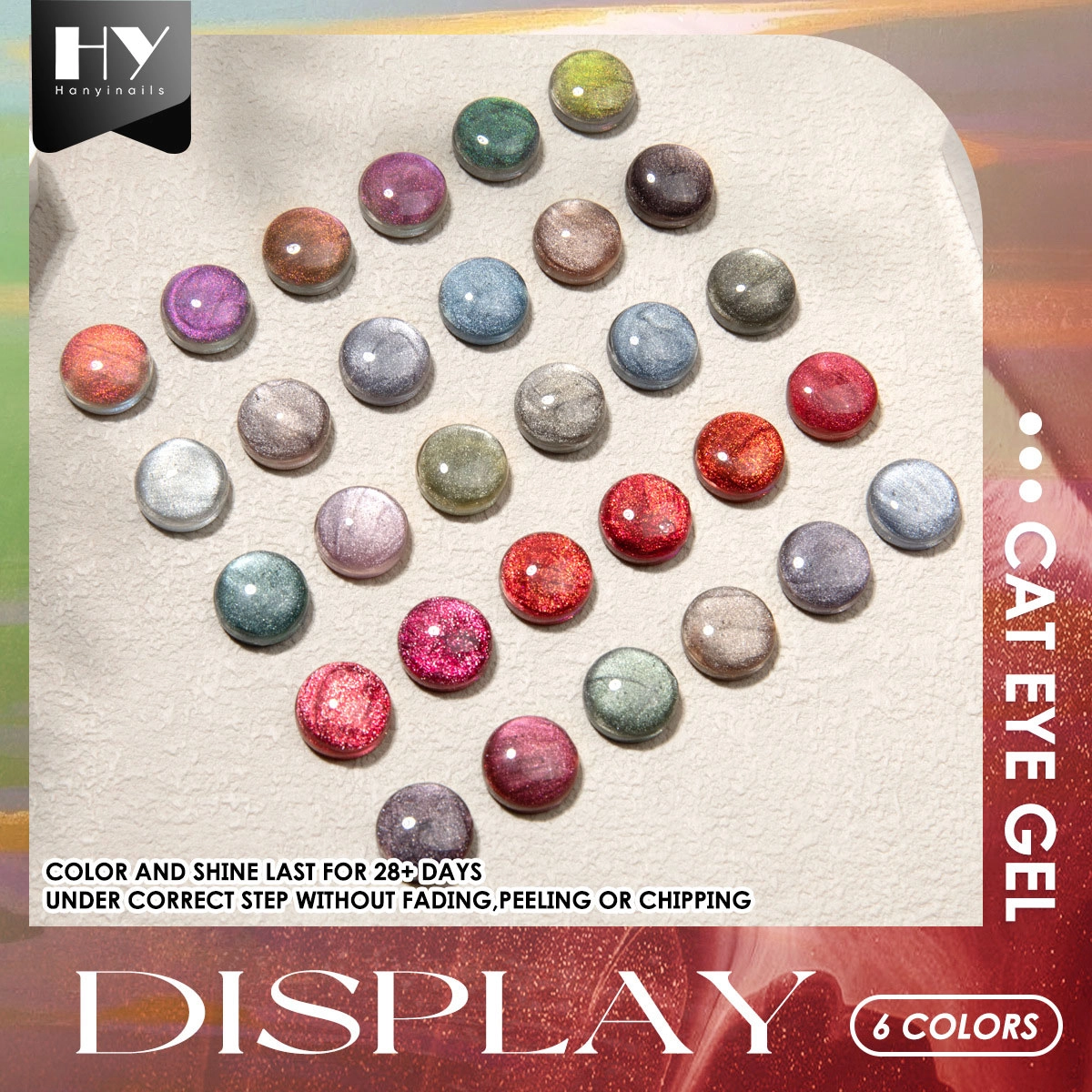
A private-label cat eye nail art kit is a coordinated magnetic gel manicure program designed for salons, distributors, beauty retailers, e-commerce brands, and professional nail-product companies. The commercial success of this type of collection depends on more than visual shimmer: buyers must control magnetic particle distribution, viscosity, curing behavior, bottle compatibility, shade consistency, packaging protection, regulatory documentation, and replenishment capacity. OEM manufacturing is suitable when a brand already has a defined formula, color system, and packaging specification, while ODM development is appropriate when the supplier is expected to contribute formulas, shade concepts, component selection, and launch-ready merchandising. A reliable project plan connects product performance with compliance, inventory economics, salon usability, and brand positioning from the first sample through mass production.
Planning a Magnetic Gel Manicure Collection for Private Label
Define the commercial role of the collection
Before requesting quotations, brand owners should define where the collection will be sold and how the product will be used. A salon-focused range may require larger bottles, strong coverage in one or two coats, fast magnetic movement, and dependable curing under commonly used LED lamps. A retail kit may prioritize compact packaging, beginner-friendly instructions, lower shipping weight, and a visually compelling assortment of shades. A professional education brand may need technical consistency across repeated classes, swatch sticks, training cards, and replenishable individual colors.
The assortment architecture should also be decided early. Options include a single magnetic color with a magnet tool, a multi-shade boxed set, a base-and-top-coat system, or a broader nail-art collection that combines magnetic gel with line gel nail art, 3D nail art gel, and colored nail polish. Each model changes the bill of materials, regulatory review, packaging dimensions, product claims, and expected average order value. A buyer who defines the use case before selecting components can avoid purchasing attractive but commercially mismatched products.
Separate OEM specifications from ODM development
In an OEM program, the buyer normally supplies or approves the essential specifications. These may include the target viscosity, magnetic particle appearance, curing time, bottle fill volume, brush shape, color references, logo placement, carton dimensions, and labeling requirements. The manufacturer’s responsibility is to reproduce the approved specification consistently and document the production process.
ODM offers a broader development partnership. The manufacturer may propose a seasonal palette, magnetic effect strength, bottle and cap combinations, brush options, kit configurations, color-chart concepts, and compatible supporting products. This route can shorten the ideation stage for emerging brands, but the buyer should still retain approval rights over formula performance, artwork, claims, and final samples. A written product brief prevents creative suggestions from being confused with confirmed technical requirements.
Technical and Procurement Criteria for Magnetic Nail Gel
Evaluate formula performance, not only visual effect
The defining feature of magnetic gel is the movement of reflective particles when a magnet is positioned above the uncured layer. Consistent results depend on particle concentration, suspension stability, viscosity, application thickness, magnet strength, working distance, and curing sequence. A High Quality appearance should remain visible after curing and top-coat application rather than dispersing into a weak shimmer.
During sampling, technical teams should test the material on natural nail overlays, gelly nail tips, and artificial substrates. Reviewers should record leveling speed, brush drag, edge coverage, self-leveling behavior, pigment settling, odor, cure response, and ease of cleanup. The same shade should be tested with different lamp types and wattages used by the intended market. This does not replace formal product validation, but it reveals whether salon operators can achieve repeatable results without excessive rework.
Supporting formulas may also affect the final customer experience. A compatible gel builder nail polish or nail hard gel can provide structure beneath the magnetic color, while Poly Acrygel may serve customers who want added strength. Nail care oil can complete a retail set, and gel x nail glue paired with gelly nail tips can extend the brand into a broader at-home enhancement system. These additions should be evaluated for compatibility, labeling, and packaging fit rather than added solely to increase the number of items in a box.
Control packaging, labeling, and operational risk
Opaque or UV-protective bottles are often important for light-sensitive nail gel products, but the exact component should be selected through compatibility testing. A formula can interact with inner coatings, brush materials, wipers, caps, or bottle geometry. Buyers should request filled-component samples, not only empty packaging prototypes, and inspect leakage resistance after transport simulation, cap torque checks, and temperature exposure.
Label content should be prepared for every destination market. Product identity, net quantity, responsible company information, batch or lot identification, directions, warnings, ingredient disclosure where required, and curing instructions must be reviewed by qualified regulatory personnel. The U.S. Food and Drug Administration cosmetics regulations provide a useful reference for U.S.-market responsibilities, while European sales require review against the European Union Cosmetics Regulation. Requirements can differ according to formulation, claims, market, and product classification, so a factory certificate alone should not be treated as universal market authorization.
| Decision area | OEM route | ODM route | Buyer control point |
|---|
| Formula direction | Buyer-defined specification | Supplier-supported development | Approve technical brief and final benchmark samples |
| Color development | Existing approved shades or buyer references | Supplier-proposed palette and effect options | Confirm shade cards, batch tolerance, and light conditions |
| Packaging | Specified components or approved selections | Supplier-curated bottle, cap, box, and insert options | Validate compatibility, artwork, dimensions, and transport strength |
| Speed to launch | Efficient when specifications are complete | Efficient when the buyer needs development support | Set sample rounds, approval deadlines, and change-control rules |
| Commercial differentiation | Strong brand ownership through precise specifications | Broader opportunity for exclusive concepts | Define exclusivity, tooling ownership, and territory terms |
Build a quality-control and compliance file
A procurement file should connect every finished unit to its approved formula, packaging version, artwork file, batch record, inspection result, and release decision. Buyers should ask how raw materials are received, identified, sampled, and quarantined; how filling volume is checked; how cap application is controlled; and how defective units are segregated. The ISO 22716 cosmetics Good Manufacturing Practices standard is a recognized framework for production, control, storage, and shipment practices, although certification scope and implementation should be verified directly with the supplier.
Quality acceptance criteria should be measurable. Examples include fill-weight tolerance, bottle and cap appearance, label position, color match under defined lighting, viscosity range, cure performance, magnetic-effect visibility, leakage rate, carton strength, and barcode readability. For a multi-shade collection, the buyer should approve a master standard and retain reference samples from the production batch. This reduces disputes caused by subjective terms such as “strong shimmer” or “similar color.”
Cost, MOQ, and Launch Execution for Nail Gel Sets
Calculate total landed cost instead of unit price alone
The quoted gel price is only one part of the project economics. The full landed-cost model may include formula development, sample freight, custom bottle tooling, cap molds, printed cartons, inserts, magnets, labels, testing, export cartons, inspection, freight, duties, payment fees, and inventory carrying cost. A lower unit price can become less competitive if it requires a high minimum order quantity, creates excess shades, or uses packaging that increases dimensional shipping weight.
Buyers should calculate cost per sellable kit and cost per usable salon application. The latter can expose differences in opacity, application waste, brush loading, and rework. A slightly higher-cost formula may produce better coverage and reduce labor at the salon level. For e-commerce, packaging damage and customer returns should also be modeled because a fragile box or leaking bottle can weaken the apparent margin.
Use staged approvals to protect the launch schedule
A practical development sequence begins with a written brief, followed by formula and effect samples, component selection, filled-packaging testing, artwork proofing, pilot production, pre-shipment inspection, and final release. Each stage should have one responsible approver and a documented decision date. Repeated changes after artwork approval can affect color matching, carton purchasing, and production planning, so change control is essential.
MOQ discussions should distinguish between formula MOQ, shade MOQ, packaging MOQ, and finished-kit MOQ. A supplier may be able to offer a lower initial quantity for stock components but require a larger volume for custom bottles, special caps, or printed boxes. Buyers can reduce launch risk by using standard components for the first release, limiting the initial palette, or ordering a pilot quantity before committing to a larger seasonal program.
How Hanyinails Supports OEM and ODM Nail Product Programs
Manufacturing capacity for scalable private-label projects
Hanyinails is a professional nail products manufacturer committed to supplying professional nail gel items for brand owners, distributors, and project operators. Our manufacturing infrastructure includes 10 production lines, 60 production machines, 8 QA/QC inspectors, and an 8,000-square-meter workshop. This structure supports organized sampling, production scheduling, inspection, and replenishment planning for programs that need more than a one-time promotional order.
With 12 years of OEM customization experience, our team can support both specification-led OEM projects and collaborative ODM development. Hanyinails also participates in exhibitions in more than 10 countries each year, helping our team monitor professional preferences, packaging directions, and international buyer expectations. Market feedback does not replace technical validation, but it can improve the relevance of proposed shades, kit structures, and merchandising concepts.
One-stop customization across color, components, and kits
Private-label differentiation often comes from the complete product system rather than the gel formula alone. Hanyinails offers more than 50 styles of stock bottles and caps, over 600 styles of customized bottles and caps, more than 100 kit-box styles, and over 200 color-chart design styles. These options allow buyers to align the magnetic collection with a salon-professional identity, minimalist retail presentation, High Quality gift set, or value-oriented e-commerce package.
Our color-development capability is supported by approximately 2,000 new colors per year, giving project owners a broad starting point for seasonal palettes, exclusive releases, and coordinated shade families. The development process should still use buyer-approved references, documented lighting conditions, and retained standards to manage production consistency. A broad color library is most valuable when it is organized into commercially coherent collections rather than presented as an unstructured catalog.
Broader product coverage for a complete nail system
Hanyinails can help buyers extend a magnetic gel launch into a broader professional assortment. Relevant product categories include 3D nail art gel for raised decorative work, gel builder nail polish for structure and overlay services, colored nail polish for conventional color ranges, nail care oil for aftercare merchandising, gel x nail glue and gelly nail tips for extension systems, nail hard gel for durable enhancement work, Poly Acrygel for hybrid sculpting applications, and line gel nail art for fine detailing.
This one-stop approach can simplify supplier management, artwork coordination, carton planning, and product-family consistency. It also gives distributors the option to create education bundles, salon starter sets, refill programs, and cross-category displays. Hanyinails’ stated vision is to become the world’s leading manufacturer of nail products, and the company’s customization model is structured to support that long-term direction through product breadth, manufacturing investment, and international project cooperation.
For a buyer evaluating Hanyinails, the next step should be a structured brief covering target market, shade count, bottle volume, desired magnetic effect, lamp environment, packaging concept, regulatory destinations, estimated order volume, and launch timing. The supplier can then recommend an OEM or ODM path, identify suitable components, prepare samples, and establish approval checkpoints before mass production. More information is available at Hanyinails, and project inquiries can be directed to sales@hanyinails.com.









Hanyinails
Hanyinails
Hanyinails
Hanyinails