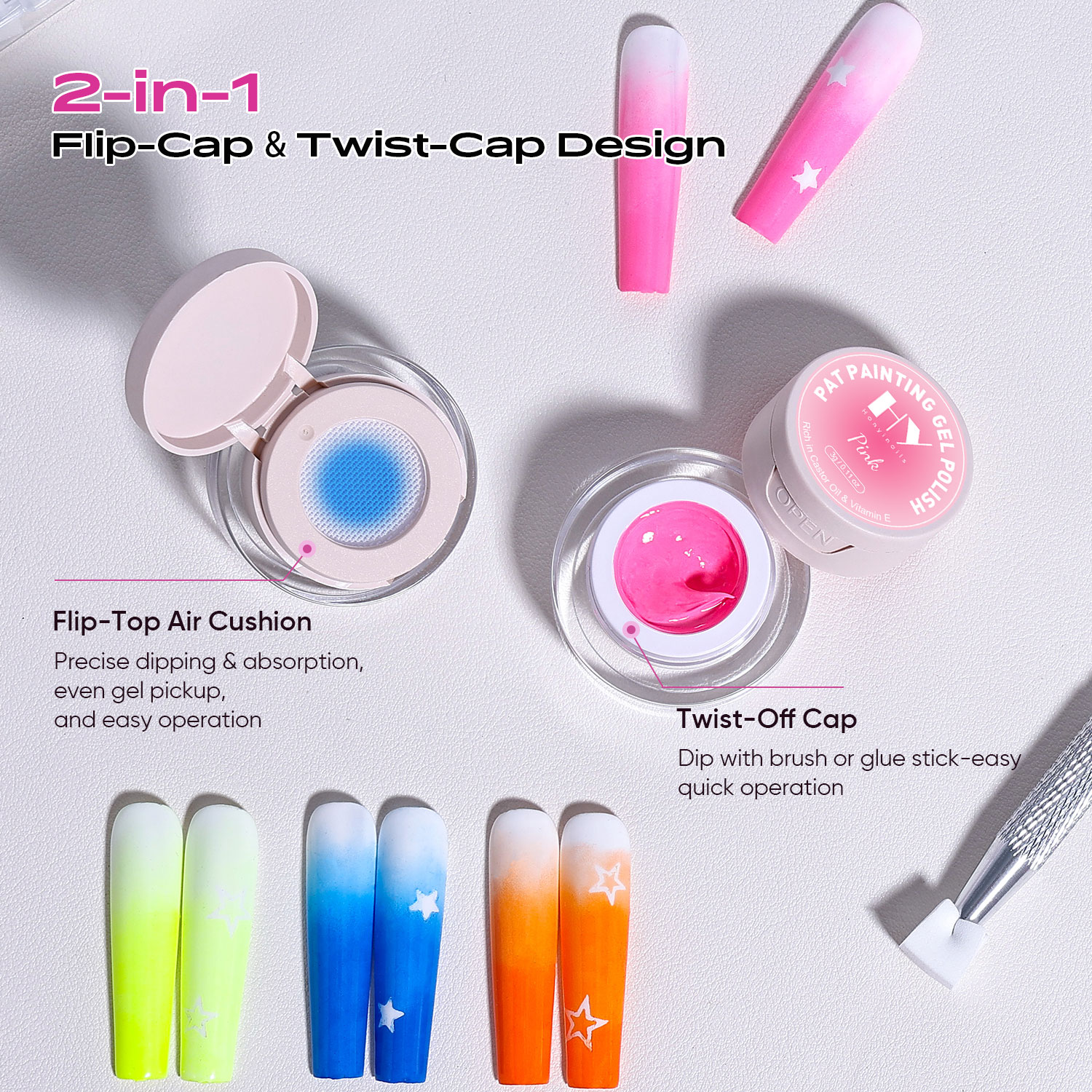
HEMA-free neon ombre painting gel gives nail artists and salon buyers a nine-shade neon palette created for gradient effects, ombre designs, and painted nail art. Hanyinails PAT Painting Gel is positioned for buyers who want concentrated creative color options in a dedicated painting-gel format, while its HEMA-free formulation may suit product assortments designed to avoid that particular ingredient. Before purchase, confirm the current ingredient list, application directions, curing requirements, and packaging details with the supplier; HEMA-free does not mean allergy-proof or risk-free.
How can a neon gradient painting gel support salon nail art?
What design problems can nine neon shades help solve?
Creating a cohesive neon collection from separate single-color products can complicate purchasing, stock management, and design planning. A nine-shade set offers a ready palette for vivid combinations and gives artists more options when matching a client’s requested look. Use the shades to explore color transitions, accent details, and layered designs, while checking the product page or supplier documentation for the precise colors included in the current set.
For salons, a dedicated nail art gel can be useful when standard application gels do not provide the control needed for painted details. Neon colors are particularly suited to designs intended to stand out, such as seasonal sets, event looks, and graphic accents. Results depend on the artist’s technique, nail preparation, compatible base and top products, and the gel’s actual opacity and viscosity, so evaluate those factors on a sample before making the product a standard service.
How does painting gel differ from ordinary color gel?
Painting gels are selected for decorative work such as lines, patterns, and gradients, whereas a conventional color gel is often chosen to cover the full nail. The practical distinction is the intended application, not a guarantee that every product has the same thickness, pigment load, or working time. Ask for the manufacturer’s usage directions and test how the gel moves with your preferred brush, especially when creating blended transitions or fine details.
For an ombre design, artists commonly build the transition gradually rather than expecting two shades to blend perfectly in one pass. Work in controlled layers and follow the label’s curing instructions for each layer. If your salon uses a particular lamp or system, confirm that the gel is compatible instead of assuming all UV or LED lamps cure every gel product equally. This verification helps prevent wasted appointments and reduces the risk of under-cured product.
Why should buyers consider HEMA-free nail art gel?
What does HEMA-free mean when selecting a gel?
HEMA-free means the product is represented as formulated without 2-hydroxyethyl methacrylate; it does not establish that the product contains no other acrylates or potential sensitizers. Buyers should review the current ingredient declaration and request relevant safety documentation rather than relying on a short product description alone. The U.S. FDA guidance on nail care products explains that nail products have specific use and safety considerations, supporting careful label review and use according to directions.
HEMA-free formulations can be relevant to buyers seeking alternatives to products containing that ingredient, but they should never be marketed as allergy-proof. Nail professionals should avoid skin contact, follow the product’s handling instructions, and stop use if a client reports a suspected reaction. Acrylate allergy is a recognized concern in nail-product use; the medical literature on acrylate contact allergy can help readers understand why ingredient awareness and preventing uncured product contact matter.
How can salons assess product safety and compliance?
Request the current ingredient list, safety data sheet where applicable, directions for professional use, and any market-specific compliance information before placing a wholesale order. Documentation should correspond to the exact product and formulation being purchased. Requirements vary across countries and product categories, so verify local rules instead of assuming a claim or certificate from one market automatically applies in another.
Good manufacturing controls are also relevant when comparing suppliers. ISO 22716 cosmetics good manufacturing practices describes guidance for production, control, storage, and shipment of cosmetic products. It is a useful reference point for supplier discussions, but it is not proof that a specific product has a particular certification. Ask the manufacturer which quality controls and records apply to the item you intend to buy.
How should buyers evaluate performance before ordering?
Which product details should be confirmed with the supplier?
Confirm the included shade names or identifiers, net quantity, packaging, shelf-life information, storage conditions, and order-unit details. The product name identifies a nine-neon-shade offering, but purchasing decisions should rely on the current listing and written supplier confirmation for commercial specifics. This is especially important when preparing a salon menu, retail listing, or wholesale forecast, because an assumed quantity or color description can create avoidable inventory and customer-service problems.
Ask whether the gel is intended for use over a particular base, whether it requires a specific lamp type, and how the manufacturer recommends applying and curing it. Do not substitute an estimated curing time for label directions. A small application trial can reveal how the gel handles with your tools, whether the neon shades meet your coverage expectations, and how the finished design behaves with your chosen top coat.
How can a sample test reduce cost and service delays?
Test the product using your normal preparation, brush, lamp, base, and top coat before introducing it into a paid service. Record the shade, layer approach, curing directions followed, and any application issues. This simple evaluation helps compare the gel against your existing system without making unsupported assumptions about compatibility. For a salon, it also helps staff reproduce a design consistently and identify whether a shade needs a particular base color.
For distributors, sample evaluation can uncover practical concerns before a larger purchase: whether the color range fits local demand, whether the packaging suits storage and display, and whether supplier documentation supports the intended market. Share clear feedback with the manufacturer, including photos under consistent lighting and details of the process used. Avoid judging neon shades from a screen alone, since monitor settings and photography can change perceived color.
How can salons use and store neon ombre gel responsibly?
What application practices help protect clients and technicians?
Follow the product label and professional training for nail preparation, application, and curing. Keep gel off surrounding skin, use only the lamp and process specified by the manufacturer, and do not apply uncured product as though it were a finished coating. These steps help address common service problems, including avoidable skin exposure and incomplete curing. The European Commission cosmetics legislation overview provides a starting point for checking regulatory responsibilities in the EU; confirm the rules applicable to your own location.
Do not use the product on damaged or irritated skin, and refer clients with concerns to an appropriate healthcare professional. Maintain clean tools and a tidy work area, and follow local salon hygiene requirements. If irritation or another unexpected response occurs, discontinue use and follow your workplace procedure. HEMA-free is a formulation attribute, not a replacement for safe handling, ingredient review, or professional judgment.
How should buyers preserve product quality in daily use?
Store the gel as directed by the manufacturer and protect the container from conditions that could affect its consistency or performance. Keep lids closed when the product is not in use, prevent contamination from brushes or other materials, and use clean tools. Check the label for storage and shelf-life details rather than applying a generic timeframe, since those specifications can vary by formulation and packaging.
For stock management, record receipt dates and use products according to the supplier’s stated shelf-life guidance. Train staff to return products to the correct storage area and to avoid mixing materials between containers. Consistent handling makes it easier to identify changes in texture or application and supports more dependable service outcomes. If a container’s condition appears abnormal, pause use and ask the supplier for product-specific guidance.









Hanyinails
Hanyinails
Hanyinails
Hanyinails