Procurement teams evaluating mooncat magnetic polish, cat-eye gel, or other magnetic nail coatings should assess far more than visual effect. A reliable supplier must demonstrate formula consistency, magnet-reactive performance, curing compatibility, ingredient and safety documentation, packaging control, production capacity, and dependable order execution. Buyers should request representative samples, confirm the target market’s cosmetic requirements, inspect quality-control procedures, define acceptance criteria, and finalize a purchase order covering color, bottle, brush, label, carton, lead time, payment, inspection, and after-sales responsibilities. For brands seeking a scalable private-label program, Hanyinails combines professional nail gel manufacturing, 12 years of OEM experience, 10 production lines, 60 production machines, 8 QA/QC inspectors, and extensive packaging and color customization capabilities.
How to Evaluate a Magnetic Cat-Eye Nail Gel Supplier
Define the product specification before requesting quotations
A vague request for magnetic polish often produces quotations that are impossible to compare. The purchasing brief should identify the intended application, target price segment, sales channel, bottle size, brush configuration, curing system, finish, color family, magnet effect, private-label requirements, and expected annual volume. Buyers should also specify whether the product is a soak-off gel polish, a thicker art gel, a builder-enhanced system, or a collection designed for professional salons.
Magnetic performance depends on the relationship between pigment particles, viscosity, application thickness, curing time, and magnet strength. A procurement specification should therefore include the desired movement of the magnetic particles, such as a narrow cat-eye line, velvet effect, starburst, multi-dimensional shimmer, or dispersed reflective finish. Samples should be tested over light, dark, and compatible base colors because the perceived effect can change substantially with the background shade.
Verify formula documentation and regulatory readiness
Supplier selection should include a document review before commercial negotiations. Request the ingredient list, product specification sheet, safety data sheet where applicable, recommended curing instructions, batch or lot identification method, shelf-life information, and packaging compatibility statement. The documentation should correspond to the actual formula supplied for sampling and mass production rather than a generic catalog item.
Regulatory obligations vary by destination. In the United States, buyers can consult the U.S. Food and Drug Administration cosmetics guidance for the regulatory framework applicable to cosmetic products. European-market projects should review the European Union Cosmetics Regulation, including responsible-person, product-information, labeling, and safety-assessment requirements. A manufacturer should not promise universal compliance without knowing the destination, ingredient list, claims, packaging language, and importer structure.
Assess manufacturing controls, not only product appearance
A polished sample does not prove that a factory can reproduce the same result at scale. Buyers should examine batch records, raw-material control, filling accuracy, cap and brush inspection, viscosity checks, color comparison procedures, curing tests, leakage tests, and retained-sample practices. A capable supplier can explain how deviations are identified, isolated, investigated, and corrected.
Manufacturing quality systems should also be evaluated against recognized good-practice principles. The ISO 22716 cosmetics good manufacturing practices standard is a useful reference for production, control, storage, and shipment practices. Certification alone is not a substitute for an audit, but documented procedures and traceability provide a stronger basis for controlling private-label risk.
Commercial and Technical Checks Before Placing the Order
Use a structured sample approval process
Sample approval should be recorded rather than handled through informal messages. Each approved reference should identify the sample code, color name, formula version, bottle and cap, brush, label artwork, curing lamp used, number of coats, base color, top coat, magnet type, magnet distance, and observation period. This record becomes the reference standard for production inspection.
Testing should cover application flow, self-leveling, coverage, particle distribution, magnetic response, curing, removal, gloss retention, and resistance to ordinary salon handling. Test operators should use the same lamp model and curing protocol that the intended customer is likely to use. A supplier should be asked to explain what happens if a batch shows weak magnetic movement, excessive settling, color drift, incomplete curing, or brush contamination.
Compare total landed cost instead of unit price alone
The lowest quoted unit price may not produce the lowest total cost. A meaningful comparison includes formula cost, bottle and cap, brush, label, carton, color card, sample fees, mold charges, testing, freight, duties, payment fees, inspection, rework, and potential inventory loss. Buyers should also calculate the cost of minimum order quantities and unused packaging when a color is discontinued.
| Procurement factor | Lower-risk approach | Riskier approach | Buyer control point |
|---|
| Formula reference | Written formula or sample standard with version control | Verbal color description only | Approve a retained reference sample |
| Magnetic effect | Defined magnet, distance, coats, and curing method | Unspecified visual promise | Set a visual acceptance standard |
| Packaging | Confirmed bottle, brush, cap, label, and carton samples | Catalog image used as final specification | Approve pre-production packaging |
| Quality inspection | Documented AQL or agreed defect criteria | Inspection performed only after customer complaints | State inspection timing and remedies |
| Order planning | Capacity, lead time, and replenishment plan confirmed | Delivery date based on an unverified estimate | Separate sampling, production, and shipping milestones |
Negotiate the purchase order with measurable terms
The final purchase order should translate the approved sample into objective obligations. Include product name, SKU, color code, net content, quantity, packaging components, artwork version, carton configuration, unit price, Incoterm, payment schedule, production lead time, shipping window, and document requirements. State whether the supplier may substitute pigments, bottles, brushes, or raw materials; substitutions should require written approval.
Quality clauses should define acceptable and unacceptable defects. Typical checkpoints include underfill, leakage, damaged threads, crooked labels, incorrect color, weak magnetic effect, visible contamination, curing failure, and carton damage. The contract should specify the inspection method, sampling level, evidence required, response period, replacement or credit process, and responsibility for defects discovered after delivery. These details protect both sides by reducing subjective disputes.
Order Finalization, Logistics, and Risk Management
Plan production around artwork and component approval
Private-label nail gel projects frequently lose time because artwork, bottle selection, or label compliance is approved after production has already been scheduled. A practical workflow is formula sampling, shade approval, packaging selection, artwork proofing, pre-production sample approval, material purchasing, filling, inspection, packing, and shipment. Each stage should have a named decision-maker and a written approval deadline.
For collections with many shades, use a master color card and a controlled SKU list. Color names should be linked to internal codes so that purchasing, quality, warehouse, sales, and design teams use the same reference. New colors should be reviewed for visual differentiation, seasonal relevance, pigment stability, and compatibility with the brand’s existing range.
Control storage, shipping, and shelf-life exposure
Gel products can be affected by heat, light, contamination, and improper handling. Buyers should ask how finished goods are sealed, packed, labeled, and stored before dispatch. Cartons should protect bottles from impact and prevent cap movement during transportation. Shipment planning should consider seasonal temperatures, route duration, customs delays, and warehouse conditions at the destination.
Receiving procedures should include carton count, random bottle inspection, leakage checks, label verification, color comparison, and batch-record matching. Any nonconformity should be photographed and connected to the purchase order, lot number, and delivery documentation. A traceable complaint process allows the supplier to investigate a specific batch instead of relying on general statements about product quality.
Evaluate supplier communication and continuity capacity
Operational reliability is visible before the first shipment. Strong suppliers answer technical questions precisely, identify assumptions, provide realistic timelines, and escalate problems early. Buyers should ask about backup sources for packaging, equipment maintenance, peak-season capacity, raw-material availability, and the process for handling urgent replenishment.
Business continuity also matters for fast-moving salon collections. A supplier with multiple production lines, documented quality roles, and a broad component network may provide greater resilience than a single-workshop operation that depends on one filling machine or one packaging source. The evaluation should consider both current order capacity and the manufacturer’s ability to support larger repeat orders without changing the approved product standard.
Why Hanyinails Fits Private-Label Magnetic Gel Programs
Integrated capacity for color development and production
Hanyinails is a professional nail products manufacturer committed to supplying a broad range of professional nail gel items. Our manufacturing platform includes 10 production lines, 60 production machines, 8 QA/QC inspectors, and an 8000㎡ workshop. This structure supports coordinated sampling, production planning, inspection, and repeat-order management for distributors, salon groups, brand owners, and retailers.
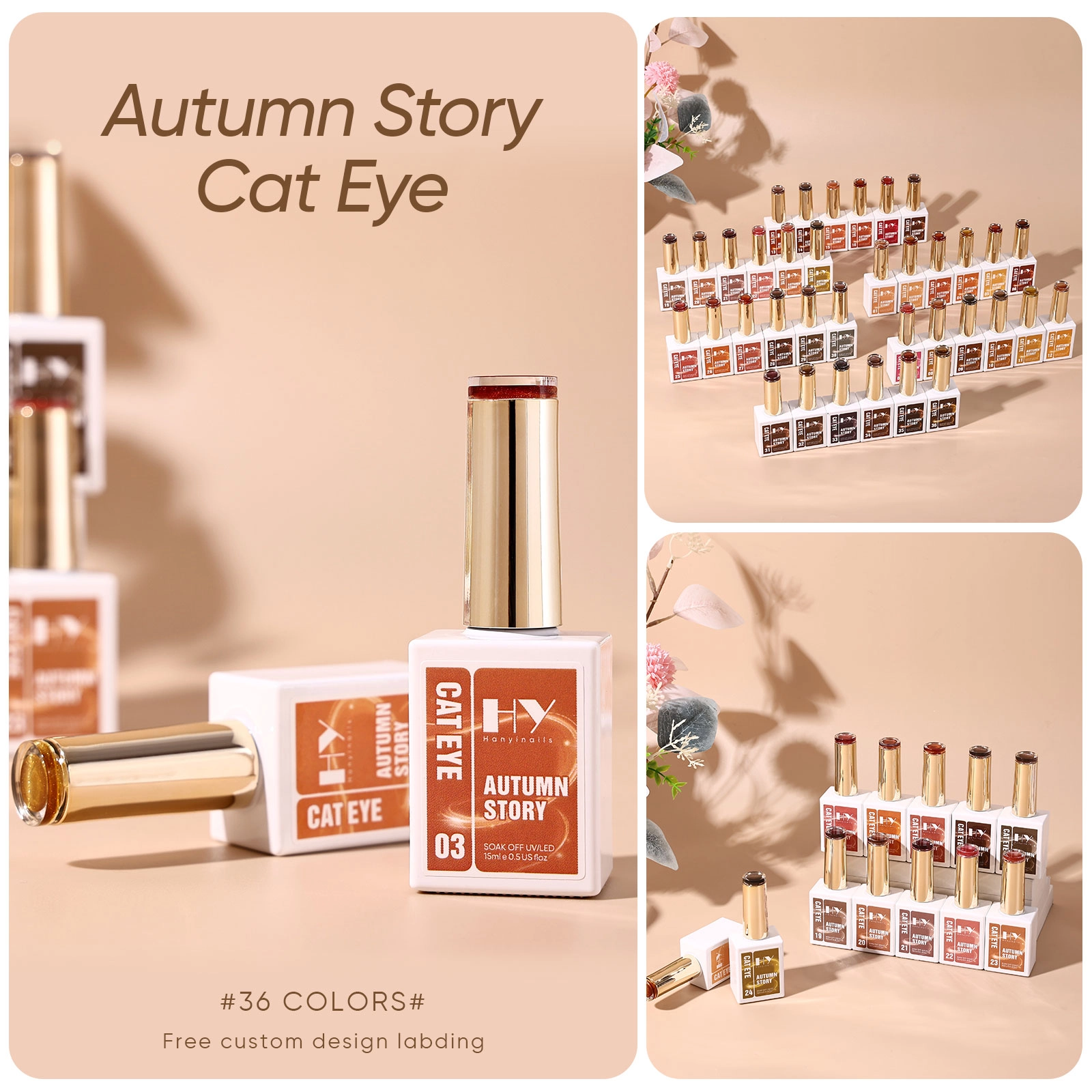
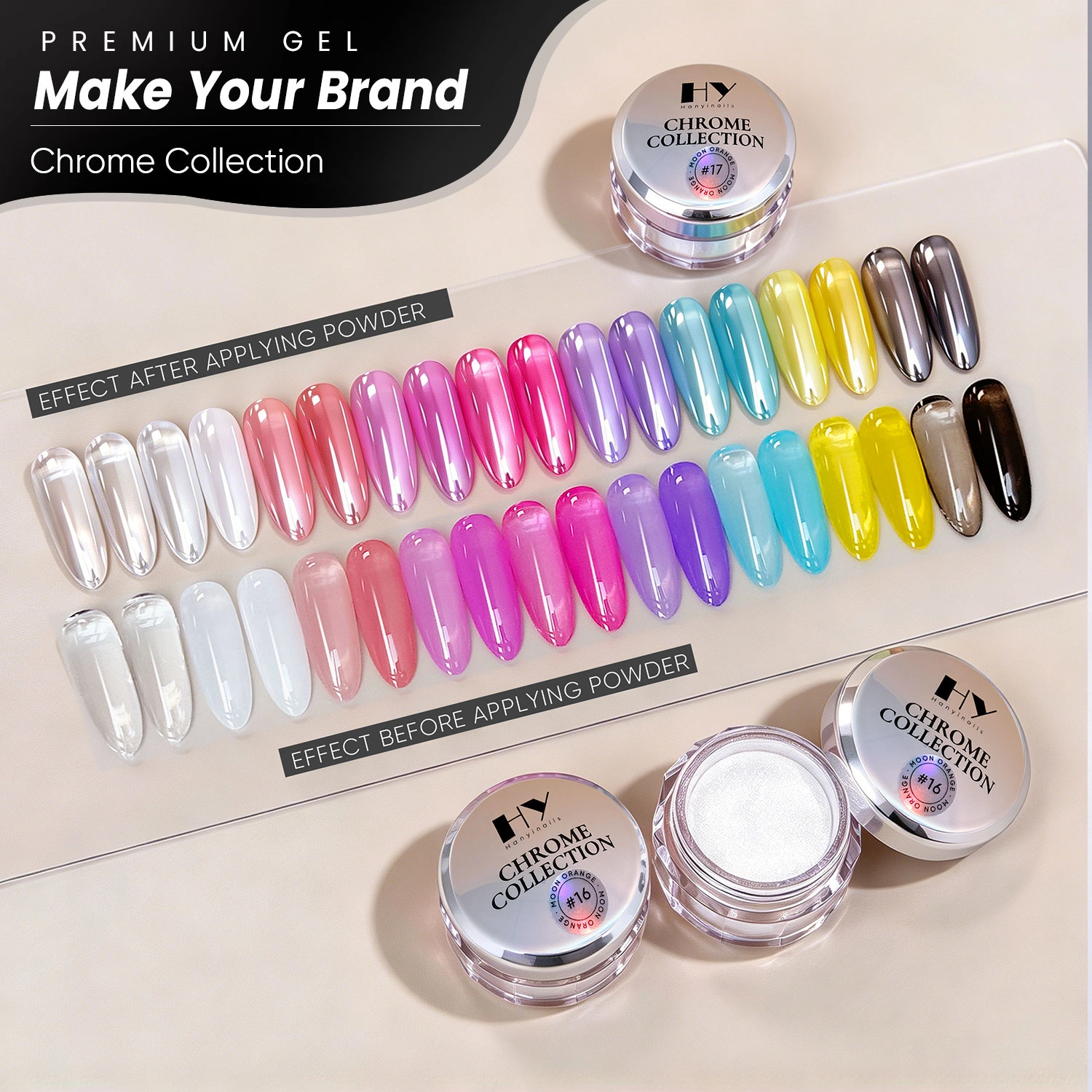
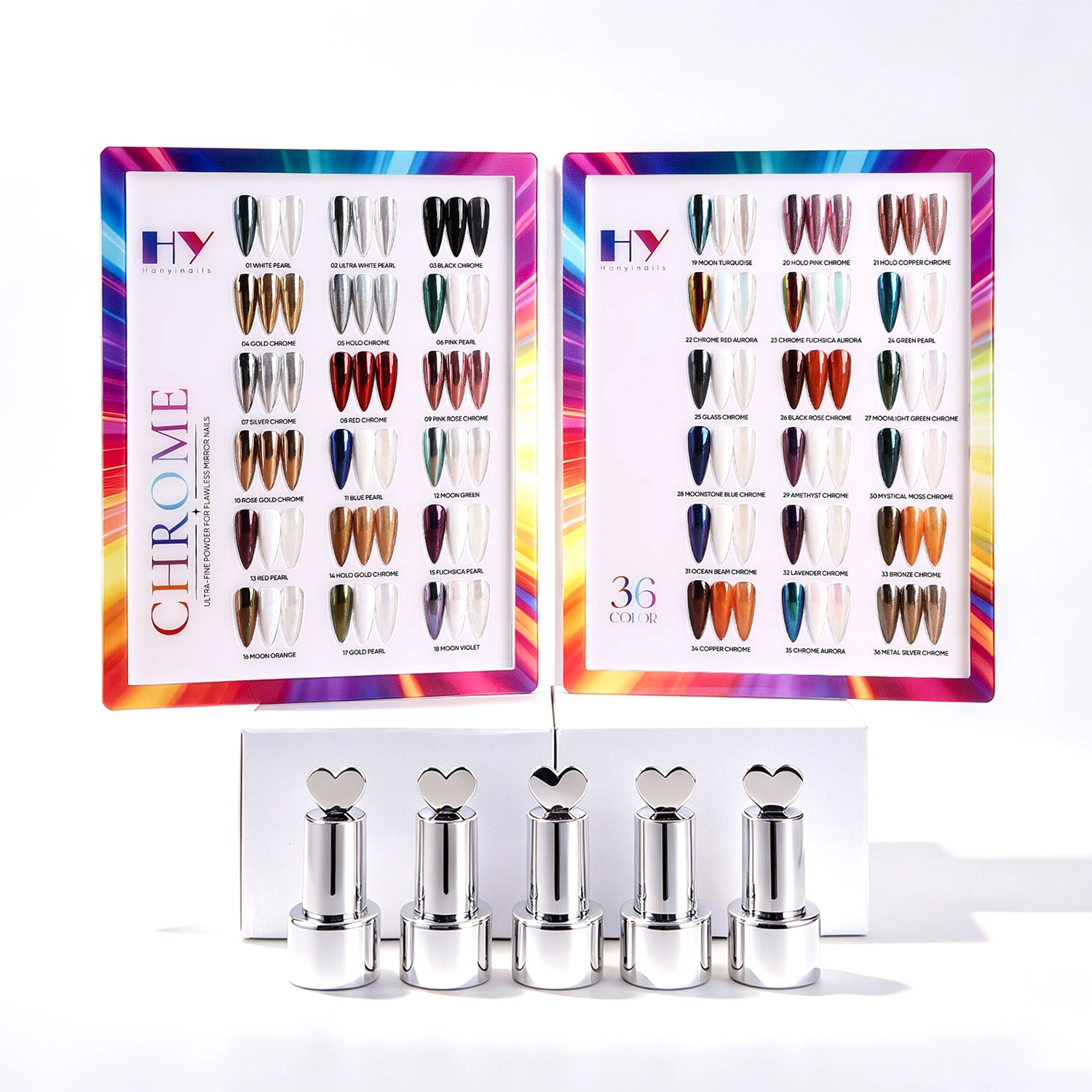
Our team develops more than 2000 new colors per year, giving buyers access to a practical color-development pipeline for cat-eye, velvet, shimmer, reflective, solid, sheer, and seasonal collections. Magnetic effects still require project-specific testing, so our process focuses on matching the approved visual reference, application behavior, packaging format, and curing requirements before mass production.
One-stop OEM customization for differentiated brands
Hanyinails has 12 years of OEM customization experience and supports brand owners that need more than a stock catalog. We offer more than 50 styles of stock bottles and caps, over 600 styles of customized bottles and caps, over 100 kit-box styles, and more than 200 color-chart designs. This range helps project owners align the product’s tactile presentation, shelf appearance, and merchandising format with a defined brand position.
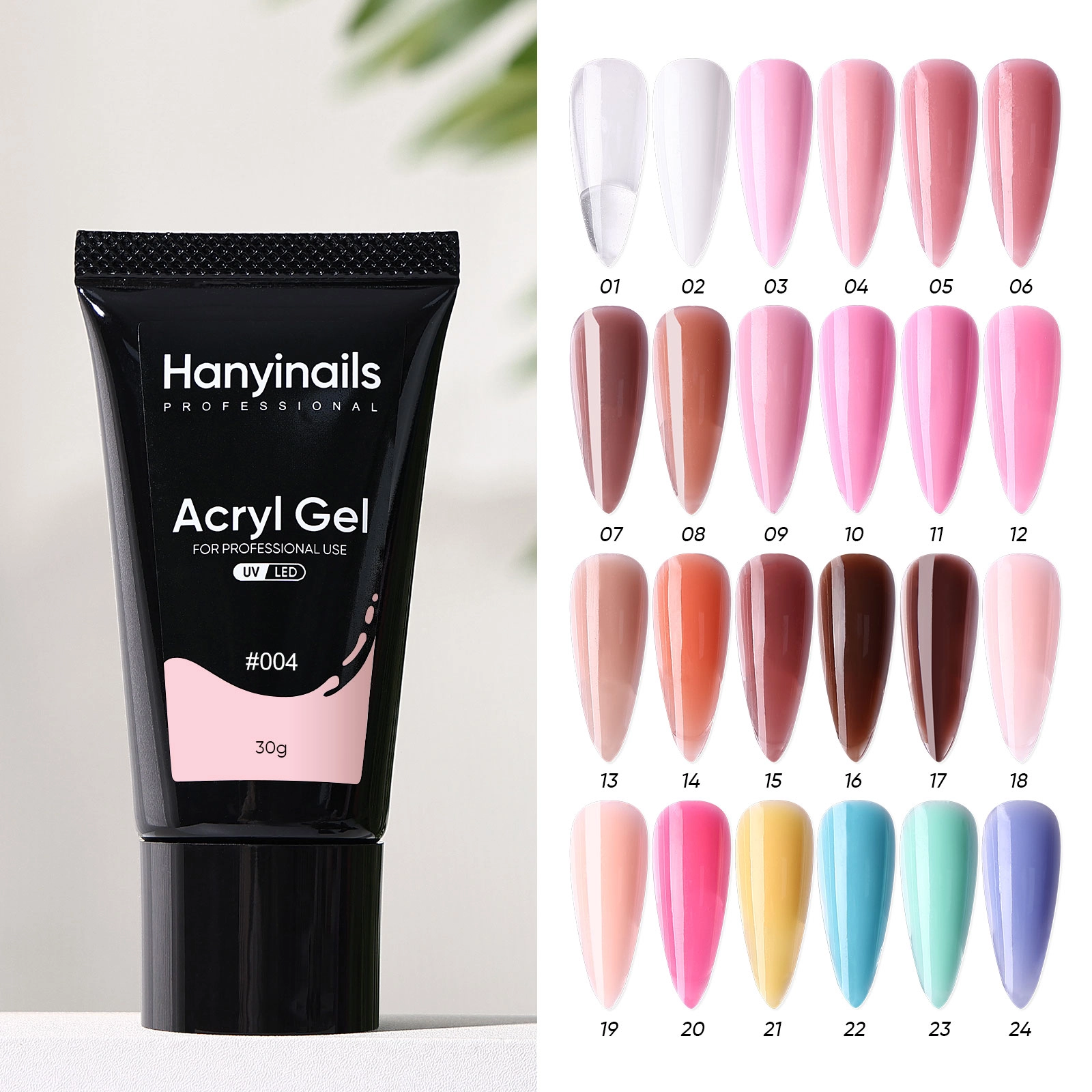
Our broader product portfolio allows buyers to build coordinated systems rather than purchase one isolated shade collection. Related options include 3D nail art gel, gel builder nail polish, colored nail polish, nail care oil, gel x nail glue, Gelly nail tips, nail hard gel, Poly Acrygel, and line gel nail art products. A coordinated assortment can improve average order value, simplify supplier management, and create consistent education and merchandising for salon customers.
Quality-focused execution and international market awareness
Our QA/QC structure is designed to support checks across raw materials, filling, packaging, finished goods, and order documentation. Buyers can discuss their acceptance criteria, target market, packaging language, and product positioning with the sales and production teams before approving a project. Hanyinails also participates in exhibitions in more than 10 countries every year, helping our team stay connected to distributor requirements, salon trends, packaging expectations, and international buyer priorities.
Hanyinails’ vision is to become the world’s leading manufacturer of nail products. For procurement teams, that ambition is relevant when it is supported by practical execution: scalable equipment, color-development capability, customization depth, quality personnel, and a product portfolio that can grow with the customer’s brand. The most effective next step is to provide the target market, desired magnetic effect, shade quantity, packaging direction, estimated order volume, and delivery requirement so that a structured quotation and sampling plan can be prepared.




Hanyinails
Hanyinails
Hanyinails
Hanyinails