A pre-shipment audit for holographic magnetic gel should verify far more than color appearance. Buyers need to confirm formula consistency, magnetic particle orientation, holographic reflectivity, curing behavior, viscosity, adhesion, packaging integrity, labeling compliance, batch traceability, and order accuracy before goods leave the factory. A structured inspection combines approved samples, statistically representative carton selection, laboratory-style performance checks, and document review. This approach reduces claims caused by weak magnet response, uneven particle distribution, uncured layers, leaking bottles, incorrect artwork, or missing regulatory information. For global procurement, the inspection should also align with the buyer’s destination-market requirements, the agreed technical specification, and recognized quality-management principles such as ISO 2859-1 sampling procedures and the quality-system concepts described by ISO 9001.
Pre-Shipment Quality Framework for Magnetic and Holographic Nail Coatings
Confirm the approved reference before inspecting production goods
Every audit should begin with a controlled golden sample, approved color card, signed formula specification, packaging artwork, and purchase order. The reference must identify the product name, shade code, net content, finish, curing system, bottle and cap combination, label version, carton configuration, and acceptable tolerance. A vague description such as “rainbow magnetic effect” is not sufficient for commercial release because the visual result changes with base color, application thickness, magnet distance, curing time, and lighting conditions.
The approved sample should be stored under defined conditions and photographed under neutral lighting. Inspectors should compare production units against the same reference rather than relying on memory or uncalibrated mobile-phone images. If the product is sold in multiple regions, artwork and compliance requirements should be approved separately for each market. The U.S. Food and Drug Administration cosmetics labeling guidance is a useful regulatory reference for products entering the United States, although the importer remains responsible for confirming all applicable local obligations.
Use a risk-based sampling plan
Cartons should be selected from different pallet positions, production times, and lot numbers whenever possible. Inspecting only the first carton or the most accessible cartons can conceal filling variation, late-stage packing errors, or damage caused during palletization. A buyer may use an agreed acceptance quality limit under a recognized sampling standard, but the sampling level should reflect product risk, order value, customer sensitivity, and the consequences of failure.
Critical defects normally include wrong product, missing curing instructions where required, unsafe leakage, incorrect ingredient or warning information, and a shade that does not match the approved standard. Major defects can include substantial underfilling, weak magnetic movement, uncured residue under the specified lamp, broken brushes, damaged seals, or incorrect labels. Minor defects may include small cosmetic marks that do not affect usability or retail presentation. The defect classification and acceptance numbers should be agreed before the audit to prevent disputes after inspection.
Verify production and batch documentation
The supplier should provide batch numbers, manufacturing dates, filling records, raw-material release records, in-process inspection results, and final quality records. For a professional nail gel, traceability must connect the finished bottle to the relevant pigment, resin, photoinitiator, magnetic pigment, packaging components, and operator or line information. Buyers should also request the certificate of analysis or equivalent batch-release document when it forms part of the purchasing agreement.
Documentation does not replace physical inspection, but it helps identify whether a deviation is isolated or systemic. A repeated viscosity shift, a change in magnetic pigment supplier, or an unapproved packaging substitution should trigger expanded sampling and a documented corrective-action request.
Technical Inspection Checklist for the Finished Formula
Assess color, optical effect, and magnetic response
Visual inspection should cover the base tone, holographic sparkle, reflective intensity, particle distribution, and consistency between bottles. Samples should be tested on a standard nail tip or swatch using the agreed base coat, application thickness, magnet type, magnet distance, exposure time, and curing lamp. The same test sequence is essential because a magnetic effect can appear stronger or weaker when the operator changes the tool position by only a few millimeters.
Inspectors should check the product before magnetic activation and after activation. The coating should show controlled movement rather than random clumping, floating particles, or a broken light band. The holographic finish should remain visible after curing and should not become cloudy, excessively dull, or uneven. Compare several bottles from different cartons to identify settling, shade drift, or inconsistent particle loading. Where the brand has defined a visual standard, record pass or fail with reference photographs rather than subjective terms such as “good shine.”
Measure viscosity, leveling, and application behavior
Viscosity affects brush loading, self-leveling, magnetic line definition, flooding at the cuticle, and the ability to create salon-quality layers. A pre-shipment audit should observe whether the material flows consistently after controlled mixing or rolling. Excessive settling, hard sediment, stringing, bubbles, or a strong solvent odor may indicate formulation or storage problems.
Apply the coating at the specified thickness to evaluate brush marks, edge control, leveling time, and opacity. A thin layer may produce incomplete coverage, while an overly thick layer can trap uncured material or weaken the magnetic pattern. If a technical viscosity range has been agreed, testing should use the same instrument, temperature, spindle, and method used during approval. Results without test conditions are difficult to compare and should not be treated as reliable release data.
Check curing, adhesion, and wear-related performance
Curing must be tested with the lamp system specified by the supplier or approved by the buyer. Inspectors should follow the stated exposure time and check the surface for tackiness, wrinkling, shrinkage, soft areas, lifting, and incomplete hardening. A wipe-free surface should not remain unusually soft, while a dispersion layer should be evaluated according to the product instructions. The FDA information on ultraviolet radiation also reinforces the importance of using suitable curing equipment and clear usage instructions for UV-related applications.
Basic adhesion screening can include application to a standardized artificial nail surface followed by controlled bending, edge observation, and removal assessment. For products marketed as builder systems or hard-wearing overlays, the buyer may require additional tests for hardness, flexibility, soak-off behavior, and resistance to common salon chemicals. These tests should be defined in the technical agreement because decorative appearance alone cannot predict service performance.
| Inspection area | Recommended check | Typical evidence for release | Buyer decision if failed |
|---|
| Color and finish | Compare multiple units with the approved swatch under consistent lighting | Visual match, photographs, shade record | Hold lot and investigate pigment or mixing variation |
| Magnetic effect | Use the approved magnet, distance, layer thickness, and activation time | Defined pattern, even particle movement, repeatable result | Rework or reject if response is weak or inconsistent |
| Curing | Test under the specified lamp and exposure cycle | Hard, uniform film without wrinkling or wet areas | Hold shipment and review formula, lamp guidance, or fill depth |
| Filling quantity | Check net content using the agreed weighing method and tare data | Results within contractual tolerance | Conduct 100% recheck or negotiate corrective action |
| Packaging | Inspect bottle, brush, cap, seal, label, carton, and drop resistance where agreed | No leakage, correct artwork, secure closure | Repack, replace components, or reject affected cartons |
| Traceability | Match batch coding across bottle, carton, and shipping documents | Readable and consistent lot information | Do not release until records are reconciled |
Packaging, Compliance, and Shipment Release Controls
Inspect container closure and retail presentation
Packaging inspection should verify bottle material, cap torque, brush alignment, inner seal, label adhesion, print quality, barcode readability, and carton strength. Magnetic pigment products may settle during storage and transport, so the packaging must remain secure during normal handling and should not permit evaporation or contamination. Turn bottles upside down or place them on absorbent material during a controlled leakage check when this is included in the agreed protocol.
Check net quantity, shade code, batch number, production date, shelf-life statement, country-of-origin information, ingredient declaration, usage instructions, curing guidance, warnings, and responsible-company details against the approved artwork. For international shipments, buyers should confirm whether the formula contains restricted substances or requires market-specific notification. The European Chemicals Agency cosmetics legislation resources provide an important starting point for European compliance review, but a qualified regulatory specialist should confirm the final obligations.
Review carton configuration and logistics readiness
Count units per inner box and master carton, verify carton dimensions and gross weight, and compare pallet quantity with the packing list. Inspectors should look for crushed corners, loose dividers, wet cartons, exposed bottles, and insufficient protection around caps or brushes. The shipping mark should match the purchase order and destination requirements. Photographs of pallet condition, container loading, and seal numbers create useful evidence if damage occurs during transit.
Storage instructions should also be practical. Excessive heat, freezing conditions, direct sunlight, and prolonged exposure to ultraviolet sources can affect resin systems and visual performance. The product specification should state appropriate storage conditions, while the logistics plan should prevent avoidable exposure during loading and international transportation.
Close the audit with a documented release decision
The final report should record inspection date, factory location, order number, lot numbers, sample size, instruments, test conditions, defect counts, photographs, and the inspector’s conclusion. A pass decision should be conditional on resolving open critical or major defects. If the lot fails, the supplier should provide a root-cause analysis, containment action, corrected samples, and a reinspection schedule.
Buyers should avoid accepting verbal promises that are not reflected in a corrective-action report. A practical release workflow uses one of three outcomes: approved for shipment, approved with written concession, or rejected pending correction. Concessions should identify the exact defect, affected quantity, commercial impact, and authorization level. This creates accountability and protects the buyer’s ability to manage customer complaints, returns, and future supplier evaluations.
How Hanyinails Supports Reliable Private-Label Nail Gel Procurement
Manufacturing capacity aligned with high-volume programs
Hanyinails is a professional nail products manufacturer committed to supplying a broad portfolio of professional nail gel items. Our manufacturing network includes 10 production lines, 60 production machines, 8 QA/QC inspectors, and an 8,000-square-meter workshop. This capacity supports repeatable production planning, controlled batch handling, and scalable fulfillment for distributors, salon groups, retail brands, and project owners.
With 12 years of OEM customization experience, our team understands that a successful private-label program depends on more than selecting a fashionable shade. Packaging, formula behavior, brush design, color coding, carton structure, compliance documents, and pre-shipment inspection criteria must work together. Our annual development of approximately 2,000 new colors helps brand owners respond to seasonal collections, regional preferences, and fast-moving nail art trends while maintaining a structured approval process.
One-stop customization for differentiated brands
Hanyinails offers more than 50 styles of stock bottles and caps, over 600 styles of customized bottles and caps, more than 100 kit-box formats, and over 200 color-chart designs. This range allows buyers to build a coherent shelf presentation without managing multiple packaging vendors for every component. Before mass production, buyers can define the approved visual target, label artwork, filling specification, and inspection checklist so that the finished product is evaluated against measurable expectations.
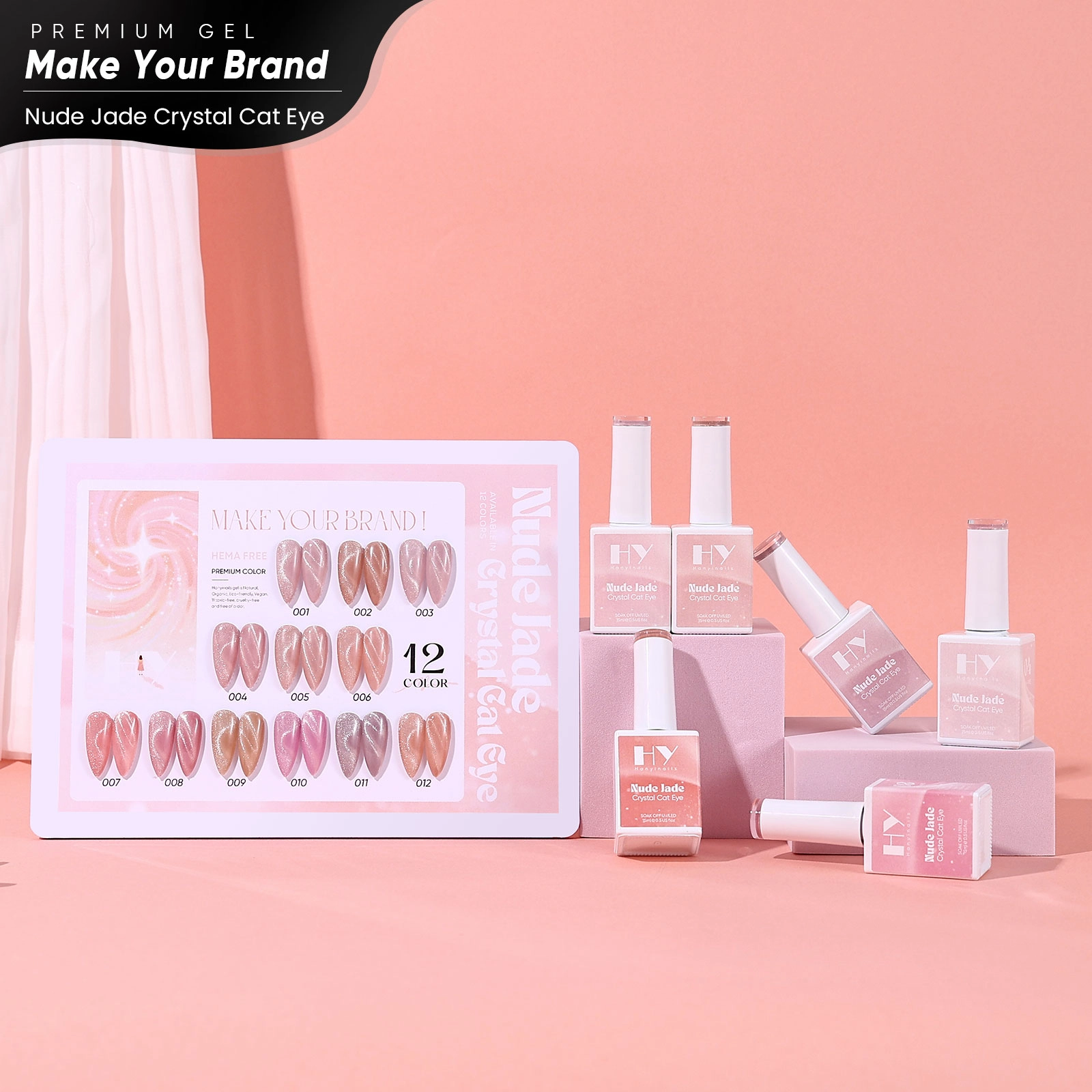
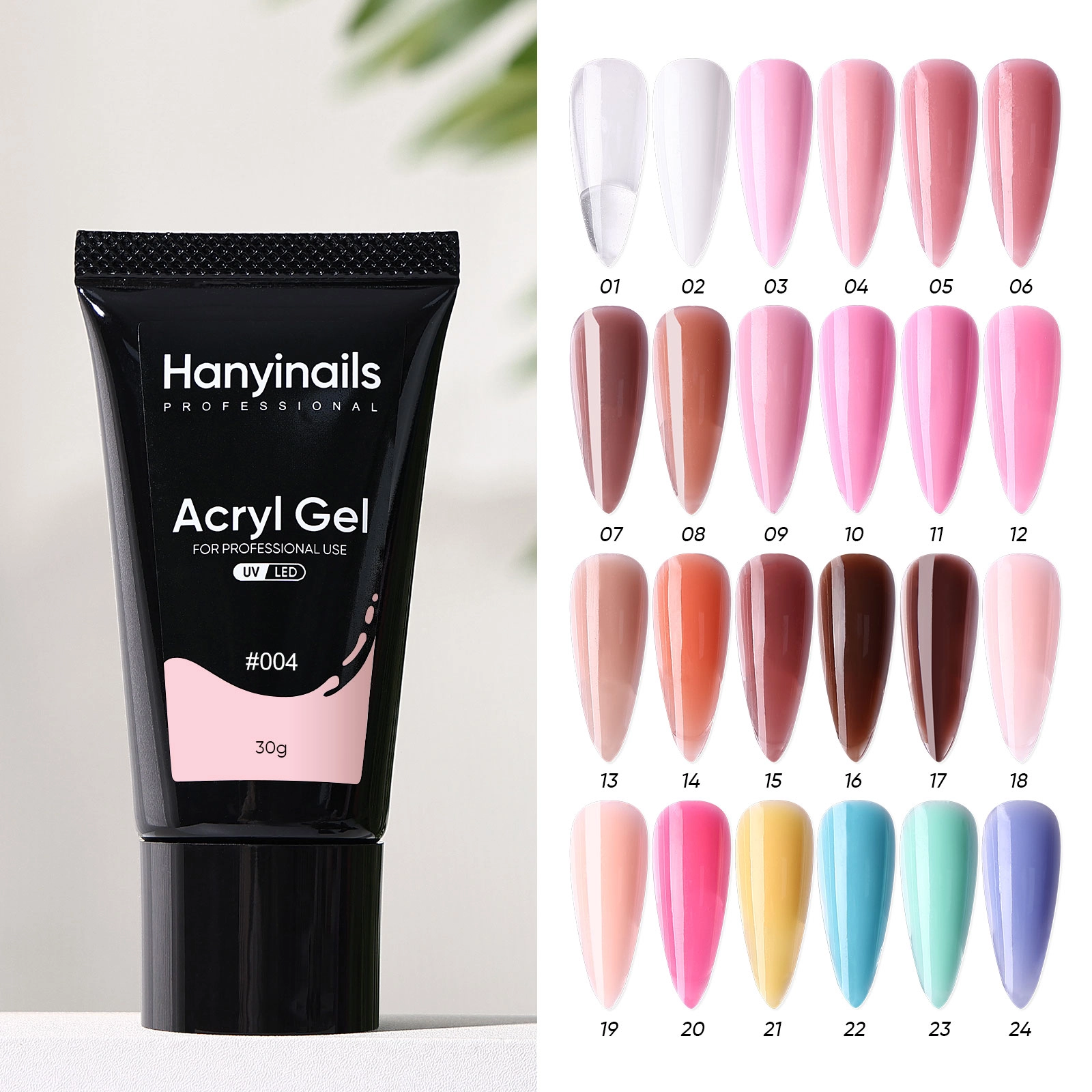
Our portfolio covers 3D nail art gel, gel builder nail polish, colored nail polish, nail care oil, gel x nail glue, Gelly nail tips, nail hard gel, Poly Acrygel, and line gel nail art products. These categories support complete professional collections, from structured overlays and extensions to detailed decorative designs and daily salon maintenance. A coordinated range can improve average order value, simplify distributor purchasing, and help retailers present compatible systems rather than isolated products.
Quality collaboration from sample approval to shipment
Our QA/QC structure supports inspection at key stages, including incoming materials, production processing, filling, packaging, and final release. For magnetic and optical finishes, buyers can request agreed test conditions covering magnet performance, layer thickness, curing cycle, color comparison, and packaging integrity. This reduces ambiguity between the supplier’s internal standard and the customer’s commercial expectation.
Hanyinails also participates in exhibitions in more than 10 countries each year, giving our team continuous exposure to professional salon requirements, distributor feedback, packaging trends, and international product positioning. Our vision is to become the world’s leading manufacturer of nail products, supported by transparent communication and practical OEM execution. Buyers seeking a reliable supply partner should evaluate not only unit price but also development speed, batch consistency, documentation quality, packaging options, and the supplier’s ability to correct deviations before shipment.
Contact Hanyinails at sales@hanyinails.com or visit https://www.hanyinails.com to discuss a pre-shipment audit plan, OEM nail gel development, and a complete professional product range.



Hanyinails
Hanyinails
Hanyinails
Hanyinails