A crayon matte top coat can help salons, nail artists, and beauty brands create a non-glossy finish with a distinctive, art-inspired appearance. For buyers evaluating the Hanyinails Crayon Matte Top Coat, the practical questions are how the finish looks over different base shades, whether the product suits the intended service workflow, and what application and curing instructions the supplier specifies. Because performance depends on the full system—including the base color, lamp, application thickness, and prep—confirm product-specific details and test representative nail tips before committing to a larger order.
How can a crayon-inspired matte finish support nail design?
What visual effect can a matte top coat create?
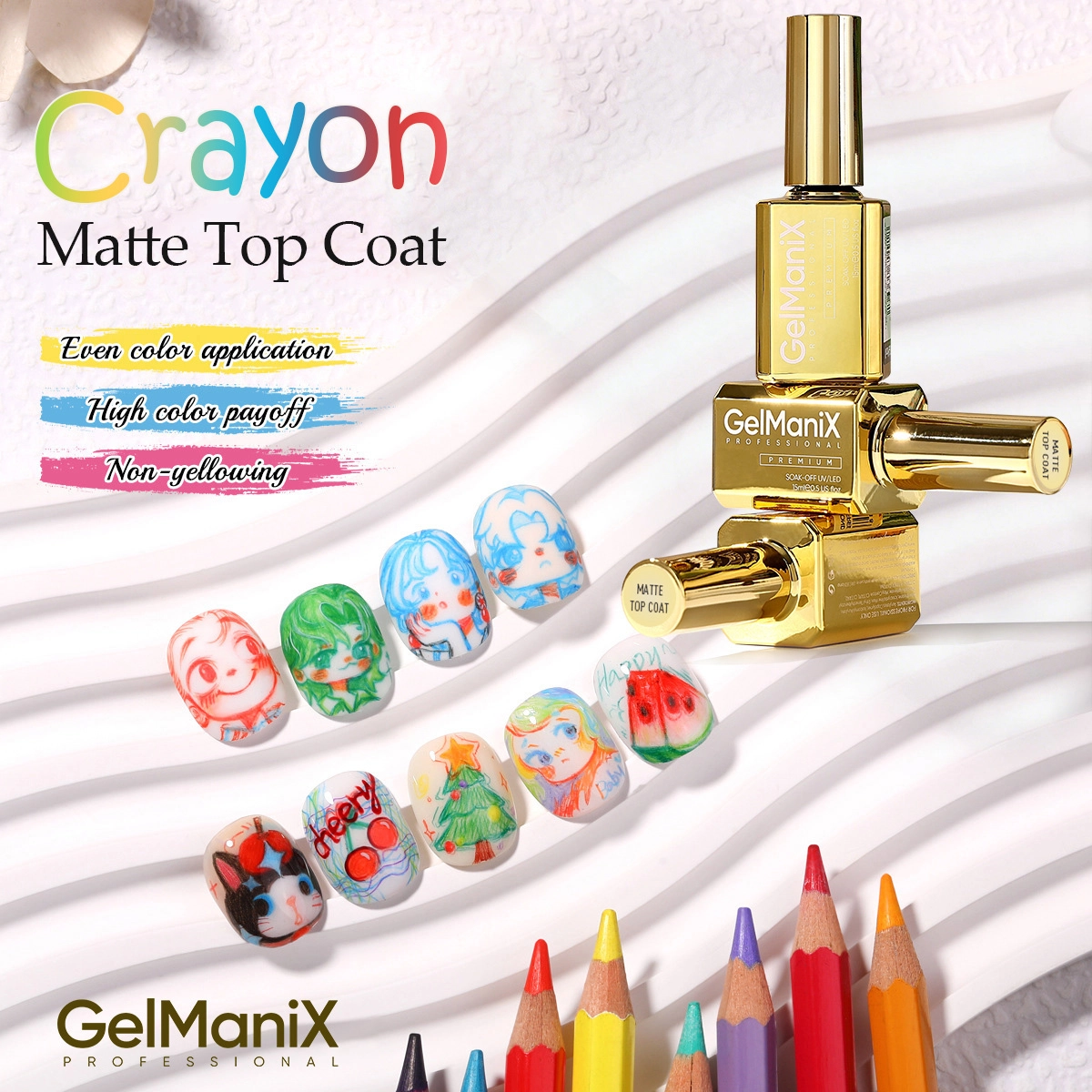
A matte top coat changes the visual character of a manicure by reducing the reflective appearance associated with a glossy finish. That shift can make a color look softer and can provide a different surface effect for nail art, especially when a design uses contrasting finishes. The “crayon” wording signals an aesthetic direction, but buyers should review current product images or request samples to judge the actual finish rather than assuming every matte formula looks identical.
For a salon, finish options can help answer clients who want something less reflective than a conventional manicure without changing the base color. For a brand, the effect can add a distinct option to a collection or support creative product photography. Results will vary with the underlying shade and design, so test the top coat on several colors, including dark, light, and highly pigmented shades, before using it in a menu or catalog.
Why should buyers test the finish on multiple base colors?
A top coat is viewed together with the color or art beneath it, so a single sample may not represent the whole range. Matte finishes can alter how color and surface texture are perceived, and brush marks or uneven coverage may be more visible on some designs than others. Prepare sample tips using the application process you expect to use, then compare them under consistent lighting before making a purchase decision.
Testing also helps teams set realistic client expectations. Photograph samples in both direct and diffuse light, and keep a record of the base shade, application method, and curing conditions used. If the finish appears inconsistent, check whether the issue comes from the top-coat layer, the underlying surface, or the curing setup before changing the service procedure. This simple comparison can reduce avoidable rework and improve recommendations at the point of sale.
How should salons evaluate application and system compatibility?
What should you confirm before applying the top coat?
Do not assume that a top coat is compatible with every gel color, lamp, or preparation routine. Ask the supplier for the product’s intended system, application directions, curing requirements, and any limitations on use. Follow the product label and technical guidance rather than substituting a curing time or lamp based on another brand’s formula. If the supplier does not provide a critical instruction, request clarification before using the product on clients.
For a controlled evaluation, use a clean, prepared sample and apply the product as directed, keeping the layer even and avoiding contact with surrounding skin. Record the lamp model and curing cycle so the result can be repeated. A systematic check helps distinguish application issues from compatibility concerns and gives salon staff a clear procedure to follow. Never treat a visual surface check as a replacement for the supplier’s full instructions.
How can a sample test reduce service and purchasing risk?
Trial the product on practice tips before introducing it to a booked service or ordering inventory at scale. Include representative base colors and at least one design that will challenge the finish, such as fine line work or a high-contrast pattern. Note coverage, visible texture, appearance after the specified cure, and how the result looks in the lighting used in the salon. These observations support a more reliable purchasing decision than a product name alone.
Document the product batch, date tested, application steps, and equipment used. If different technicians will use the top coat, ask more than one person to follow the same instructions; this can reveal whether the procedure is easy to reproduce across a team. Keep the test within the supplier’s directions and avoid making durability or wear claims until you have assessed the product under your own service conditions.
What should professional buyers verify before placing an order?
Which product and supplier details matter most?
For a business purchase, confirm the available package sizes, current pricing, minimum order quantity, lead time, shipping options, and the documentation supplied for the product. Ask for the current ingredient information and safety guidance applicable to your market, and check that labels and claims suit the region where the product will be sold or used. These checks help prevent delays caused by missing commercial or compliance information after an order has been placed.
Cosmetic requirements vary by market and product category. In the United States, the FDA overview of cosmetic laws and regulations explains the regulatory framework, while its nail care products guidance provides context specific to nail products. In the European Union, consult the European Commission cosmetics legislation resources for applicable requirements. Buyers should verify obligations for their own role and market rather than treating a supplier page as legal advice.
How can buyers assess quality processes without overclaiming?
Ask what quality controls and product documentation the supplier can provide, and review the answers against your business’s purchasing criteria. Manufacturing standards may help buyers understand process controls, but they should not be interpreted as proof that a particular finished product will perform in every salon system. For context, ISO 22716 guidance on good manufacturing practices for cosmetics describes a framework relevant to cosmetic manufacturing and control.
Before scaling up, compare a sample with your own acceptance criteria: appearance, application experience, documented curing instructions, and supplier responsiveness. Keep written records of questions and answers, especially when your business needs information for staff training or product listings. If you are a distributor or private-label buyer, clarify which party supplies final packaging, market-specific labeling, and supporting documentation. This makes the order decision more transparent and helps avoid relying on assumptions about unlisted specifications.









Hanyinails
Hanyinails
Hanyinails
Hanyinails