Evaluating a supplier for mooncat magnetic polish requires more than comparing shade cards or factory prices. Wholesale distributors and professional nail salons should assess magnetic pigment alignment, gel viscosity, curing performance, ingredient documentation, batch consistency, packaging reliability, minimum order quantities, customization capability, and total landed cost. A dependable supplier should provide repeatable cat-eye effects under a salon-appropriate lamp, stable color payoff across production batches, compliant product documentation, practical sampling support, and a scalable manufacturing process. The strongest sourcing decision balances client experience, regulatory readiness, inventory risk, margin protection, and the supplier’s ability to develop complementary Nail Gel products such as builder formulas, colored systems, nail art gels, and extension materials.
Selecting a Reliable Magnetic Cat-Eye Nail Gel Supplier
Assess magnetic effect and application performance
The visual movement created by a magnetic gel depends on the concentration, particle size, orientation, and suspension stability of the magnetic pigment. A high-quality formula should respond clearly to a salon magnet while maintaining a smooth, self-leveling surface. Buyers should test whether the line effect remains sharp after the magnet is removed, whether the particles settle during storage, and whether the product produces a uniform finish on short, long, natural, and extended nails.
Application testing should cover the complete service sequence rather than a single swatch. Evaluate base coat compatibility, recommended coat thickness, flash-curing behavior, full-cure performance, top-coat interaction, removal time, and resistance to chipping. A professional salon also needs to know whether the product floods the cuticle area, shrinks during curing, or requires excessive manipulation. These variables directly influence appointment duration, technician training, rework rates, and customer satisfaction.
Verify shade repeatability and pigment stability
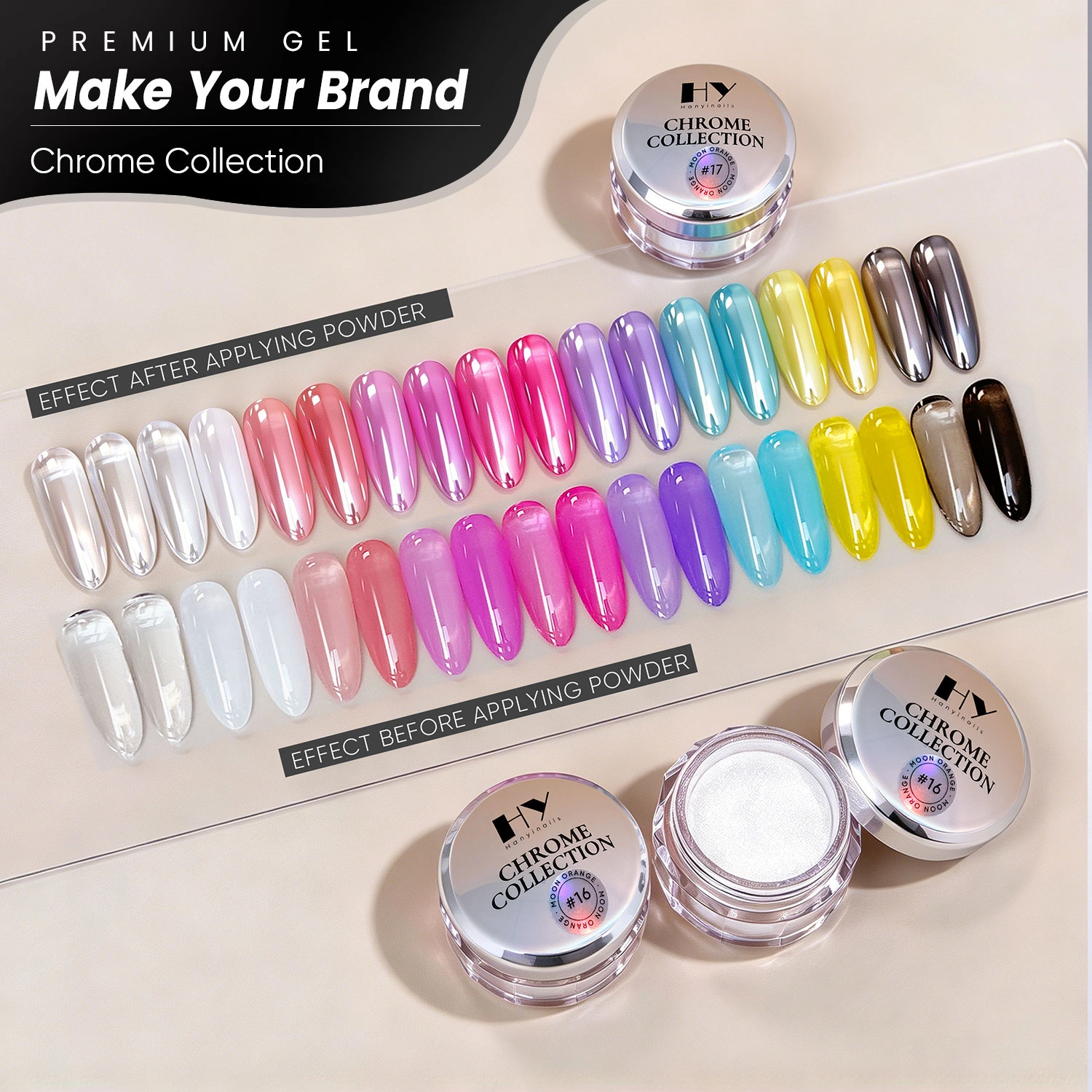
Magnetic shades can appear dramatically different under warm salon lighting, daylight, photography lights, and retail display illumination. A supplier should provide physical samples rather than relying solely on digital images. Buyers should compare multiple production samples from separate batches and record the base color, reflective stripe, particle density, opacity, and finish after curing.
Stability testing is equally important. Request information about accelerated stability studies, storage recommendations, shelf-life expectations, and packaging compatibility. Bottles should prevent leakage, reduce pigment settling where possible, and support controlled brush loading. For distributors, a consistent shade identity reduces complaints, replacement costs, and discrepancies between online product photography and the item received by customers.
Check curing, safety, and technical documentation
Every gel system should be tested with the lamp types commonly used by the target market. Buyers should confirm recommended wavelength, curing time, layer thickness, and compatibility with LED or UV/LED equipment. Under-curing can create service failures and may increase skin exposure to uncured ingredients, while excessive heat spikes can negatively affect client comfort.
Cosmetic products placed on the market require appropriate regulatory review in the intended sales region. The U.S. Food and Drug Administration cosmetics guidance explains the regulatory framework for cosmetic products in the United States, while ISO 22716 Good Manufacturing Practices addresses production, control, storage, and shipment practices for cosmetics. Buyers should request an ingredient list, safety data where applicable, product specifications, batch or lot identification, testing records, and market-specific labeling support. Documentation should be checked by the importer or responsible person for the destination market rather than accepted as a substitute for local compliance review.
Commercial Due Diligence for Wholesale and Salon Purchasing
Compare supplier economics beyond the unit price
The lowest quotation is rarely the lowest procurement cost. A meaningful comparison should include sample fees, mold or artwork charges, bottle and cap costs, labels, cartons, color chart production, testing, freight, import duties, payment terms, defect allowances, and expected replacement rates. Buyers should calculate landed cost per sellable unit and compare it with the planned wholesale price, salon service revenue, or retail margin.
Minimum order quantity also affects working capital. A large opening order may reduce the factory price but create slow-moving inventory if the shade range is too broad or the product has not been validated with local technicians. A phased launch with a smaller test assortment can help measure sell-through, service feedback, and repeat purchase behavior before expanding the collection.
Audit quality systems and production capacity
Supplier capacity should be assessed through evidence rather than promotional claims. Ask how incoming raw materials are inspected, how color standards are approved, how filling weights are controlled, how brushes and bottles are checked, and how finished goods are released. A robust quality system should connect every batch to production records and retain reference samples for complaint investigation.
Factory scale matters when a product becomes commercially successful. A supplier with insufficient equipment may struggle with delivery windows, shade expansion, or packaging changes. Conversely, a very large factory may not provide adequate communication or customization support. The best fit is a manufacturer that combines measurable capacity with clear project ownership, documented approval stages, and a practical escalation process for nonconformities.
Use a structured supplier scorecard
A scorecard prevents purchasing teams from overvaluing appearance or price. Each supplier can be rated against technical performance, documentation, quality assurance, customization, lead time, communication, sustainability information, payment terms, and after-sales support. Scores should be weighted according to the project: a High Quality salon may prioritize curing and wear performance, while a distributor may give greater weight to packaging, barcode readiness, assortment breadth, and replenishment reliability.
| Evaluation area | What to test or request | Why it affects ROI |
|---|
| Magnetic effect | Stripe sharpness, particle response, surface smoothness, and performance after curing | Influences service quality, customer retention, and social-media presentation |
| Formula consistency | Separate-batch samples, viscosity, opacity, settling, and removal behavior | Reduces rework, complaints, and shade-related returns |
| Compliance file | Ingredient information, labeling data, lot traceability, and market-specific documentation | Supports responsible importing and lowers regulatory risk |
| Manufacturing control | QA procedures, filling controls, retained samples, and defect handling | Protects repeat orders and brand reputation |
| Commercial terms | MOQ, lead time, payment terms, packaging charges, and landed cost | Determines cash flow, margin, and inventory exposure |
| Customization | Bottle options, caps, labels, kits, color cards, and artwork approval process | Improves differentiation and supports private-label positioning |
Operational Validation Before a Purchase Order
Run salon and distributor pilot tests
A controlled pilot should involve qualified nail technicians and, where relevant, retail or education teams. Record application time, number of coats, magnet positioning, curing settings, top-coat behavior, removal method, wear after one and two weeks, and customer feedback. Testing should include different nail lengths and service styles because a formula that performs well on a swatch may behave differently over builder gel, hard gel, or extension tips.
Distributors should also test product presentation. Check whether the label remains readable on curved packaging, whether the color chart accurately represents the cured shade, whether cartons survive transport, and whether product information can be translated without losing mandatory details. For e-commerce, photograph the finish under several lighting conditions and avoid promising an identical visual effect when magnetic particles naturally shift with angle and light.
Confirm supply continuity and change control
Before committing to a collection, ask how the supplier manages raw-material substitutions, formula revisions, packaging changes, and discontinued components. Any change that may affect viscosity, curing, color, odor, brush behavior, or labeling should be communicated and approved through a documented change-control process.
Lead time should be separated into sampling, artwork approval, production, inspection, and shipping. Seasonal launches require additional buffer for laboratory work, packaging procurement, and customs clearance. A reliable supplier should provide realistic production schedules instead of guaranteeing unusually short delivery times without explaining capacity assumptions.
Consider the complete professional nail product ecosystem
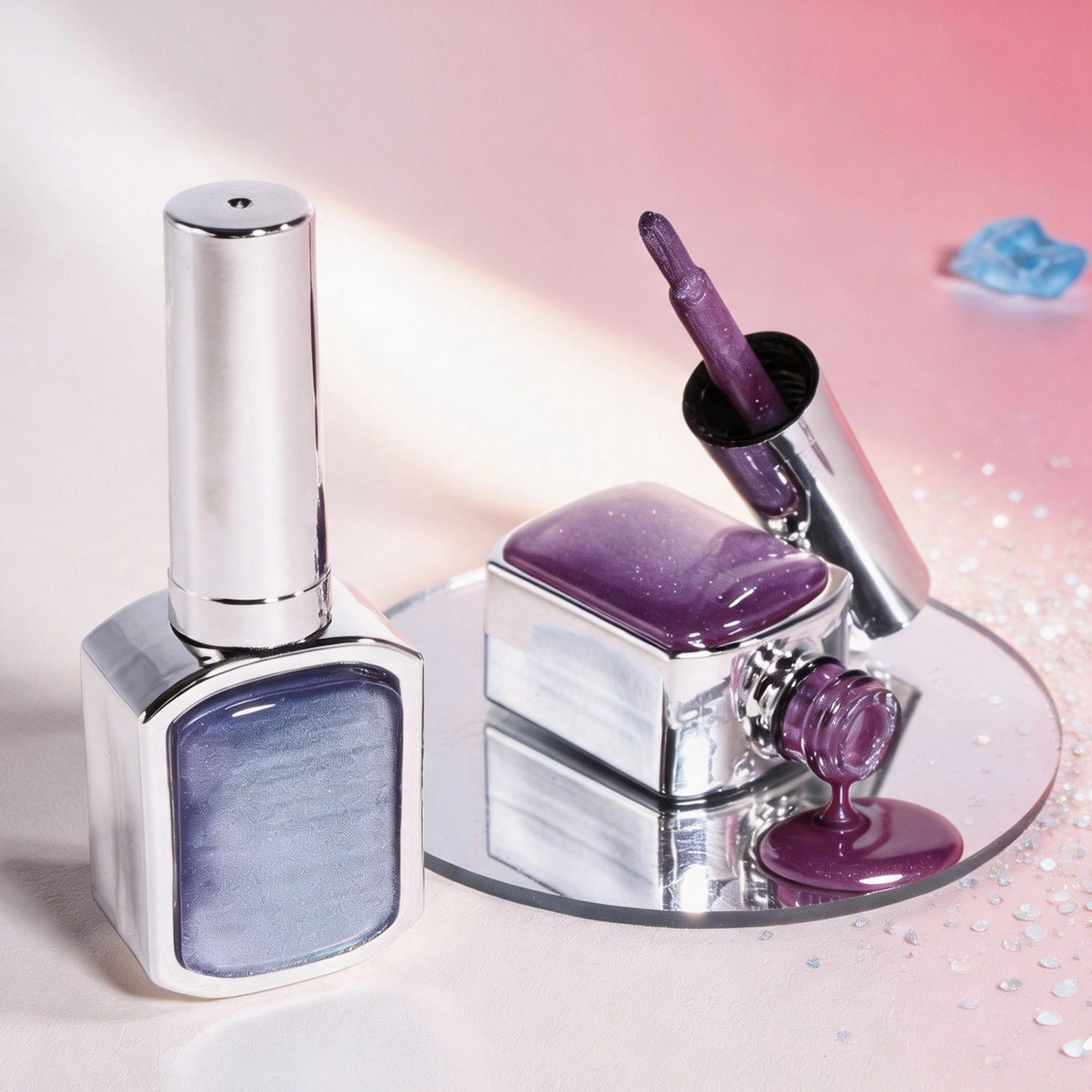
A magnetic color collection becomes more valuable when it integrates with the rest of a salon’s workflow. Buyers may need a compatible colored nail polish range, gel builder nail polish for reinforcement, nail hard gel for structured services, Poly Acrygel for extension work, gel x nail glue and Gelly nail tips for soft-gel systems, line gel nail art for detailing, 3D nail art gel for raised decoration, and nail care oil for after-service retail.
Consolidating related items with one qualified manufacturer can simplify artwork management, shipment planning, training, and quality communication. However, compatibility should still be validated product by product. A supplier’s broad catalog is useful only when formulas, packaging, documentation, and production controls meet the same standard across the portfolio.
Why Hanyinails Is a Practical Partner for Custom Nail Gel Programs
Manufacturing scale supported by quality control
Hanyinails is a professional nail products manufacturer committed to supplying a broad range of professional nail gel items. Our operation includes 10 production lines, 60 production machines, 8 QA/QC inspectors, and an 8,000㎡ workshop. This structure supports organized production scheduling, batch management, and quality checkpoints for wholesale, salon, and private-label programs.
Our manufacturing process is designed to support ongoing product development, not only one-time orders. Hanyinails develops more than 2,000 new colors per year, giving buyers access to trend-led shade development while maintaining a platform for core colors and repeatable replenishment. For magnetic collections, project teams can evaluate reflective effects, base tones, packaging presentation, and collection architecture before final production approval.
One-stop OEM customization for differentiated collections
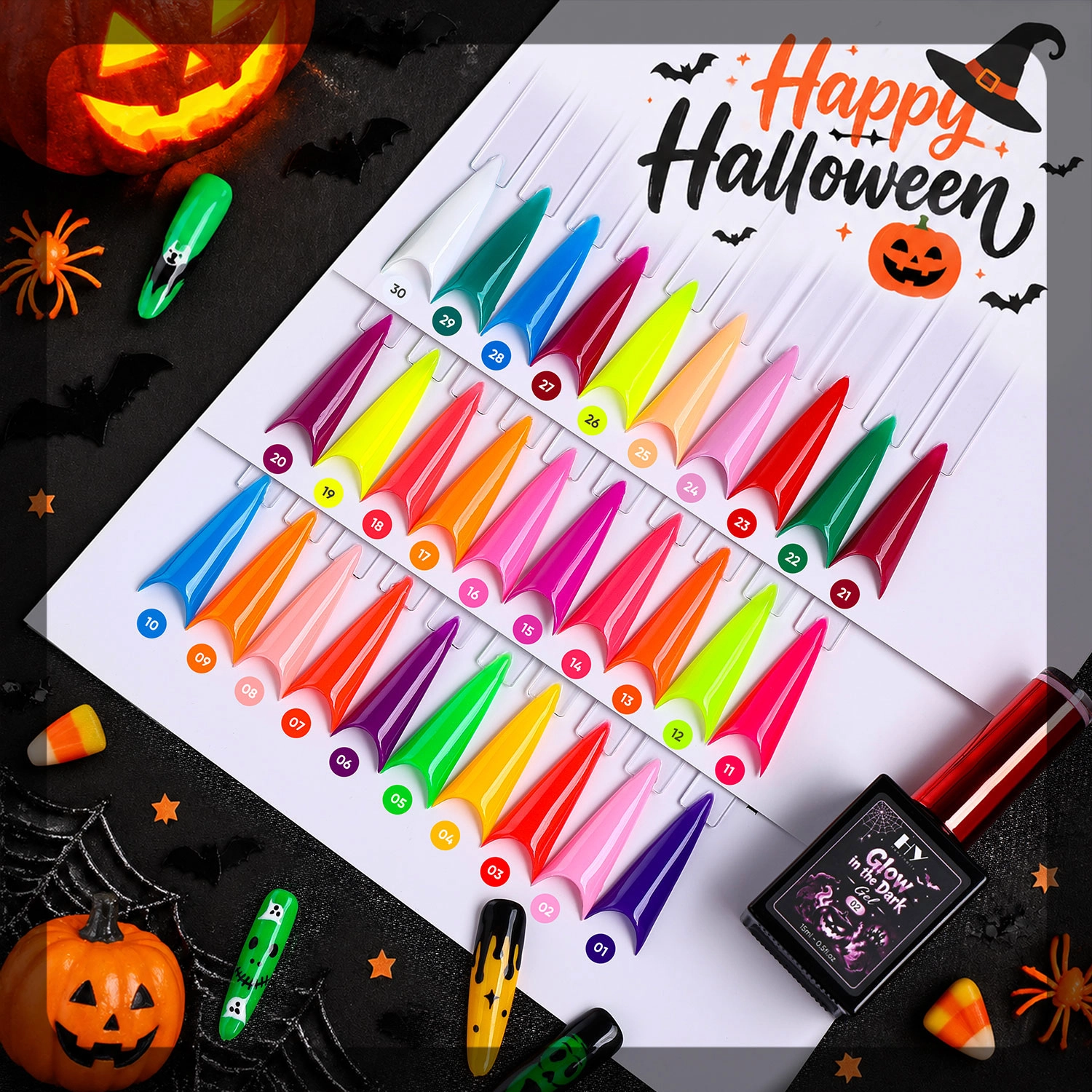
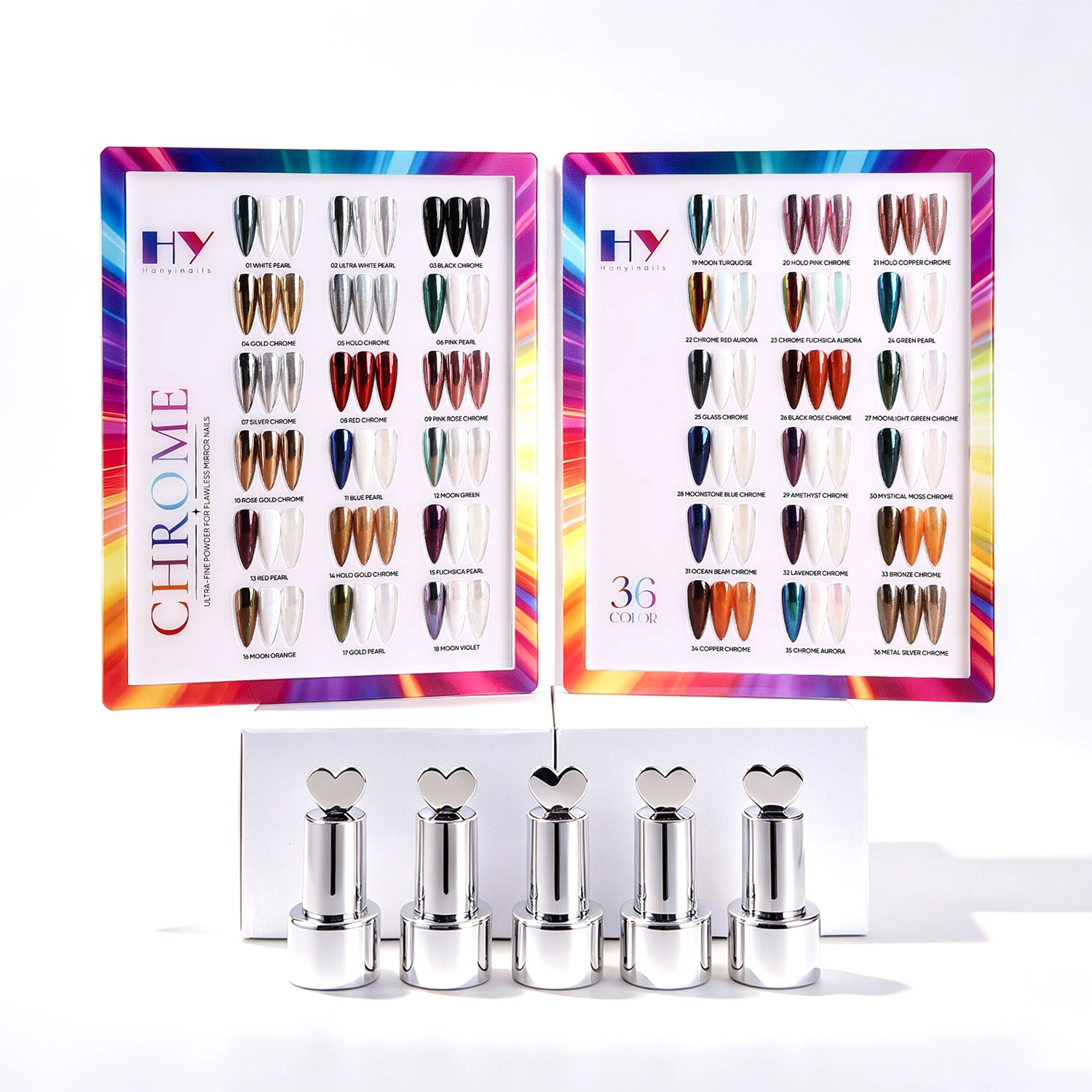
Brand owners and distributors often need more than a standard gel in a stock bottle. Hanyinails offers more than 50 styles of stock bottles and caps, over 600 styles of customized bottles and caps, more than 100 kit box styles, and over 200 color chart design options. This range allows project owners to build a coherent identity across cat-eye colors, builder systems, extension products, nail art products, and aftercare items.
Our OEM customization process can support shade development, bottle selection, cap design, label application, kit configuration, color chart planning, and packaging coordination. Buyers should still provide a detailed technical brief covering target market, lamp compatibility, viscosity preference, finish, application method, regulatory destination, and expected annual volume. Clear specifications help reduce approval cycles and make the final product more consistent with the brand’s positioning.
Experience serving international professional markets
Hanyinails has 12 years of OEM customization experience and participates in exhibitions in more than 10 countries every year. International exposure helps our team understand the different purchasing priorities of salons, distributors, educators, and brand owners. It also supports more effective communication around packaging formats, shade trends, launch calendars, and regional product expectations.
Our product portfolio includes 3D nail art gel, gel builder nail polish, colored nail polish, nail care oil, gel x nail glue, Gelly nail tips, nail hard gel, Poly Acrygel, and line gel nail art products. This breadth enables buyers to plan coordinated professional assortments instead of sourcing every category from a different vendor. Hanyinails’ vision is to become the world’s leading manufacturer of nail products, with continued attention to innovation, customization, quality, and long-term customer value.
For a responsible procurement decision, buyers should request samples, technical documents, packaging proposals, quotation details, and a production timeline before approving a commercial order. The evaluation should be based on measurable performance and total project fit rather than the visual appeal of a single shade or the cheapest initial offer.





Hanyinails
Hanyinails
Hanyinails
Hanyinails