Custom formulation for holographic magnetic gel requires more than selecting a reflective pigment and adding a magnet effect. Brand owners, distributors, salon groups, and private-label operators must define the optical appearance, magnetic response, viscosity, curing profile, color stability, packaging compatibility, regulatory documentation, and repeat-production controls before approving a commercial batch. A capable OEM partner should translate a visual brief into a stable Nail Gel system, validate it through laboratory samples and pilot production, and provide traceable quality documentation. The most reliable development process connects formulation engineering, application testing, packaging selection, manufacturing capacity, and market positioning from the beginning.
Building a Technical Brief for Magnetic and Holographic Nail Coatings
Define the visual effect in measurable terms
Many formulation requests begin with a reference image, but photographs rarely communicate enough information for accurate reproduction. A project brief should describe the base shade, particle brightness, rainbow dispersion, magnetic line or cat-eye movement, flash intensity, opacity, layering requirement, and appearance under different lighting conditions. Buyers should also specify whether the finish is intended for one-coat application, a two-layer system, or use over a dark colored nail polish base.
Optical language should be converted into approval criteria. For example, “strong prism effect” can become a requirement for visible spectral separation under direct light, while “sharp magnetic pull” can become a defined movement time and line clarity after a specified magnet exposure. This makes supplier comparison more objective and reduces disagreement between a product developer, a factory, and a marketing team.
Choose the correct particle and pigment architecture
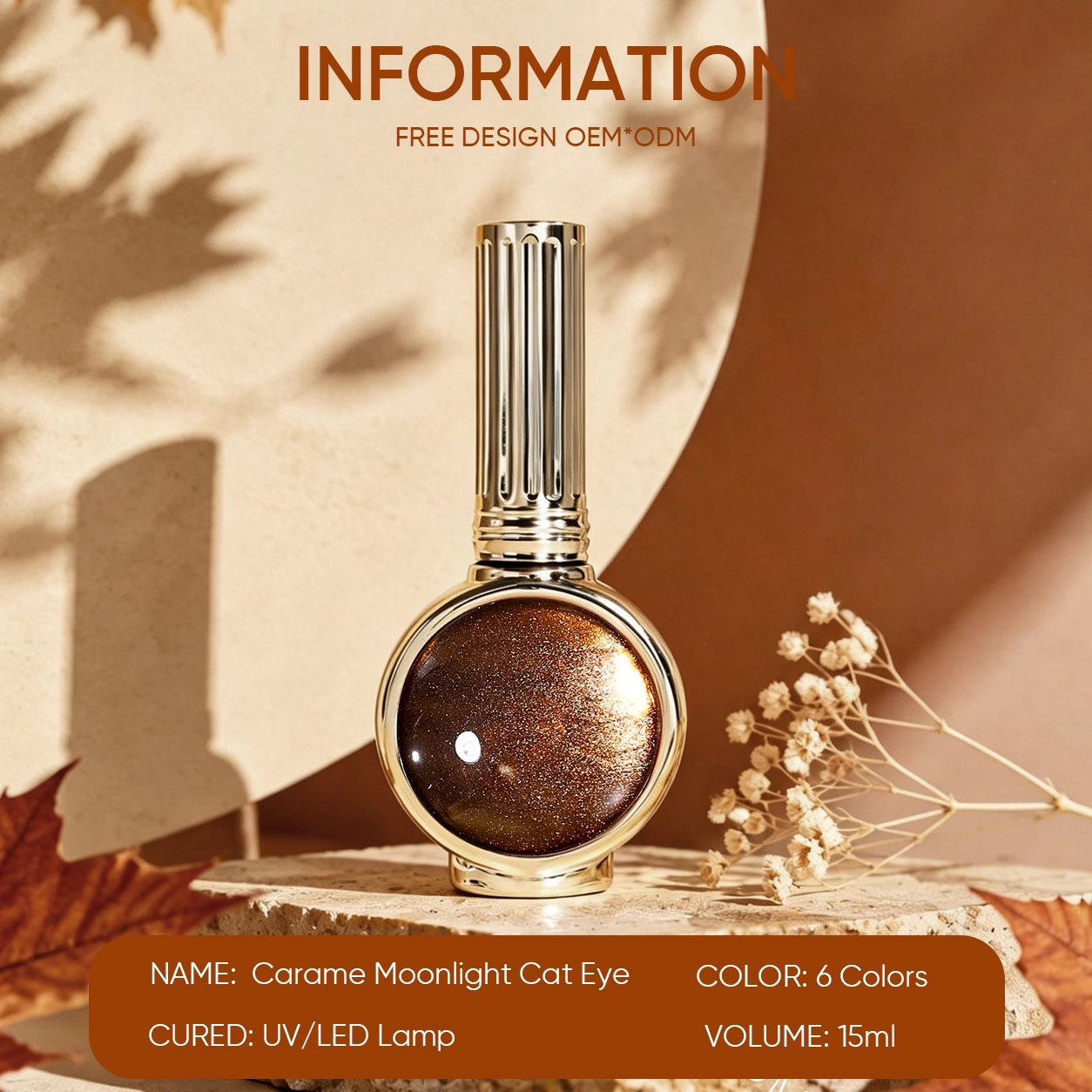
The formulation may combine magnetic effect pigments, holographic particles, colorants, film-forming polymers, solvents or reactive diluents, photoinitiators, and suspension aids. Particle size influences sparkle, smoothness, settling behavior, and the risk of a rough surface. Excessively large particles may create an attractive flash but can compromise leveling or topcoat adhesion. Very fine particles can improve smoothness while reducing dramatic visual separation.
The requested effect also determines whether the product should be designed as a gel polish, a high-viscosity art medium, a 3D nail art gel, or a layered salon system. A supplier should confirm compatibility between the optical package and the intended curing chemistry rather than treating pigments as interchangeable ingredients.
Set application and curing requirements early
Professional users typically evaluate brush control, self-leveling, coverage, magnetic response, cure speed, heat spike, shrinkage, and removal behavior. These parameters must be tested with the lamp types used by the target market because LED and UV systems can vary in wavelength, power distribution, and effective curing performance. The U.S. Food and Drug Administration guidance on nail care products provides useful regulatory context, although the manufacturer and brand owner remain responsible for ensuring that the final product complies with applicable market requirements.
A practical brief should identify the target curing lamp, recommended layer thickness, cure time, application temperature, storage temperature, and expected shelf life. It should also state whether the formula must remain stable when applied over builder systems, nail hard gel, Poly Acrygel, or Gelly nail tips.
How OEM Formulation Development Moves from Concept to Production
Use staged samples instead of approving a single prototype
A professional development program normally begins with a technical consultation, followed by laboratory samples that isolate different variables. One sample may prioritize holographic dispersion, another may maximize magnetic movement, and a third may focus on viscosity and one-coat coverage. Comparing controlled variations helps the buyer understand trade-offs before the final formula is selected.
Samples should be evaluated on natural nails, artificial tips, and the actual base and top products planned for launch. Reviewers should record application strokes, leveling time, magnet distance, movement speed, cure response, surface smoothness, gloss retention, removal time, and visual appearance after aging. A signed sample standard or approved master panel is valuable because it gives the production team a physical reference for future batches.
Validate stability, packaging, and compatibility
Magnetic and reflective particles can settle during storage, especially when the rheology is not properly balanced. Stability checks should examine sedimentation, pigment redistribution, viscosity drift, color change, odor, separation, leakage, and curing performance. Testing under accelerated conditions can identify potential risks, but it does not replace real-time shelf-life monitoring.
Packaging is part of the formulation decision. The bottle interior, brush, wiper, cap liner, fill volume, and closure torque can affect contamination control and product usability. Dark or opaque packaging may protect light-sensitive components, while a suitable brush can improve control of highly reflective formulas. Buyers should request a packaging compatibility test before approving large-scale filling.
Control scale-up variables and batch repeatability
Laboratory success does not automatically guarantee factory consistency. Scale-up may change mixing energy, dispersion time, temperature, vacuum conditions, filling speed, and pigment distribution. The OEM should define a controlled manufacturing sequence, including raw material identification, pre-dispersion, mixing order, de-aeration, viscosity adjustment, color matching, filling, and final inspection.
Batch records should connect each finished lot with raw material information, production parameters, inspection results, and retained samples. The principles of ISO 22716 cosmetics good manufacturing practices are relevant when buyers assess hygiene, documentation, personnel practices, production controls, storage, and quality systems. Certification alone is not a substitute for product-specific validation, but a disciplined GMP framework lowers operational risk.
| Development area | Minimum buyer review | Commercial risk if neglected | Recommended approval evidence |
|---|
| Optical effect | Color, prism dispersion, sparkle, magnetic movement | Mismatch between marketing images and salon result | Approved master panel and controlled-light photographs |
| Application behavior | Brush control, leveling, coverage, layer thickness | Slow service, streaks, uneven particle distribution | Application protocol and technician trial |
| Curing performance | Lamp compatibility, cure time, heat response | Soft film, lifting, service complaints | Test report using representative lamps |
| Stability | Settling, separation, viscosity and color retention | Shortened shelf life and inconsistent bottles | Stability observations and retained samples |
| Packaging | Brush, wiper, closure, leakage, light protection | Filling defects, leakage, poor user experience | Filled-pack compatibility approval |
| Compliance | Ingredient review, labeling, market requirements | Import delays, relabeling, or product withdrawal | Ingredient documentation and regulatory assessment |
Procurement Criteria for Selecting a Private-Label Nail Gel Manufacturer
Assess technical communication and documentation
Buyers should evaluate how clearly a supplier handles formulation requests. A reliable partner asks for target markets, intended users, lamp information, packaging requirements, restricted substances, application claims, target cost, minimum order quantity, and launch schedule. Vague answers during development often become avoidable delays during production.
Documentation should include an ingredient list or INCI information where applicable, safety data documentation, batch specifications, test records, packaging details, and labeling support. Market access requirements differ. The European Union Cosmetics Regulation establishes requirements for cosmetic products placed on the EU market, while other regions may apply different rules concerning responsible parties, notification, language, labeling, and safety assessment.
Compare total project economics rather than unit price alone
The lowest quoted price may not produce the lowest landed cost. Buyers should calculate formulation fees, sample rounds, packaging tooling, color matching, testing, artwork, filling loss, freight, customs, inspection, and potential relabeling. A formula with better coverage and lower service consumption may create stronger salon economics even if its purchase price is higher.
Commercial planning should also consider minimum order quantities and the number of stock keeping units. A supplier able to coordinate multiple shades, complementary Nail Gel products, and unified packaging can reduce procurement complexity. Forecast accuracy remains important because highly customized colors and printed components may require longer replenishment cycles.
Verify factory capacity and quality assurance
Factory capability should be assessed through production-line information, inspection staffing, equipment, sample retention, change-control procedures, and complaint handling. Buyers can request a virtual or physical audit covering raw material storage, weighing, mixing, filling, labeling, finished-goods storage, and shipment release. The objective is not merely to confirm factory size, but to determine whether the supplier can repeat the approved effect at the required volume.
Relevant quality indicators include lot-to-lot color difference, viscosity range, fill-weight tolerance, appearance, cap and brush fit, cure performance, and packaging leakage. For global sales, buyers should also confirm whether the supplier can provide export documentation and coordinate requirements across multiple countries.
Why Hanyinails Fits Complex OEM Nail Product Programs
Integrated capacity for formulation and product expansion
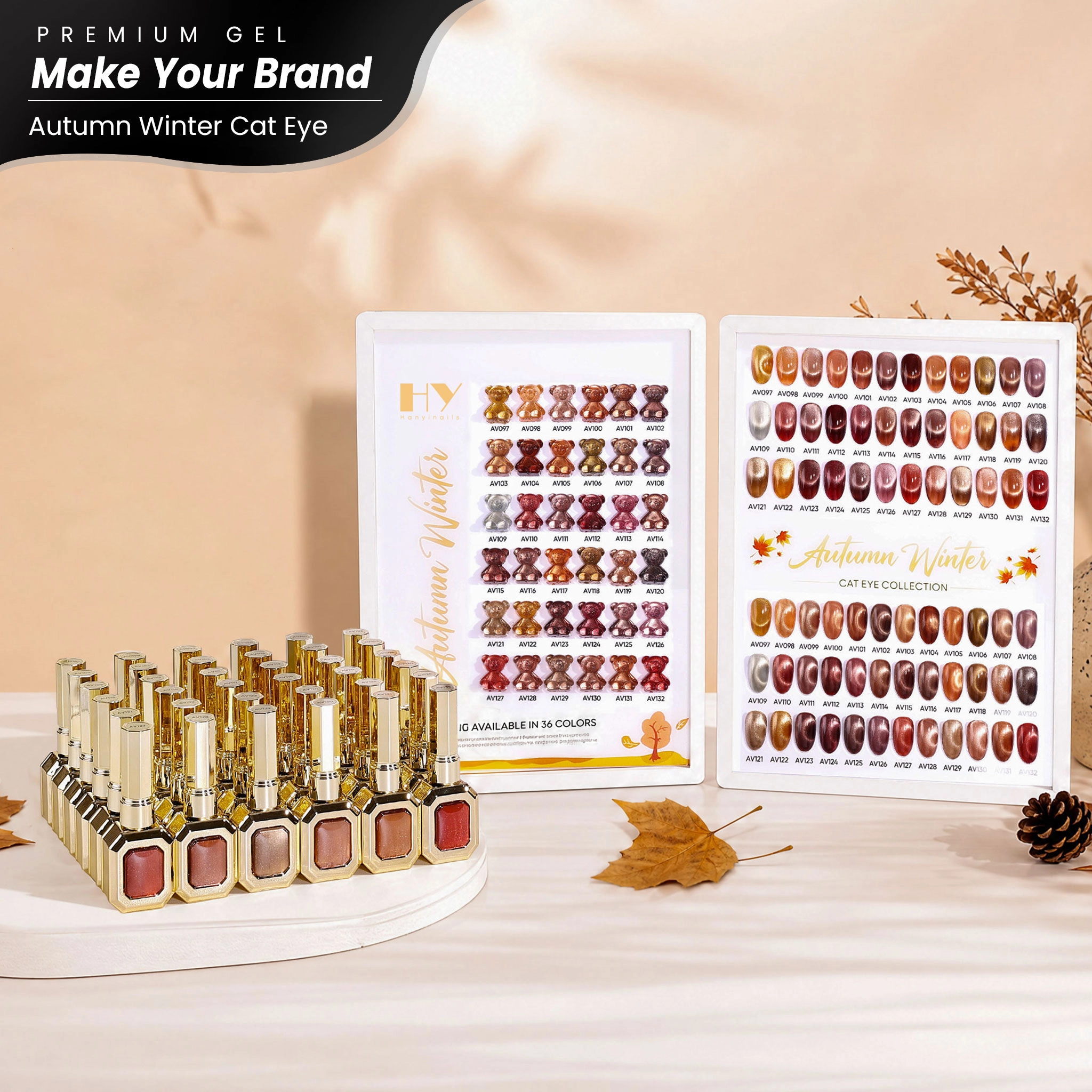
Hanyinails is a professional nail products manufacturer committed to supplying a broad range of professional nail gel items. Our manufacturing platform includes 10 production lines, 60 production machines, 8 QA/QC inspectors, and an 8000㎡ workshop. This structure supports coordinated development, filling, inspection, and production planning for brands that need more than a single custom shade.
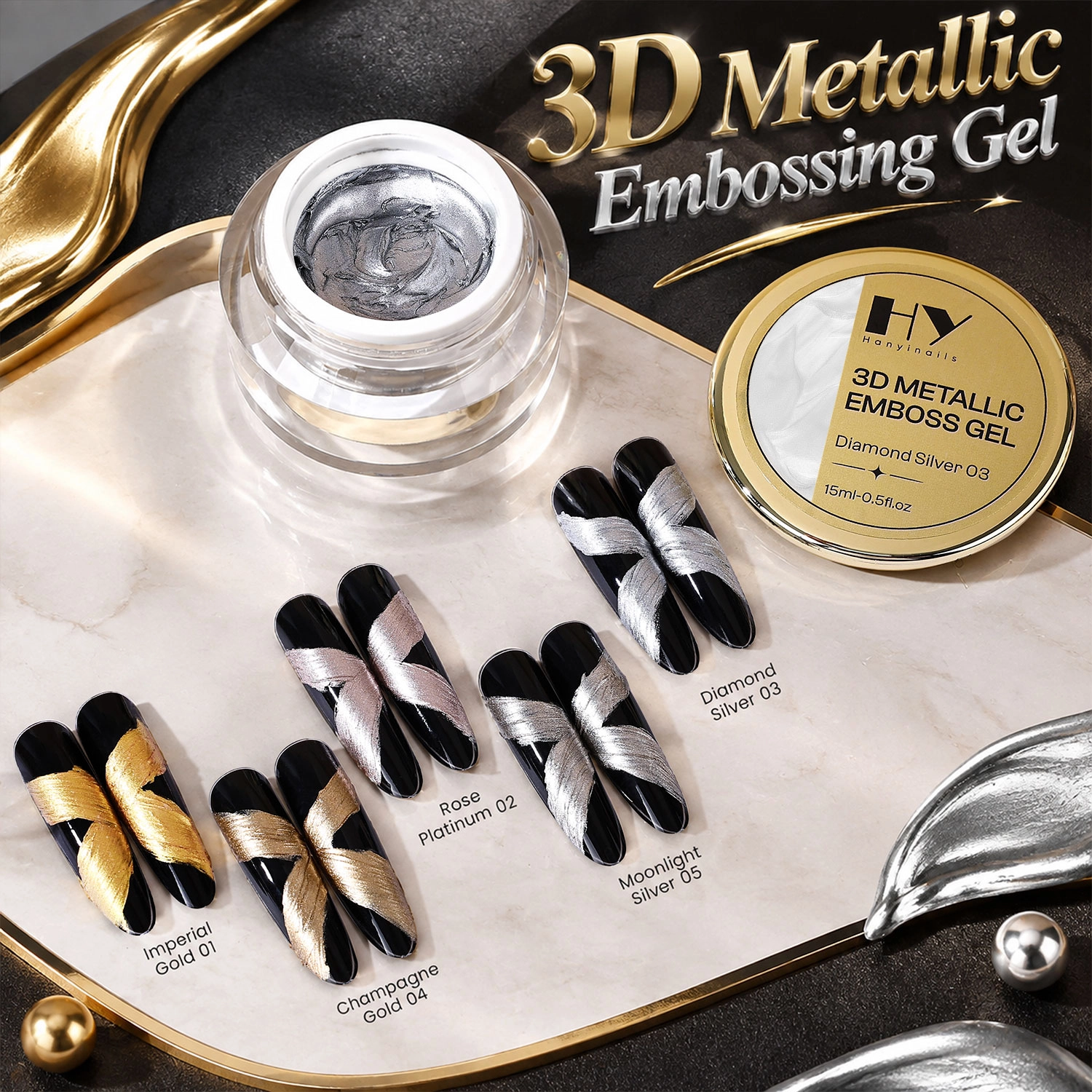
Our product scope can extend from magnetic reflective color systems to 3D nail art gel, gel builder nail polish, colored nail polish, nail care oil, gel x nail glue, Gelly nail tips, nail hard gel, Poly Acrygel, and line gel nail art products. A broader portfolio allows project owners to build a complete professional range while maintaining consistent packaging direction and supplier communication.
One-stop customization for differentiated brands
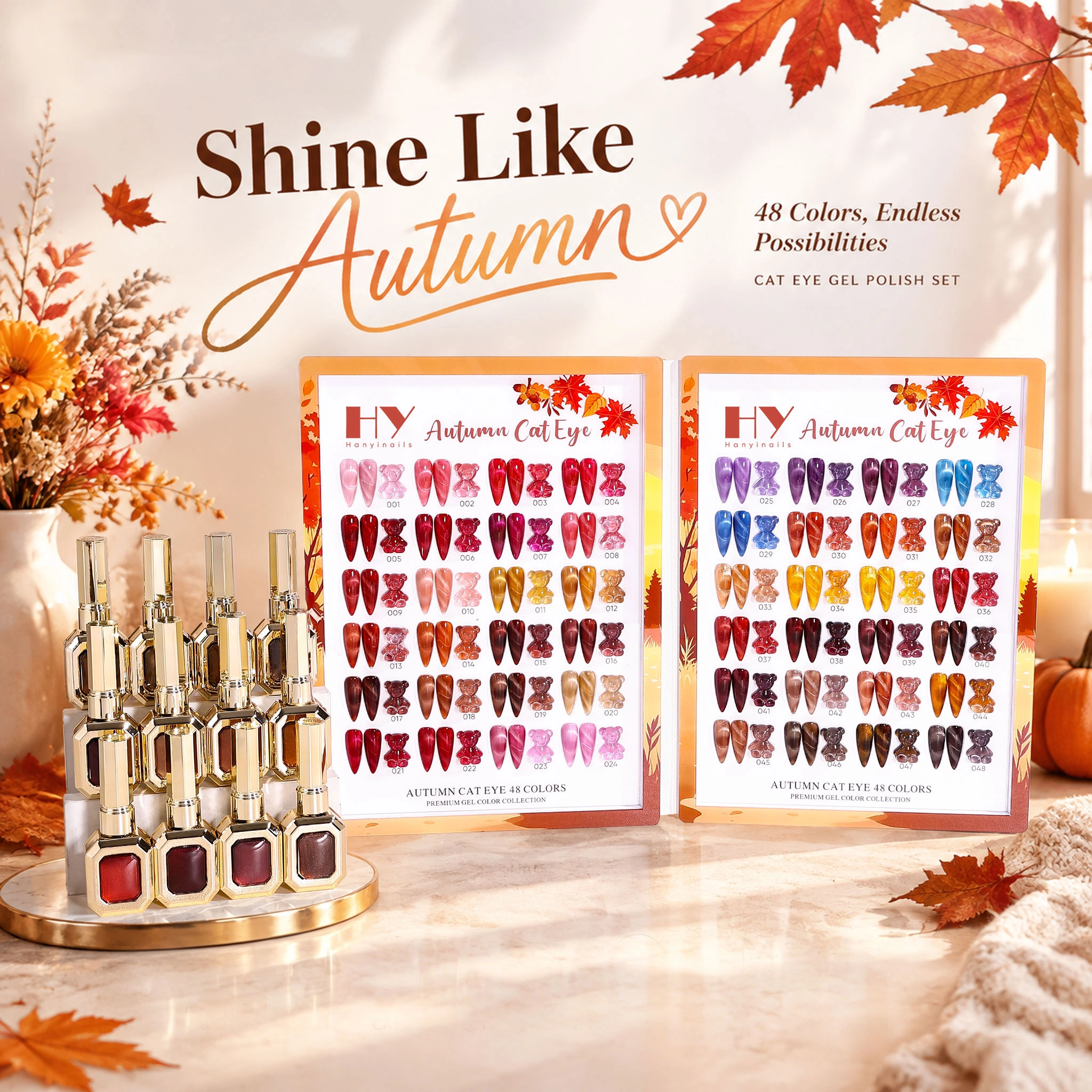
Different brands require different visual identities, price points, and retail formats. Hanyinails provides more than 50 styles of stock bottles and caps, over 600 styles of customized bottles and caps, more than 100 kit-box styles, and over 200 color-chart design options. These resources help buyers move from a formula concept to a coherent shelf-ready system without managing separate vendors for every component.
Our team has 12 years of OEM customization experience and develops approximately 2000 new colors per year. That activity supports efficient color communication, shade-family planning, and seasonal collection development. For a magnetic or holographic range, the practical benefit is the ability to compare multiple effect directions while also planning complementary base colors, art gels, builder products, and aftercare items.
Designed for international B2B cooperation
Hanyinails takes part in exhibitions in more than 10 countries every year, helping our team remain connected with distributors, salon operators, brand owners, and international market expectations. Global cooperation still requires product-specific compliance review, but regular market contact improves communication around packaging formats, color preferences, application habits, and launch timing.
For buyers preparing a custom brief, the most efficient starting package includes reference images, target shade descriptions, preferred magnetic movement, desired particle intensity, curing equipment, target market, bottle preference, estimated annual volume, and required delivery date. Our team can then structure sample development, packaging selection, quality checkpoints, and production planning around the commercial objective. Hanyinails’ vision is to become the world’s leading manufacturer of nail products, and our OEM approach is built around dependable execution rather than a one-size-fits-all catalog.
To discuss a custom magnetic reflective gel project or review Hanyinails’ complete nail product range, contact sales@hanyinails.com or visit https://www.hanyinails.com.



Hanyinails
Hanyinails
Hanyinails
Hanyinails