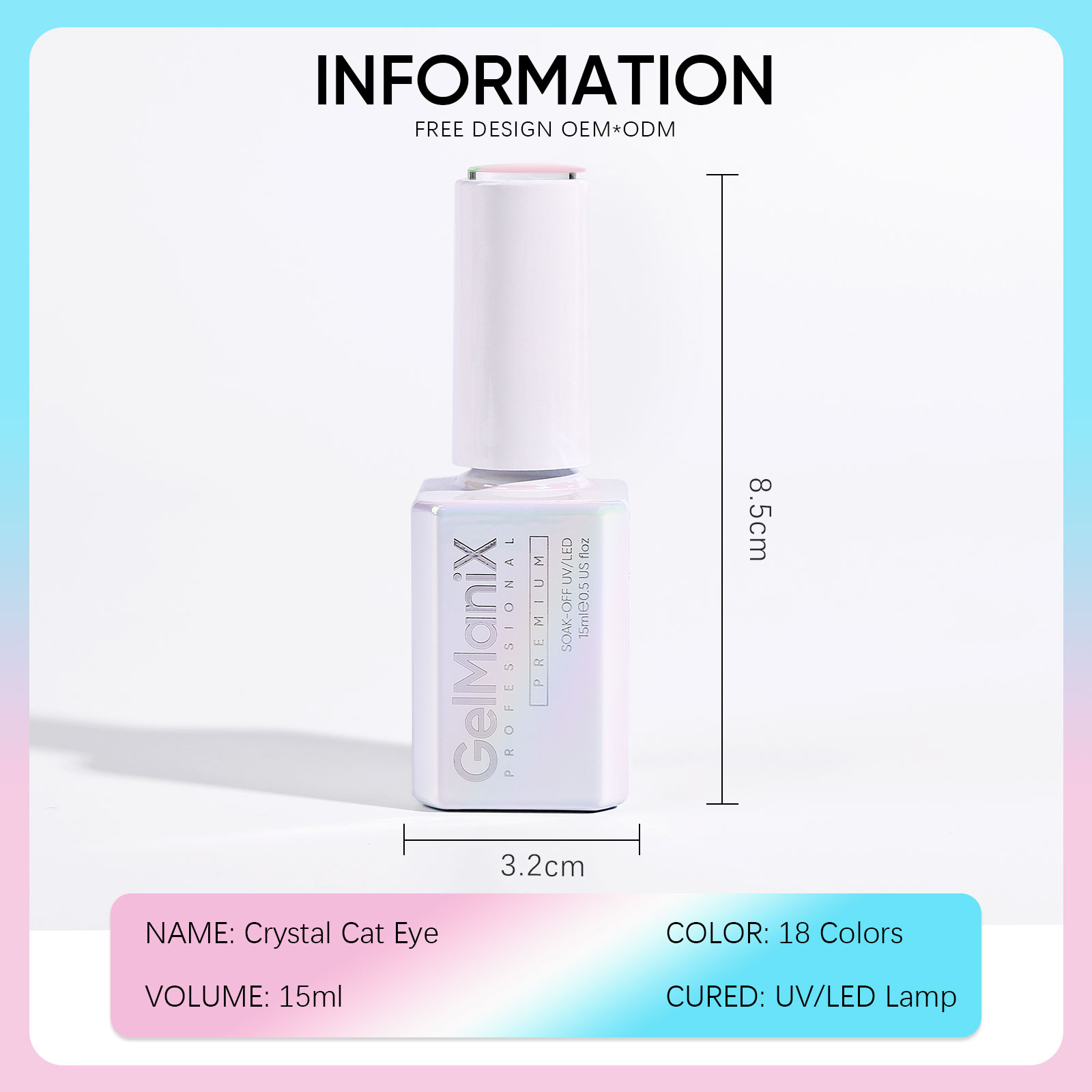
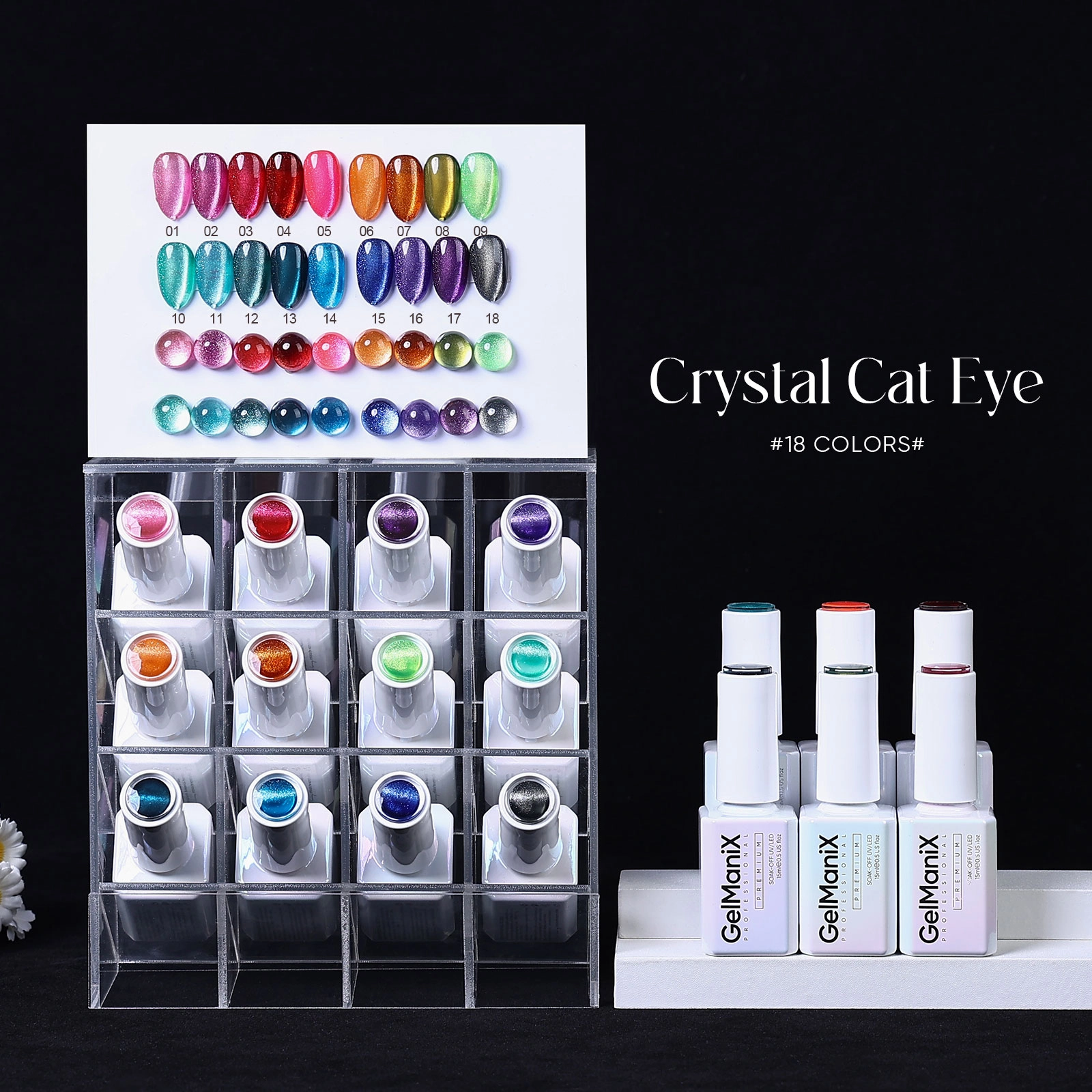
Hanyi Nails’ crystal cat eye gel is an 18-color magnetic gel polish collection for nail artists, salons, and beauty-product buyers seeking a dimensional, light-catching manicure effect. The magnetic finish helps create shifting, crystal-like patterns, while the range of shades supports varied nail-art looks. For reliable results, confirm lamp compatibility, application instructions, packaging, and wholesale terms with the supplier before purchase.
How Can an 18-Shade Magnetic Gel Polish Expand Nail-Art Options?
What makes a crystal cat eye manicure visually distinctive?
Cat eye gel contains magnetic-effect particles that can be arranged with a magnet before the gel is cured, creating a concentrated line or other reflective pattern. As the nail moves, the effect can appear to shift with the light. This dimensional look offers an alternative to a flat-color manicure without requiring a separate decorative element on every nail.
The Hanyi Nails crystal cat eye gel collection is presented as an 18-color range. A multi-shade selection can help a salon build seasonal menus, offer customers more choices, and test which colors work best with its client base. The actual appearance may vary with the base color, gel thickness, magnet technique, and lighting, so evaluate swatches under the conditions in which clients will see them.
How can salons use multiple shades without overcomplicating stock?
A curated color range can support different service styles while keeping the magnetic effect consistent across a collection. Before committing to a full set, compare the shade names and product images with physical samples if available. Swatch each color on a clear or colored nail tip and record the base coat, number of layers, magnet position, and curing process used. This creates a repeatable reference for staff and helps customers choose confidently.
For buyers managing inventory, assess shades against real demand rather than assuming every color will sell at the same rate. Ask the supplier about available set configurations, individual-color purchasing, minimum order quantities, and replenishment lead times. These details are not interchangeable across suppliers and should be confirmed directly before preparing a retail assortment or salon launch.
Which buyers are most likely to benefit from this collection?
Professional nail technicians may value the range when they want a magnetic-effect service that can be adapted to different client preferences. Beauty retailers and distributors may be interested in a multi-color assortment that offers a clear visual story for product displays. Independent nail-art sellers can also assess the collection for use in service demonstrations or curated manicure kits.
Suitability depends on more than the effect itself. Buyers should establish whether the product is intended for professional use, what application and curing directions apply, and what information is supplied for safe handling. If you are sourcing for resale, request product documentation and commercial terms early; do not assume that specifications, labeling, or private-label options are included unless the supplier confirms them.
How Do You Apply Magnetic Cat Eye Gel for a Controlled Finish?
What preparation helps magnetic gel apply evenly?
Begin with clean, prepared nails and follow the product’s supplied instructions for base coat and application. Applying gel too thickly can make control more difficult and may contribute to uneven curing, so use the manufacturer’s recommended layer thickness. Keep product off the surrounding skin, and remove accidental contact before curing. The correct preparation and compatible lamp are essential; do not substitute a curing schedule based on another brand’s formula.
Before serving clients, test the gel with the lamp specified or approved by the supplier. Gel products can differ in formulation and curing requirements, so a lamp that works with one system may not be suitable for another. Follow the product label and supplier guidance rather than relying on a universal curing time. If instructions are missing or unclear, request them before applying the product.
How should you use a magnet to create a cat eye effect?
After applying the magnetic gel layer, position a suitable nail-art magnet near the nail to move the effect particles into the desired pattern. The distance, angle, and time spent holding the magnet can change the result, so practice on a sample tip before working on a client. Once the design looks right, cure it promptly according to the product directions to preserve the pattern.
For a consistent salon service, standardize the sequence: apply the layer evenly, position the magnet, inspect the reflection from more than one angle, and cure only when satisfied with the design. A straight line, diagonal sweep, or concentrated highlight may create different visual effects. Keep a record of the magnet used and its position so another technician can reproduce the look more reliably.
Why should you test the finish before offering it as a service?
A swatch test can reveal whether the magnetic effect is visible over the chosen base color and whether a particular shade suits the salon’s lighting. It also gives staff an opportunity to practice timing and magnet placement without pressure during an appointment. Test the finished sample after curing and top-coating, because each layer can influence the final appearance and reflection.
Use a small service trial to estimate application time, product use, and client response before adding the manicure to a price list. Capture photographs under consistent lighting and explain that reflections can look different in indoor, daylight, and camera conditions. This helps avoid mismatched expectations and gives buyers more dependable content for menus, product listings, or demonstrations.
How Should Buyers Evaluate Quality, Safety, and Supply?
What product details should you confirm before ordering?
Product-page images can help identify the collection and intended effect, but they do not replace a complete specification. Ask for current information on net contents, ingredients or ingredient disclosure, country of origin, shelf life, storage, application directions, curing requirements, and safety documentation. For wholesale purchasing, also confirm unit packaging, carton quantities, minimum order requirements, production lead time, shipping terms, and the process for handling damaged goods.
For manufacturers and suppliers, ISO 22716 guidance for cosmetic good manufacturing practices is a useful reference when discussing cosmetic production controls. Its existence does not establish that a particular product or supplier is certified; request relevant evidence and verify its scope. Buyers should also clarify whether product documentation applies to the exact formula and market in which the gel will be sold.
How can salons reduce avoidable application and handling risks?
Use products only as directed, avoid skin contact, and ensure adequate ventilation and hygienic work practices. Do not apply gel to irritated or damaged skin, and follow the supplier’s instructions for removal rather than forcibly peeling product away. The U.S. Food and Drug Administration’s nail-care product guidance explains that nail products are subject to applicable labeling and safety requirements; regulatory obligations vary by market.
Some gel services involve UV or LED lamps that emit ultraviolet radiation. Review practical precautions from the American Academy of Dermatology’s advice on gel manicures, and follow the lamp and gel manufacturers’ instructions. This is particularly relevant for salons setting service protocols: establish consistent lamp use, protect the surrounding skin as appropriate, and never shorten or extend curing based on guesswork.
How can wholesale buyers assess whether the collection fits their business?
Compare the supplier’s commercial terms with your sales model. A salon may prioritize reliable replenishment and clear technician instructions, while a distributor may need consistent packaging, product data, and market-specific labeling. Ask whether samples are available and whether the supplier can provide the documentation required for your destination market. Confirm any customization or private-label service in writing rather than treating it as an assumed feature.
Evaluate the collection using a small, documented trial where possible: inspect packaging, test each selected shade, record application performance, and gather feedback from technicians or customers. Review the supplier’s response time and clarity during the inquiry process as part of your sourcing assessment. This practical approach helps balance visual appeal with service efficiency, compliance needs, and the ongoing cost of maintaining inventory.








Hanyinails
Hanyinails
Hanyinails
Hanyinails