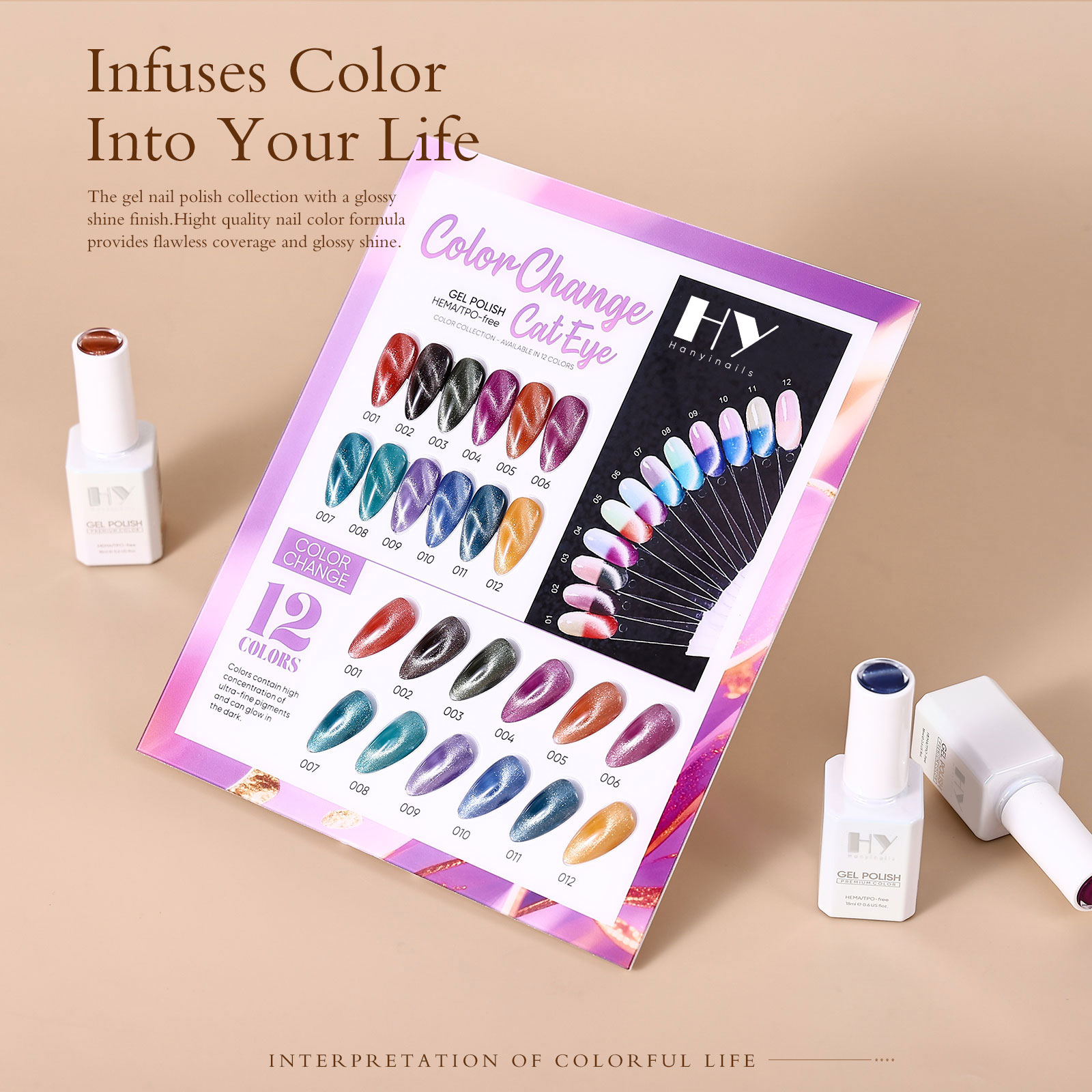
HEMA-free color-changing cat-eye nail gel combines a magnetic cat-eye effect with a shifting color appearance in a 12-color range, giving salons and beauty brands a way to offer expressive nail art without relying on a single flat shade. Its HEMA-free positioning may be relevant to buyers who are comparing ingredient profiles, but it does not mean allergy-proof or risk-free; professional handling, complete curing, and review of product documentation remain essential. Before placing a wholesale order, confirm the effect, application method, compatibility, packaging, and available safety information with the supplier.
How can a 12-color magnetic gel expand a salon’s nail-art options?
What visual effects can color-shifting cat-eye gel create?
Cat-eye nail gel is used with a magnet to move or shape magnetic particles into a reflective line or other dimensional pattern. A color-changing finish adds another visual variable, helping a technician create looks that appear different as the nail catches light or the viewing angle changes. The exact color-shift behavior can depend on the formula and lighting, so review product images and request a sample to confirm the result before promising a particular effect to clients.
A 12-color assortment lets a salon offer clients more than one interpretation of the same technique: dramatic dark tones, brighter statement shades, or combinations suited to seasonal collections. For buyers, this can make a product range more useful across different customer preferences. Rather than assuming every shade performs identically, test each color for opacity, magnetic response, and visual consistency under the lighting used in your salon or product photography.
Why does a multi-shade assortment help with purchasing decisions?
Buying a coordinated range can simplify merchandising and give nail technicians a broader palette without sourcing each shade from a different supplier. For distributors, a defined 12-color selection also creates a clear basis for evaluating assortment size and shelf presentation. Confirm what is included in the offered set, how shades are identified, and whether the supplier can provide current product images and packaging details; these checks prevent mismatches between a listing, a purchase order, and the goods received.
To assess commercial fit, compare the range with your existing inventory and customer demand rather than purchasing on color count alone. Request samples where possible, record how each shade applies, and gather feedback from technicians before committing to a larger order. This approach helps identify shades that are easy to demonstrate and repeat, reducing the risk of tying up inventory in colors that do not suit your clientele.
How should professionals evaluate HEMA-free gel before ordering?
What does HEMA-free mean, and what should it not imply?
HEMA-free means the product is presented as formulated without the ingredient HEMA; it does not establish that the gel cannot cause irritation or sensitization. Nail products can contain other ingredients that require careful handling, and uncured gel should be kept off the skin. Ask the supplier for the ingredient information and applicable safety documentation, then follow the product’s directions and local requirements. The U.S. FDA guidance on nail care products explains why intended use and safe handling matter.
Salon teams should use the gel as directed, avoid skin contact, and ensure that the selected lamp and curing process are appropriate for the product. Do not treat a HEMA-free claim as a substitute for ingredient review, client screening, or technician training. The FDA cosmetics safety information provides general context on cosmetic safety responsibilities; it is not a product-specific assessment or endorsement.
Which documents and claims should a buyer verify?
Ask for product-specific ingredient details, usage directions, curing guidance, and safety documentation relevant to your market. Confirm whether the supplier can provide the information in a format your team can review and retain. For private-label or distribution programs, clarify which party is responsible for local labeling, claims review, and market-specific compliance rather than assuming that a supplier’s general statement covers every jurisdiction.
Good manufacturing practices are also part of a buyer’s quality review, but a reference to a standard should not be mistaken for proof that a particular product or factory is certified. The ISO 22716 overview for cosmetics good manufacturing practices describes a framework relevant to production and quality control. Ask the supplier what quality procedures and records apply to the specific item you are considering.
How can technicians apply and assess cat-eye gel consistently?
What should a salon test before adding the gel to a service menu?
Run a controlled trial on sample tips or a small number of services before introducing a new gel across the salon. Follow the supplier’s application and curing instructions, and use a compatible lamp as specified rather than assuming that every lamp will cure every formula equally. Record the base preparation, coat thickness, magnet technique, curing process, and top coat used. A simple written protocol helps different technicians compare results and repeat the appearance clients selected.
Test magnetic patterns at the working distance and timing recommended by the supplier. Small changes in magnet placement can shift the reflective line, so a consistent hand position and viewing angle make demonstrations easier to reproduce. Assess the cured finish for appearance and wear under normal service conditions, and document any concerns for the supplier. Never use uncured performance as a substitute for following the stated curing instructions.
How can buyers check compatibility and service reliability?
Compatibility questions should be answered before purchase: ask which base coat, top coat, lamp type, and curing directions the supplier recommends, and whether those details differ by shade. If your salon uses a particular system, trial the gel within that workflow instead of relying on assumptions based on another brand. The European EU Cosmetics Regulation is a useful reference for buyers selling cosmetics in the EU, but market obligations should be reviewed for the specific product and business role.
For dependable replenishment, confirm the product name and shade identifiers on samples, invoices, and cartons, then clarify lead times and order terms with the supplier. Keep a retained sample or product record when establishing a repeat order so that future deliveries can be compared with the original evaluation. These practical checks help a salon or distributor distinguish a temporary visual success from a product that fits its purchasing and service requirements.
How can distributors assess commercial fit and supply readiness?
What should be confirmed before a wholesale order?
Before committing to volume, request current details on the available 12 colors, unit configuration, packaging, minimum order quantity, production lead time, and shipping terms. These commercial details can vary by order or market and should be confirmed directly rather than inferred from a product title. Ask whether samples are available and how the supplier identifies shades, so purchasing teams can compare the delivered goods with the approved selection.
For a new listing, prepare accurate product copy that explains the magnetic cat-eye appearance and HEMA-free positioning without making unsupported safety or performance guarantees. Keep shade photography representative and describe the effect under realistic lighting. If the gel will be sold under a private label or across multiple regions, obtain specialist review of label language and claims before launch.
How can product information reduce returns and customer confusion?
Clear instructions help technicians understand the intended application, while precise shade names and images help buyers select the right color. Provide customers with practical guidance on magnet use, curing according to supplier directions, and avoiding skin contact. If information is missing or unclear, resolve it with the manufacturer before publishing a listing; filling gaps with assumptions can create service issues and avoidable returns.
Hanyinails’ 12-color range is worth evaluating when your customers want a reflective cat-eye design with a color-shifting look and your team can verify the formula’s application requirements. A sample review, documentation check, and confirmed order specification give salons and distributors a stronger basis for deciding whether this gel belongs in their assortment.









Hanyinails
Hanyinails
Hanyinails
Hanyinails