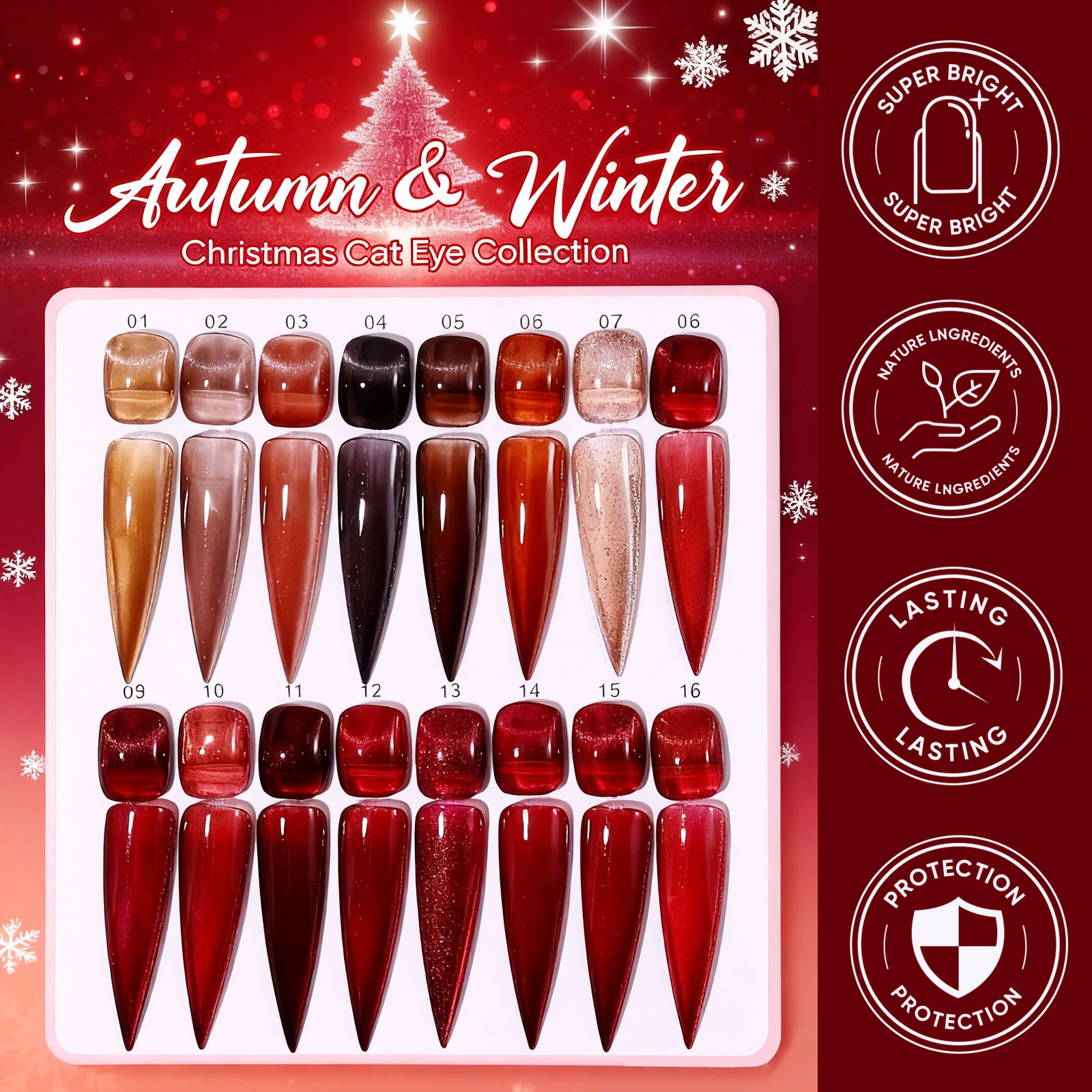
The 16-color Christmas cat-eye gel polish collection combines a seasonal range of 16 shades with the distinctive, light-reflecting look created by magnetic gel polish. For salon professionals, nail brands, and beauty retailers, it offers a way to present varied festive nail designs in one collection; before ordering, confirm practical details such as bottle size, curing instructions, magnet availability, packaging, and private-label options directly with the supplier.
How can you choose a magnetic holiday gel polish collection?
What makes a cat-eye gel finish different?
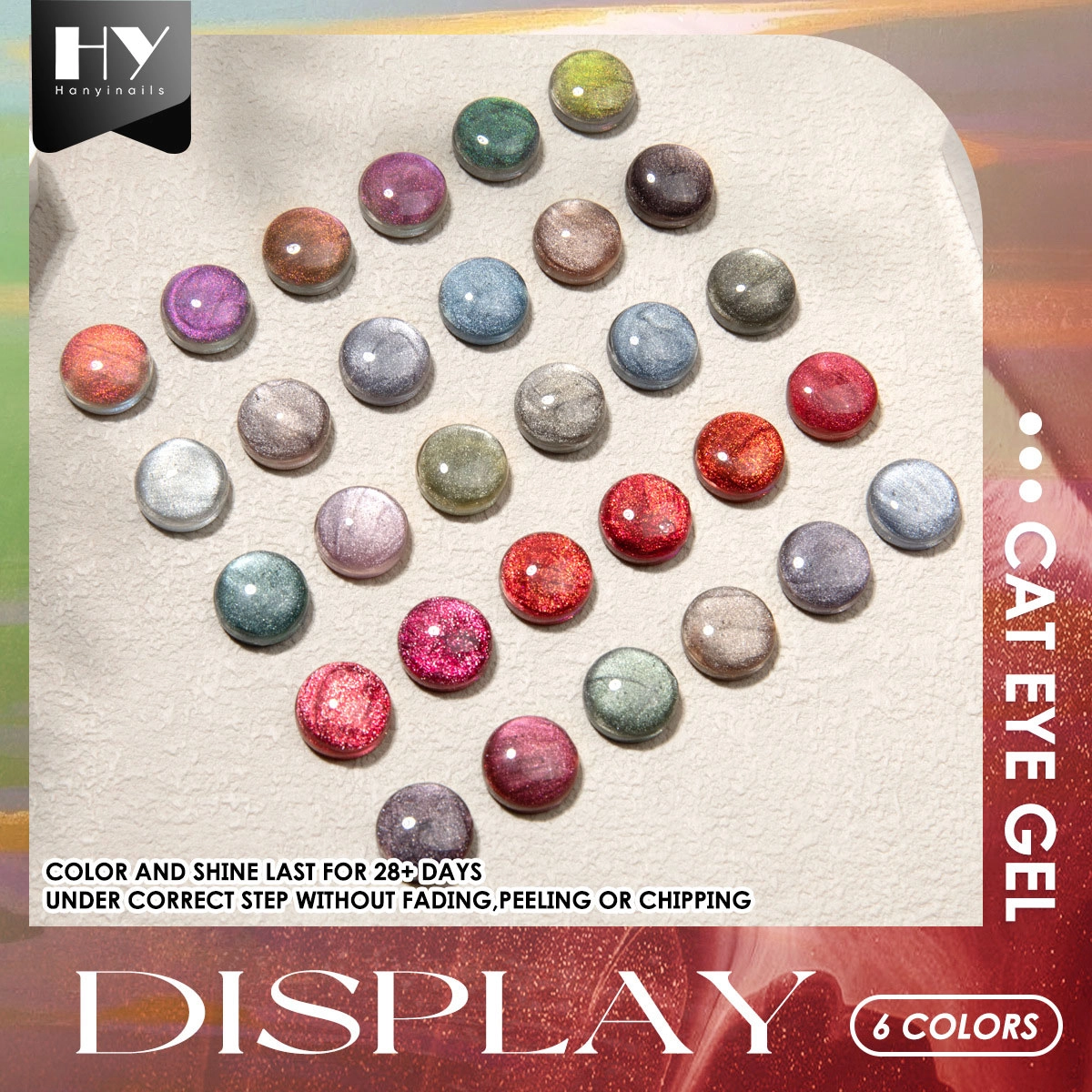
Cat-eye gel polish uses magnetic particles in the formula to create a concentrated line or shifting highlight when a magnet is held near the uncured product. The final appearance depends on the polish shade, the magnet’s shape and placement, the distance from the nail, and how long the effect is positioned before curing. That technique gives nail artists room to vary the pattern without needing a separate printed design for every look.
For a salon, that flexibility can help one color serve several design preferences: a narrow central beam, a diagonal sweep, or a softer, more dispersed reflection. The magnetic effect is not a substitute for application control, however. A clean base, even color coverage, and a consistent magnet technique help make the result more uniform from nail to nail.
Why consider 16 shades for seasonal merchandising?
A 16-shade assortment can give buyers more choice than a single seasonal color while keeping the collection organized around a clear Christmas theme. Salons can use the range to create varied client options, while retailers can present coordinated shades as a seasonal edit. The product page identifies a 16-color collection; confirm the shade names, swatches, and color-to-bottle matching before committing to a display or marketing campaign.
Screen images and lighting can affect how gel colors appear, so buyers should request current product photos or physical samples when exact shade representation matters. This is especially useful for matching a store’s holiday palette, preparing salon look books, or checking whether the colors complement the base and top coats already used in the business.
Which details should a buyer verify before ordering?
Do not assume that every gel polish collection includes a magnet, lamp, base coat, or top coat. Ask the supplier to confirm exactly what is included, the unit size, recommended application steps, curing requirements, available packaging, order quantities, and shipping terms. If you are buying for resale, also check whether product labeling and documentation are suitable for the markets where you plan to sell.
For a private-label or wholesale project, request written confirmation of customization scope, sample availability, production lead times, and any artwork requirements. These details help you compare suppliers on the full cost and operational fit rather than judging a collection only by its shade count or product photography.
What benefits can magnetic gel polish offer salons and retailers?
How can one magnetic effect support more design options?
Magnetic polish gives nail professionals a way to create a dimensional-looking accent with a relatively simple tool-based technique. Artists can adjust the magnet’s position to change the direction and placement of the reflected line, making the finish adaptable to full sets, accent nails, and seasonal nail-art combinations. That versatility can be useful when clients want a distinctive look without an elaborate hand-painted design on every nail.
For repeatable salon service, establish a consistent workflow: prepare the nail according to your professional practice, apply the product as directed, position the magnet before curing, and cure only in accordance with the supplier’s instructions and the lamp’s specifications. Test the technique on a sample or practice tip first, since the visual result can vary with application thickness, magnet strength, and working distance.
How can a seasonal range support product planning?
A collection with a defined holiday theme can simplify merchandising and seasonal content planning. A retailer can group the shades together, while a salon can photograph sample designs to help clients compare finishes. The 16-color format also gives a business the opportunity to build a broader seasonal selection, but demand, inventory quantity, and shade preferences should be assessed locally rather than assumed.
Before planning promotions, verify product availability and replenishment expectations with the supplier. Seasonal products can be more time-sensitive than core shades, so realistic lead times and confirmed stock status matter. Ask for the latest product specifications and images to ensure that catalog descriptions, online listings, and customer expectations all match the current offering.
What should businesses know about cosmetic compliance?
Cosmetic requirements differ by market, and a supplier’s product description alone is not a substitute for the documentation or labeling required where a product will be sold. The U.S. FDA cosmetics laws and regulations explain the regulatory framework for cosmetics in the United States, while the FDA’s nail care products guidance provides context specific to nail products.
Ask the manufacturer which product documents are available and confirm that they apply to the exact formula and destination market. Where relevant, request ingredient information, safety documentation, and labeling details for review by your regulatory or compliance professional. Do not describe a cosmetic product as approved or certified unless the claim is supported by the appropriate evidence.
How should you use and evaluate Christmas cat-eye gel polish?
How do you create a more consistent magnetic effect?
Begin by following the product’s own application directions rather than applying a generic cure schedule. Apply an even coat, hold the suitable magnet near the nail without touching the wet surface, and observe how the reflective particles move before curing. If the line looks weak or uneven, adjust the magnet position or distance and test again on a practice tip before working on a client.
Keep the magnet steady while the effect forms, and avoid bumping or dragging it across the uncured layer. The exact result depends on the formula and tool, so a supplier sample is a practical way to assess the collection’s behavior with your salon’s equipment. Cure according to the manufacturer’s instructions and the specifications for the compatible lamp; do not infer compatibility from appearance alone.
What safety and handling practices matter?
Use gel products as directed and avoid contact with skin, since uncured nail products can cause irritation or sensitization in some users. Work in a suitable, well-ventilated setting, keep containers closed when not in use, and follow the product label and safety documentation. If product contacts skin, or a user develops a reaction, stop use and follow appropriate professional or medical guidance.
For workplace handling, ask the supplier for a Safety Data Sheet when applicable and make sure staff know where product instructions and safety information are stored. The OSHA guidance on Safety Data Sheets explains how SDS documents communicate hazard and handling information in workplaces covered by U.S. hazard communication requirements. Requirements vary by location, so businesses should check their applicable rules.
Which supplier questions help reduce purchasing risk?
Request written answers about shade availability, bottle size, ingredients or ingredient documentation, curing instructions, magnet inclusion, packaging, minimum order quantity, sample orders, lead time, and shipping. For customization, ask whether the supplier supports private labeling and what artwork or packaging specifications are needed. Confirm that any statements about product performance or compliance are documented and relevant to the specific item being purchased.
For manufacturing quality discussions, buyers may also ask whether the supplier uses documented quality controls and whether any claimed quality-management practices can be substantiated. ISO 22716:2007 provides guidelines on good manufacturing practices for cosmetics; mentioning the standard should not be taken as evidence that a particular product or factory is certified. Verify any certification claim directly and check its scope and validity.
Would you like to confirm shade details, samples, packaging, or wholesale options for this collection? Contact Hanyinails customer service to discuss your requirements and request current product information.









Hanyinails
Hanyinails
Hanyinails
Hanyinails