For a professional nail brand, distributor, salon chain, or retail project, the decision between a cat eye nail art kit supplier and a direct manufacturer should be based on commercial objectives rather than price alone. A supplier may consolidate products from different factories and simplify early purchasing, while a manufacturer controls formulation, production scheduling, quality systems, packaging development, and private-label execution. The right choice depends on expected order volume, required magnetic effect, target market regulations, launch speed, customization depth, and the level of technical accountability the project requires.
How to Distinguish a Reseller from a Production Partner
Supplier model: convenient sourcing with limited technical control
A supplier or trading company can be useful when buyers need a small assortment of magnetic gel colors, accessories, lamps, tools, or ready-made manicure sets from one commercial contact. This model can reduce the administrative burden of communicating with multiple factories and may support mixed cartons, sample orders, or rapid catalog selection. It is often suitable for testing a new channel, serving a local salon network, or filling a short-term inventory gap.
However, the buyer should determine whether the supplier owns the formula, maintains batch records, or simply purchases finished goods. A reseller may not be able to change pigment concentration, magnetic particle distribution, viscosity, brush design, curing behavior, bottle compatibility, or label construction without consulting another factory. This can create slower corrective action when a shade separates, the velvet effect weakens, or packaging arrives with inconsistent decoration.
Manufacturer model: direct control over formula and execution
A direct nail gel manufacturer operates production equipment and manages the manufacturing process rather than only arranging transactions. The manufacturer can usually provide a more complete technical discussion covering raw material selection, pigment dispersion, magnetic response, rheology, curing parameters, filling accuracy, bottle sealing, and batch release. This direct relationship is valuable when the product must deliver a consistent reflective stripe or aurora effect across repeated production runs.
Manufacturers are generally better positioned for private-label development, coordinated packaging, color expansion, and production forecasting. Buyers can also establish clearer accountability for nonconformities because the organization responsible for formulation and filling is directly involved in investigation and corrective action. The trade-off may be a higher minimum order quantity, a longer development cycle, or greater documentation requirements during onboarding.
Verification questions before commercial approval
Procurement teams should request the factory address, business license information, production photographs or audit access, product specification sheet, safety documentation, sample batch records, and an explanation of quality-control checkpoints. It is also important to confirm whether the proposed partner is the actual producer for the exact SKU being quoted. A trading company can still be reliable, but the commercial agreement should clearly identify who controls the formula, who owns the artwork, who handles complaints, and who is responsible for regulatory files.
For cosmetic products, compliance cannot be inferred from a logo or a general certificate. Buyers should review the requirements of the destination market and use recognized guidance such as the U.S. Food and Drug Administration cosmetics resources and the ISO 22716 Good Manufacturing Practices standard when evaluating manufacturing controls. For European distribution, the responsible party should assess the applicable obligations under the European Union Cosmetics Regulation.
Commercial Criteria for Selecting Magnetic Gel Partner
Compare customization, minimum quantities, and launch speed
Ready-to-ship products are usually the fastest route to market, particularly when a buyer accepts standard shades, bottles, caps, and box formats. A supplier may provide broader catalog access and lower trial quantities. Yet standardization can restrict differentiation. If a brand requires a signature magnetic finish, exclusive shade names, branded color charts, custom kit composition, or a coordinated collection of builder gel and nail art products, direct factory development normally creates more options.
Minimum order quantity should be assessed together with inventory turnover, not viewed as an isolated number. A low unit price becomes expensive if slow-moving colors occupy warehouse space or if the buyer must overstock packaging. Request a quotation showing sample fees, mold or artwork charges, filling quantity, packaging cost, inspection cost, freight assumptions, payment terms, and the price impact of future repeat orders.
Assess performance characteristics that affect salon results
A magnetic manicure product is judged by more than visual color. Buyers should evaluate viscosity, leveling, pigment suspension, magnet responsiveness, coverage in one or two coats, curing under the intended LED or UV lamp, surface tack, removal behavior, and compatibility with the base and top coat system. The visual line should remain controllable without excessive manipulation, while the formula should not flood the cuticle or shrink away from the free edge during curing.
Professional collections may also require complementary items. A brand could pair reflective gel colors with line gel nail art, 3D nail art gel, colored nail polish, gel builder nail polish, nail hard gel, or Poly Acrygel. Extension-focused kits may need gel x nail glue and Gelly nail tips, while retail bundles can include nail care oil. A partner able to coordinate these categories can reduce color mismatch, packaging inconsistency, and fragmented purchasing.
Use a structured supplier scorecard
A practical scorecard prevents a visually attractive sample from dominating the decision. Assign weighted scores for formulation capability, sample repeatability, documentation, production capacity, customization, communication, delivery reliability, packaging engineering, and total cost. Require at least two or three samples from different batches when the project is high volume. Test the products under the lamps, application methods, and removal protocols used by the target customers.
| Evaluation factor | Supplier or reseller | Direct manufacturer | Buyer implication |
|---|
| Small trial quantity | Often more flexible | May require development or MOQ | Suppliers can reduce early inventory exposure |
| Formula customization | Usually dependent on another factory | Managed closer to the production source | Manufacturers are preferable for exclusive performance targets |
| Packaging choices | Common stock options | Stock and custom options may be available | Direct development supports stronger shelf differentiation |
| Quality traceability | Depends on upstream factory disclosure | Can include internal batch and inspection records | Traceability reduces complaint and recall uncertainty |
| Scale-up coordination | May require extra intermediary communication | Production planning is handled at the source | Manufacturers can improve continuity for repeat programs |
| Product assortment | Broad catalog aggregation | Focused on in-house or coordinated capabilities | The best option depends on whether breadth or control is the priority |
The table describes common operating characteristics, not a guarantee for every company. A capable supplier may maintain strong audits and long-term factory relationships, while a manufacturer may have limited customization or weak export procedures. Verification, sample testing, and contract clarity remain essential.
When a Direct Nail Gel Factory Creates Greater ROI
Private-label programs and differentiated collections
Direct manufacturing becomes more valuable when the commercial plan includes exclusive colors, seasonal launches, salon education kits, retailer-specific packaging, or a multi-category nail system. The manufacturer can coordinate color development with bottle selection, cap decoration, label dimensions, box inserts, and color chart presentation. This reduces the risk that artwork, filling specifications, and component tolerances are managed by unrelated parties.
For a growing brand, the long-term value lies in repeatability. A formula brief, approved master sample, packaging specification, and inspection standard create a documented reference for future batches. These controls help protect the customer experience as volumes increase and reduce the hidden costs of reformulation, relabeling, emergency replenishment, and marketplace complaints.
Compliance, safety, and quality accountability
Buyers should request ingredient information, allergen or restricted-substance review where applicable, safety data relevant to transportation, packaging compatibility results, and product-use instructions. Claims such as low odor, soak-off, hypoallergenic, or long wear should be supported by appropriate evidence and reviewed for the destination market. The FDA information on cosmetic ingredients is a useful starting point for understanding why ingredient responsibility and labeling review matter, although market-specific legal advice may still be required.
Quality assurance should cover incoming materials, in-process filling, net weight, appearance, cap torque, leakage, curing performance, and finished-goods inspection. For magnetic products, the quality plan should also define acceptable particle distribution, visual effect, settling behavior, and application instructions. A factory that can explain these checkpoints demonstrates stronger operational maturity than a quotation that only lists color names and carton quantities.
Forecasting and supply continuity
Manufacturing decisions should reflect the demand pattern. A distributor with stable monthly replenishment may benefit from reserved capacity and planned raw-material purchasing. A retailer launching a limited collection may prefer a controlled pilot followed by a scale-up gate. In both cases, buyers should agree on lead times for sampling, artwork approval, bulk production, inspection, and shipment. Incoterms, port selection, carton dimensions, palletization, and customs documents should be confirmed before purchase order release.
Why Hanyinails Fits Growth-Oriented Nail Brands
Integrated capacity for professional gel development
Hanyinails is a professional nail products manufacturer committed to supplying professional nail gel items for brands, distributors, salons, and international project owners. Our manufacturing platform includes 10 production lines, 60 production machines, 8 QA/QC inspectors, and an 8,000-square-meter workshop. This structure supports coordinated development and repeat production instead of treating every order as a standalone trading transaction.
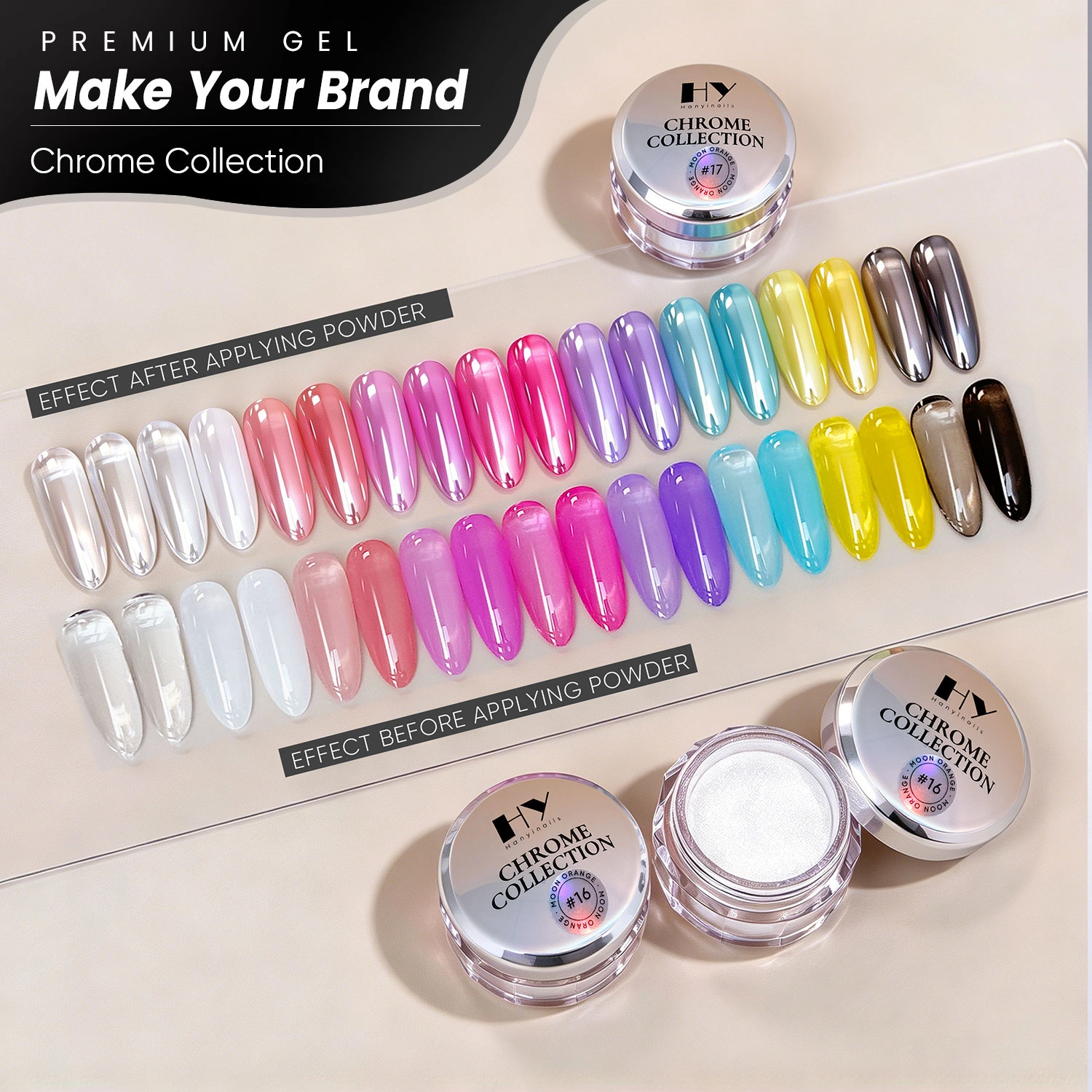
With 12 years of OEM customization experience, our team can support buyers from product concept and sampling through packaging approval and bulk manufacturing. The development pipeline includes approximately 2,000 new colors per year, providing a broad base for magnetic finishes, colored nail polish collections, line gel nail art, and complementary professional systems. Color approval should still be based on physical samples and agreed standards, but a large development program gives brands more room to build differentiated assortments.
One-stop packaging and kit customization
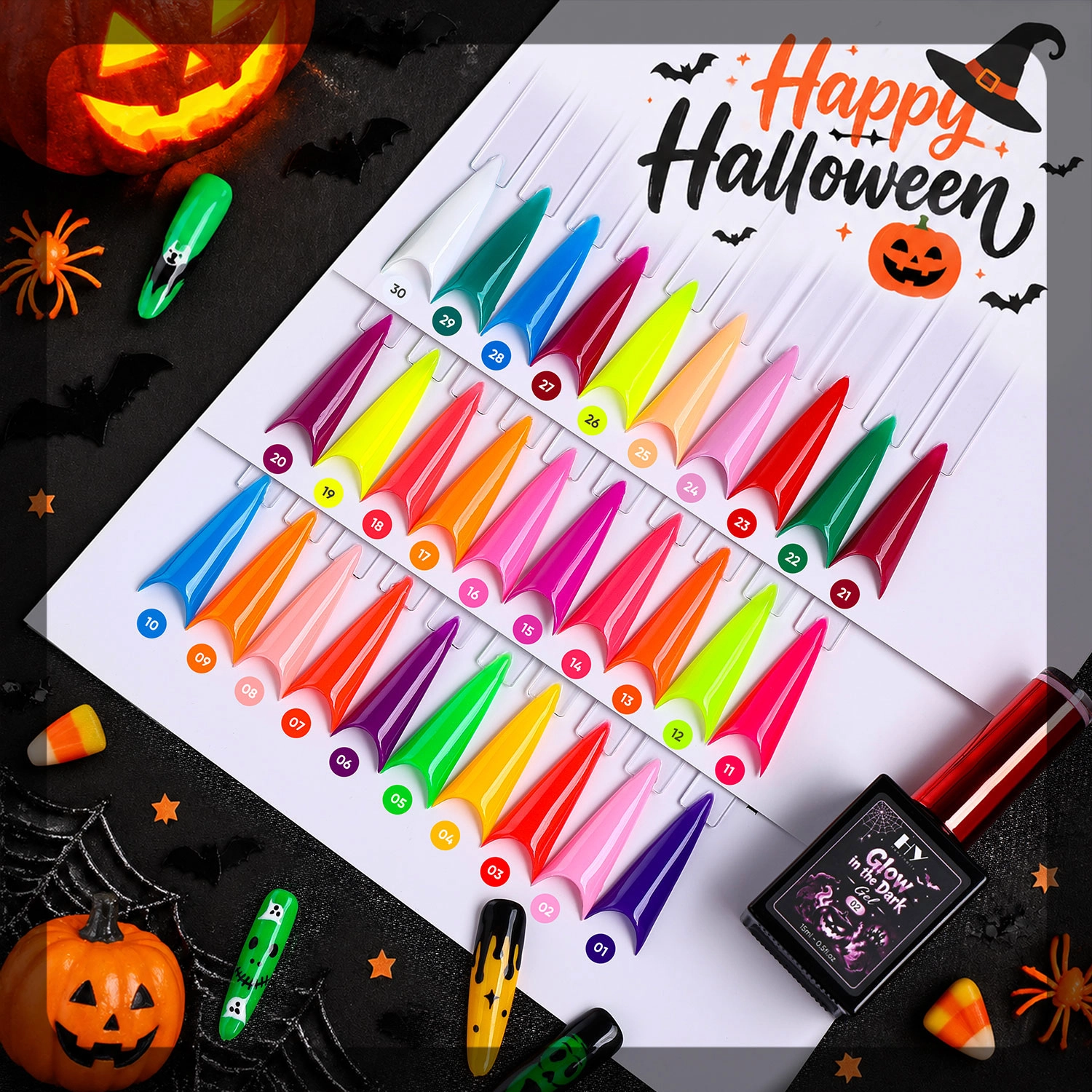
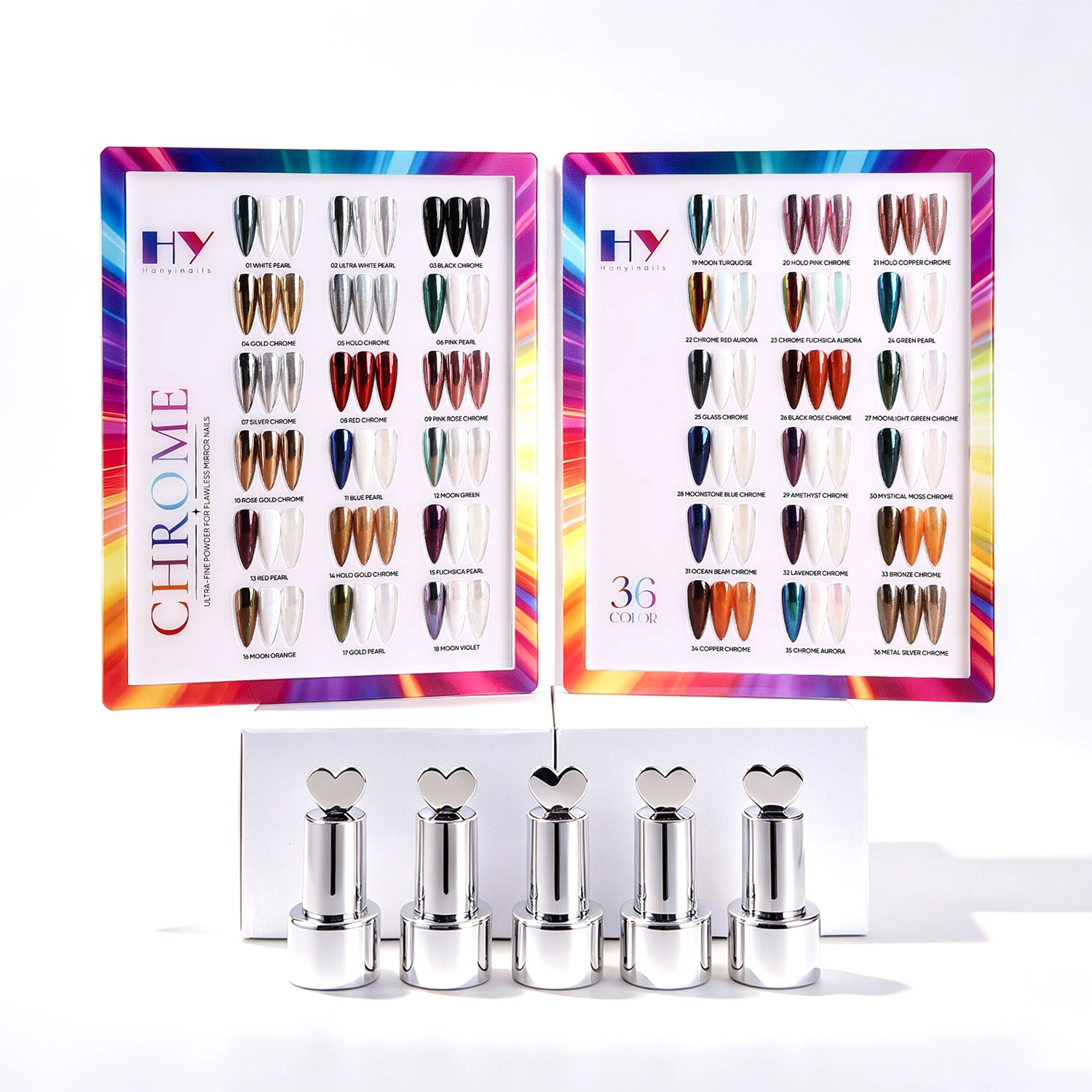
Packaging influences shelf recognition, salon usability, shipping efficiency, and perceived product value. Hanyinails offers more than 50 styles of stock bottles and caps, over 600 styles of customized bottles and caps, more than 100 kit-box styles, and over 200 color-chart designs. These options help project owners select a practical route: stock components for a faster launch, or customized components for stronger brand ownership.
Our one-stop customization approach can combine magnetic gel colors with 3D nail art gel, gel builder nail polish, nail hard gel, Poly Acrygel, gel x nail glue, Gelly nail tips, nail care oil, and other professional nail products. This integrated approach can simplify artwork coordination, packaging procurement, quality communication, and shipment planning across a complete manicure or extension range.
International orientation and buyer communication
Hanyinails participates in exhibitions in more than 10 countries every year, giving our team regular exposure to distributor requirements, salon workflows, packaging preferences, and evolving nail-art trends across markets. International visibility does not replace due diligence, but it supports clearer communication about product positioning, documentation, sampling, and commercialization.
For buyers comparing a catalog intermediary with a production partner, the practical question is whether the relationship can support the next stage of growth. If the project only needs a small quantity of standard products, a qualified supplier may be efficient. If the plan requires exclusive shades, repeatable magnetic effects, coordinated nail gel categories, custom packaging, and reliable scale-up, a direct manufacturer such as Hanyinails may deliver stronger control and total lifecycle value. Our vision is to become the world's leading manufacturer of nail products by helping customers build dependable, distinctive, and commercially viable collections.
Contact Hanyinails at sales@hanyinails.com or visit https://www.hanyinails.com to discuss magnetic gel development, OEM packaging, and a complete professional nail product program.




Hanyinails
Hanyinails
Hanyinails
Hanyinails