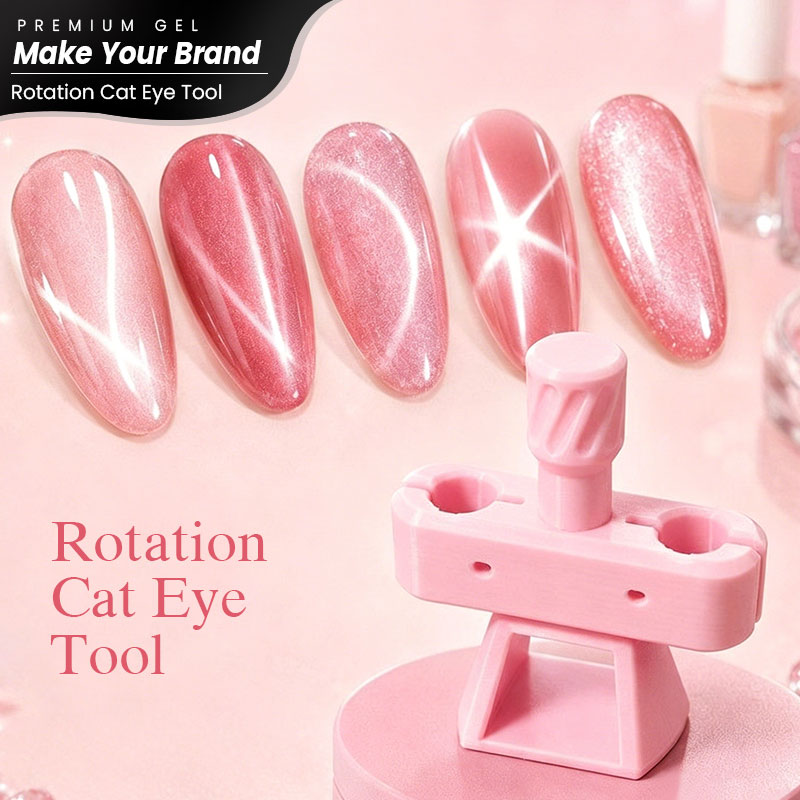
An adjustable rotating cat-eye nail magnet gives nail technicians a practical way to direct magnetic particles in cat-eye gel polish and produce more controlled designs. Its adjustable, rotating format can help users change the magnet’s position and angle without relying on a single fixed approach. For salons, distributors, and private-label buyers, the key value is workflow flexibility: the tool supports creative variation while helping make magnetic nail art easier to repeat across clients and product demonstrations.
How Can a Rotating Magnetic Tool Improve Cat-Eye Nail Art?
How does the magnet shape the reflective effect?
Magnetic cat-eye gel contains particles that respond to a nearby magnet, allowing the nail artist to move or concentrate the reflective effect before curing. The resulting look depends on the polish formula, the magnet’s position, the distance from the nail, and the time spent manipulating the particles. A rotating and adjustable tool offers more ways to approach the surface than a single fixed-angle magnet, which can be useful when creating narrow highlights, diagonal streaks, or varied patterns.
For reliable results, treat the magnet as a shaping tool rather than a guaranteed pattern maker. Apply compatible magnetic gel evenly, work on one nail at a time, and observe how the particles respond before curing. Small changes in angle or distance can alter the line and intensity, so a measured technique is more useful than moving the magnet randomly. This process helps artists control the visual result and avoid curing a design that still needs adjustment.
Why can adjustable positioning help with salon workflow?
A fixed magnet may be sufficient for a familiar effect, but it can limit the range of positions available when the design or nail shape changes. An adjustable rotating format makes it easier to explore different orientations and to position the magnetic field relative to the nail. That flexibility can help a technician move between a simple centered cat-eye and more directional effects without switching among several tools.
In a busy salon, repeatability matters as much as creativity. Establishing a preferred working angle and consistent distance gives technicians a process they can reproduce, while keeping the tool adjustable for individual designs. For training or product demonstrations, the ability to alter the position visibly can also make it easier to show how the magnetic effect changes. The tool does not eliminate practice, but it can give the user a more adaptable way to test and refine a design.
What Should Buyers Check Before Choosing a Cat-Eye Nail Magnet?
How do compatibility and handling affect the result?
Compatibility starts with the gel polish, not just the magnet. Confirm that the polish is specifically formulated to create a magnetic effect and follow its application and curing instructions. A magnet cannot produce a cat-eye pattern from ordinary gel that lacks responsive particles. Buyers sourcing for a salon or resale program should test the magnet with the actual polish range they plan to use, since particle behavior and visual intensity may differ between formulas.
Handling also influences the finished look. Keep the tool stable while the particles settle, and avoid contacting uncured gel with the magnet or its support. Test the position and distance on a sample tip before using a new design on a client. For professional environments, assess whether the rotating mechanism is comfortable to manipulate and whether the tool can be stored and cleaned in a way that fits the salon’s normal operating procedures. Confirm dimensions, materials, packaging, and available customization directly with the supplier rather than assuming specifications.
What supplier information supports a confident purchase?
For wholesale and private-label purchasing, request clear product specifications, product images, packaging details, minimum order quantity, lead time, and available logo or packaging options. If you are building a product set, ask whether the magnet can be bundled with compatible magnetic gel polish or other nail-art accessories. A sample order can help your team assess ease of use and visual performance before committing to a larger quantity, especially when the tool will be sold under your own brand.
Ask suppliers to distinguish confirmed specifications from customization possibilities and to provide documentation relevant to their product and manufacturing process. Cosmetic products and tools may have different regulatory considerations, so do not assume that a magnet carries the same requirements as gel polish. For broader supplier due diligence, review the ISO 22716 cosmetics good manufacturing practices standard and ask relevant questions about quality systems where cosmetic products are included in the purchase. The FDA guidance on nail care products is also a useful reference for understanding that nail products have specific safety considerations.
How Can Professionals Get Consistent Results and Manage Sourcing?
How can technicians make magnetic designs more repeatable?
Build a simple test routine: prepare a sample tip, apply the magnetic gel according to its instructions, and use the same tool position and timing each time you assess a design. Record the gel brand, number of coats, approximate magnet distance, angle, and curing method. These notes help a team recreate successful looks and identify whether a changed result comes from the gel, application technique, or tool positioning.
Do not rush the design stage. Observe the reflective particles and make small adjustments before curing, then cure the nail using the polish manufacturer’s specified lamp and cycle. If the effect appears weak, check that the product is a magnetic formula, that the layer is applied as instructed, and that the magnet is being used at an effective distance. Consistent preparation and controlled testing are more dependable than assuming that one magnet position will suit every polish or nail design.
Why should distributors evaluate compliance and after-sales support?
Distributors need more than an attractive sample: they need dependable product communication, predictable replenishment, and clear answers about customization and packaging. Confirm order quantities, production timing, shipment terms, and the process for handling quality concerns before placing a bulk order. If the magnet is bundled with gels or other cosmetics, review the documentation for each product category separately and make sure descriptions do not overstate performance or regulatory status.
Regulatory expectations vary by market and product type. For example, the European Commission overview of cosmetics legislation provides a reference for cosmetic products sold in the EU, but it should not be treated as a certification for a nail magnet. Buyers should check applicable local requirements, request the documentation relevant to their goods, and confirm the supplier’s ability to support their intended sales region. Clear communication at the sourcing stage reduces avoidable delays and helps protect brand trust.





Hanyinails
Hanyinails
Hanyinails
Hanyinails