Cat eye gel polish samples should be evaluated as a complete commercial system rather than as attractive color swatches. B2B buyers need to verify magnetic effect strength, particle alignment, shade consistency, viscosity, curing response, adhesion, wear resistance, ingredient documentation, packaging compatibility, production repeatability, and landed cost before approving a supplier. A dependable sample review process reduces salon complaints, protects retail reputation, and confirms whether a supplier can scale from laboratory quantities to repeat bulk orders. The same framework applies to magnetic gel polish, velvet-effect nail coatings, reflective nail gel, and other specialty Nail Gel products designed for professional salons, distributors, private-label brands, and beauty retailers.
How to Assess Magnetic Nail Gel Samples for Commercial Use
Magnetic effect, pigment movement, and visual depth
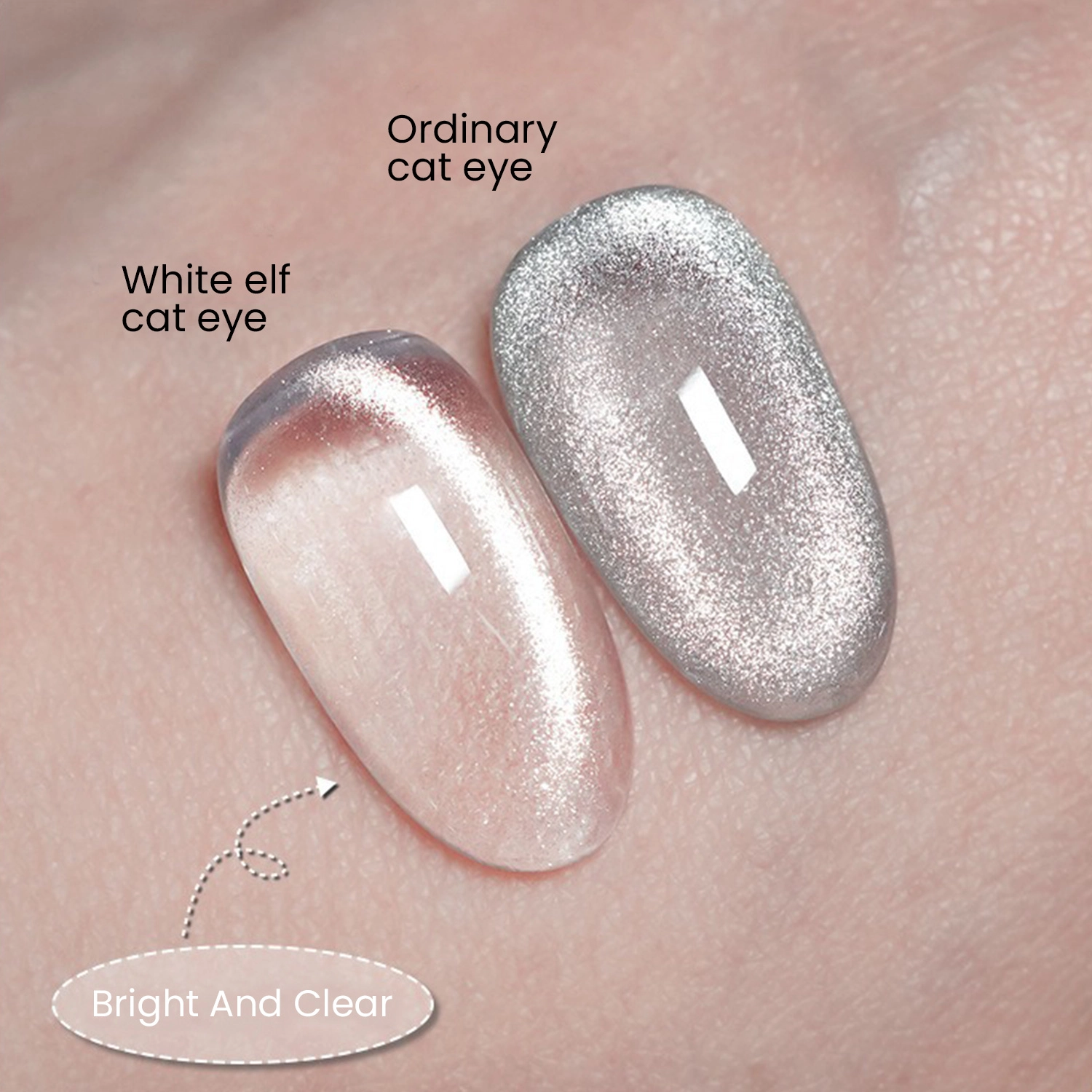
The defining feature of a cat eye coating is the interaction between magnetic particles and a suitable magnet. A sample should produce a visible, concentrated line or dimensional halo within a practical working time. Test the product with the magnet supplied by the manufacturer and with the magnet intended for retail sale. Record the distance between magnet and nail, exposure time, angle, and number of passes. A strong sample should respond predictably without requiring excessive manipulation that slows salon service.
Evaluation should continue under multiple bases, including black, white, nude, and transparent gel. Some magnetic formulas appear impressive only over a dark foundation, while others maintain useful depth over several base colors. Check whether the particles settle rapidly, form uneven patches, or create a muddy appearance after the magnet is removed. A commercial formula should preserve the intended cat-eye stripe after curing and should not lose excessive contrast under top coat.
Color accuracy and batch-to-batch control
Color approval must be based on cured samples, not only on the bottle or digital artwork. Prepare at least three swatches from the same sample and compare them under daylight-balanced lighting, salon lighting, and retail display lighting. Inspect the base shade, reflective stripe, shimmer density, and transparency. For private-label collections, record a master standard using photographs, physical swatches, batch information, and acceptable visual tolerances.
Color consistency is especially important when a distributor sells a collection across several markets. A small variation in magnetic pigment concentration can change the apparent hue, stripe width, and depth. Buyers should ask how the supplier controls pigment dispersion, raw-material lot changes, filling conditions, and retained samples. A reliable approval process distinguishes an intentional color variation from a manufacturing deviation.
Viscosity, leveling, and salon handling
Professional operators need sufficient working time to position the magnetic effect without flooding the cuticle or shrinking away from the sidewalls. Apply one coat at the recommended thickness and observe leveling, brush drag, pooling, stringing, and self-leveling behavior. Then apply a second coat because some formulas show acceptable handling on the first layer but become too thick or uneven after additional product is added.
Samples should also be tested after storage at normal room temperature and following controlled temperature exposure. Changes in viscosity, separation, sedimentation, or brush loading can indicate packaging or formulation instability. Buyers should request the supplier’s recommended storage conditions and shelf-life basis rather than assuming that every magnetic gel behaves like ordinary colored nail polish.
Technical and Compliance Checks Before Sample Approval
Curing performance and compatibility with salon equipment
Test the sample in the lamp categories used by the target market, such as LED and UV/LED systems, while following the manufacturer’s stated curing time. Observe surface tack, wrinkling, bubbling, under-curing, heat spike, and color change. A formula that cures in one high-powered lamp may remain under-cured in another, creating service failures and increasing the risk of product lifting.
Record lamp brand, rated wattage, wavelength information where available, curing duration, coat thickness, and application method. The rated wattage alone does not fully describe curing performance, so buyers should avoid approving a product from a single lamp test. If the product is intended for professional use, the technical data sheet should provide clear application instructions, recommended lamp conditions, base and top coat compatibility, and removal guidance.
Adhesion, wear, removal, and safety observations
A practical wear test should examine adhesion at the free edge, cuticle area, sidewalls, and stress points. Apply the sample over the intended base system and assess lifting, chipping, cracking, dulling, shrinkage, and staining over a defined observation period. Where possible, compare results with a benchmark product sold in the same market segment. The objective is not to claim a universal wear duration from a small sample, but to identify performance differences under controlled conditions.
Removal behavior deserves equal attention. A formula that performs well but requires excessive filing or prolonged soaking may reduce salon efficiency and damage the natural nail if handled improperly. Evaluate soak-off time, filing resistance, residue, odor, and the condition of the underlying base. Product safety documentation should be reviewed alongside the sample. For manufacturing quality guidance, buyers can consult the ISO 22716 cosmetics good manufacturing practices standard. For market-specific regulatory requirements, the FDA cosmetics laws and regulations and the European Union Cosmetics Regulation are useful primary references.
Documentation, labeling, and restricted-substance controls
A B2B sample package should include an ingredient list or INCI information, safety data documentation where applicable, technical data, batch or sample identification, shelf-life information, storage guidance, curing instructions, and country-of-origin details. Buyers should confirm whether the documentation applies to the exact formula and color rather than to a generic product family.
Label review should cover product identity, net contents, responsible party information where required, usage instructions, warnings, batch coding, and language requirements for the destination market. A supplier that cannot explain how formula changes are communicated creates avoidable compliance and inventory risk. Claims such as hypoallergenic, non-toxic, nine-free, or long-wear should be supported by appropriate evidence and should not be accepted solely as marketing language.
| Evaluation area | Sample test | Commercial acceptance indicator | Buyer record |
|---|
| Magnetic response | Use the intended magnet at fixed distance and timing | Clear, repeatable stripe or dimensional effect | Magnet type, distance, exposure time, photos |
| Color consistency | Prepare multiple cured swatches under controlled lighting | Minimal visible variation against the approved master | Swatch code, lighting, batch number |
| Curing | Test in the target LED and UV/LED lamps | Fully cured surface without wrinkles or persistent defects | Lamp details, coat thickness, cure time |
| Adhesion and wear | Apply over the proposed base and inspect stress areas | No premature lifting, cracking, or unacceptable dulling | Application date and inspection intervals |
| Removal | Follow the supplier’s soak or filing procedure | Predictable removal with manageable salon labor | Removal time, method, residue observations |
| Documentation | Match technical and compliance documents to the formula | Complete, current, destination-market documentation | Document revision and responsible contact |
Supplier Capability, Packaging, and Total Cost Evaluation
From approved sample to repeatable production
Sample quality has limited value if the supplier cannot reproduce it at scale. Ask how the approved reference is retained, how magnetic pigment is dispersed, how filling weight is controlled, and how each batch is released. The supplier should be able to explain in-process checks, finished-product inspection, defect handling, and retained-sample procedures. Buyers should also define acceptable tolerances for fill volume, brush alignment, cap torque, bottle leakage, shade variation, and label placement.
Lead time should be separated into formula development, sample preparation, artwork approval, packaging procurement, bulk production, inspection, and shipment. This breakdown helps project owners identify the true critical path. Minimum order quantity, color count, packaging customization, test charges, tooling, payment terms, and replacement policy should be documented before a purchase order is issued.
Bottle, brush, cap, and kit compatibility
Packaging is part of product performance. Test whether the brush delivers an even layer, whether the cap closes consistently, and whether the bottle protects the formula from avoidable light exposure. Check leakage after transport simulation or controlled inversion, inspect the wiper for excess product, and confirm that the filled package works with the intended application technique.
Retail brands should review the complete shelf presentation, including color labels, barcode placement, carton dimensions, kit configuration, and color-chart accuracy. A visually distinctive package can support High Quality positioning, but it should not compromise filling efficiency, recyclability requirements, carton strength, or shipping cost. For professional channels, kit formats may combine magnetic gel, magnets, base gel, top coat, and application instructions to improve service consistency.
Total landed cost and return on investment
The lowest unit price does not necessarily produce the best commercial result. Total cost should include sample development, testing, packaging, labels, quality inspection, freight, duties, breakage, rework, inventory carrying cost, and potential customer returns. A more stable formula can reduce salon complaints and distributor markdowns even when its purchase price is moderately higher.
Use a weighted scorecard rather than approving a sample based on appearance alone. For example, a buyer may assign separate scores to magnetic effect, curing, adhesion, color accuracy, documentation, packaging, lead time, and commercial terms. Any category considered safety-critical or compliance-critical should function as a pass-or-fail gate. This approach makes supplier comparisons more transparent for procurement teams, investors, and brand managers.
Why Hanyinails Supports Scalable Magnetic Gel Programs
Manufacturing depth for professional Nail Gel portfolios
Hanyinails is a professional nail products manufacturer committed to supplying a broad range of professional nail gel items. Our manufacturing platform includes 10 production lines, 60 production machines, 8 QA/QC inspectors, an 8000㎡ workshop, and the capacity to develop approximately 2000 new colors per year. These resources support structured sampling, color development, production scheduling, and quality management for brands that need more than a one-time sample shipment.
Our portfolio can be coordinated around magnetic gel collections and complementary systems, including 3D nail art gel, gel builder nail polish, colored nail polish, nail care oil, gel x nail glue, Gelly nail tips, nail hard gel, Poly Acrygel, and line gel nail art products. This broader assortment helps distributors and private-label operators build coherent professional ranges instead of sourcing every item from a separate supplier.
OEM customization and brand-specific presentation
With 12 years of OEM customization experience, Hanyinails supports projects that require formula selection, color development, packaging coordination, labeling, kit assembly, and product-line expansion. Our one-stop customization service includes more than 50 styles of stock bottles and caps, over 600 styles of customized bottles and caps, over 100 kit-box styles, and more than 200 color-chart designs.
This packaging depth gives brand owners flexibility to align magnetic gel products with salon, retail, distributor, or e-commerce positioning. A project team can compare bottle formats, cap finishes, brush options, carton structures, and color presentation before finalizing the commercial sample. The same evaluation checklist should remain active throughout approval so that the mass-production product matches the approved visual, technical, and packaging standard.
Quality communication and international project support
Hanyinails takes part in exhibitions in more than 10 countries every year, giving our team regular contact with international distributors, salon operators, and professional beauty brands. This market exposure supports clearer communication around regional packaging expectations, product assortment, and application preferences. It also helps buyers discuss practical issues such as sample approval, documentation, lead time, and repeat-order planning with a supplier familiar with export-oriented projects.
For procurement teams, the recommended next step is to provide the target market, required color references, magnet format, bottle preference, expected order quantity, compliance destination, and desired launch timeline. Hanyinails can then help structure a sample brief that connects product performance with packaging and production requirements. Our vision is to become the world’s leading manufacturer of nail products, supported by a process designed for dependable customization and long-term brand growth.
Contact Hanyinails at sales@hanyinails.com or visit Hanyinails to discuss cat eye gel samples, OEM customization, and a scalable professional Nail Gel product program.










Hanyinails
Hanyinails
Hanyinails
Hanyinails