Brand owners choosing between a cat eye gel polish manufacturer and a supplier are not simply selecting a source for magnetic nail color. The decision affects visual performance, salon application results, regulatory readiness, packaging differentiation, inventory continuity, and gross margin. A manufacturer generally controls formulation development and production, whereas a supplier may purchase finished products from several factories and coordinate orders as an intermediary. For a growing beauty brand, the most reliable option is the partner that can demonstrate stable magnetic pigment orientation, repeatable curing, documented quality controls, transparent lead times, and a practical path from sample approval to commercial replenishment.
How to Distinguish a Factory Partner from a Trading Supplier
Manufacturing control and formulation ownership
A direct factory partner normally manages raw-material selection, mixing, filling, curing checks, labeling coordination, and batch release within its own operating system. This matters for magnetic gel because the final visual effect depends on more than pigment color. Particle distribution, viscosity, settling behavior, magnetic responsiveness, application thickness, curing compatibility, and storage conditions all influence the stripe, velvet, galaxy, or dimensional finish seen by the customer.
A trading supplier can still be commercially useful, particularly when a buyer needs many unrelated beauty products or a small trial order. However, the supplier may not control the original formula, may need to request technical answers from another factory, and may have limited authority to correct shade drift or modify viscosity. Brand owners should ask who owns the formulation, who performs batch testing, where filling takes place, and whether the same production site will be used for future orders.
Catalog breadth versus private-label development
Suppliers often present large catalogs because they aggregate products from multiple producers. This can accelerate initial sampling, but catalog breadth does not automatically indicate technical depth. A private-label brand usually requires more than a ready-made shade: it may need a custom magnetic effect, a particular opacity level, a low-odor system, a defined brush, a special bottle, a tamper-evident seal, or a coordinated collection with matching builder products and nail art gels.
Manufacturers are generally better positioned to manage these variables through controlled product development. Buyers should request a written sample brief covering target shade, effect, curing lamp compatibility, recommended coat thickness, expected shelf life, packaging components, artwork requirements, and acceptance criteria. This converts subjective approval into a reproducible specification.
Evidence of operational capability
Factory claims should be tested against verifiable evidence. A credible partner can explain production capacity, quality personnel, batch coding, raw-material traceability, filling accuracy, retained samples, complaint handling, and corrective action procedures. A useful reference point is ISO 22716 cosmetics good manufacturing practices, which addresses the organization and controls expected in cosmetic production. Certification alone does not guarantee a perfect product, but documented procedures and consistent records reduce procurement risk.
Buyers should also distinguish between a manufacturing certificate, a product test report, and a business registration document. These documents answer different questions. The first concerns operating systems, the second concerns a specific product or batch, and the third concerns legal identity. Requesting all three categories helps prevent a brand from relying on vague claims such as factory direct or laboratory tested.
Procurement Criteria for Magnetic Gel Color Collections
Visual effect, application behavior, and curing performance
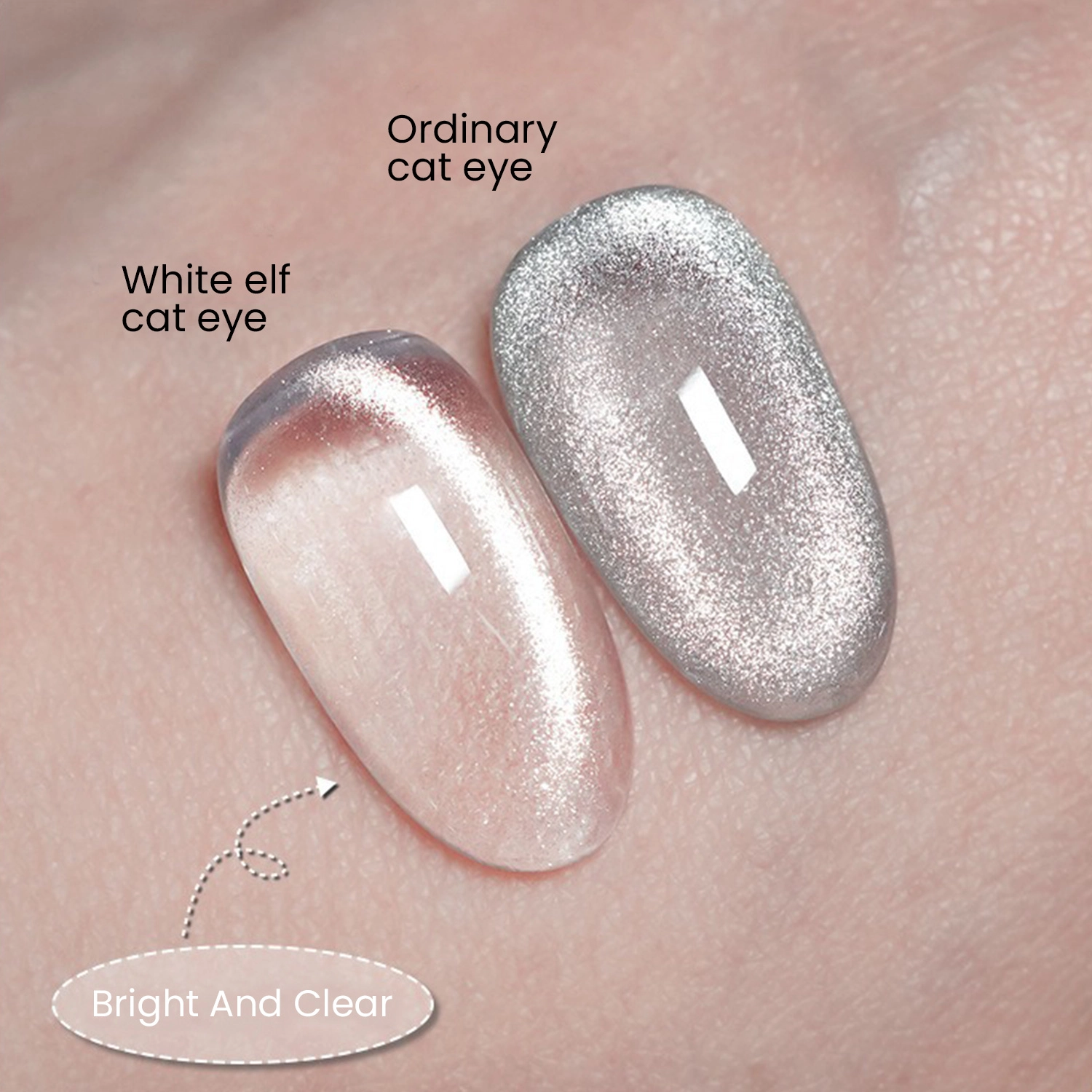
The defining value of magnetic gel color is its ability to create a controlled reflective effect when a magnet is positioned above the uncured layer. A professional buyer should evaluate the product on a nail tip and on a natural-nail simulation, using the brand’s intended lamp, base coat, top coat, and application method. Testing should cover one-coat and two-coat opacity, line sharpness, flash curing, full curing, pigment movement, surface smoothness, and resistance to dragging during top-coat application.
Application instructions should specify whether the bottle requires rolling or shaking, how long the magnet should be held over the wet layer, whether the effect must be created before curing, and whether a no-wipe or wipe top coat is recommended. These details support salon education and reduce negative reviews caused by inconsistent technique. The formula should also be checked for settling after accelerated storage and for changes in viscosity across normal shipping temperatures.
Safety documentation and market readiness
Cosmetic requirements differ by destination. In the United States, the FDA cosmetics laws and regulations explain the general regulatory framework for cosmetic products, while European-market products must be assessed against applicable requirements such as Regulation (EC) No 1223/2009 on cosmetic products. Brand owners should not assume that a document prepared for one market is sufficient for another.
A responsible procurement file may include the ingredient list using accepted nomenclature, safety data sheets where applicable, allergen or restricted-substance declarations, heavy-metal or microbiological testing when relevant, packaging compatibility information, product specifications, stability evidence, and manufacturing records. The buyer remains responsible for confirming local obligations, claims, labeling, responsible-person requirements, notification systems, and language rules before launch.
Commercial terms, lead times, and total landed cost
The lowest unit price is rarely the complete cost. Total landed cost can include sampling, custom color development, artwork, molds, bottle and cap tooling, labels, regulatory review, freight, import duties, inspection, defective units, and slow-moving inventory. A supplier may appear less expensive for a small initial order, while a manufacturer may create better economics once the collection reaches repeat production.
Request a quotation that separates product cost from packaging, decoration, testing, tooling, and logistics. The commercial comparison should also show minimum order quantity by shade, minimum order quantity by packaging component, sample lead time, bulk production lead time, payment terms, replacement policy, and the process for approving a color deviation. These details reveal whether the partner is prepared for a real brand program rather than a one-time transaction.
| Evaluation area | Direct manufacturer | Trading supplier | Buyer implication |
|---|
| Formula modification | Usually coordinated with in-house or assigned technical staff | Often dependent on an external factory | Confirm who approves technical changes |
| Packaging customization | Can often coordinate components, decoration, and filling specifications | May offer selected catalog options | Check tooling ownership and component continuity |
| Batch traceability | Typically available from production records | Must be obtained from the producing factory | Require batch numbers and retained-sample procedures |
| Small trial order | May have higher minimums for custom production | May provide stock products more easily | Balance launch speed against long-term consistency |
| Replenishment control | Can plan production capacity directly | May face availability changes among source factories | Secure written lead-time and substitution rules |
| Technical accountability | Usually closer to formulation and process data | May require several communication steps | Use a defined escalation contact and response time |
How Hanyinails Supports Scalable Nail Gel Brands
Integrated production and quality management
Hanyinails is a professional nail products manufacturer committed to supplying a broad range of professional nail gel items. Our operation includes 10 production lines, 60 production machines, 8 QA/QC inspectors, and an 8,000-square-meter workshop. This structure gives brand owners a clearer route from color development to filling, inspection, packaging, and repeat production than a purely transactional sourcing model.
Our team develops approximately 2,000 new colors per year, supporting seasonal launches, salon collections, distributor exclusives, and trend-led capsule ranges. For magnetic collections, the commercial objective is not only a striking sample. The product must also be manufacturable at scale, identifiable by shade code, supported by application guidance, and repeatable when the brand returns for replenishment.
One-stop OEM and packaging customization
Brand identity is built through the complete presentation, including bottle silhouette, cap ergonomics, brush selection, label placement, color visibility, kit architecture, and shelf presentation. Hanyinails offers more than 50 styles of stock bottles and caps, over 600 styles of customized bottles and caps, more than 100 kit-box styles, and over 200 color-chart design styles. These options allow project owners to compare a fast stock route with a more differentiated private-label route.
Our 12 years of OEM customization experience supports practical coordination between formula, package, artwork, and production scheduling. Buyers can define a collection architecture instead of ordering isolated shades. For example, a launch may combine reflective magnetic colors with 3D nail art gel, gel builder nail polish, colored nail polish, and nail care oil. A salon-focused assortment may add gel x nail glue, Gelly nail tips, nail hard gel, Poly Acrygel, and line gel nail art products to increase average order value and create a complete service system.
International communication and product portfolio depth
Hanyinails takes part in exhibitions in more than 10 countries every year, giving our team direct exposure to distributor expectations, salon workflows, packaging preferences, and regional product trends. This international contact supports clearer project communication, although each brand owner should still complete market-specific legal and safety reviews.
Our broader portfolio is valuable when a buyer wants one coordinated supplier for color, structure, enhancement, and aftercare categories. A collection can be organized around a visual theme while maintaining compatible merchandising across magnetic gel colors, builder systems, nail extension products, decorative gels, and cuticle care. Consolidating compatible categories may reduce supplier-management effort, simplify artwork control, and improve launch consistency.
Decision Framework for Selecting the Right Production Partner
Questions to ask before sample approval
Before approving samples, buyers should ask for the product specification, ingredient documentation, recommended curing conditions, storage guidance, sample batch code, packaging options, and a clear explanation of the magnetic effect. The evaluation should be documented with photographs taken under consistent lighting and with the same magnet, base, top coat, lamp, and application thickness. A retained approved sample can then serve as the visual reference for bulk production.
Procurement teams should also ask how the factory handles shade changes, pigment shortages, raw-material substitutions, defective filling, broken components, label errors, and late deliveries. The strongest answers describe a controlled change-notification process rather than an informal promise to solve problems later.
When a supplier may be the better choice
A trading supplier can be appropriate when a retailer needs immediate access to ready-made stock, wants to test demand with limited quantities, or requires products from several unrelated factories under one purchase order. The model can reduce early coordination work. Nevertheless, the buyer should identify the actual producer for every product, especially when claims, documentation, formula changes, and quality complaints could affect the brand.
When a manufacturer creates greater long-term value
A manufacturer is usually the stronger choice when the project involves custom formulation, differentiated packaging, multiple coordinated categories, recurring replenishment, distributor growth, or strict batch consistency. Direct production access can improve technical communication and shorten the path for corrective action. It can also help the brand build proprietary specifications that are harder for competitors to copy.
The final decision should be based on a weighted scorecard covering formula performance, compliance documentation, quality systems, customization, capacity, minimum order quantities, lead time, communication, landed cost, and continuity risk. A supplier that performs well across these dimensions is more valuable than one that wins on unit price alone.
To discuss custom magnetic gel collections and coordinated nail product manufacturing, contact Hanyinails at sales@hanyinails.com or visit Hanyinails.









Hanyinails
Hanyinails
Hanyinails
Hanyinails