



Case Study: Successful Cat Eye Gel Brand Launches
Case studies of successful launches for magnetic-effect nail gels reveal repeatable playbooks: product differentiation through formulated optical pigments, scalable OEM production, salon and distributor engagement, and strict compliance with cosmetic GMP. This article breaks down market positioning, operational KPIs (cure time, wear, MOQ, QC sampling), supply-chain tactics, and measurable ROI benchmarks for gemstone-effect nail systems, then demonstrates how Hanyinails’ manufacturing scale and customization services accelerate private-label rollouts in global markets.
- Market dynamics and positioning for magnetic gemstone nail systems
- Buyer segmentation and channel selection
- Technical attributes that influence purchasing decisions
- Regulatory compliance and quality frameworks
- Go-to-market playbooks: production, supply chain, and launch tactics
- Scalable OEM production and quality control
- Packaging, artwork, and SKU architecture
- Distributor onboarding and salon education
- Operational benchmarks and a factual comparison of product classes
- Comparative performance for decision-making
- Data-driven KPIs for launch success
- Case study patterns: repeatable tactics from high-performing gemstone-effect brands
- Product development timelines and color systems
- Marketing, retail placement, and adoption metrics
- Common failure modes and mitigation strategies
- Why Hanyinails accelerates private-label gemstone-effect rollouts
- Manufacturing scale and customization capabilities
- R&D, color capacity, and QA infrastructure
- End-to-end OEM services and trade support
- How procurement teams validate Hanyinails' credentials
- Execution checklist for buyers launching a magnetic-effect nail collection
- Pre-launch procurement milestones
- Post-launch monitoring
- Frequently Asked Questions
Case studies of successful launches for magnetic-effect nail gels reveal repeatable playbooks: product differentiation through formulated optical pigments, scalable OEM production, salon and distributor engagement, and strict compliance with cosmetic GMP. This article breaks down market positioning, operational KPIs (cure time, wear, MOQ, QC sampling), supply-chain tactics, and measurable ROI benchmarks for gemstone-effect nail systems, then demonstrates how Hanyinails’ manufacturing scale and customization services accelerate private-label rollouts in global markets.
Market dynamics and positioning for magnetic gemstone nail systems
Buyer segmentation and channel selection
Professional buyers typically group into three cohorts: salon chains and technicians, retail beauty distributors, and private-label cosmetic brands. Each cohort places different emphasis on formulation attributes — salons prioritize fast cure cycles, long wear and refill systems; distributors value SKU rationalization and clear labeling for regulatory resale; brand owners look for color libraries, bespoke finishes, and marketing assets. A successful launch aligns SKU packaging, minimum order quantities, and lead times to the dominant channel’s procurement cadence.
Technical attributes that influence purchasing decisions
Critical product variables that determine adoption are pigment magnetization strength, viscosity for brush or dip application, adhesion promoters, and cure compatibility with LED or UV lamps. Typical industry benchmarks include LED cure windows of 30–60 seconds per coat and salon-acceptable wear of 2–4 weeks for color gels, with builder compounds often delivering 3–6 weeks when used as structure layers. Buyers should request independent lab reports on adhesion, flexural strength, and accelerated wear testing as part of supplier evaluations.
Regulatory compliance and quality frameworks
Regulatory frameworks for topical beauty products vary by market. Buyers require suppliers to demonstrate compliance with cosmetics safety requirements and good manufacturing practices. Useful references include Nail polish - Wikipedia (overview of product classes), the FDA Cosmetics guidance for the U.S. market, and ISO 22716 - Cosmetics GMP for manufacturing best practices. European buyers will also check REACH-related considerations via agencies like ECHA.
Go-to-market playbooks: production, supply chain, and launch tactics
Scalable OEM production and quality control
Manufacturing scalability is often a gating factor for private-label timelines. Procurement teams should verify a supplier’s line capacity, machine counts, QA headcount, and batch traceability processes. Key KPIs include per-shift throughput, mean time to changeover for color runs, stability testing protocols (accelerated and real-time), and a documented non-conforming material process. These controls reduce SKU stockouts and protect brand reputation at launch.
Packaging, artwork, and SKU architecture
Packaging choices materially affect perceived value and logistics. Stock bottle programs reduce T1 lead times for entry SKUs; custom bottle tooling supports High Quality positioning but increases time-to-market. Brands should plan SKU pyramids: 6–12 hero shades (high inventory), 20–40 seasonal shades (moderate inventory), and limited-run finishes (low MOQ). Artwork approvals, barcoding, and multi-language labeling must be synchronized with production windows to avoid launch slips.
Distributor onboarding and salon education
Field adoption depends on training and sample programs. Effective launches include tutorial kits, magnet application guides for optical finishes, and technician incentive structures. Measurement of early success uses sell-through rate, reorder rate within 60 days, and salon satisfaction scores. A two-pronged approach — product demo roadshows for salons plus digital educational assets for e‑commerce partners — typically accelerates adoption.
Operational benchmarks and a factual comparison of product classes
Comparative performance for decision-making
Procurement teams evaluate trade-offs between standard lacquer systems, magnetic optical gels, and structural builder formulations. Decisions should be based on measurable attributes, regulatory status, and production economics rather than marketing claims.
| Attribute | Conventional Nail Lacquer | Magnetic Optical Gel Systems | Builder/Hard Gel Systems |
|---|---|---|---|
| Cure Method | Air-dry solvent-based | UV/LED curing; often dual-curable | UV/LED curing; thicker viscous formulations |
| Typical Cure Time (per coat) | Not applicable | LED: ~30–60s; UV: ~120s | LED: 30–90s depending on layer thickness |
| Typical Wear | 3–7 days | 2–4 weeks (with correct prep) | 3–6+ weeks (structure dependent) |
| Visual Effect | Solid/translucent color | Magnetic shimmer, linear light reflection, depth effect | High gloss, sculptable volume, reinforcement |
| QC Focus | Viscosity, pigment dispersion | Magnetic pigment alignment, magnet response, adhesion | Cohesive strength, flexural modulus, adhesion to natural nail |
| Typical OEM MOQ | Low–medium (100–1,000 units depending on pack) | Medium (300–2,000 units for custom colors due to pigment milling) | Medium–high (structural compounds often require larger batch runs) |
Data-driven KPIs for launch success
Measurable KPIs include first-order fill rate, 30/60 day reorder percentage, return rate per 1,000 units, and time-to-shelve for retail partners. Procurement teams should require pre-launch pilot runs and sample analytics to validate that pigment magnetization and visual consistency meet POS expectations.
Case study patterns: repeatable tactics from high-performing gemstone-effect brands
Product development timelines and color systems
Successful collections follow a phased palette rollout: phase one introduces 6–8 hero neutrals and best-sellers in pearl/multichrome finishes, phase two expands seasonal tones, and phase three launches limited-edition specialty topcoats. Buyers should insist on a color-proof process including ΔE color difference testing and batch-to-batch color tolerance limits to ensure brand consistency across production runs.
Marketing, retail placement, and adoption metrics
Launches that outperform peers couple in-salon trials with influencer-driven tutorials and point-of-sale demos that highlight the magnetization technique. Measured outcomes include conversion uplift on display SKU vs. baseline and average order value lift when offering matching topcoats or builder overlays.
Common failure modes and mitigation strategies
Frequent pitfalls are inconsistent magnetic response due to improper pigment dispersion, packaging that does not protect light-sensitive pigments, and labeling misalignment with local regulation. Mitigation requires pre-launch accelerated stability, robust packaging validation (light and temperature exposure), and legal review of ingredient lists against target-market rules.
Why Hanyinails accelerates private-label gemstone-effect rollouts
Manufacturing scale and customization capabilities
We operate 10 production lines with 60 production machines and an 8,000㎡ workshop capable of high-mix, low-to-high volume manufacturing. Our typical OEM engagement shortens time-to-market because we maintain 50 styles of stock bottles and caps, a bank of over 600 customized container designs, and more than 100 kit box styles. This inventory of tooling options reduces lead times for packaging while supporting differentiated brand expressions.
R&D, color capacity, and QA infrastructure
Our team delivers 2,000 new colors per year and applies rigorous QA/QC: eight dedicated inspectors, documented stability testing, and batch traceability. Buyers benefit from our capability to produce specialized finishes — including magnetic shimmer systems and structural builders — while meeting production tolerances for viscosity, magnet pigment dispersion, and cure performance.
End-to-end OEM services and trade support
With 12 years of OEM customization experience and regular participation in over 10 international exhibitions annually, we provide one-stop customization from formula development through packaging and promotional assets. Our portfolio spans 3D nail art gel, gel builder varnishes, colored finish systems, nail care oils, Gel-X adhesives, Gelly nail tips, nail hard gels, Poly Acrygel systems, and precision line gels for nail art. Buyers can co-design a SKU matrix optimized for salon adoption and retail sell-through.
How procurement teams validate Hanyinails' credentials
Prospective partners should request factory tours, review production capacity worksheets, evaluate QA sampling plans, and receive third-party test reports for adhesion, heavy metals, and VOCs. We assist brand owners with documentation aligned to international norms including good manufacturing practice guidance as outlined in ISO 22716 - Cosmetics GMP and with regulatory inputs mapped to FDA Cosmetics and EU requirements.
Execution checklist for buyers launching a magnetic-effect nail collection
Pre-launch procurement milestones
- Validate pigment supplier qualifications and magnet pigment milling history.- Confirm MOQ and lead times for both color and packaging.- Request accelerated stability and adhesion test reports.- Approve artwork with finalized multilingual labeling.- Plan salon/demo kit and SKU pyramiding for inventory control.
Post-launch monitoring
- Track 30/60 day reorder rates and technician feedback.- Sample returned goods for root-cause analysis when reports exceed thresholds.- Maintain an agreed plan for color replenishment and seasonal rollouts.- Schedule periodic QA audits and formulation reviews to reduce obsolescence risk.
For procurement teams seeking an established manufacturing partner with comprehensive OEM services, detailed packaging options, and an extensive color library, contact Hanyinails via our website Hanyinails or email sales@hanyinails.com.
Frequently Asked Questions
What is the typical cure time for magnetic optical gel systems and how does it affect salon throughput?
LED-cured magnetic formulations typically require about 30–60 seconds per coat under modern LED units, while traditional UV units can take ~120 seconds. Buyers should align cure time requirements with the salon channel’s throughput expectations and specify lamp compatibility during supplier selection.
What minimum order quantities (MOQs) should brands expect for custom magnetic-effect shades?
Custom magnetic-effect finishes often require medium-sized initial runs due to pigment dispersion and milling needs; a common industry range is roughly 300–2,000 units depending on packaging and color complexity. Buyers should confirm MOQ and tooling lead times with the OEM to plan inventory and cash flow.
Which regulatory standards should be checked when sourcing specialty nail gels for international markets?
Suppliers should provide documentation aligned with cosmetic safety and GMP frameworks. Useful references include ISO 22716 for manufacturing practices, FDA cosmetics guidance for U.S. market requirements, and EU chemical notifications via agencies such as ECHA. Requests for third-party test reports on heavy metals and preservative safety are standard practice.
How can a buyer verify pigment magnetization and visual consistency before a full production run?
Request pilot batches and visual delta evaluations using ΔE color difference metrics, magnet response tests with specified magnetic strength tools, and accelerated light/temperature stability tests. A supplier should provide batch-level samples and technical reports demonstrating reproducible magnetization and color stability.
What post-launch KPIs should procurement track to evaluate a magnetic-effect collection’s market performance?
Key metrics include first-order fill rate, 30/60 day reorder percentage, sell-through rate at retail/salon, return rate per 1,000 units, and technician satisfaction scores. These indicators help determine whether to expand the palette, adjust marketing support, or optimize inventory levels.
Tips for buy roll on cuticle oil
Latest Gel Nail Trends from Nail Polish Manufacturers
What are the application scenarios of glam gel remover?
Everything You Need to Know About best at home gel nails
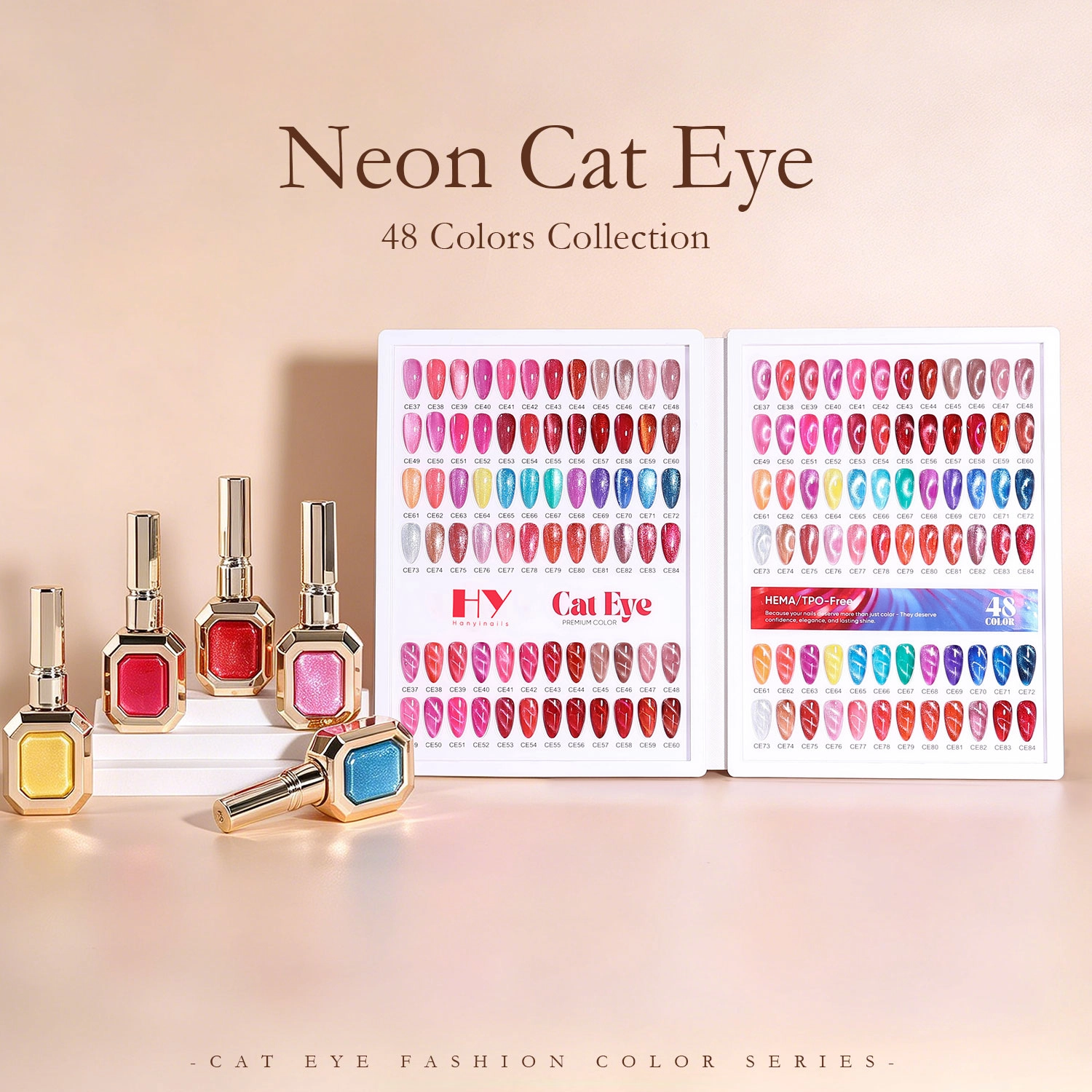
Hanyinails Neon Cat Eye Gel – 48 Colors Bright Magnetic Nail Polish Set with Neon Pink, Green, Blue & Purple – HEMA & TPO Free | 15ml
✨ Key Features:
-
🌈 48 Vibrant Neon Shades – Electric pinks, neon greens, UV blues – complete bold palette.
🧲 Strong Magnetic Cat Eye Effect – Sharp, luminous patterns that shift with light.
✨ UV Reactive Neon Glow – Bright colors that pop – perfect for summer & festivals.
💅 HEMA & TPO Free – Gentle, low-odor – safe for natural nails.
⚡ UV/LED Curable & Long-Lasting – 60 sec LED cure – 28+ day wear.
🎨 48 Colors Complete Set – Full neon spectrum – endless creativity.
🛠️ OEM/ODM Customization – Custom colors, packaging, branding – your signature collection.
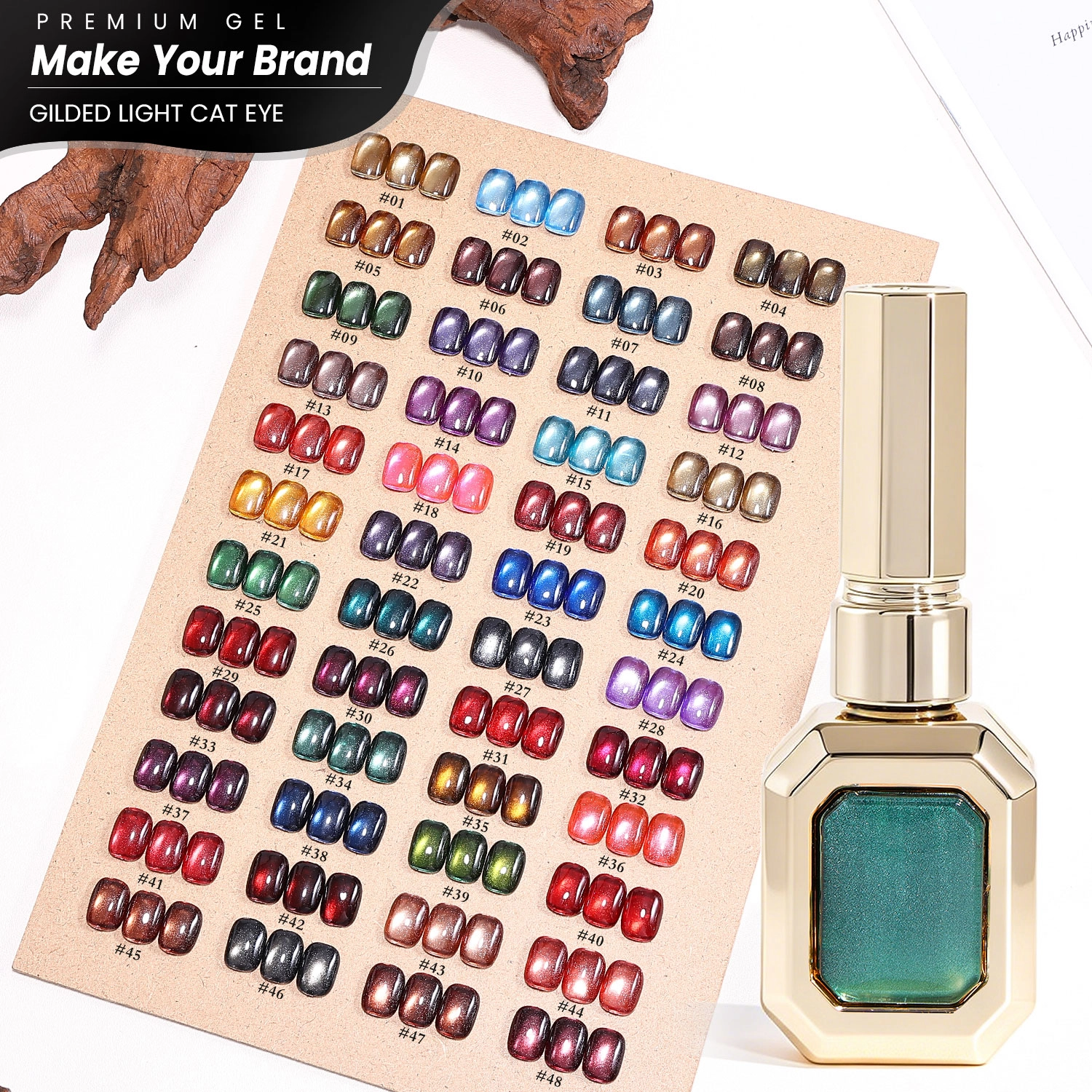
48 Colors Cat Eye Gel Polish Set – 15ml Magnetic Nail Gel Kit – HEMA Free UV/LED Cured Soak Off – High Pigment Shimmer Gel for Salon & Home DIY
✨ Key Features:
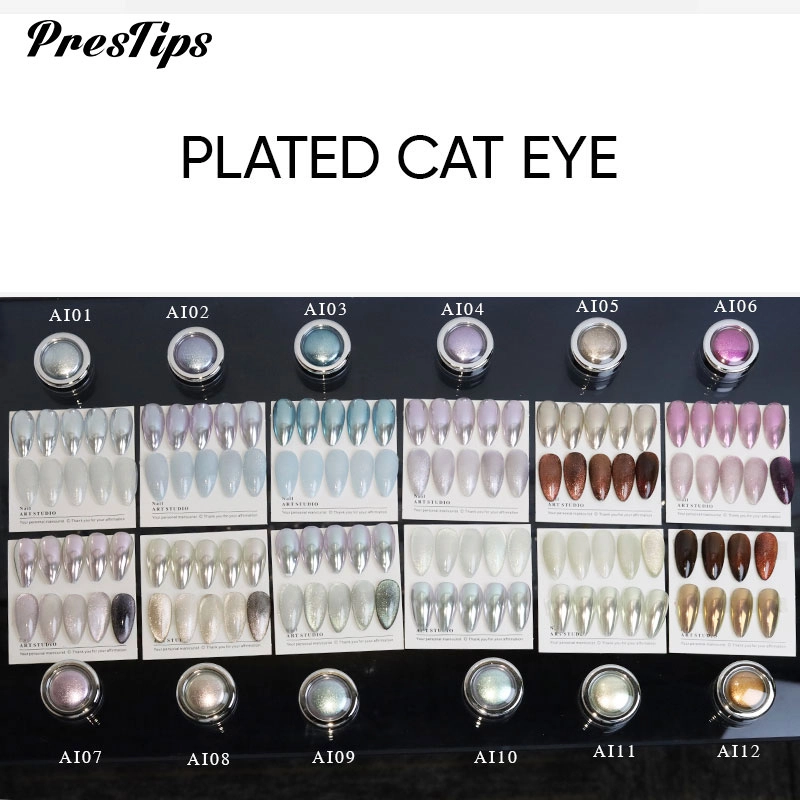
Hanyinails Plated Cat Eye Gel Polish | Long-Lasting with Intense Aurora Shine | Private Label Welcome
✨ Key Features:
🧲 Plated Effect—Creates a stunning magnetic aurora finish with brilliant color shifts.
⚡ Fast Curing—Cures completely under LED/UV lamp in 60 seconds.
🎨 High Pigmentation—Full coverage in just one coat for rich, vibrant color.
💎 High Gloss—Shines intensely without top coat for a mirror-like finish.
🌿 Healthy Formula—Vegan, cruelty-free, and HEMA-free options available.
📦 OEM/ODM Supported—Custom colors, bottles, and packaging available.
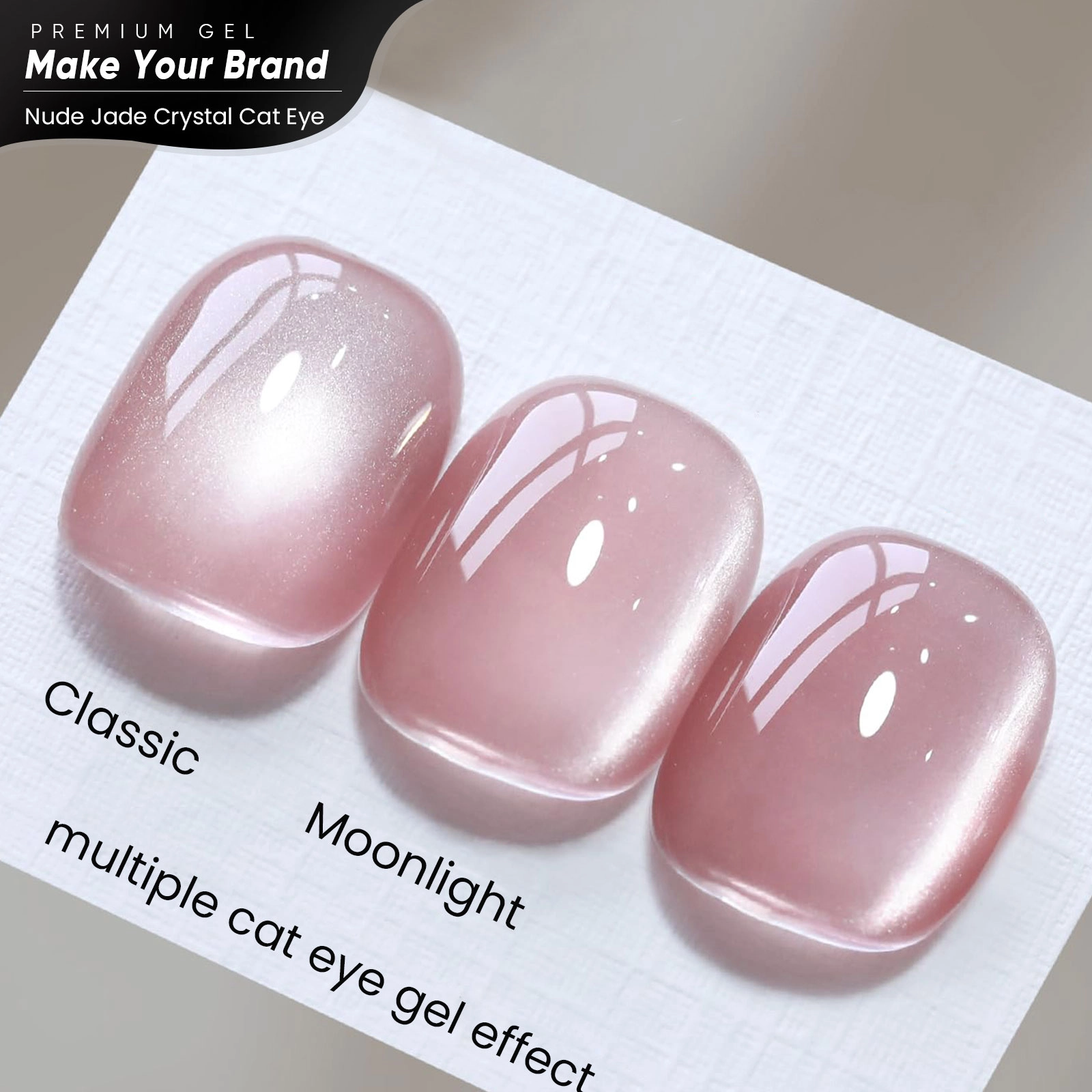
Hanyinails Nude Jade Crystal Cat's Eye Gel – High-Shine Magnetic Polish | Salon-Grade | OEM Available
✨ Key Features:
-
💎 Jade Elegance - Translucent crystal finish
✨ 3D Magnetic - Multi-dimensional shine
🖌️ Pro Formula - Self-leveling application⏳ 21-Day Wear - Chip & yellowing resistant
🌿 HEMA/TPO-Free - Gentle breathable formula
🏭 OEM Ready - Low MOQ customization
Looking for a creative, premium, and reliable nail product manufacturer?
Whether you're an Amazon seller, Shopify store owner, chain store buyer, brand owner, distributor, wholesaler, or nail supply retailer — Hanyinails is your trusted partner for custom and wholesale nail solutions.

Hanyinails
Hanyinails
Hanyinails
Hanyinails