Auditing a cat eye nail art kit factory before ordering is essential for protecting product quality, launch schedules, regulatory compliance, and retail margins. A qualified supplier should be assessed across formulation control, magnetic pigment consistency, curing performance, batch traceability, packaging accuracy, quality assurance, customization capability, production capacity, and export documentation. Buyers should not rely only on product photographs or a low quotation; they should verify samples, factory processes, technical files, inspection records, and the supplier’s ability to reproduce the same visual effect across commercial production batches.
How to Evaluate a Magnetic Nail Gel Manufacturer Before Purchase
Begin with legal identity, facility ownership, and product scope
Start by confirming the supplier’s legal FOSHAN HANYI COSMETICS CO., LTD., registered address, manufacturing location, business license, export experience, and relationship with any trading company involved in the quotation. A factory audit should establish whether the entity receiving the purchase order actually controls formulation, filling, curing tests, labeling, and final inspection. If production is outsourced, the buyer should request disclosure of the subcontracted processes and define responsibility for defects in the supply agreement.
Review the factory’s product scope carefully. A supplier that produces professional nail gel items should be able to explain the differences among magnetic color gel, colored polish, builder gel, hard gel, Poly Acrygel, line gel nail art, gel X nail glue, and nail care oil. Product knowledge is commercially important because each category has different viscosity, adhesion, curing, packaging, and storage requirements. A manufacturer that treats every formula as interchangeable may create avoidable problems for salon users and retail customers.
Quality-system evidence should be evaluated against recognized guidance rather than accepted as a marketing statement. ISO 22716 describes good manufacturing practices for cosmetics and is useful when reviewing personnel hygiene, production controls, storage, documentation, and quality systems. Certification alone does not guarantee a suitable formula, but missing procedures and incomplete records indicate elevated procurement risk.
Inspect formulation control and magnetic performance
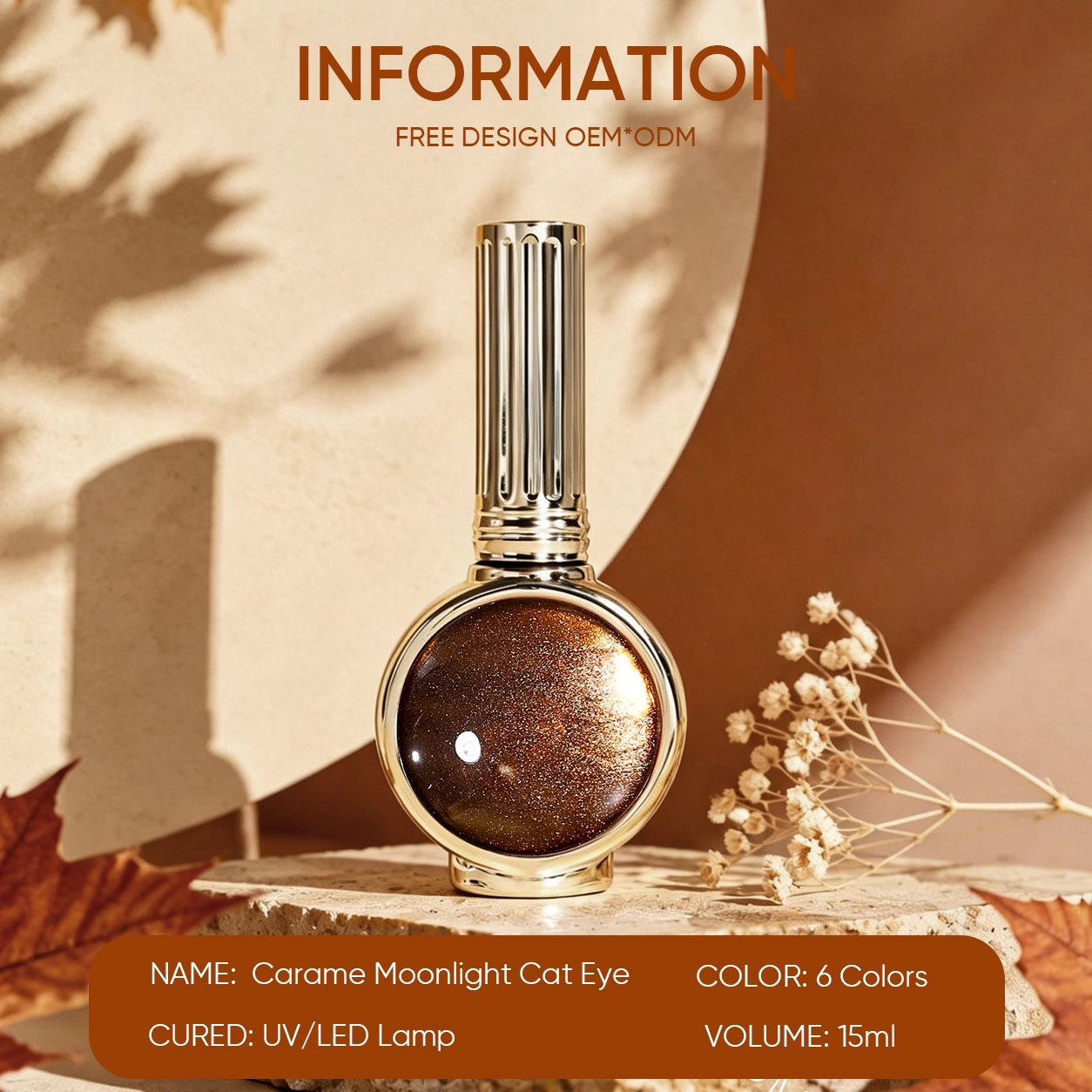
The defining feature of a magnetic manicure product is the controlled movement of reflective particles under a magnet. The factory should explain the pigment system, recommended magnet distance, working time, viscosity range, curing schedule, and expected appearance on different base colors. The effect should remain visible after the product is leveled and cured, rather than disappearing because the particles settle unevenly or the gel is too thin.
Request samples from several shades and ask the supplier to provide a written test protocol. Compare line sharpness, particle density, color depth, leveling behavior, self-leveling time, curing completeness, surface gloss, removal behavior, and resistance to chipping. Test the material over common base coats and on artificial nail tips, because a formula that performs well on a transparent swatch may behave differently over opaque gel, builder systems, or extensions.
Ask whether color development is supported by retained samples and controlled master standards. Each commercial shade should have an approved reference sample, formula identification, batch number, production date, and acceptance range. For private-label collections, the buyer should define acceptable variation in hue, shimmer distribution, opacity, viscosity, and magnetic line position before mass production begins.
Verify safety documentation and market-specific compliance
Cosmetic compliance depends on the destination market, product claims, ingredients, labeling, and responsible party. Ask for the complete INCI ingredient list, safety data where applicable, allergen information, stability or compatibility evidence, recommended shelf life, storage conditions, and test reports relevant to the destination. The U.S. Food and Drug Administration guidance on cosmetic products explains that cosmetics are regulated differently from drugs and that companies remain responsible for product safety and proper labeling.
For European sales, the project owner should review the requirements of Regulation (EC) No 1223/2009 on cosmetic products, including the responsible person, product information file, safety assessment, prohibited and restricted substances, and notification obligations. The factory may not be the responsible person, so the brand owner should clarify which party prepares each compliance document and who maintains updates when regulations change.
Do not accept unsupported claims such as non-toxic, hypoallergenic, chemical-free, or fully safe for everyone. A credible supplier uses precise claims supported by suitable evidence and provides warnings for skin contact, eye contact, curing equipment, ventilation, storage, and professional use. Buyers should also confirm whether the formula contains ingredients restricted in target markets and whether the label includes batch information, net content, usage instructions, curing guidance, and responsible-company details.
Factory Audit Checks That Predict Commercial Reliability
Review production flow, equipment, and capacity evidence
A physical or video audit should follow the material flow from incoming raw materials to finished cartons. Check whether pigments, oligomers, monomers, solvents, bottles, caps, labels, and cartons are identified and segregated. Production areas should be clean, organized, and protected from cross-contamination. Mixing vessels, filling machines, curing equipment, weighing instruments, and environmental controls should be maintained according to documented procedures.
Capacity should be assessed using evidence rather than a stated monthly output. Ask for the number of production lines, filling machines, operators, shifts, quality personnel, and average lead times during peak seasons. Compare the proposed order quantity with realistic daily output and packaging constraints. A supplier may have enough mixing capacity but insufficient filling, labeling, color matching, or carton assembly capacity, creating a bottleneck late in the schedule.
Confirm the factory’s business-continuity plan. Buyers should ask how the supplier manages raw-material shortages, pigment substitutions, equipment failure, power interruptions, labor shortages, and urgent corrective production. Approved alternative materials should never be introduced without written authorization and a documented equivalence review.
Audit incoming, in-process, and final quality controls
A dependable quality system uses controls at several stages. Incoming inspection should verify raw-material identity, packaging dimensions, color, odor, appearance, and supplier documentation. In-process checks may include weight, fill volume, viscosity, color match, magnetic response, cap torque, label position, and curing behavior. Final inspection should use a defined sampling plan and acceptance criteria for appearance, leakage, damaged packaging, incorrect components, and carton count.
Ask to see anonymized inspection records rather than a single certificate. Records should show batch numbers, test results, inspector approval, deviations, corrective actions, and release status. The buyer should also understand how nonconforming products are quarantined and whether root-cause analysis is completed before shipment. This is especially important for multi-item manicure sets, where one incorrect shade, magnet, brush, or instruction card can make an otherwise acceptable kit unsellable.
Traceability is another key audit point. Every finished unit should be connected to a production batch and, where practical, to raw-material lots, filling records, inspection results, and shipment documents. The ISO 9001 quality management principles provide a useful framework for evaluating documented processes, customer focus, continual improvement, and corrective action, even when the purchasing project does not require ISO 9001 certification.
Compare the audit evidence with procurement risk
| Audit area | Lower-risk evidence | Warning sign | Buyer action |
|---|
| Formula control | Approved master samples, formula codes, batch records | Shade decisions made only from photographs | Require signed sample approval and tolerance limits |
| Magnetic effect | Written test method and repeatable results across batches | Effect varies by operator or magnet position | Define magnet, distance, timing, and visual standard |
| Quality inspection | Incoming, in-process, and final inspection records | Only a final visual check is documented | Request a control plan and pre-shipment report |
| Traceability | Batch numbers linked to materials and shipment cartons | No retained samples or lot identification | Make traceability a purchase-order requirement |
| Capacity | Visible equipment, staffing, and realistic lead-time plan | Large promises without production evidence | Use a pilot order before scaling |
| Compliance | Destination-specific ingredients, labels, and safety files | Generic certificates with no product linkage | Have an importer or compliance specialist review files |
This comparison helps buyers separate operational capability from sales presentation. A factory audit should end with a written risk register covering formulation, documentation, quality, packaging, delivery, payment exposure, and corrective-action responsibility. High-risk gaps should be resolved before the deposit is paid, not after goods arrive at the warehouse.
Sampling, Packaging, and Contract Controls for a Successful Order
Use a staged approval process
A practical order sequence is supplier screening, factory audit, technical sample review, packaging prototype approval, pilot production, pre-shipment inspection, and final shipment release. The sample stage should include the exact bottle, brush, cap, magnet, insert, label, carton, and color chart planned for production. Substituting components after approval can change application performance and consumer perception.
For a magnetic gel collection, test the product in the same curing lamps used by the intended customer segment. Confirm the lamp type, wavelength range, recommended curing time, layer thickness, and behavior on natural nails, tips, and overlays. Buyers should also perform accelerated storage checks appropriate to the project, including heat exposure, cold exposure, leakage orientation, label adhesion, cap compatibility, and repeated opening and closing.
Control packaging, customization, and landed cost
Packaging audits should cover bottle capacity, fill weight, brush quality, cap alignment, decoration durability, carton strength, barcode readability, multilingual labeling, and shipping protection. Request a packaging specification with dimensions, materials, color references, print tolerances, and approved artwork. Small details such as a magnet that is too weak, a cap that loosens during transit, or an insert that omits curing instructions can generate customer complaints and returns.
When comparing quotations, calculate total landed cost rather than unit price alone. Include tooling, artwork, color development, samples, testing, packaging upgrades, inspection, freight, duties, payment fees, and potential rework. A lower factory price can become more expensive if the minimum order quantity is excessive, lead times are unreliable, or defect rates create repacking costs.
Put measurable obligations into the purchase agreement
The contract or purchase order should identify the approved formula, shade references, component specifications, packaging artwork, quantity tolerance, inspection standard, delivery date, payment milestones, ownership of custom artwork and molds, confidentiality terms, and remedy for nonconforming goods. Include a change-control clause requiring written approval for ingredient, pigment, bottle, cap, brush, label, or carton substitutions.
Dispute prevention improves when the buyer and supplier agree on objective criteria before production. Examples include acceptable fill-weight deviation, maximum leakage rate, shade tolerance, percentage of damaged units, required document set, carton configuration, and inspection timing. For international orders, clarify Incoterms, export documents, insurance, responsibility for customs clearance, and the process for handling concealed transport damage.
Why Hanyinails Can Support Scalable Private-Label Nail Gel Programs
Manufacturing infrastructure for repeatable supply
Hanyinails is a professional nail products manufacturer committed to supplying a broad range of professional nail gel items. Our manufacturing base includes 10 production lines, 60 production machines, 8 QA/QC inspectors, and an 8,000-square-meter workshop. This structure supports organized production planning, quality checkpoints, and capacity allocation for both standard items and customized collections.
Our team has 12 years of OEM customization experience and participates in exhibitions in more than 10 countries every year. That international exposure helps our engineering, packaging, and sales teams understand the practical requirements of distributors, salon groups, e-commerce brands, wholesalers, and regional importers. We also develop approximately 2,000 new colors per year, supporting seasonal launches, trend-led assortments, and differentiated shade portfolios.
One-stop development across formulas and presentation
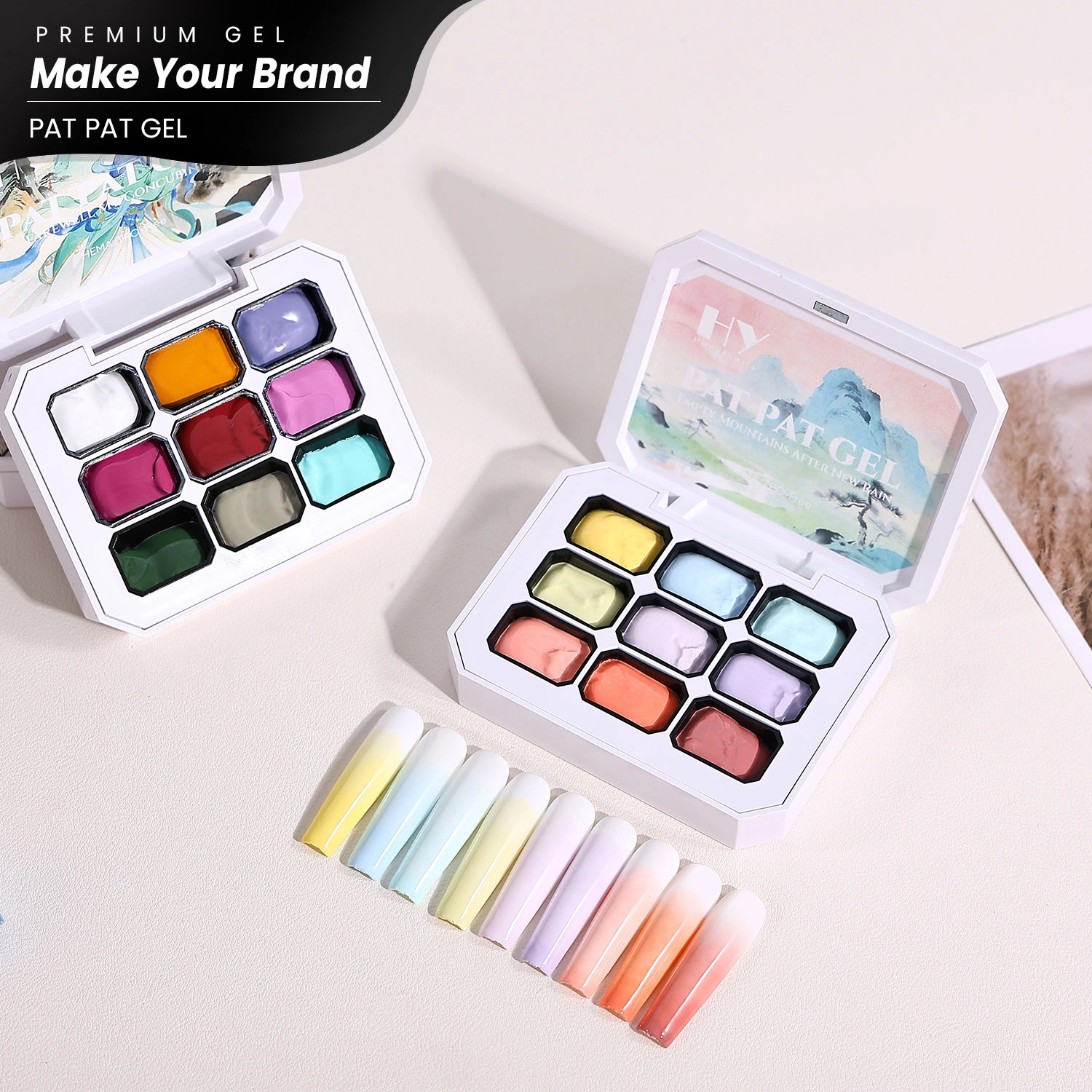
Hanyinails supports private-label projects that require more than filling a standard bottle. Our customization resources include more than 50 styles of stock bottles and caps, over 600 styles of customized bottles and caps, more than 100 kit-box styles, and over 200 color-chart designs. This allows brand owners to coordinate the visual identity of the formula, container, brush, carton, insert, and merchandising materials through one supplier.
Product development can include 3D nail art gel for raised designs, gel builder nail polish for structured overlays, colored nail polish for core shade ranges, nail care oil for aftercare programs, gel X nail glue and Gelly nail tips for extension systems, nail hard gel for durable enhancement work, Poly Acrygel for hybrid application preferences, and line gel nail art for detailed decoration. These complementary categories can help distributors build a cohesive professional nail range rather than purchasing unrelated items from multiple factories.
Project support from sample approval to delivery
Our process is designed to help buyers move from concept to commercial production with clearer checkpoints. The project team can coordinate color development, bottle and cap selection, kit-box configuration, artwork preparation, sample confirmation, production scheduling, QA/QC review, and export coordination. Buyers should still define destination-market compliance responsibilities and conduct independent inspection when required, but a structured factory partner can reduce communication gaps and duplicated approvals.
Hanyinails’ long-term vision is to become the world’s leading manufacturer of nail products. That objective is reflected in continued investment in product development, production capability, packaging variety, and international customer support. For procurement teams, the practical value lies in a supplier that can combine visual effect development with scalable manufacturing and a broader professional nail gel portfolio.
Before issuing a purchase order, buyers should send the factory a written audit checklist, request representative samples, verify technical documents, approve a golden sample, and define measurable acceptance criteria. This process protects the brand from inconsistent magnetic effects, incorrect packaging, incomplete compliance files, and delivery surprises while creating a stronger basis for long-term supplier cooperation.









Hanyinails
Hanyinails
Hanyinails
Hanyinails